Fregola con Arselle: The Toasted Sardinian Pasta and Clams
Semolina pellets, lagoon clams, and a grating of mullet roe
Contents
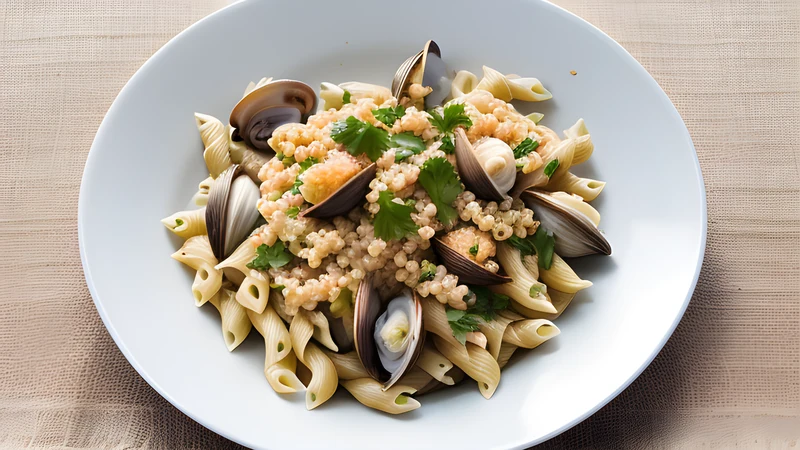
↓ Jump to recipeFregola looks like couscous and behaves like risotto rice. It is durum semolina rolled by hand into irregular pellets and then toasted in an oven until it is amber and smells like a biscuit, and that toast is the entire reason the stuff exists. Cook it in clam liquor and it drinks the sea.
This is the Cagliari dish. Clams from the lagoons at the edge of the city, semolina from the plain behind it, and about thirty minutes of stirring.
Fregola con Arselle: The Toasted Sardinian Pasta and Clams
Ingredients
- 1kg live carpet shell clams, or palourdes
- 30g fine sea salt, for purging
- 320g medium fregola sarda
- 150g cherry tomatoes, halved
- 4 garlic cloves, 2 crushed and 2 finely sliced
- 100ml dry white wine, ideally Vermentino
- 60ml extra virgin olive oil
- 800ml light fish stock or hot water
- a small pinch of saffron threads, about 0.1g (optional)
- 1 dried chilli, crumbled
- 15g flat-leaf parsley, leaves only, chopped
- 20g bottarga di muggine, in one piece
- 1/2 lemon
Method
- Purge the clams: dissolve the 30g of salt in 1 litre of cold water, submerge the clams, and leave in a cool place for 2 hours. Lift them out of the water rather than pouring, leaving the sand behind. Discard any clam that stays open when tapped firmly.
- Put the clams in a wide pan with the crushed garlic and the wine. Cover, set over high heat, and cook for 3 to 4 minutes, shaking twice, until they open. Tip into a colander set over a bowl at the first sign that most are open.
- Pick the meat from three-quarters of the clams, keeping the rest in their shells. Discard any that stayed shut. Strain the collected liquor through a muslin-lined sieve into a jug and top it up with the fish stock to make 1 litre. Add the saffron, if using, and keep it hot.
- Wipe the pan dry. Toast the fregola in it over medium heat, with no fat, for 3 minutes, shaking constantly, until it smells of toast and darkens by a shade. Tip it into a bowl.
- Heat the olive oil in the same pan over medium heat. Add the sliced garlic and the chilli and cook for 60 seconds, until the garlic is pale gold at the edges.
- Add the tomatoes and cook for 4 minutes, pressing them with a spoon until they slump and release their juice.
- Return the fregola to the pan and stir for 30 seconds. Add a third of the hot liquor and simmer, stirring often, until it is absorbed. Continue adding liquor a ladleful at a time for 12 to 14 minutes, until the fregola is tender with a firm centre and the pan is loose and soupy.
- Fold in the picked clam meat and the clams in their shells. Cook for 1 minute more, just to heat them.
- Take off the heat, stir in the parsley and a squeeze of lemon, and rest for 2 minutes. It should be wetter than a risotto and looser than a pasta.
- Serve in shallow bowls with the bottarga grated over each portion at the table.
Rolled in a terracotta bowl, twice a year
Fregola — fregula in Sardinian, from the Latin fricare, to rub — is made in a scivedda, a wide, shallow, unglazed terracotta basin. Coarse semolina goes in, salted water is flicked over it, and a hand moves in a slow circle for a long time. The grains agglomerate around the droplets into pellets of wildly varying size, from 2 to 6mm, and the roughness of the terracotta is doing the work. Then the pellets are sieved into grades, dried, and toasted in a wood oven.
The toast is the difference between fregola and every other small pasta on earth. It gelatinises the outside of each pellet and drives Maillard browning into the surface, which does two things: it gives the finished dish its nutty, bready backbone, and it means fregola releases its starch slowly and unevenly. That is why it works risotto-style. It thickens the liquid around it while keeping a distinct centre, for twenty minutes, without going to mush.
The earliest documentation is a fourteenth-century statute from Cagliari that regulated when fregola could be made, apparently because the process was noisy, took over the courtyard, and involved most of the women of a neighbourhood at once. Households made it in large batches twice a year and stored it dry.
Arselle is the Sardinian word for clams, and around Cagliari it means one clam in particular: the carpet shell, Ruditapes decussatus, from the brackish lagoons of Santa Gilla and Molentargius that sit on the city’s western and eastern edges. Those ponds are also where the flamingos are, which makes clam-gathering in Cagliari one of the more surreal sights in Italian food. The clams are sweeter and less saline than open-sea ones because of the fresh water coming in.
Bottarga completes the picture. Cured, pressed grey mullet roe from the lagoon at Cabras, up the west coast, aged into an amber block that grates like hard cheese and tastes of concentrated sea and almonds. Sardinia has been making it since the Phoenicians, and it goes on this dish at the table, never in the pan.
There is a Cagliari argument about whether the dish belongs to the fishermen of the Sant’Elia quarter or to the households of the Marina, and like most such arguments it resolves into the same recipe with a different amount of tomato. The version sold along the Poetto seafront in summer is redder and wetter than the one made at home. Both are correct and I prefer the paler one, which lets the toast through.
The second toast
Fregola arrives already toasted. I toast it again, dry, in the pan, for three minutes before anything else goes in, and it is the small change that makes this bowl mine.
The logic is the same as toasting rice for a pilaf, except more so. The first toast happened weeks ago in a factory or a wood oven and the volatile aromatics from it have largely dissipated in the bag. Three minutes in a dry pan regenerates them — you can smell the moment it happens — and it puts a second, harder skin on each pellet, which buys you another two or three minutes of structure at the end of the cook. Fregola cooked without it goes from firm to soft over about ninety seconds. Toasted, that window widens to four minutes, which is the difference between paying attention and panicking.
No oil for this. Fat coats the pellets and slows the browning, and it will also smoke at the heat you want. Dry pan, medium heat, constant shaking, three minutes, and tip it out the instant it smells like toast. Left in a hot pan it goes from amber to bitter without warning.
Grade matters, incidentally. Fregola comes fine, medium and coarse, and medium — pellets around 4mm — is what this dish wants. The fine stuff cooks in six minutes and behaves like a thickener. The coarse takes twenty and stays stubbornly separate. If the bag does not say, look at it: you want something between a peppercorn and a caper.
Clams, honestly handled
Buy them live. A live clam is closed, or closes when you tap it. One that gapes and stays gaping is dead, and a dead bivalve is the single worst thing you can put in a pan — discard it without sentiment. After cooking, apply the same rule in reverse: a clam that has not opened did not want to, and it goes in the bin.
Purge them. Two hours in 3% salt water — 30g per litre, which is roughly seawater — and they will spit out sand you did not know was there. Fresh tap water kills them and they will not purge; the salt is doing real work. Lift them out of the purging water rather than tipping, so the grit stays at the bottom of the bowl.
Open them separately from the main pan, and stop the moment the majority have gapped. Clams overcook in about forty seconds and become erasers. The ones that took longest to open will be the toughest, which is why three-quarters of them get picked from their shells and folded in at the very end.
The liquor is the point of the entire exercise. Strain it through muslin — even purged clams leave silt — and taste it before you add any salt to anything. It is already properly seasoned, and this is a dish that people over-salt by reflex and then cannot rescue.
One habit worth keeping: cook the clams in a pan wide enough to hold them two deep at most. Piled four deep, the ones at the bottom open at ninety seconds and are still in there at four minutes while the top layer catches up. A wide pan and a lid gets the whole kilo through the same forty-second window, which is the only way all of them end up tender.
Consistency, and the Cagliari test
The correct texture is all’onda, waved: tip the bowl and it should move. Fregola con arselle sits between a soup and a risotto, wetter than either instinct suggests, because the pellets keep drinking for two minutes after the pan leaves the heat. Serve it looking slightly too loose and it will be right when it reaches the table.
The tomato is a seasoning. A hundred and fifty grams of cherry tomatoes, slumped and pressed, adds acidity and a faint sweetness and turns the liquid the colour of weak tea. A version swimming in passata is a different dish and it buries the clams.
Saffron is optional and Sardinian — the island grows a good deal of it around San Gavino Monreale — and a very small pinch gives a floral note under the shellfish. Leave it out and nobody will miss it.
What goes wrong
It is gritty. Under-purged clams, or liquor poured straight in without straining. Two hours in seawater-strength brine and a muslin filter are both non-negotiable, and lagoon clams carry more silt than open-sea ones.
The clams are tough. They cooked twice. Open them in their own pan, pull them at the first gap, and give them sixty seconds at the end and no more.
It is a solid mass. Too little liquid, or it sat. One litre for 320g of fregola is roughly three parts liquid to one part pasta by volume, which is more than you would give risotto rice, and it is right. If it tightens in the bowl, loosen with hot stock.
It tastes flat despite all that clam. Almost always missing acid. A squeeze of lemon at the end is doing structural work — the liquor is salty and sweet with nothing sharp in it, and half a lemon over four bowls opens the whole thing up.
It is too salty. You salted the pan. Clam liquor is around 2% salt on its own, which is more than seawater is on the tongue once it has reduced. Taste the topped-up liquor before it goes near the pan, and dilute with unsalted stock if it is fierce.
The fregola is soft outside and chalky inside. The heat was too high and the liquid boiled off before it penetrated. Simmer, do not boil, and add the liquor a ladle at a time.
Storage, substitutions and the neighbours
This does not keep. Reheated fregola con arselle is a bowl of soft pellets and rubber, and there is no technique that saves it. Cook what you will eat.
If fregola is unavailable, the closest substitute is Israeli couscous toasted hard in a dry pan, which gets you the shape and about half the flavour. Orzo is a poor stand-in — it releases starch too fast and the bowl turns claggy. Cockles work in place of carpet shells and are often cheaper; mussels change the dish considerably, since mussel liquor is much stronger and will bully the bottarga.
Bottarga is expensive and worth it. A 20g piece grates over four bowls with room to spare, it keeps for months wrapped tight in the fridge, and there is no substitute — anchovy gets you salt without the roe’s almond note. If you cannot find it, finish with lemon zest and accept a different, lighter bowl.
For the same clams cooked the Roman way, linguine alle vongole with white wine is the obvious neighbour and a good comparison — the liquor handling is identical and the starch behaves completely differently. Mussels in white wine, garlic and cream covers the bivalve-opening technique in more detail if you have never done it. And if the risotto-style absorption is what appeals, crni rizot, the Croatian black cuttlefish risotto runs the same Adriatic logic with squid ink.
A note on the wine. Vermentino di Gallura is the island’s white and it is the obvious choice for the pan and the glass, because it has enough acid to open the clams cleanly and a faint bitter almond finish that lands on exactly the same note as the bottarga. Any dry, unoaked white will open a clam. Something oaked will put vanilla into the liquor, and vanilla in a bowl of shellfish is a long afternoon of regret.
Buy a kilo of clams for four people. It looks like too many. About 400g of that weight is shell.
Related Content