Focaccia Barese: The Potato Dough and Cherry Tomatoes
A slack semolina dough, a blackened round tin, and tomatoes pressed in hard
Contents
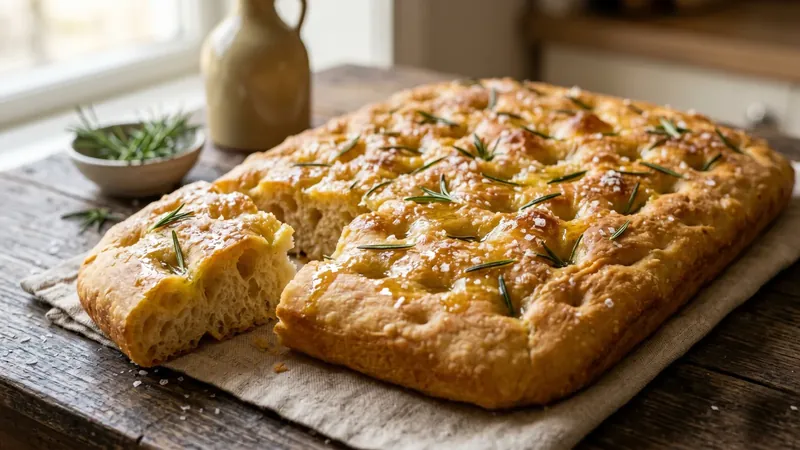
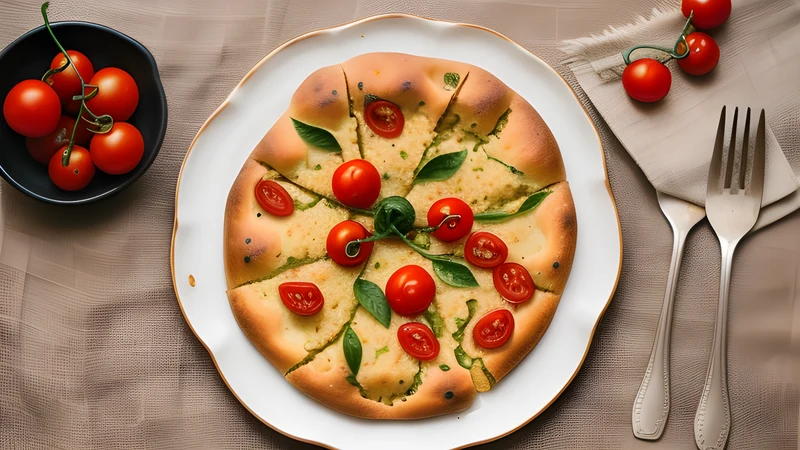
↓ Jump to recipeFocaccia barese is wet dough, boiled potato, and tomatoes pushed in hard enough that they cook inside the bread rather than on top of it. The base fries in a shallow lake of olive oil. The top blisters. It is sold by weight in Bari from morning until it runs out, wrapped in a square of greaseproof paper, and eaten walking.
I have made this most weeks for years and the only thing I have changed is what goes on the surface at the last minute. That change is the tomato-water brine, a few sections down. Everything else is Bari’s.
Focaccia Barese: The Potato Dough and Cherry Tomatoes
Ingredients
- 200g floury potato, such as Maris Piper or King Edward, unpeeled
- 300g semola rimacinata di grano duro
- 200g strong white bread flour
- 5g instant dried yeast
- 360g water at 30°C
- 11g fine sea salt
- 30g extra virgin olive oil, for the dough
- 60ml extra virgin olive oil, for the tin
- 350g ripe cherry tomatoes
- 80g green olives in brine, ideally baresane, stones in
- 2 tsp dried oregano, preferably on the stalk
- 40ml extra virgin olive oil, for the brine
- 1 tsp flaky sea salt
Method
- Boil the potato whole and unpeeled in salted water for 25 to 30 minutes, until a knife slides in with no resistance. Drain, peel while hot, and pass through a ricer onto a plate. Spread it out and cool to lukewarm, about 15 minutes.
- Whisk the semolina, bread flour and yeast in a large bowl. Add the water and mix to a shaggy mass. Rest, uncovered, for 20 minutes.
- Add the riced potato, the salt and the 30g of olive oil. Squeeze and fold the dough in the bowl with a wet hand for 3 minutes, until the potato disappears and the dough is slack, sticky and glossy.
- Cover and bulk ferment for 2 hours at room temperature, folding the dough over itself four times in the bowl at 30 and 60 minutes. It should roughly double and hold large bubbles.
- Pour the 60ml of olive oil into a 32cm round metal tin and tilt it so the oil climbs the sides. Tip the dough in without knocking it back. Rest for 20 minutes, then press it out with oiled fingertips until it reaches the edges. If it springs back, wait 10 minutes and press again.
- Cover loosely and prove for 45 minutes, until the surface is domed and quivering. Heat the oven to 240°C with a shelf in the lowest position.
- Halve the tomatoes over a bowl, catching every drop of juice and seed. Whisk the caught juice with the 40ml of olive oil, the flaky salt and the oregano crumbled between your palms.
- Push the tomato halves cut side up into the dough with a fingertip, sinking each one until it is level with the surface. Press in the olives. Spoon the tomato-water brine over the whole top.
- Bake on the lowest shelf for 25 to 28 minutes, until the base sizzles audibly, the crust is deep gold and the tomato edges have gone black.
- Run a knife round the rim, slide the focaccia straight onto a rack, and rest for 10 minutes before cutting.
Bread dough with somewhere to go
Puglia is Italy’s grain belt. The Tavoliere plain behind Foggia grows durum wheat on a scale that made Altamura’s bread famous enough to hold a DOP, and it is a landscape of bakeries — the panificio is still a daily errand in a way it stopped being in most of Europe.
Focaccia barese comes directly out of that. A wood oven for bread runs at 400°C or better, and the baker needs to know the floor temperature before committing forty loaves to it. The test was a disc of leftover dough, flattened and thrown in to see how fast it coloured. That disc had to go somewhere afterwards, and it was better with a slick of oil and whatever was in the crate by the door: tomatoes, olives, oregano. The Bari version keeps that lineage plainly visible. It is bread dough with the day’s produce shoved into it.
The potato is the local signature and it does structural work. Bari’s focaccia is softer, wetter and longer-keeping than the Genoese kind, and the potato is why. Argue about the ratio and you will get an argument — Altamura tends to less potato and a more open crumb, Bari to more, and a family in Bari Vecchia will tell you the exact percentage their grandmother used with a confidence no one should take literally.
The tin has a name and a cult. The ruoto is a round aluminium or blue-steel pan, usually 32 or 36cm, and it is never scrubbed. Years of baked-on oil polymerise into a black surface that releases the bread and conducts brutally, and a Barese cook will guard a well-seasoned ruoto the way other people guard a cast-iron pan. A new tin makes noticeably worse focaccia for its first few bakes. This is true and slightly annoying.
The olives are baresane: green, firm, cured in brine, and served with their stones in. Stones in is the tradition and the reason is flavour — a stoned olive leaks brine into the dough and goes flabby. Warn whoever is eating.
There is one more thing about Bari focaccia that surprises visitors: it is breakfast. The bakeries have it out by seven, and the standard order is a hundred grams cut with scissors and handed over in paper, eaten before nine in the morning with nothing to drink. Tourists treat it as a side dish at dinner. Bari treats it as the first thing that happens.
Why the potato works
Potato starch does two things to a bread dough. It absorbs water at gelatinisation, around 60 to 70°C, and it holds onto that water in the crumb long after baking, which is why potato breads stay soft for days when a lean dough is stale by evening. It also dilutes the gluten — a fifth of the flour weight in potato means a fifth less protein network — which produces a tender, slightly cakey crumb rather than a chewy one.
Rice the potato rather than mashing it. A masher ruptures cells and releases free starch, which turns the dough gluey. A ricer pushes intact cells through in threads. The difference is obvious in the bowl within thirty seconds.
Cool it to lukewarm before it goes in. Hot potato at 80°C dropped into a dough that already contains yeast pushes local temperatures past where yeast is comfortable and begins denaturing the gluten you have just built. Warm is fine and helpful. Hot is a wrecked dough.
Use a floury variety. Waxy potatoes hold their shape because they are lower in starch and higher in moisture, which is exactly wrong here — you want the starch and you do not want the extra water in a dough already sitting at high hydration.
The tomato-water brine
Halve the tomatoes over a bowl. What collects is a few tablespoons of tomato water: seeds, gel, and juice, and it is the most savoury part of the fruit. Tomato gel carries most of the glutamate in a tomato, several times the concentration of the flesh, which is why chefs strain it and hoard it.
Most focaccia barese gets finished with oil and salt. I whisk the caught tomato water into the finishing oil with the salt and the oregano and spoon that over instead. It breaks into a loose emulsion, sits in the dimples, and reduces in the oven into something between a glaze and a dressing. The top comes out sharper and deeper than plain oil manages, and it costs nothing — you were going to throw that liquid away.
Crumble the oregano between your palms rather than shaking it from a jar. The friction cracks the leaf and the smell tells you whether the jar is still alive; oregano more than a year old is hay. Dried oregano on the stalk, the way Puglian and Greek shops sell it, is a different herb from the powdered version and worth seeking out.
One caution: the brine is loose and it will run to the low points. Spoon it over from a height of about 10cm so it lands in droplets across the whole surface rather than in a puddle at one edge, and give the tin a small shake afterwards. A focaccia with all its brine in one quadrant bakes unevenly — the wet side stays pale while the dry side browns.
Pressing, proving and the bake
The dough is slack — around 78% hydration once the potato’s water counts — and it will not behave like a ball. Do not try to make it behave. Fold it in the bowl with a wet hand, four times over two hours, and let the folds do what kneading would.
Getting it to the edges of the tin takes two goes. Press with oiled fingertips, meet resistance, stop. Ten minutes later the gluten has relaxed and it goes the rest of the way without complaint. Forcing it in one pass tears the structure and you lose the big holes.
Sink the tomatoes properly. A half sitting on the surface roasts and shrivels; a half pressed level with the dough steams inside a pocket and stays juicy while its exposed edge burns. That contrast is the point of the whole bake. Use one fingertip and push until you feel the tin.
Lowest shelf, 240°C, and listen. When the base is right you can hear the oil frying through the tin — a fine hiss that starts around fifteen minutes. The top goes deep gold well before the job is done, so judge it from underneath: lift a corner with a palette knife and look. The base should be brown and crisp right into the centre.
What goes wrong
The base is pale and soft. Not enough oil, or the tin was too high in the oven. Sixty millilitres in a 32cm round sounds like a lot and it is the correct amount — the base is shallow-fried, and a thin film simply bakes dry. Lowest shelf, every time. If your oven has a bottom element, use it.
The crumb is dense and the bread is heavy. Either the potato was mashed rather than riced, or the dough was knocked back when it went into the tin. Tip it in and leave it alone; the gas you have built over two hours is the entire crumb.
It stuck to the tin. New tin, or too little oil. Line the base with a disc of baking paper for the first three bakes of a new ruoto, oil on top of the paper, and by the fourth you will not need it.
The tomatoes are dry and wrinkled. They sat on the surface. Push each half down until it is level with the dough.
It tastes flat. Eleven grams of salt in 500g of flour is a little over 2%, which is at the top of the normal bread range and deliberate — a wet, oily, potato-rich dough needs it. Add the flaky salt at the end as well; that hit is textural and it lands on the tongue first.
The dough is unmanageably wet. Semola rimacinata varies. Different mills drink different amounts, and durum in particular absorbs slowly. Hold back 30g of the water on the first mix and add it during the folds if the dough feels tight. It is far easier to add water than to take it out.
Storage, variations and what else to do with the dough
It keeps for two days in a paper bag at room temperature and it reheats properly: five minutes on a dry pan, base down, medium heat, brings the crisp back completely. Do not refrigerate it — fridge temperature is the fastest possible staling for bread, worse than the counter.
The dough freezes better than the finished focaccia. Bulk ferment, then freeze in the tin, covered; thaw overnight in the fridge, then bring to room temperature for two hours before topping and baking.
Swap the tomatoes for thin rings of red onion and the olives for anchovy and you have the version sold in Bari in winter. Potatoes sliced 2mm on a mandoline and pressed in with rosemary make a third. If you want the softer, sweeter northern approach, caramelised onion and thyme focaccia is the same family with an entirely different accent, and the slack-dough handling here is a close cousin to ciabatta with a wet dough and an open crumb if you want to practise the wet-hand fold on something less forgiving.
Semolina in the dough is worth defending too. The 60:40 split of semola to bread flour gives colour, a faint sweetness and a crumb with more bite than an all-aestivum dough. Go to 100% semolina and the focaccia turns short and crumbly, because durum’s gluten is strong but does not stretch far. Go to 100% bread flour and it is a decent focaccia from somewhere else entirely.
Cut it into squares. Eat it standing up, from paper, before it cools. There is nothing romantic in that. A cold focaccia barese is a worse thing than a warm one by a wide margin, and Bari worked this out long before I did.
Related Content