Flaounes: Cyprus's Cheese-Filled Easter Bread
Mastic, mahleb, mint and a cheese you have to plan for
Contents
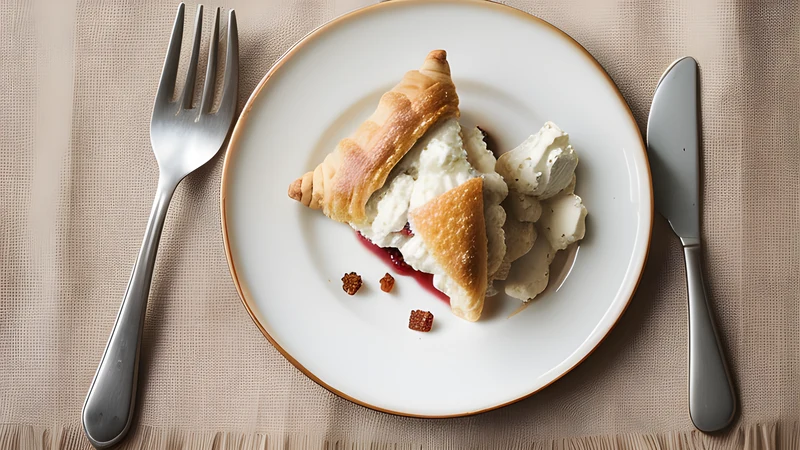
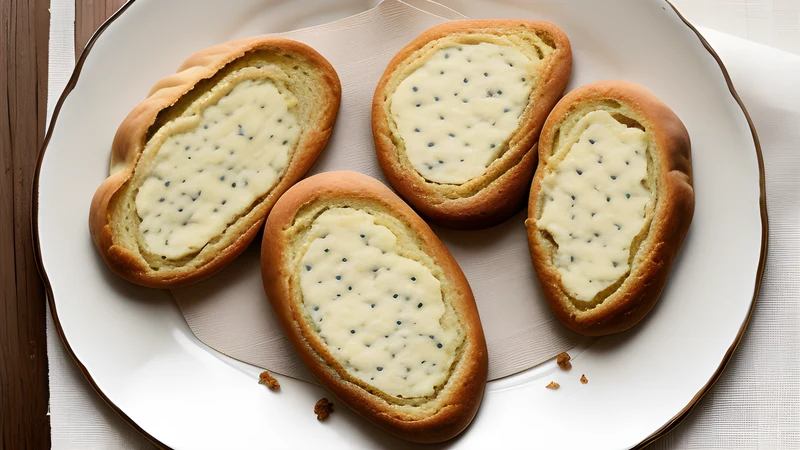
↓ Jump to recipeFlaounes are the reason Cypriot Easter starts on the Thursday, three days ahead of the feast itself, when the kitchens fill with grated cheese and everyone’s aunt turns up with an opinion about how much mint is correct. They are a cheese pastry the size of your palm, open at the top like a tricorn hat, crusted with so much sesame that you leave a trail.
They are also the single Cypriot recipe where the shortcuts genuinely do not work, and the reason is the cheese.
Flaounes: Cyprus's Cheese-Filled Easter Bread
Ingredients
- 500 g strong white bread flour
- 7 g fast-action dried yeast
- 1 tsp fine salt
- 1 tsp ground mahleb
- 1/4 tsp ground mastic (see method)
- 60 g unsalted butter, melted
- 240 ml warm milk
- 1 egg
- 600 g flaouna cheese, or 400 g halloumi plus 200 g mild pecorino
- 4 eggs, for the filling
- 60 g semolina
- 2 tsp baking powder
- 3 tbsp dried mint, crumbled
- 100 g sultanas (optional)
- 1/2 tsp coarsely ground black pepper
- 1 egg yolk beaten with 1 tbsp milk, to glaze
- 120 g sesame seeds
Method
- Two days ahead, coarsely grate the cheese. Spread it on a tray lined with kitchen paper, cover loosely with a tea towel, and refrigerate for 48 hours, tossing once a day.
- Grind the mastic tears with 1 tsp of the flour in a mortar until powdered — mastic alone will gum the pestle.
- Mix the flour, yeast, salt, mahleb and ground mastic. Add the melted butter, warm milk and egg, and bring together into a dough.
- Knead for 8-10 minutes until smooth and elastic. Cover and prove at room temperature for 90 minutes until roughly doubled.
- For the filling, mix the dried cheese with the semolina, baking powder, dried mint and pepper. Beat in the 4 eggs one at a time, then fold in the sultanas if using. The mixture should be thick and scoopable.
- Rest the filling, covered, for 30 minutes so the semolina hydrates.
- Divide the dough into 12 pieces. Roll each into a 15 cm circle about 3 mm thick.
- Tip the sesame seeds onto a plate. Press one face of each circle firmly into the seeds so they embed.
- Turn each circle seed-side down. Spoon 3 heaped tablespoons of filling into the centre. Fold three sides up and over to form a triangle, leaving the centre open, and pinch the corners hard to seal.
- Space on lined trays, glaze the exposed dough with the egg wash, and rest for 20 minutes.
- Bake at 190C fan for 28-32 minutes until deep gold and the filling is puffed and set. Cool on a rack for at least 20 minutes before eating.
Why the cheese has to be planned
Flaouna cheese is a specific thing: a semi-hard sheep and goat cheese made in the weeks before Easter, salted, and then left to dry and mature. It is not halloumi, though it is halloumi’s close relative — both are made from the same milk by the same households, and flaouna cheese is essentially what you get if you make halloumi and then let it age and dry out rather than storing it wet in brine.
That dryness is the entire structural point. Fresh, wet cheese in a flaouna filling releases water in the oven, the filling weeps, the base goes soggy, and the whole thing collapses into a sad puddle. Dry cheese holds. This is why every Cypriot recipe you will find begins, in effect, two days early: grate the cheese, spread it out, and let the fridge pull the moisture out of it.
If you cannot source flaouna cheese — and outside a Cypriot grocer you almost certainly cannot — the working substitute is 400 g halloumi plus 200 g of a mild pecorino or a young kefalotyri. Halloumi brings the springy, squeaky texture; the pecorino brings the salt and the aged tang that halloumi lacks. Grate them together and dry them together.
The twist: dry the cheese for two full days
Most recipes that acknowledge the problem tell you to squeeze the cheese or leave it out for a few hours. Two days in the fridge on kitchen paper, uncovered but for a tea towel, is meaningfully better and it is my one real intervention here.
Refrigerator air is dry — a domestic fridge runs at something like 30-40 per cent relative humidity because the evaporator is constantly condensing moisture out of it. Forty-eight hours of that, with the cheese spread thin and tossed once a day, drops the water content substantially and, more interestingly, concentrates the flavour. The cheese goes from mild and rubbery to sharp and slightly crystalline at the edges. Grated fresh halloumi tastes of salt and not much else; grated halloumi after two days in the fridge tastes of sheep.
It also changes how the filling behaves. Dry cheese absorbs the beaten egg rather than sitting in it, so the mixture becomes a coherent paste instead of cheese suspended in liquid. That paste puffs in the oven and sets into something between a soufflé and a savoury custard.
Do not cover it tightly. The point is airflow. A tea towel keeps fridge smells off without sealing it.
The Easter week it belongs to
Flaounes exist because of the fast, and the fast is what makes them taste the way they do.
Orthodox Great Lent runs seven weeks, and for most of it Cypriot households eat no cheese, no eggs, no milk and no meat. Flaounes are made on Maundy Thursday and Good Friday and eaten from the Saturday midnight liturgy onward — the first thing the fast breaks on. Every ingredient in them is a thing that has been forbidden for forty-odd days: cheese, eggs, butter, milk. That is the design. It is a pastry constructed entirely out of what you have been missing.
The timing is fixed by the cheese-making calendar too. Cypriot sheep and goats lamb and kid in the autumn and are in full milk through the spring, so the weeks before Easter are exactly when a household has more milk than it can drink. Flaouna cheese gets made then, salted, and hung to dry for the few weeks it needs. The dish and the agricultural year are the same object viewed from different angles.
Making them is communal in a way that is hard to replicate in a British kitchen on a Wednesday evening. The grating is done by whoever is available, the shaping is done by everyone at a table, and the trays go to the village bakery’s wood oven because no domestic oven holds ninety flaounes. Households make them in numbers that seem absurd — sixty, eighty, a hundred — because they are given away all through Easter week to anyone who comes to the door. Twelve, which is what this recipe makes, would be regarded on Cyprus as a rehearsal.
Mastic and mahleb
These two are what make a flaouna taste Cypriot rather than generically Mediterranean, and both are worth buying properly.
Mastic is the resin of Pistacia lentiscus, grown commercially only on the southern half of Chios — a genuinely protected geographical origin, and the trees have been tapped there since antiquity. It arrives as small brittle tears and tastes of pine, cedar and something faintly medicinal. A quarter teaspoon across 500 g of flour is the right dose; half a teaspoon and your bread tastes of dentistry. Grind it with a spoonful of the flour, because mastic is soft and sticky and will weld itself to a mortar otherwise. Freeze the tears for ten minutes first if it is a warm day.
Mahleb is the ground kernel of the St Lucie cherry stone, and it tastes of marzipan and sour cherry at once. A full teaspoon is fine — it is far gentler than mastic and it is what gives the dough its almondy background.
Use dried mint. Fresh mint in a flaouna filling turns black and tastes of nothing after thirty minutes at 190C. Dried mint has already lost its volatile fresh notes and kept its menthol backbone, which survives the oven. Three tablespoons across 600 g of cheese sounds like a lot. It is correct.
Shaping and the things that go wrong
The sesame gets embedded before shaping. Press one face of each rolled circle into a plate of seeds and turn it seed-side down. The seeds end up on the outside of the finished flaouna, embedded rather than sprinkled, and they toast in the oven. Sprinkling them on top after the egg wash gives you seeds that fall off on the plate.
Pinch the corners like you mean it. The three folded sides want to unfold in the oven as the filling expands. A firm pinch, and a rest of 20 minutes before baking to let the seal set, holds them.
The filling should mound rather than spread. If it slumps flat when you spoon it in, the cheese was too wet or you were heavy-handed with the eggs. Add another tablespoon of semolina and rest it.
Sultanas divide households. Roughly half of Cyprus finds them essential and half finds them an outrage. I include them because the sweetness against salt cheese and mint is the interesting part. They are genuinely optional.
Cracked, leaking filling means the oven was too hot or the flaounes went in without their rest.
A dense, bready base means the dough was rolled too thick. Three millimetres. It feels too thin when you are doing it and it is correct — the dough proves again during the 20-minute rest and puffs in the oven, and a 5 mm circle gives you a bread roll with cheese on it.
Pale, flat filling means you skipped the baking powder. Two teaspoons in 600 g of cheese sounds like an odd addition to a savoury mixture, and it is what makes the filling rise into a dome and set light rather than sitting flat and rubbery. It is standard in every Cypriot recipe I have ever been shown.
Why the filling behaves like a custard
It is worth understanding what is happening inside a flaouna, because it explains every rule above.
The filling is a protein gel. Four eggs supply the setting agent; the cheese supplies bulk and flavour; the semolina supplies starch that absorbs stray water and stops the gel weeping. As the flaouna heats, the egg proteins denature and link into a network at around 65-70C, trapping the fat and moisture from the cheese inside it. The baking powder releases carbon dioxide as it goes, which is what inflates the network before it sets.
Everything that ruins a flaouna is an attack on that gel. Too much water and the network cannot hold it, so the filling weeps and the base goes grey — which is precisely why the cheese spends two days drying. Too hot an oven and the proteins contract too fast, squeezing out moisture and cracking the surface, the same mechanism that makes an overcooked quiche split. No semolina and there is nothing to mop up what the gel cannot bind.
The 30-minute rest for the filling before shaping serves this too: semolina hydrates slowly, and a mixture used immediately will still be absorbing water in the oven, at exactly the moment the gel is trying to set around it.
Halloumi behaves oddly and it is fine. Halloumi is made by heating the curd, which denatures its proteins before you ever get near it. That is why it grills without melting. In a flaouna it holds its shape rather than dissolving, so you get distinct springy shreds suspended in the set egg. The pecorino, which does melt, fills the gaps. That contrast of textures is what the two-cheese substitution is really buying you.
Storage
Flaounes keep three days at room temperature in a tin and are best on day one and two. They reheat well at 160C for eight minutes, which crisps the base again. Freeze them baked and cooled; reheat from frozen at 170C for 15 minutes. Do not freeze them raw — the baking powder in the filling will have spent itself.
If you want more of this family, su böreği works the same cheese-and-egg logic in a completely different structure, and banitsa is the Bulgarian coil. For the halloumi itself in a less ceremonial mood, halloumi, watermelon and za’atar is the summer version of the same cheese.
Start on Thursday. That is the deal.
Related Content