Beer-Battered Fish and Chips
Crisp, golden and properly British
Contents
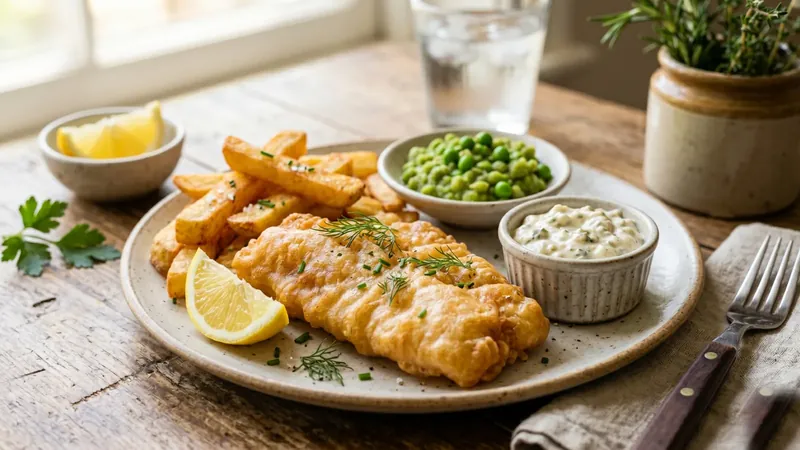
↓ Jump to recipeFew meals say British seaside quite like a parcel of fish and chips, and the secret to that shattering coating is an ice-cold beer batter, whisked at the very last second so the bubbles survive the fryer. My small flourish is a malt-vinegar salt, made by drying vinegar into flaky sea salt, which delivers all the sharp tang of the chip-shop bottle without ever turning the batter soggy. It is the one thing chip shops get wrong at home: they splash liquid vinegar over the batter and, thirty seconds later, that lovely crisp shell has gone limp. Dry the vinegar into salt and you keep the sharpness and the crunch. Hot, golden and unapologetically generous, it is the meal I make when I want to feel properly looked after.
I resisted frying at home for years, convinced it was more trouble than it was worth: the smell, the spitting oil, the guilt. Then I bought a cheap probe thermometer, learned that temperature control is the whole game, and never looked back. Done properly, a home fryer beats most takeaways, because you control the freshness of the fish and the oil, and you eat it thirty seconds out of the pan rather than steamed limp inside a polystyrene tray on the drive home.
Beer-Battered Fish and Chips
Ingredients
- 4 skinless cod or haddock fillets, about 150g each
- 1kg floury potatoes, such as Maris Piper
- 200g plain flour, plus extra for dusting
- 1 tsp baking powder
- 330ml ice-cold beer or lager
- 1.5 litres sunflower oil, for frying
- 1 tbsp malt vinegar
- 2 tsp flaky sea salt
- Lemon wedges and mushy peas, to serve
Method
- Peel the potatoes and cut into thick chips, then rinse under cold water and pat thoroughly dry.
- Heat the oil in a deep, heavy pan to 130C and fry the chips for 6-7 minutes until soft but pale, then lift out and drain.
- Stir the malt vinegar into the flaky salt, spread on a tray and leave to dry while you cook, then crush back to a coarse salt.
- Whisk the flour and baking powder with a pinch of salt, then pour in the ice-cold beer and whisk to a smooth batter just before frying.
- Raise the oil to 190C, dust each fish fillet in flour, then dip into the batter and let the excess drip off.
- Lower the fish gently into the oil and fry for 6-8 minutes until deep golden and crisp, turning once.
- Drain the fish on kitchen paper and keep warm in a low oven.
- Return the chips to the 190C oil and fry for a further 3-4 minutes until golden and crunchy.
- Drain the chips and scatter with some of the malt-vinegar salt.
- Serve the fish and chips at once with lemon wedges, mushy peas and the rest of the salt.
The Story
Fish and chips became a national institution in Victorian Britain, when two separate food traditions met and married. Fried fish, dredged in flour or batter, was sold in the cities of the south and is often linked to Jewish immigrant cooks, whose method of frying fish in batter to preserve it for the Sabbath was noted in London as early as the 1830s. The fried chip, meanwhile, arrived from the industrial north of England, where fried potatoes had become a cheap and filling street food. The two were eventually sold together from the same counter, and rival towns still argue over who did it first: Joseph Malin’s shop in the East End of London, opened around 1860, and John Lees, said to have sold fish and chips from a wooden hut in Mossley, near Oldham, in the 1860s, are the two names most often cited.
By the late nineteenth century dedicated chip shops were spreading rapidly across the country, fed by an expanding railway network that could carry fresh catch inland and by the steam trawler fleets working the North Sea out of ports such as Grimsby and Hull. At the trade’s peak in the 1920s there were said to be some 35,000 shops in Britain. The dish earned a peculiar wartime status, too: during both world wars it was deliberately left off the ration, judged too important to the morale and diet of ordinary working people to be restricted. Winston Churchill reportedly called the fish and the chips “the good companions,” and it remained one of the few hot meals a family could rely on through the leanest years.
The batter is where most of the skill lies. Cold liquid and a quick hand keep the gluten from developing, so the coating stays light rather than bready. Beer does two jobs at once: its carbon dioxide bubbles aerate the batter, and the alcohol boils off fast in the fryer, drawing water out with it to leave a drier, crisper shell. The baking powder is your insurance, throwing off gas the moment it hits the hot oil so the coating puffs into that lacy, blistered crust. Keeping everything ice-cold until the moment of frying maximises the temperature difference against the 190C oil, which drives the dramatic sizzle that inflates the batter.
The two fries that make the chips
Chips reward patience, and the double fry is the classic method for a reason rooted in physics. The first gentle cooking at 130C is not about colour at all; it is about cooking the potato through so the starch inside turns fluffy, while driving off surface moisture. Skip it and you get chips that are golden outside and hard in the middle, or that never crisp because the water is still trying to escape. The second blast at 190C then dehydrates and browns the outside into a crunchy armour. If you have time, let the chips cool completely between the two fries, or even chill them; the drier the surface, the crisper the result.
Floury potatoes such as Maris Piper or King Edward give the fluffiest centre, because their low moisture and high starch collapse into that steamy interior. Waxy salad potatoes stay dense and greasy however you cook them, so leave them for the roasting tin. If you enjoy this, my crispy roast potatoes lean on the same starch-and-surface principle from the oven rather than the fryer.
What goes wrong, and why
Soggy batter almost always means the oil was too cool: it should recover to 180C or above within a few seconds of the fish going in, so fry in batches of no more than two fillets and let the temperature climb back between them. A probe thermometer is worth more than any gadget in this dish. Batter that slides off the fish means you skipped the flour dusting, which gives the wet batter something to grip. And greasy chips almost always come from crowding the pan, which crashes the oil temperature and lets the potatoes stew in tepid fat rather than searing.
The vinegar salt is a modern kitchen idea rather than a heritage one, but it solves a genuine problem. Splashing liquid vinegar over batter quickly softens it, whereas drying the vinegar’s flavour into crunchy salt crystals lets the seasoning cling to the surface while keeping it crisp. It is a small, honest improvement on a much-loved classic, leaving the fish and chips themselves exactly as tradition demands.
Substitutions, storage and make-ahead
Cod and haddock are the traditional choices, but sustainably sourced pollock, hake or coley all batter and fry beautifully; look for firm white fillets around 2cm thick so the timings hold. If you cannot get beer, ice-cold sparkling water works, though you lose a little of the savoury depth; a splash of vinegar in the water helps. The batter must be mixed at the last second and used within a few minutes, so have the oil at temperature and the fish patted dry before you whisk.
Fish and chips do not keep, and they should not: the whole point is eating them the moment they come out of the pan. What you can do ahead is the first fry of the chips, up to a few hours in advance, holding them at room temperature ready for their final crisping while the fish cooks. The malt-vinegar salt keeps for weeks in a sealed jar, so make a big batch; it is excellent on roast potatoes and thick-cut crisps too.
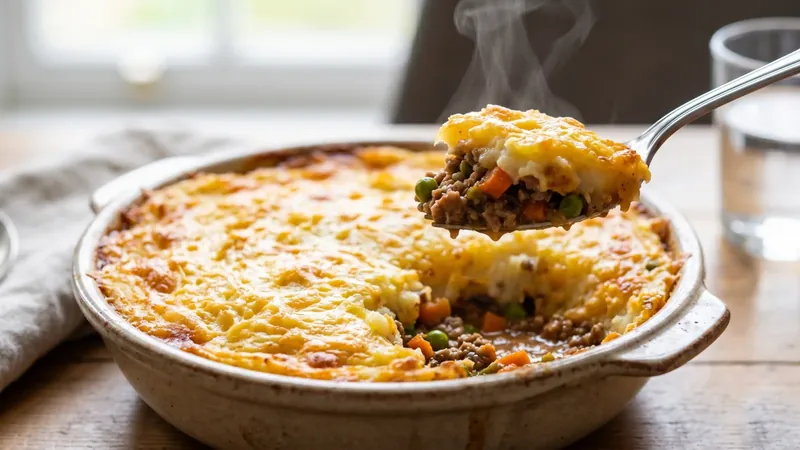
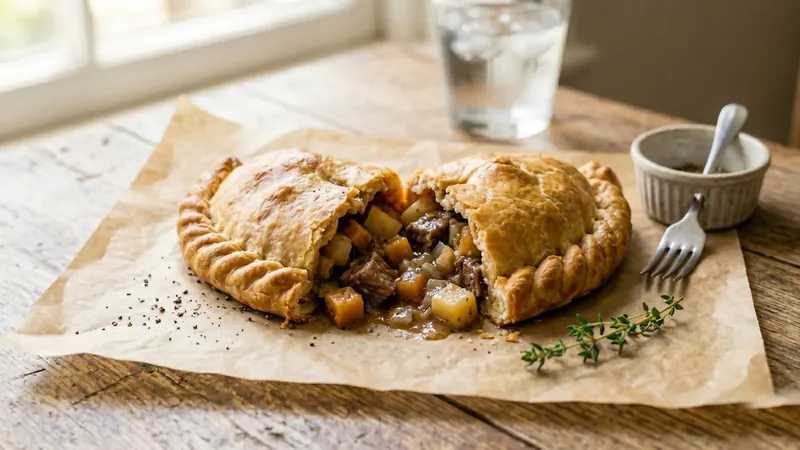
Serve with mushy peas, lemon wedges and, if you are feeling generous, a spoonful of tartare sauce. A scattering of the malt-vinegar salt at the table lets everyone season their own without wielding the vinegar bottle and softening the batter. For another proper British plate that turns humble ingredients into something worth the effort, my shepherd’s pie is the cold-weather companion to this summer-seaside supper, and the cornish pasty is the pocket-sized version of the same working-class thrift.
A last word on safety and sanity: never fill your pan more than a third full of oil, keep a lid and a folded damp cloth within reach, and never leave hot oil unattended. Frying at home is far less daunting than its reputation suggests once you respect those rules, and the payoff is a plate that no takeaway, however good, can match for freshness. Do it once and the ritual becomes a proper treat rather than a chore.
Related Content