Fideuà: The Paella That Swapped Rice for Noodles
Short toasted noodles, seafood stock, aioli on the side
Contents
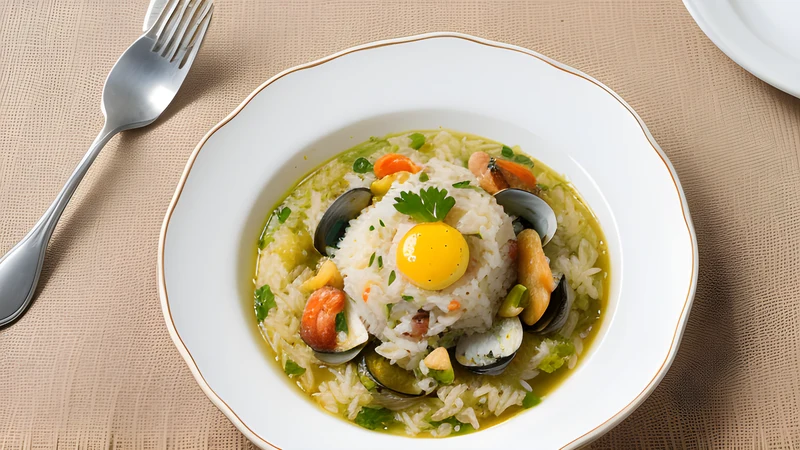
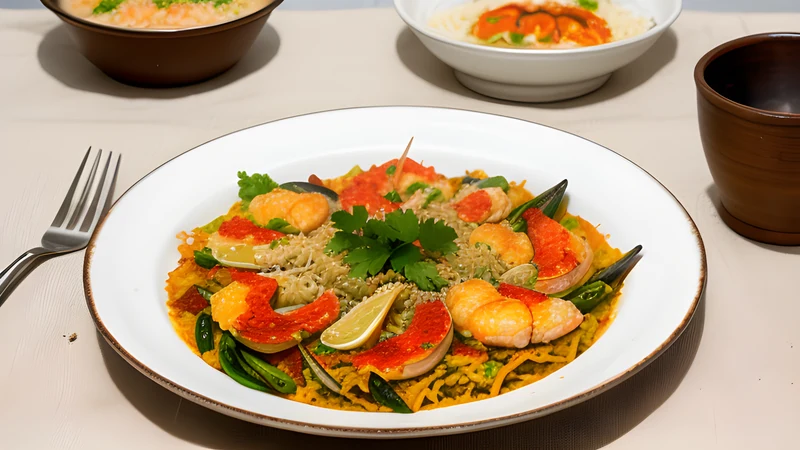
↓ Jump to recipeFideuà is what happens when a cook is denied the thing the recipe calls for and refuses to stop cooking. It is a paella in every way except the grain: same wide shallow pan, same sofrito, same saffron, same fierce boil and total ban on stirring, same crisp brown crust welded to the base. The rice has been replaced by short toasted noodles that swell, absorb the stock, and end up standing on end in the pan like a nest of quills.
My twist is a stage most recipes leave out: I toast the noodles in the oven rather than in the pan. Spread thin on a tray at 180C for ten minutes, they colour evenly all the way through, every noodle the same shade of weak tea. Toasting them in the pan gives you a handful of black ones, a handful of pale ones and a lot of anxiety. The oven does it hands-off while you make the stock, and the flavour it builds — nutty, biscuity, faintly malted — is the backbone of the whole dish.
Fideuà: The Paella That Swapped Rice for Noodles
Ingredients
- 400 g fideos No. 2 (short thin noodles), or spaghettini snapped into 2 cm lengths
- 1.1 litres hot fish stock
- 300 g raw shell-on prawns
- 300 g monkfish or another firm white fish, cut into 3 cm chunks
- 250 g mussels, scrubbed and debearded
- 1 medium onion, finely chopped
- 3 garlic cloves, finely sliced
- 2 ripe tomatoes, halved and coarsely grated, skins discarded
- 1 tsp sweet smoked paprika
- A large pinch of saffron threads (about 30 threads)
- 4 tbsp olive oil
- 1 tsp fine salt, plus more to taste
- 1 lemon, cut into wedges
- 200 ml aioli, to serve
Method
- Heat the oven to 180C fan. Spread the fideos on a large dry baking tray in a thin even layer and toast for 8 to 12 minutes, stirring every 3 minutes, until they are the colour of weak tea throughout. Tip onto a cold tray and set aside. They will smell like biscuits.
- Crush the saffron threads between your fingers into a small bowl, pour over 3 tbsp of the hot stock and leave to steep for 10 minutes.
- Peel the prawns, keeping the heads and shells. Refrigerate the peeled prawns.
- Heat 1 tbsp of the olive oil in a wide pan over high heat and fry the prawn heads and shells for 3 to 4 minutes, pressing the heads with a spoon to release the juices, until deep orange. Add them to the hot fish stock, simmer for 10 minutes, then strain and discard the shells. Keep the stock at a bare simmer.
- Heat the remaining 3 tbsp olive oil in a 38 cm paella pan or a wide shallow frying pan over medium heat. Fry the onion with a pinch of salt for 6 to 8 minutes until soft and translucent.
- Add the sliced garlic and cook for 1 minute, then add the grated tomato and cook for 8 to 10 minutes, stirring now and then, until it darkens to brick red and the oil separates out at the edges.
- Stir in the paprika and cook for 30 seconds only, then pour in the saffron and its steeping liquid.
- Add the toasted fideos and stir for 1 minute so every noodle is coated in the sofrito.
- Pour in 1 litre of the hot stock and 1 tsp fine salt. Turn the heat to high and bring to a fierce boil. Spread the noodles into an even layer and do not stir again from this point.
- Boil hard for 5 minutes, then nestle the monkfish chunks and the mussels into the noodles, hinge-side down. Reduce to a steady medium boil and cook for 6 minutes.
- Scatter the peeled prawns over the top and cook for 3 to 4 minutes more, until the stock has gone, the noodles have swollen and tilted upright, and you can hear a dry crackle from the base of the pan. Add a splash of the reserved stock if the noodles are still firm.
- Turn off the heat, cover loosely with foil or a clean tea towel and rest for 5 minutes. Serve straight from the pan with lemon wedges and a bowl of aioli.
A cabin boy, a greedy skipper and a shortage
The story is unusually well attested for a food origin myth. In the 1930s, aboard a fishing boat called the Santa Isabel working out of Gandía on the Valencian coast, a cook named Gabriel Rodríguez Pastor — known to everyone as Gabrielo — had a problem. The skipper had an enormous appetite and kept eating most of the rice arrossejat the crew were meant to share. Gabrielo’s fix was to make it with pasta instead, on the theory that the captain liked it less and would leave some for the men.
It backfired entirely. The captain loved it, and so did the crew, and the dish came ashore with them. Gandía has claimed it ever since and has run an annual fideuà competition since 1974. The town’s tourist office will tell you the date and the boat’s name without prompting.
What makes the story credible is the economics. Fideos were cheap, kept indefinitely in a damp hold where rice would spoil, and cooked in a third of the time on a boat where fuel was rationed. The dish is a working solution to a working problem, which is where most of the good ones come from.
The noodle question
Fideos are a Spanish pasta shape with a longer history than the dish — the word comes to Castilian through Andalusi Arabic fidāwš, and dried noodles were being made in Al-Andalus by the thirteenth century, well before Marco Polo’s imaginary trip. They come numbered by thickness. No. 2 is the standard for fideuà: about 1.5 mm thick and 2 cm long, straight, hollow-free.
You will also see fideos gruesos or No. 4, thicker and often slightly curved, and the hollow fideuà noodles sold specifically for this, which some cooks swear give a better crust because stock gets inside them. Both work. What matters is that they are short and thin, because they need to cook through in ten minutes in a shallow layer of boiling stock without turning to porridge.
Spaghettini snapped into 2 cm lengths is a perfectly good substitute and what I use when I cannot get to a Spanish grocer. Snap it inside a folded tea towel unless you want to find pasta shards behind the fridge for a month. Do not use a shape with any thickness to it — penne, macaroni and their relatives hold too much water and never crisp.
Sofrito is the flavour, and it takes longer than you want
Everything good in this dish that is not the stock is in the sofrito. Onion cooked slow and soft, garlic, then grated tomato reduced hard until it darkens and the oil splits back out at the edges of the pan. That last visual cue is the whole test — when you can see clear orange oil separating from the tomato solids, the water has gone and the sugars have concentrated. Before that point the sofrito tastes raw and thin and will make a watery fideuà.
Eight to ten minutes is the honest minimum, and fifteen is better. Grate the tomatoes on the coarse side of a box grater, cut side down, and the skin stays in your hand — the neatest trick in Spanish cooking and the reason nobody in Spain peels a tomato.
The paprika goes in for thirty seconds and no longer. It burns at a temperature well below what the pan is running at, and burnt paprika is acrid in a way that cannot be seasoned around. This is the same discipline the sauce in patatas bravas demands.
The stock decides everything
A fideuà is mostly stock, and a fideuà made with a supermarket carton tastes of a supermarket carton. The prawn-shell step is fifteen minutes and it is the difference between a nice pasta dish and something that tastes of the sea.
Fry the heads and shells hard until they go from grey to deep orange — that colour is astaxanthin releasing from its protein bindings, and the browning is genuine Maillard flavour, so let them catch. Press the heads. The brown paste inside is the best-tasting substance in the prawn.
The ratio is 2.5 parts stock to 1 part noodle by weight, and it is less forgiving than rice because pasta absorbs faster and has no starch buffer. Keep 100 ml back to correct with. Too little and the noodles stay chalky in the centre; too much and you have soup.
Socarrat, the crust worth burning for
The prize at the bottom of the pan is the socarrat — the layer where the last of the stock caramelises and the noodles weld into a brittle brown sheet. The technique is the same as for a seafood paella with a proper socarrat: once the liquid has gone, give it thirty to sixty seconds more on high heat and listen. You are waiting for a crackle, a sound like distant rain on a window. When you smell toast, you have about ten seconds before you smell burning.
Use your ears and your nose. Looking does not help, because the crust is under the noodles.
A wide thin pan is worth more than any other equipment here. The layer of noodles should be about 1.5 cm deep, which is why a 38 cm pan for four people is right and a deep casserole is wrong — depth means the top steams while the bottom scorches.
What goes into it, and what stays out
Fideuà is a seafood dish and the Valencian consensus is narrow about what belongs. Prawns, monkfish, cuttlefish, mussels, clams, langoustines if you are showing off. The fish must be firm — monkfish, hake cheeks, gurnard, anything that holds together in a boiling pan. Cod and other flaky white fish disintegrate into the noodles and leave you with texture-free threads.
Timing is staged by how long each thing takes. Cuttlefish goes in early with the sofrito, because it needs fifteen minutes to soften and it releases a dark savoury liquor that seasons everything above it. Monkfish and mussels go in at the halfway point. Peeled prawns go in for the last three minutes and no more — they cook in ninety seconds and then spend the rest of their existence getting worse.
Chorizo does not go in. Chicken does not go in. Both are excellent and both belong to other dishes, and putting them here gives you a pan of competing flavours where the saffron and the shellfish should be talking to each other. If you want meat and pulses in the same register, chickpea and chorizo stew with spinach is the dish you are actually after.
Things that go wrong
The noodles are chalky in the middle. Not enough stock, or the boil dropped to a simmer too early. The first five minutes need a genuinely fierce boil to drive liquid into the pasta. Add a ladle of hot stock and give it two more minutes.
It is soupy. Too much stock, or the pan is too small and deep so evaporation could not keep up. Turn the heat to maximum and let it drive off, watching for the crackle.
Everything is pale and tastes flat. The sofrito was rushed. There is no fixing it at the end — no amount of salt substitutes for the twelve minutes of tomato reduction you skipped.
It stuck and burnt through. The socarrat went past crust into carbon, usually because the heat stayed on high after the crackle started. Thirty seconds is the window.
Aioli, and why it is compulsory
Every Valencian table serves fideuà with aioli, and unlike most garnishes it is structural. The noodles are toasted, dry and intense; the aioli is cold, sharp and fat, and a spoonful stirred through your portion turns the whole thing creamy. Make it properly with garlic and oil, or make the cheat version with an egg yolk. Either way, make more than you think.
The pan, and what to do without one
A paella pan is a wide, shallow, thin-walled steel dish with sloping sides, and its shape is a piece of engineering. Thin carbon steel responds to the burner instantly, which is what lets you slam the heat up for the socarrat. The slope lets you judge the depth of the noodles by eye. The width gives you evaporation.
A 38 cm pan feeds four. If you are cooking on a domestic hob, the pan is almost certainly wider than the burner, and the standard fix is to move the pan every couple of minutes — a quarter turn, then a slide across so a different quadrant sits over the flame. Fideuà is more forgiving of uneven heat than rice is, because the noodles cook faster and there is less time for a cold spot to matter.
No pan? A large stainless frying pan works if it is genuinely wide. Cast iron is the wrong tool: it holds heat so well that you cannot stop the socarrat once it starts. Non-stick is worse, because the crust needs to grip the metal to form at all.
Season a steel pan the way you would any carbon steel, dry it over the burner after washing, and wipe it with oil. They rust overnight if you leave them wet on the draining board.
Resting, leftovers and storage
Rest it for five minutes under a tea towel. The noodles finish absorbing, the crust firms, and the fish stops being molten. Serving it straight off the heat is the most common mistake after under-toasting.
Leftovers keep two days and reheat badly in a microwave and beautifully in a dry frying pan, pressed flat with a spatula until the underside crisps again. It is arguably better this way. For something to eat alongside, grilled octopus with smoked paprika and potato shares the same paprika register and needs the same lemon.
Related Content