Fiadone: The Brocciu Cheesecake of Corsica
No base, no biscuit, no cream — just fresh cheese, eggs, lemon and eau-de-vie
Contents
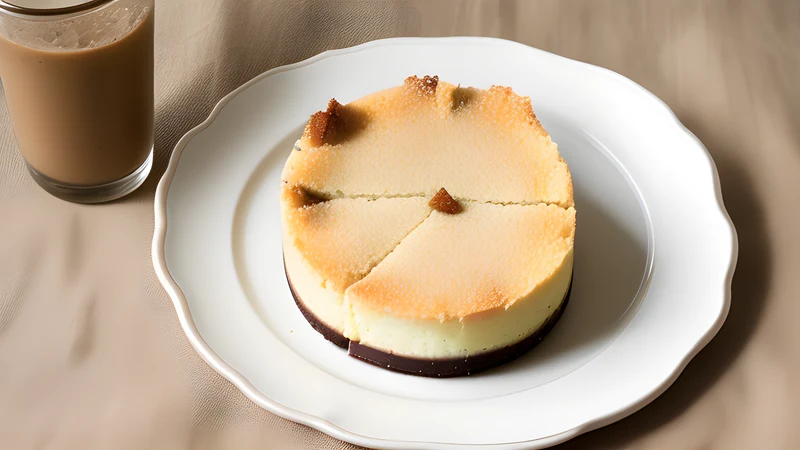
↓ Jump to recipeA fiadone has no base. That is the first thing to understand about it, and the thing people find hardest to accept. There is no biscuit crumb, no pastry case, no ring of digestives held together with melted butter. You butter a tin, you pour in a batter that is essentially fresh cheese and eggs, and it bakes into something that sits somewhere between a cheesecake and a baked custard, cracked on top like dried mud, sunk in the middle, faintly boozy, and tasting overwhelmingly of lemon and sheep.
It is the best cheesecake in the Mediterranean and it has about five ingredients.
Fiadone: The Brocciu Cheesecake of Corsica
Ingredients
- 600 g fresh brocciu, or full-fat ricotta
- 5 large eggs, at room temperature
- 150 g caster sugar
- Finely grated zest of 2 unwaxed lemons
- 2 tbsp eau-de-vie, grappa or good brandy
- 1 pinch fine sea salt
- 10 g unsalted butter, for the tin
Method
- If using ricotta, tip it into a sieve lined with muslin set over a bowl and leave to drain in the fridge for at least 4 hours, ideally overnight. Discard the whey. Fresh brocciu needs no draining.
- Heat the oven to 180C fan. Butter a 23 cm round tin generously, including the sides. Do not line it with paper.
- Put the buttered tin into the oven for 4 minutes so the butter browns against the metal. Take it out, swirl it to coat the sides, and let it set while you mix the batter.
- Push the drained cheese through a sieve into a large bowl with the back of a ladle. This takes 3-4 minutes and removes every lump.
- Add the sugar, lemon zest, eau-de-vie and salt. Beat with a wooden spoon for 1 minute until smooth and glossy.
- Beat in the eggs one at a time, mixing fully between each. The batter will look alarmingly loose - it is meant to.
- Pour into the tin and bake for 40-45 minutes, until the top is deep golden brown and cracked and the centre wobbles as one piece when you shake the tin.
- Turn the oven off, open the door a hand's width and leave the fiadone inside for 15 minutes.
- Cool completely in the tin at room temperature, at least 3 hours. It will sink in the middle. Serve at room temperature, cut into wedges, straight from the tin.
Brocciu, and why Corsicans get emotional about it
Fiadone exists because brocciu exists. Brocciu (brocciu corsu, AOP since 1998) is a whey cheese — the Corsican cousin of ricotta, made by reheating the whey left over from sheep’s or goat’s cheese production and adding fresh milk to it, then skimming off the curds that rise. Fernand Braudel called it the only cheese made from what everyone else throws away, which is roughly right.
The season is the thing. Brocciu is made between November and June, following the ewes’ lactation, and it is illegal to sell it outside that window under the AOP rules. Corsicans eat it fresh, within a couple of days, often still warm and still weeping whey, sometimes with a spoonful of sugar and a splash of eau-de-vie for breakfast. What does not get eaten fresh gets salted and aged into brocciu passu, or turned into fiadone.
So fiadone keeps a real season, which most cheesecakes have long since abandoned. It appears at Easter, when the ewes are in full milk and the cheese is at its best, and it is on every table in the island from March to May. There is a savoury version of the same batter baked in a pastry case, and an omelette au brocciu et à la menthe which is one of the great simple dishes anywhere. But fiadone is the one people leave the island and miss.
The name itself carries the method. Brocciu comes from the Corsican brocca, meaning a ladle or a jug — the tool used to skim the curds off the reheated whey. Whey cheeses like this one exist wherever people made hard cheese and refused to waste the by-product: Italian ricotta, Greek mizithra, Norwegian brunost, Romanian urdă. What distinguishes brocciu is the addition of fresh whole milk to the whey before heating, which raises the fat and gives it a richness plain ricotta never reaches. Ask a Corsican shepherd and they will tell you it also depends on the maquis — the scrub of myrtle, juniper and cistus the ewes graze — and having eaten it there in spring, I am not going to argue.
You will not find fresh brocciu outside Corsica unless you are lucky and it is April. Full-fat ricotta is the honest substitute, and this recipe is written for it, with one non-negotiable extra step.
Drain the ricotta, always
Supermarket ricotta is wet. It is packed in its own whey and it will happily hold 15-20% more water than brocciu ever does. Pour that straight into a fiadone batter and you get a pale, weeping, curdled slab that never sets — the water dilutes the egg proteins past the point where they can build a network, and what does not set simply leaks out as the thing cools.
So: sieve, muslin, bowl, fridge, four hours minimum. Overnight is better. You will be surprised how much whey comes out — often 100 ml or more from 600 g. Throw it away, or keep it for bread dough.
Then push the drained cheese through a sieve. This is the step everyone skips and it is what separates a fiadone with the texture of set cream from one with the texture of scrambled egg. Ricotta curds are stubborn little pebbles; whisking does not break them down, it just bounces them around the bowl. Pushing them through a fine sieve with the back of a ladle shears them properly. It takes four minutes and it is the difference between a good fiadone and an excellent one.
The twist: brown the butter in the tin
The version I make now uses one thing the Corsican original does not, and it happens before the batter is mixed. Butter the tin, then put it in the oven for four minutes while it comes up to temperature, so the butter browns against the metal. Take it out, swirl it, let it set, then pour the batter in.
What you get is a thin nutty film on the underside and the sides of the finished cake — a substitute for the base that fiadone deliberately lacks, delivering the toasted note a biscuit crumb would give without adding a millimetre of biscuit. It also releases better. I stole the idea from the way Basque bakers treat their tins, and it has stuck.
Do not line the tin with paper. A fiadone needs to grip the sides as it rises, and paper lets it slide back down.
Use metal rather than ceramic or glass. A fiadone wants fast, aggressive heat from below to set the base before the whole thing gets hot, and metal conducts it. A ceramic dish insulates, the batter heats slowly and evenly, and you end up with something closer to a baked custard throughout — pleasant, but a different dessert. Light-coloured aluminium is ideal; a dark non-stick tin browns the outside before the middle sets.
The bake, the crack and the sink
Bake it hot — 180C fan — and let it go properly dark on top. A pale fiadone is an undercooked fiadone. The deep brown crust does real work: it supplies the only textural contrast in the whole dessert, and its Maillard flavours balance the lemon.
It will crack. Every fiadone cracks, and Corsican bakers would think you had done something wrong if yours did not. The batter is loose and egg-heavy, it rises fast in the heat as the water in it turns to steam, and the surface sets before the middle finishes expanding, so it splits. Then it sinks as it cools and the steam condenses. A fiadone that comes out of the oven domed and smooth and stays that way has too much starch in it, which means someone added flour.
The wobble test is the only reliable doneness check. Shake the tin gently at 40 minutes: the middle should move as a single mass, like a set jelly, rather than rippling like liquid. If it ripples, give it five more minutes. If you can push a knife in and it comes out clean, you have gone too far and the texture will be rubbery — this is a custard, and custards are done before a skewer comes out clean.
The 15 minutes in the turned-off oven with the door ajar is a graduated cool-down. Egg proteins that are shocked by cold air contract hard, and hard contraction squeezes water out — the same reason a rushed crème caramel weeps. Fifteen minutes of gentle descent stops that.
Then leave it alone for three hours. A warm fiadone is a soupy fiadone. It sets on cooling and it needs the whole time.
Getting the eggs in
Five eggs into 600 g of cheese is a high ratio, and the eggs do all the structural work in a batter with no flour, no cornflour and no cream. That makes how they go in worth some care.
One at a time, fully incorporated before the next. If you dump all five in together, the batter breaks into a slack, watery suspension with lumps of cheese in it, and no amount of subsequent beating rebuilds it — you have diluted the cheese past the point where it can hold anything in emulsion. Added singly, each egg’s water is absorbed by the cheese proteins before the next arrives.
Room temperature, as noted. Cold eggs seize the fat in the cheese and give you a grainy batter.
Beat with a wooden spoon rather than a whisk or a mixer. Air is the enemy here. A whisked fiadone batter rises like a soufflé, cracks open like a canyon and collapses into something with a dry, foamy crumb. You want it dense, and the way to keep it dense is to stir rather than aerate.
The batter will look far too loose to set — closer to pancake batter than cheesecake mix. That is correct and it is the fault of the egg-to-cheese ratio. Trust the oven.
Eating it, keeping it, changing it
Room temperature, in wedges, out of the tin with a palette knife. Corsicans do not serve it with cream, coulis or anything else, and they are right — there is nothing here that needs help.
The eau-de-vie. Traditionally this is acquavita, the Corsican grape spirit, but grappa, marc or a decent brandy all work. Some households use myrtle liqueur, which is darker and more resinous and very good. Leave it out if you must; the fiadone will be flatter but still fine.
The zest. Two lemons sounds like a lot. It is not. The cheese is mild and sweet and the zest is the only thing standing between it and blandness. Corsican lemons are more aromatic than most; if yours are supermarket-standard, add the zest of a third.
Storage. Three days in the fridge, covered, but bring it back to room temperature for an hour before eating or the texture is claggy. It does not freeze — the water crystallises and the set breaks on thawing.
Make-ahead. The batter can be mixed and left covered in the fridge for up to 12 hours before baking, which is useful for Easter lunch. Stir it once before pouring; the cheese settles.
The savoury turn. Drop the sugar to 20 g, drop the eau-de-vie, add 30 g of chopped mint and a good grind of black pepper, and bake the same batter in a blind-baked shortcrust case. That is roughly the Corsican savoury fiadone and it eats like a very good quiche with a Mediterranean accent.
What can go wrong. Weeping means wet cheese or overbaking. A grainy texture means you skipped the sieve. A rubbery layer at the bottom means the eggs went in too fast and were not fully incorporated. A fiadone that stays liquid in the centre after 50 minutes almost always traces back to undrained ricotta, and there is no rescue for it once it is in the tin.
If you like this end of the cheesecake spectrum, the Basque burnt cheesecake takes the deliberate scorching much further with cream cheese, and the Hungarian túrós csusza shows what the same fresh-curd family does in savoury company. For lemon in a different register, the Italian-meringue lemon meringue pie is the maximalist opposite of this.
Related Content