Festival: The Sweet Jamaican Fried Dumpling
The cornmeal-and-flour torpedo that turns up wherever fried fish does
Contents
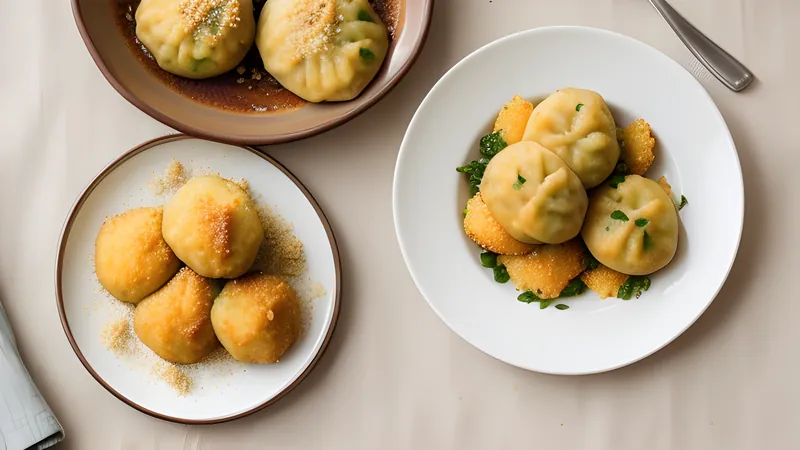
↓ Jump to recipeFestival is the dumpling that shows up wherever fried fish does on a Jamaican table, a slightly sweet, cornmeal-flecked torpedo of fried dough sold from the same stalls and beach shacks that sell escovitch fish and bammy, built specifically to be the sweet, starchy counterweight to something salty, spiced and often fried alongside it. It’s a different animal entirely from the plain, savoury boiled or fried dumplings that turn up in a pot of brown stew chicken — festival is sugar, vanilla and a little cinnamon worked into a cornmeal dough, then deep-fried until the outside is a shattering, deep gold crust around a dense, faintly sweet interior that’s closer to a cross between cornbread and doughnut than to bread proper.
Festival: The Sweet Jamaican Fried Dumpling
Ingredients
- 250g plain flour
- 100g fine cornmeal
- 2 tsp baking powder
- 1/2 tsp fine salt
- 60g caster sugar
- 1/2 tsp ground cinnamon
- 1/4 tsp ground nutmeg
- 1 tsp vanilla extract
- 200ml coconut milk (or whole milk), plus more if needed
- 1 tbsp softened butter
- Vegetable oil, for deep frying
Method
- Whisk the flour, cornmeal, baking powder, salt, sugar, cinnamon and nutmeg together in a large bowl.
- Stir the vanilla into the coconut milk, then add the butter to the dry ingredients and rub it in with your fingertips until it's fully distributed and no lumps remain.
- Pour in the coconut milk gradually, mixing with a fork or your hand as you go, stopping once the mixture comes together into a smooth, firm dough that's no longer sticky to the touch. Add a splash more liquid only if it still looks dry and won't bind; the dough should hold its shape without being tacky.
- Knead briefly, 1-2 minutes, just until smooth. Cover and rest for 15 minutes at room temperature.
- Divide the dough into 12 equal pieces. Roll each piece between your palms into a torpedo shape roughly 8cm long and 2.5cm thick, tapered at both ends.
- Heat about 5cm of oil in a heavy pot or deep fryer to 160C. The temperature matters more than usual here: too hot and the outside burns before the dense interior cooks through; too cool and the dumplings soak up oil and turn greasy.
- Fry the dumplings in batches of 3-4, turning them regularly, for 10-12 minutes per batch, until deep golden brown all over and cooked through to the centre. Test one by breaking it open if unsure.
- Lift out with a slotted spoon onto kitchen paper to drain briefly, then serve warm.
Where the name and the dish come from
The name is generally traced back to the food festivals and fairs that became a fixture of Jamaican community life in the mid-twentieth century, gatherings that brought street vendors together selling exactly this kind of fried, portable food alongside fish and other fried snacks; the dumpling itself, sold at these events, eventually took the festival’s own name rather than any more descriptive title. Whatever its exact origin, the dish settled firmly into beach food culture, particularly at spots like Hellshire Beach near Kingston, where rows of stalls fry festival and fish side by side over open flame, and the pairing of the two is now close to inseparable in Jamaican food culture: order fried fish almost anywhere on the island and festival is very likely to turn up on the same plate without needing to be asked for.
The cornmeal in the dough is doing real work beyond flavour and texture. Jamaican cooking leans on cornmeal across a surprising range of dishes, from cornmeal porridge as a breakfast staple to turned cornmeal (similar to polenta) as a savoury side, and its presence in festival gives the dough a coarser, slightly grainy structure that plain flour alone can’t replicate, along with a faint sweetness of its own that works with rather than against the added sugar. The ratio of cornmeal to flour in a good festival dough sits well below half, usually closer to a quarter, because cornmeal alone has no gluten to speak of and a dough built mostly from it would crumble apart in the fryer rather than holding the smooth, elastic torpedo shape festival is known for. Plain flour supplies the structure; cornmeal supplies the character.
Festival’s closest relative on the wider Caribbean table is the Bahamian and Trinidadian johnny cake, another fried or baked cornmeal bread, though that version is generally savoury and shaped as a flatter round rather than a sweet, tapered finger, which says something about how far a shared base ingredient can travel across neighbouring food cultures and end up somewhere entirely different in the mouth.
The word “festival” itself likely inherits from the English fair and harvest-festival tradition brought over during colonial rule, where fried dough sold from stalls was a standard part of any country fair; Jamaica kept the word for the occasion and transferred it onto the specific dumpling most associated with those gatherings, a naming pattern that shows up elsewhere on the island too, most obviously in the bulla cake sold at wakes. By the 1960s and 1970s, as Jamaica’s beach culture grew into a fixture of both local life and the tourist economy, festival had migrated fully from fairground snack to the standard accompaniment for fried fish sold at any beach stall.
Getting the fry right
Festival’s whole appeal rests on a contrast that’s genuinely tricky to nail: a shatteringly crisp, deep-gold exterior wrapped around an interior that’s cooked all the way through but still moist and a little dense, never doughy or raw-tasting at the centre. That contrast depends almost entirely on oil temperature, and it’s worth taking the 160C figure seriously rather than eyeballing it, since festival dough is thicker and denser than most fried batters and needs a genuinely moderate, patient fry to cook through before the outside goes past golden into burnt.
Too hot an oil is the more common failure. Push past roughly 175C and the sugar in the dough caramelises and then scorches on the surface within a couple of minutes, while the dense centre is still raw and gummy, a problem no amount of extra frying time fixes because by then the outside is already too dark to cook further. Too cool an oil creates the opposite problem: below about 150C, the dough sits in the fat rather than searing immediately on contact, absorbing oil steadily as it slowly cooks through, leaving a greasy, heavy dumpling rather than a genuinely crisp one. A cheap sugar thermometer clipped to the side of the pot removes the guesswork entirely, and it’s worth the small investment if festival becomes a regular thing, since fried dough recipes generally live or die on getting that number right rather than on any subtlety in the ingredient list.
Shape matters too, more than it looks like it should. The traditional torpedo — tapered at both ends, thicker in the middle — isn’t just for looks; it means the thinner ends cook through slightly faster than the dense centre, which helps the whole piece finish closer to evenly done than a uniform cylinder or a flattened disc would, both of which tend to leave a stubbornly underdone core by the time the surface is properly browned.
What can go wrong
The most common failure is a raw, gummy centre inside a dumpling that looks perfectly done from the outside, and it almost always traces back to shaping them too thick or the oil running a touch too hot. If the torpedoes are noticeably fatter than about 2.5cm through the middle, drop the diameter slightly on the next batch rather than trying to fix it by extending the frying time, since a longer fry at the same heat just burns the crust before the centre catches up. A cracked or split dumpling, with dough bursting out through the crust partway through frying, usually means the dough was slightly too wet and expanded faster than the crust could set around it, or that the dumplings went into oil that wasn’t quite hot enough yet, giving the surface time to soften rather than seal immediately on contact. Check the temperature has actually recovered between batches; dropping four cold dumplings into the pot brings the oil down several degrees, and frying the next batch before it’s climbed back to 160C is the single most common reason a whole batch turns out patchy, with some pieces perfect and others pale and greasy.
The recipe
Makes 12 dumplings.
Ingredients
- 250g plain flour
- 100g fine cornmeal
- 2 tsp baking powder
- 1/2 tsp salt
- 60g caster sugar
- 1/2 tsp ground cinnamon
- 1/4 tsp ground nutmeg
- 1 tsp vanilla extract
- 200ml coconut milk (or whole milk)
- 1 tbsp softened butter
- Vegetable oil, for frying
Method
- Whisk the dry ingredients together.
- Rub in the butter until evenly distributed.
- Stir the vanilla into the coconut milk, then mix into the dry ingredients until a firm, smooth, non-sticky dough forms.
- Knead briefly, rest 15 minutes.
- Divide into 12 pieces and roll into tapered torpedo shapes, 8cm long.
- Heat oil to 160C. Fry in batches, turning regularly, 10-12 minutes per batch, until deep golden and cooked through.
- Drain on kitchen paper and serve warm.
Tips, substitutions and storage
Resist the urge to speed things up by raising the oil temperature; a slower fry at the right heat is the only reliable way to cook the dense centre without scorching the crust. If coconut milk isn’t to hand, whole milk works fine and gives a slightly less rich, more neutral result, still entirely recognisable as festival. The dough can be made a few hours ahead and kept covered in the fridge, though it firms up as it chills, so let it sit at room temperature for 15-20 minutes before shaping. Cooked festival is best eaten within an hour or two while the crust is still crisp; leftovers keep two days in an airtight container and reheat reasonably well in a hot oven for 8-10 minutes, though they’ll never quite recapture that first-fry crunch, and a microwave turns them soft and a little sad. The uncooked, shaped dumplings also freeze well laid out on a tray until solid and then bagged; fry them from frozen, adding two to three minutes to the cooking time and keeping the oil a touch closer to 155C so the outside doesn’t outpace the colder centre. Sugar is adjustable within reason: cut it to 40g for a version that leans closer to savoury and sits better against a very sweet side dish, or push it to 75g for a dessert-leaning festival served with a dusting of extra cinnamon sugar straight from the fryer. Self-raising flour can stand in for the plain flour and baking powder together, but drop the baking powder to 1 tsp if you do, since the two rising agents stacked at full strength give an overly open, almost bread-like crumb that loses festival’s characteristic density.
Serve festival exactly the way Jamaica does: alongside fried or escovitch fish, next to brown stew chicken as a sweet counterpoint to the peppery gravy, or with jerk chicken straight off the grill, where its sweetness does real work cutting through the scotch bonnet heat.
Variations
A pinch of grated fresh ginger in the dough is a common home addition that adds a gentle warmth without overpowering the vanilla and cinnamon already there. Some cooks swap a portion of the plain flour for self-raising and drop the baking powder slightly, though the version here, built on plain flour and a full measure of baking powder, gives more control over the final rise and is easier to get consistent from batch to batch. A few households add a beaten egg to enrich the dough further, which produces a slightly softer, more cake-like crumb at the centre, closer to a doughnut than the denser, more bread-like texture of the classic version. A spoonful of mashed ripe banana or pumpkin worked into the wet ingredients is another home variation, adding natural sweetness and a softer crumb, though the dough needs slightly less added liquid to compensate for the extra moisture, added a tablespoon at a time until it reaches the same firm, non-sticky consistency. Grated nutmeg on its own, pushed up to a scant half teaspoon in place of the smaller amount paired with cinnamon, gives a warmer, more Caribbean-forward spice profile that some cooks prefer to the more generic cinnamon-and-nutmeg combination. Where cassava flour or breadfruit flour is available, a small portion, no more than a fifth of the total flour weight, can replace some of the plain flour for a slightly denser, more rustic dumpling closer to the island’s older ground-provision cooking, though it needs a little extra coconut milk to bring the dough back together since both are more absorbent than wheat flour.
Whatever else changes, keep the dough properly firm rather than batter-like; a wet dough spreads and flattens in hot oil instead of holding its torpedo shape, and shape is a large part of what makes festival instantly recognisable on a plate next to rice and peas or a whole fried snapper. Made well, it should crackle audibly when broken open, with steam escaping from a soft, faintly sweet crumb underneath, and that contrast between the two textures in a single bite is really the entire point of the dish.
Related Content