Feijoada Completa: The Weekend Project
Black beans and many cuts of pork, the pot that anchors a Brazilian Saturday
Contents
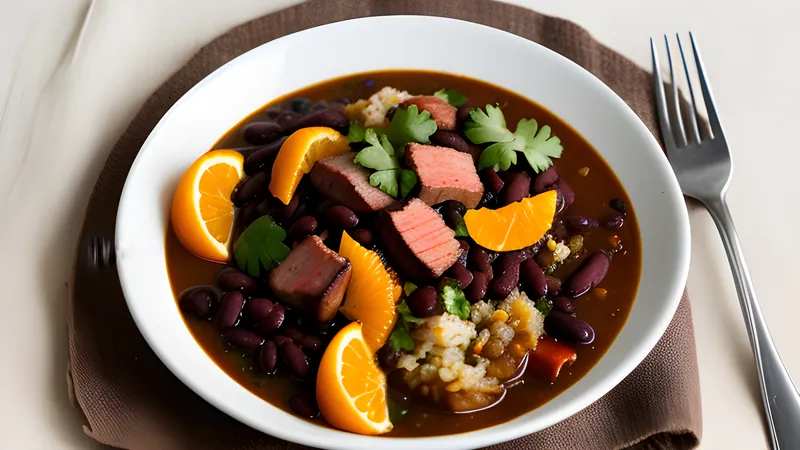
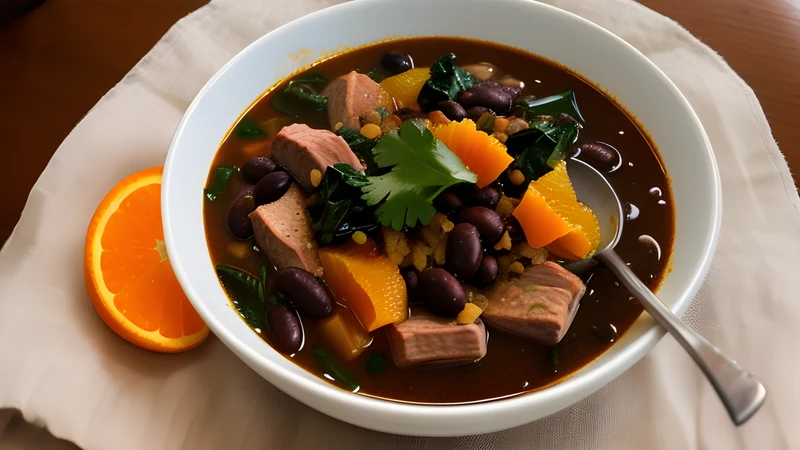
↓ Jump to recipeFeijoada is a whole afternoon, and that is the point of it. You are not making dinner so much as building a reason for people to come over, sit around, and stay long past the meal. The pot does most of the work while you drift in and out of the kitchen, and what comes out at the end is a deep, dark, savoury stew of black beans and half a butcher’s counter of pork, ladled over rice with a bright fringe of orange and greens to cut the richness. It is Brazil’s most famous dish for good reason.
I will not pretend it is quick or light. It is a Saturday project, best cooked for a crowd, and its rewards scale with the number of people around the table. What I can promise is that the technique is forgiving. Beans want time and patience rather than skill, and once everything is in the pot, the stew looks after itself.
Feijoada Completa: The Weekend Project
Ingredients
- 500 g dried black turtle beans
- 300 g smoked pork ribs or a smoked ham hock
- 250 g smoked pork sausage (linguiça or a good chorizo/kielbasa)
- 250 g fresh pork belly, cut into 3 cm chunks
- 300 g pork shoulder, cut into 4 cm chunks
- 150 g streaky smoked bacon, cut into lardons
- 2 large onions, finely chopped
- 6 garlic cloves, minced
- 2 bay leaves
- 1 tsp ground cumin
- 2 tbsp neutral oil
- Salt and black pepper to taste
- To serve: cooked white rice, sautéed collard greens (couve), orange segments, farofa (toasted cassava flour), and a fresh chilli-and-lime hot sauce
Method
- Soak the black beans in plenty of cold water overnight, or for at least 6 hours. Drain.
- Put the drained beans in a large heavy pot with the smoked ribs or ham hock and bay leaves. Cover with 2 litres cold water. Bring to a boil, then reduce to a low simmer, partly covered, for 1 hour.
- Meanwhile, brown the pork shoulder and pork belly chunks in 1 tbsp oil in a frying pan over high heat, in batches, until deeply coloured. Add them to the bean pot.
- In the same pan, fry the bacon lardons until the fat renders, then add the onions and cook 8 minutes until soft. Add the garlic and cumin and cook 1 minute more. Scrape all of this, fat included, into the bean pot.
- Slice the sausage into thick coins, brown briefly, and add to the pot. Top up with hot water if needed to keep everything just covered.
- Simmer gently, partly covered, for a further 1.5 to 2 hours, stirring occasionally, until the beans are completely soft and the liquid has thickened to a dark, glossy gravy. Add water as needed so it stays saucy.
- Lift out the smoked ribs or hock, strip the meat from the bones, chop, and return it to the pot. Season with salt and plenty of black pepper. The salt goes in late because the smoked meats are already salty.
- Rest the pot 20 minutes off the heat. Serve over white rice with sautéed greens, fresh orange segments, farofa scattered over, and hot sauce alongside.
Where feijoada comes from
Feijoada as Brazil knows it — black beans with an assortment of pork — took shape in the nineteenth century, and its exact origins are genuinely contested. The romantic story, taught for generations, held that enslaved people created it from the offcuts their enslavers discarded: ears, tails, trotters, feet. Historians have pushed back hard on that tidy narrative. Bean-and-meat stews are ancient and pan-European, and the wealthy in Rio de Janeiro were eating lavish feijoadas full of prime cuts by the mid-1800s. The truth is layered: a European bean-stew tradition, African cooking knowledge and ingredients, and the specific abundance of black beans and pork in colonial Brazil all meeting in one pot.
What is certain is that it became the national dish, cooked most classically on Saturdays and Wednesdays, and that the completa — the full version with all its accompaniments — is a communal event. The stew itself is only the centre of a much larger plate. Get the sides right and a modest pot of beans becomes a feast.
Feijoada sits at the heart of the Brazilian table alongside the coast’s great fish stew, moqueca baiana with dendê and coconut, and the snacks you might put out while it finishes, like pão de queijo from tapioca flour or a plate of coxinha, the teardrop chicken croquette.
The meats
A proper feijoada is defined by its variety of pork, and the interplay of smoked and fresh is what gives the finished stew its complexity. You want at least three or four different cuts. In Brazil the traditional roll-call includes carne seca (salted dried beef), paio and linguiça sausages, and cuts like ribs, trotters and ears. Outside Brazil, work with what your butcher and shops actually stock.
My reliable line-up: a smoked element for depth (smoked ribs or a ham hock, which also seasons the bean liquid as it simmers), a smoked sausage for spice and fat (linguiça if you can find it, otherwise a good coarse chorizo or Polish kielbasa), fresh pork belly for melting richness, pork shoulder for meaty chunks that hold their shape, and smoked bacon to start the flavour base. If you can get carne seca, soak it well to remove salt and add it in — it is deeply traditional and gives that characteristic funk. Trotters and pig’s ears add body and gelatine for the adventurous; skip them without guilt if they are not your thing.
Beans, time and the dark gravy
Black turtle beans are the only correct bean here. Soak them overnight — properly, six hours minimum — which shortens the cooking time and gives a more even texture. There is an old worry that salt in the cooking water toughens beans; the bigger truth is that acidic ingredients and hard water slow softening, so I keep the early simmer plain and season only near the end, which also suits the salty smoked meats.
The magic is in the long, low simmer. You are after beans that have collapsed at the edges while staying whole in the middle, releasing their starch to thicken the liquid into a dark, glossy gravy that clings to a spoon. That takes two and a half to three hours of gentle bubbling. Do not rush it with a hard boil, which breaks the beans up into mush and can leave the meat tough. Stir occasionally, keep the level topped up with hot water so nothing catches, and let time do its work.
A cook’s trick for extra body: near the end, scoop out a ladleful of beans, mash them, and stir them back in. It thickens the gravy without any flour and deepens the colour.
Building flavour before the beans go soft
The step that separates a memorable feijoada from a merely brown one is browning the fresh meats and rendering the aromatics before they meet the beans. When you sear the pork shoulder and belly in a hot pan until they take on a deep, mahogany crust, you are laying down the savoury, roasted notes that give the finished gravy its depth. Do it in batches so the pan stays hot; crowd the pan and the meat steams grey instead. Then the bacon, onions and garlic go into the same pan, picking up all the browned fond stuck to the base, and every bit of that is scraped into the pot. Nothing rinsed down the sink.
The smoked meats work differently. The ribs or ham hock go in early, with the beans, so their smoke and salt leach slowly into the cooking liquid over the full simmer — this is what perfumes the whole pot. The sausage goes in later, browned first, because a coarse smoked sausage left to boil for three hours surrenders all its texture and turns to a soft, greasy log. Timed right, it holds its bite and gives you a proper coin of spiced meat in the bowl.
Judging when it is done
Feijoada is ready when three things have happened at once: the beans are completely tender and beginning to break down at the edges, the pork chunks pull apart under gentle pressure, and the liquid has reduced to a dark, glossy gravy that coats the back of a spoon rather than running off it like soup. If the beans are soft but the liquid is still thin, simmer uncovered for another twenty minutes to drive off water, or mash a ladleful of beans and stir them back to thicken. If the liquid has thickened but the beans still have a chalky centre, they need more time and a little more hot water — under-cooked beans will not improve on standing.
Taste for seasoning only at this final stage. The smoked meats have been quietly salting the pot all along, so it is easy to over-salt if you season early. Black pepper, on the other hand, wants a generous hand at the end. A rest of twenty minutes off the heat lets everything settle and the gravy tighten before you serve.
The completa: everything on the plate
The stew alone is heavy and dark. The accompaniments are what make feijoada completa a balanced, joyful meal, and they are not optional extras.
- White rice — plain, fluffy, long-grain, the neutral bed for the beans.
- Couve — collard greens (or spring greens/kale) sliced into fine ribbons and flashed in a hot pan with garlic and a little oil for two minutes, so they stay bright and just tender. The fresh, slightly bitter greens cut straight through the richness.
- Orange — peeled and segmented, served cold. The acidity and sweetness reset your palate between mouthfuls, and it is said to aid digestion of all that pork. Do not skip it; it genuinely transforms the plate.
- Farofa — toasted cassava (manioc) flour, often fried with a little butter, onion and bacon until golden and sandy. Scattered over the beans, it adds a nutty crunch and soaks up the gravy. Bags of cassava flour are sold in Latin American and many African shops.
- Hot sauce — a sharp fresh sauce of chopped chilli, onion, lime and a little of the bean liquor, spooned on to taste.
Serving, timing and storage
Feijoada is better the next day, so if anything cook it ahead. The flavours deepen overnight and the gravy sets and enriches. Reheat gently, loosening with a splash of water. This makes it a superb dish for entertaining: cook it Friday, warm it Saturday, and spend the day with your guests rather than the stove.
To serve, ladle the beans and meat over rice, pile the greens alongside, tuck in the orange segments, scatter farofa, and pass the hot sauce. A cold beer or a caipirinha is the traditional partner.
- Slow cooker. After browning the meats and building the onion base, everything can go into a slow cooker on low for 8 hours. Add the sausage in the last 2 hours so it does not disintegrate.
- Lighter version. Use leaner cuts — smoked ham, a little sausage, and pork loin — for a less fatty pot. It loses some richness but is still very good.
- Make it stretch. Feijoada scales beautifully. Double the beans and add more meat; a big pot feeds a dozen and reheats for days.
- Freezing. The stew freezes excellently for up to three months. Cool, portion, and freeze without the sides, which you make fresh.
Give it the afternoon, invite more people than you think you should, and let the pot pull the day together. That slow, patient simmer is the whole pleasure of feijoada, and the table it builds is the reward.
Related Content