Farofa: The Toasted Cassava Meal at Every Brazilian Table
Golden, buttery toasted cassava meal, crunchy against Brazil's richest stews and never quite the same twice between households
Contents
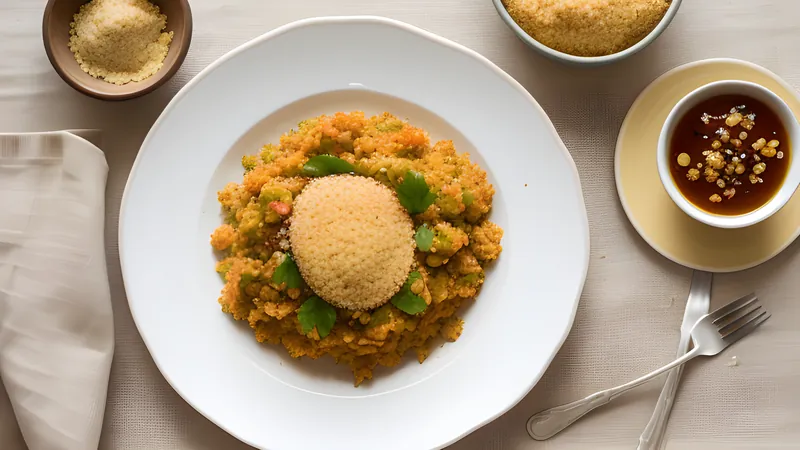
↓ Jump to recipeFarofa is toasted cassava meal, crisped in fat with onion, garlic and whatever else a given household adds, and it is the single ingredient most likely to appear on a Brazilian table regardless of what else is being served. It isn’t a dish in the sense of being eaten alone; it’s a texture, added at the table in whatever quantity the eater wants, and its job is to bring crunch and savoury contrast to a national cuisine built heavily around soft, slow-cooked stews.
Farofa: The Toasted Cassava Meal at Every Brazilian Table
Ingredients
- 100g bacon lardons or diced smoked bacon
- 50g unsalted butter
- 1 medium onion, finely diced
- 3 garlic cloves, finely chopped
- 250g farinha de mandioca (coarse cassava/manioc meal)
- 1/2 tsp fine salt, to taste
- 4 spring onions, sliced, plus more to finish
- Small handful chopped parsley, to finish
Method
- Fry the bacon lardons in a dry, wide frying pan over medium heat for 6-8 minutes, until crisp and their fat has rendered out.
- Add the butter to the pan and let it melt into the bacon fat.
- Add the onion and cook for 5 minutes, until soft and starting to turn golden at the edges.
- Stir in the garlic and cook for 1 minute, until fragrant.
- Reduce the heat to medium-low and add the farinha de mandioca a handful at a time, stirring constantly to coat every grain in the fat.
- Continue toasting, stirring almost constantly, for 8-10 minutes, until the meal turns a deep golden colour throughout and smells distinctly toasted and nutty.
- Season with the salt, taking into account the bacon's saltiness, and taste before adding more.
- Remove from the heat and stir through the sliced spring onions and parsley.
- Tip into a bowl and let it cool for a few minutes; it crisps further as it cools.
- Serve warm or at room temperature, scattered generously over rice, beans and stews.
Farinha de mandioca, the meal itself
Farinha de mandioca is cassava root, peeled, grated, pressed to remove excess liquid and its natural cyanogenic compounds, and then roasted or toasted in large batches until it dries into a coarse, granular meal. This process, developed by Indigenous Tupi-Guarani communities across Brazil long before European contact, turns a root that’s toxic and unpalatable raw into a stable, long-keeping staple, and it remains one of the most important foods in Brazil today, particularly across the poorer rural North and Northeast where it has historically been more reliably available and affordable than wheat flour or rice. Sold dry in bags at any Brazilian grocer, it comes in fine and coarse grinds and in raw (crua) or already-toasted (torrada) forms; this recipe calls for the raw, untoasted meal, since the whole point of making farofa yourself is controlling that toasting stage in fat rather than eating the plain roasted meal dry, which is a more austere, and much less interesting, everyday staple in its own right.
Buttered, fried farofa like the version here is specifically farofa de manteiga, one of dozens of named regional variations; farofa can also be made with palm oil for a Bahian-style version closer in spirit to that region’s dendê-based cooking, with dried shrimp and coconut for a coastal variation, or with bananas, raisins and nuts for a sweeter, more elaborate version often served at Christmas. What all versions share is the base technique: dry cassava meal, added gradually to hot fat and aromatics, and stirred constantly until it’s evenly coated and deep golden rather than pale and raw-tasting.
Why farofa exists, and what it’s actually doing on the plate
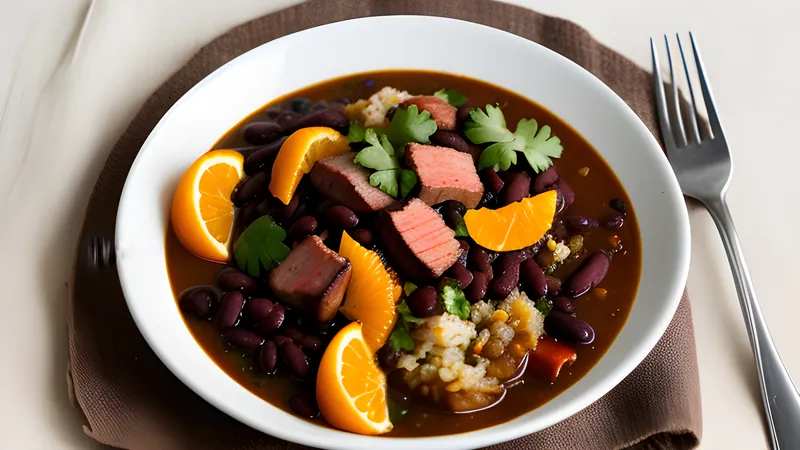
Brazil’s classic stews, above all feijoada, the black bean and pork stew that anchors a full Brazilian weekend spread, are soft-textured through and through: beans cooked down for hours, meat falling apart, rice steamed to a fine, separate grain but still soft against the tongue. Farofa exists specifically to break that softness up, added at the table in a spoonful over rice and beans so that every mouthful carries some crunch against the stew’s tenderness. It’s the textural equivalent of a crumb topping on a pie, present in nearly every substantial meal not because it’s the most interesting component on the plate, but because Brazilian cooking has, over centuries, decided that a purely soft meal is an unfinished one.
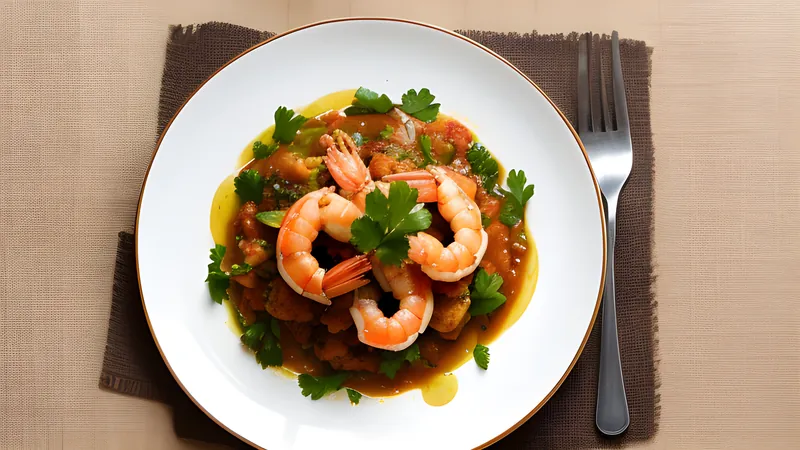
The same logic extends to Bahian dendê-based dishes: vatapá and bobó de camarão, both thick, smooth, entirely soft-textured purées and braises in their own right, are traditionally served with a scattering of farofa on the side for exactly the same reason feijoada is: contrast, not flavour matching. A good farofa doesn’t need to taste remarkable on its own; it needs to be crisp enough to survive contact with a wet stew for a minute or two without turning soggy, and toasted deeply enough that its flavour reads as more than plain starch.
Getting the toasting stage right
The single technical point that separates a good farofa from a mediocre one is patience during the toasting stage. Cassava meal added to hot fat looks done within a minute or two, pale gold and coated evenly, but it needs a genuine 8-10 minutes of near-constant stirring over gentle heat to develop the deep, nutty toasted flavour that makes farofa worth eating rather than just an oily crumb. Stop too early and it tastes starchy and a little raw underneath the fat; the colour should progress visibly through the cooking time, from pale cream to a deep, even gold, roughly the shade of a well-baked shortbread, and the smell should shift from a flat, dusty note to something closer to toasted nuts.
Stir constantly, or as close to constantly as you can manage, because cassava meal at the bottom of the pan closest to direct heat toasts much faster than the meal on top, and an unstirred pan gives you a mix of burnt and underdone grains in the same batch rather than an even result. A wide pan helps considerably here, since it keeps the meal in a shallower, more evenly heated layer than a narrow saucepan would.
Reading the pan when it goes wrong
A farofa that tastes bitter rather than nutty has gone past golden into scorched, usually because the heat was too high rather than because it was left on too long; pull it off immediately, and next time drop to a properly gentle heat and accept that the process takes the full 8-10 minutes rather than trying to rush it. A batch that stays pale and starchy-tasting no matter how long it cooks is more often a fat problem than a time problem: if the meal was added to the pan before the butter and bacon fat had properly melted and combined, some of it never gets coated and toasts unevenly, so make sure the fat is fully liquid and coating the pan before the first handful goes in. Clumping, where the meal forms damp little balls rather than a loose, even crumb, means either too much liquid ran into the pan from very fatty bacon or the onion wasn’t cooked down enough before the meal went in; break clumps up with the back of a spoon as you stir, and lower the heat slightly so excess moisture has time to cook off rather than steaming the meal into lumps.
Variations and what to add
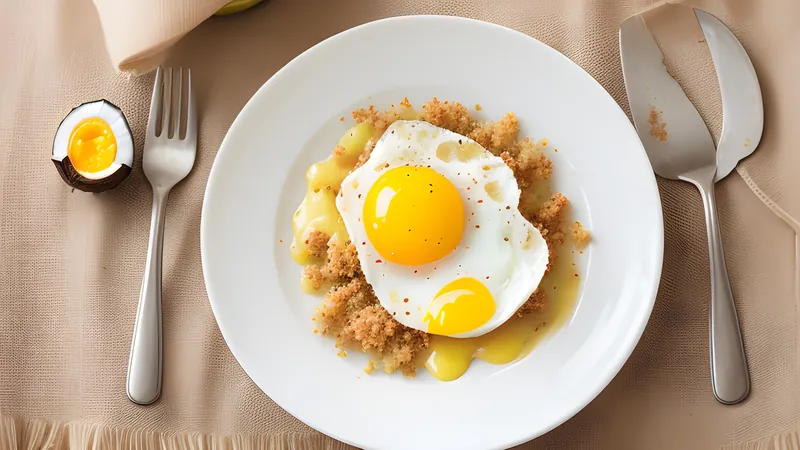
Bacon and butter, as in this version, is one of the most common everyday combinations, but plenty of households skip the bacon entirely and toast the meal in butter or a neutral oil with just onion and garlic, particularly if farofa is being served alongside a meal that’s already rich in pork elsewhere, as feijoada usually is. A hard-boiled egg, chopped and stirred through at the end, is a common addition in some regions, adding a soft contrast against the crunch. Whatever additions you choose, keep the ratio of fat to meal roughly consistent with what’s given here; too little fat and the meal never toasts evenly, staying pale and dusty in patches; too much and it turns heavy and greasy rather than light and crumbly.
Farofa keeps well once cooked, stored in an airtight container at room temperature for two to three days, though it loses some of its crispness over time; a brief re-toast in a dry pan for a couple of minutes brings most of that crunch back before serving. It doesn’t freeze well, since the toasted meal turns soft and slightly gluey on thawing, so make it in a quantity you’ll realistically get through within a few days rather than a large batch for the freezer. Store it uncovered for the first hour or so as it cools, rather than sealing it straight into a container while still warm, since trapped steam is what softens the crunch fastest; once fully cooled, an airtight container keeps the moisture out and the texture holding for longer.
A note on farinha varieties and where to buy it
Farinha de mandioca comes in both fine and coarse grinds, and for farofa you specifically want the coarse variety, sold as farinha grossa or simply labelled “coarse”; the fine grind toasts too quickly and unevenly, turning powdery rather than developing the small, distinct granules that give good farofa its texture against the teeth. It’s stocked in any Brazilian or Portuguese grocer, and increasingly in the international aisle of larger supermarkets, usually in plain paper or plastic bags rather than branded boxes. Buy in modest quantities rather than the largest bag available unless you cook Brazilian food often; like most coarse grain products, it can turn slightly rancid if it sits too long in a warm kitchen cupboard.
Some cooks toast the raw meal completely dry first, in a pan with no fat at all, before adding it to the aromatics and butter separately; this two-stage method gives a marginally more even toast if you have the patience for it, though the single-stage method in this recipe, toasting directly in the fat and aromatics, is what most home cooks actually do and produces a very good result with considerably less fuss. If you do want to try the dry-toast method, dry-fry the meal alone over low heat for 5 minutes until it just starts to colour, then set it aside while you cook the bacon, onion and garlic separately, and combine everything together for a final minute or two of stirring before serving.
Farofa beyond the plain buttered version
A handful of raisins and chopped banana stirred through towards the end, a Christmas-table variation in some households, adds a sweetness that plays surprisingly well against a salty, fatty main like a roast turkey or feijoada, and it’s worth trying at least once even if it sounds like an odd pairing on paper. Toasted cashews or Brazil nuts, roughly chopped and folded in at the very end so they keep their own crunch rather than softening in the fat, are another common regional addition, particularly in states where those nuts are grown commercially. If you’re avoiding pork entirely, a good vegetarian version replaces the bacon with a larger quantity of butter or a neutral oil and leans harder on garlic and a pinch of smoked paprika for savoury depth, losing some complexity but still delivering the crunch that’s really the point of the dish.
Whichever method you use, taste the fat you’re cooking the aromatics in before you commit the full quantity of meal to the pan; bacon varies enormously in saltiness between brands and countries, and it’s much easier to adjust the salt of a small test spoonful of onion and bacon than to try to fix an entire pan of finished farofa that’s turned out too salty because you didn’t account for the cured meat’s contribution from the start.
Related Content