Farinata: The Chickpea Flatbread of Genoa
Four ingredients, twelve hours of waiting, and the hottest oven you own
Contents
↓ Jump to recipeFarinata is four ingredients and I have watched people fail at it repeatedly, myself included. Chickpea flour, water, olive oil, salt. There is nowhere to hide.
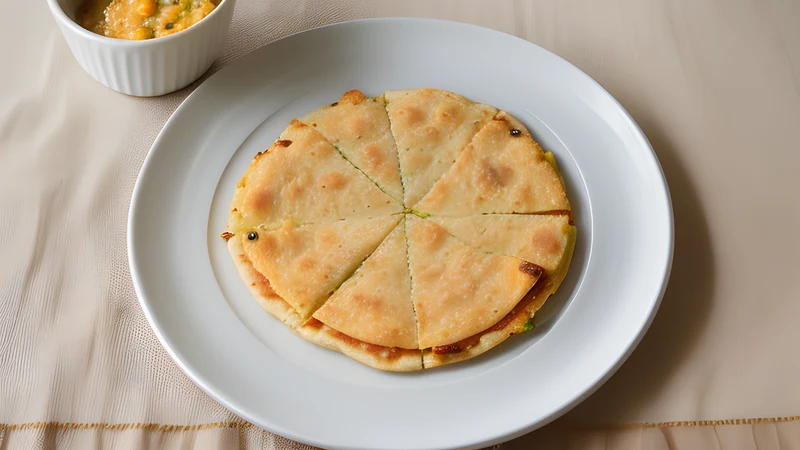
What you are after is a disc about 5 mm thick with two distinct textures in it: edges and blisters that are crisp to the point of brittleness, and a centre that is soft, dense and almost custardy, like a very savoury baked flan. Hot from the pan, with cracked pepper on top, it is one of the great things to eat standing up in a street, which is precisely where Genoa sells it.
The failures are all variations on one theme. Too thick, and it never crisps. Oven not hot enough, and it steams into a rubbery pancake. Batter not rested, and it tastes bitter and raw. Get all three right and it is very hard to make a bad one.
Farinata: The Chickpea Flatbread of Genoa
Ingredients
- 300 g chickpea flour (farina di ceci)
- 900 ml water, at room temperature
- 10 g fine sea salt
- 80 ml extra virgin olive oil, plus 40 ml for the pan
- 1 sprig rosemary, leaves picked (optional)
- 2 tsp coarsely cracked black pepper, to finish
- 1 pinch flaky sea salt, to finish
Method
- Sift the chickpea flour into a large bowl. Add about a third of the water and whisk to a smooth, lump-free paste before adding the rest in a steady stream, whisking continuously.
- Cover the bowl with a cloth and leave at room temperature for at least 8 hours, ideally 12. Do not refrigerate.
- Skim off and discard the pale foam that has collected on the surface. There will be a lot of it. Whisk the salt and the 80 ml of olive oil into the batter until it emulsifies.
- Put a 32 cm black steel or cast-iron pan into the oven and heat to the highest temperature your oven reaches, at least 250C, for 30 minutes. Use the top element or the grill if you have one.
- Take the hot pan out and pour in the 40 ml of olive oil - it should smoke instantly. Swirl to coat.
- Whisk the batter once more and pour it into the pan to a depth of no more than 5 mm. Scatter over the rosemary if using. Tilt to spread evenly.
- Bake near the top of the oven for 14-18 minutes, until the surface is blistered and dark gold in patches, the edges have shrunk and gone crisp, and the centre is set.
- Slide onto a board, crack over the black pepper and flaky salt, and cut into rough wedges with a knife. Eat immediately, with your hands.
The Ligurian street loaf
Farinata is sold in Genoa from sciamadde — the word is dialect for “flame”, and they are cave-like shops with wood ovens at the back, most of them older than anyone’s grandmother. The farinata comes out in copper pans a metre across, gets cut with a blade, weighed, and handed over on greaseproof paper. It costs almost nothing. Genoese eat it for breakfast, in a focaccia sandwich at lunch, and standing in doorways in between.
The dish tracks the chickpea’s route through the Mediterranean and it has as many names as ports. Nice calls it socca and makes it thicker; Tuscany calls it cecina or torta di ceci; Sardinia has fainè, brought there by Genoese sailors; Gibraltar has calentita; Algeria and Uruguay both have versions. Where Genoa traded, the chickpea pancake landed.
The origin story is a good one and probably false. It has the Genoese fleet returning from the Battle of Meloria in 1284, having beaten Pisa, caught in a storm that soaks the ship’s stores; barrels of chickpea flour and olive oil break loose and mix with seawater; the resulting sludge is left in the sun on deck, sets into a cake, and the sailors eat it out of hunger and find it good. The Genoese are then supposed to have named it l’oro di Pisa — Pisan gold — as an insult, which is where the Tuscan torta di ceci and its alternative name are alleged to come from. The chronology is shaky and the pun is too perfect, but you will be told this story in every sciamadda in the city.
What is documented is that Genoa took it seriously enough to legislate. In 1447 the Republic passed a decree regulating farinata production, specifying the ingredients, and prosecuting adulterers who cut the chickpea flour with cheaper wheat. A city with a five-hundred-year-old law about your snack is a city that has opinions.
The rest, which is the whole thing
Eight hours minimum. Twelve is better. This is the step people skip and it is the step that matters most.
Chickpea flour is milled from a legume, and legume flours carry things that wheat does not: raffinose and stachyose (the oligosaccharides that make chickpeas famously windy), saponins, and a set of bitter, beany volatile compounds. During a long rest at room temperature, several things happen at once. The starch granules hydrate fully — chickpea starch absorbs water far more slowly than wheat starch, and an unrested batter has dry cores in it that give the finished farinata a chalky, powdery texture. Wild yeasts and bacteria from the flour and the air begin a mild spontaneous fermentation, which consumes some of those oligosaccharides and generates a faint sourness that lifts the whole thing. And the saponins, which are natural surfactants, get driven to the surface as a thick grey-white foam.
Skim that foam and throw it away. It is bitter, it is soapy, and it is the single biggest cause of farinata that tastes wrong. There is often a centimetre of it. Skim it all.
Leave it on the counter. The fridge stops the fermentation and slows the hydration, and twelve hours in there achieves about a third of what twelve hours on the counter does. In a warm kitchen in summer, 8 hours is plenty; in a cold flat in February, go to 14.
The ratio is 1:3 flour to water by weight, which is far looser than looks right — the batter is the consistency of single cream. Trust it. Thick batter makes thick farinata makes rubber.
The twist: emulsify the oil in late
Standard practice is to whisk the oil in at the start with everything else. I add it after the rest, with the salt, immediately before baking, and it makes a noticeable difference.
Salt slows fermentation, so keeping it out for twelve hours lets the batter do more of its work. Oil added at the start sits on top for twelve hours and oxidises gently at the air interface, and it also traps the saponin foam underneath it so you cannot skim cleanly. Added at the end and whisked hard into a rested, fully hydrated batter, the oil emulsifies properly into the starch suspension and stays there through the bake, which is what gives the centre its custardy set instead of a greasy layer at the bottom.
It is a small change and it costs nothing. It just means one more minute of whisking before the pan goes in.
Heat, and the pan
Your oven is not hot enough. Nobody’s is. Genoese wood ovens run at 400C and a domestic oven tops out around 250-280C, so every advantage has to be squeezed.
Preheat the pan in the oven for a full 30 minutes. Black steel or cast iron — the thermal mass is what sears the underside on contact, and a preheated pan is worth 50C of oven temperature. A thin aluminium tray heats and cools too fast and gives a pale, sad bottom. Copper, if you have a copper pan, is what Genoa actually uses.
Get the pan as high in the oven as it will go, close to the top element. Turn the grill on for the last three minutes if the surface is not blistering. Convection helps.
The oil in the pan should smoke when it hits. That instant contact between 5 mm of cold batter and a screaming hot oiled surface is what sets the base before the batter can spread and thin, and it is what gives the crisp underside.
5 mm maximum, and that depth decides how many farinate you get. A 300 g batch makes about 1.2 litres of batter, and a 5 mm layer in a 32 cm pan takes roughly 400 ml of it, so one batch is three pans cooked in succession, with the pan going back into the oven to reheat between each. Pour the whole batch into a single pan and you get a slab that will be raw in the middle when the edges burn.
Reading the bake
Fourteen to eighteen minutes, and the clock is the least useful instrument in the room. Three things tell you it is done.
The edges shrink. A finished farinata pulls back from the side of the pan by two or three millimetres, leaving a dark, lacy, almost burnt rim that is the best part of the whole thing and which everyone fights over. If the edges are still clinging, it needs longer.
The surface blisters. Steam pushing up through a setting batter lifts the top into raised brown bubbles, some of which char. Dark patches are correct and a uniformly beige farinata is an undercooked one. This is the point at which most people take it out, having been trained by cakes to fear colour.
The centre sets. Press it with a fingertip: it should feel firm and springy with no liquid movement underneath. A wobbly middle at 18 minutes means the batter went in too deep.
The texture you are chasing is the contrast. The base and rim are brittle from direct contact with the hot oiled metal; the middle stays soft because chickpea starch gelatinises into a dense, moist set rather than a crumb — there is no gluten in here and nothing to make it bready. Genoese call the good version sottile e croccante, thin and crunchy, and they will send back anything thicker than a pound coin.
Eating it, and what to change
Immediately. Farinata has a working life of about five minutes; the crisp edges soften as steam migrates out of the centre. Cut it roughly with a knife, straight on the board, and eat it with your fingers.
Black pepper is compulsory and it goes on after baking, coarsely cracked. Ground pepper baked into the batter loses everything.
Additions. Rosemary is standard and goes in the pan. Thinly sliced onion scattered on top before baking gives farinata con cipolle, which is superb. Genoa also does it with stracchino, with artichokes, and — in the sciamadde — with baby whitebait. Do not add more than one thing.
Storage. None. It is a five-minute food and reheating produces something leathery. The batter, though, keeps two days in the fridge after resting, so you can bake one pan tonight and one tomorrow.
Chickpea flour. Buy Italian farina di ceci if you can; Indian besan is milled from a different chickpea (chana dal, kala chana) and is nuttier and darker, which is a real difference. It works, but it is a different pancake. Whatever you buy, check the date — chickpea flour has a high fat content for a flour and it goes rancid within about six months of milling, at which point the farinata tastes of old crayons and no amount of resting will fix it. Sift it, always; it clumps in the bag and the clumps survive whisking.
The oil. Ligurian Taggiasca oil is what belongs here, soft and sweet with no pepper, and there is a lot of it — 120 ml across the batch. This is the flavour of the dish as much as the chickpea, so a cheap oil shows immediately. A grassy Tuscan oil turns bitter at the temperatures involved.
What can go wrong. A bitter, soapy taste means you did not skim the foam. A chalky, powdery texture means the rest was too short. A pale, floppy, rubbery result means the oven or the pan was not hot enough, or the batter went in deeper than 5 mm — usually all three at once. A greasy layer at the bottom means the oil never emulsified. And a farinata that welds itself to the pan means the pan was not properly hot when the oil went in, or the pan is not seasoned; a well-used black steel pan releases it in one piece.
Scaling. The 1:3 flour-to-water ratio and the 5 mm depth are the two fixed points. Everything else scales off them. Measure your pan, work out the area, and remember that a 5 mm layer over 32 cm is about 400 ml of batter.
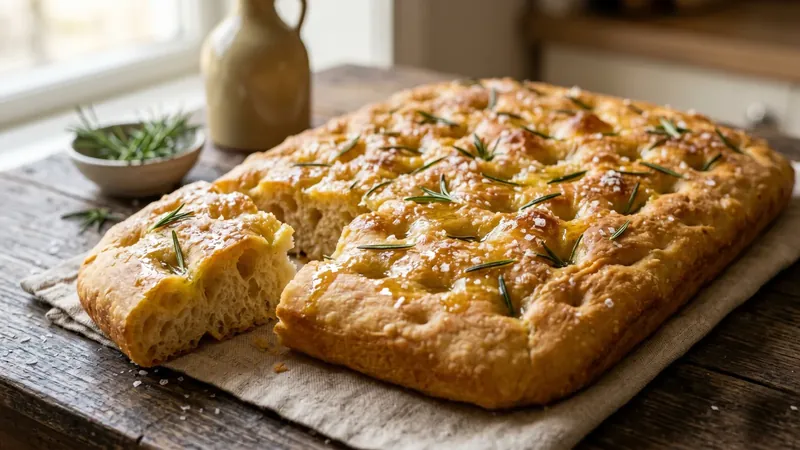
The close relative is socca, the chickpea pancake of the old port in Nice, which is thicker and eaten from a paper cone. If you want the rest of a Ligurian table, trofie al pesto with potato and green beans is the region’s other landmark, and rosemary focaccia is what farinata gets sandwiched inside at lunchtime.
Related Content