Fabada Asturiana: Asturias in a Bean Pot
Fat white beans, smoked pork, and four hours of doing almost nothing
Contents
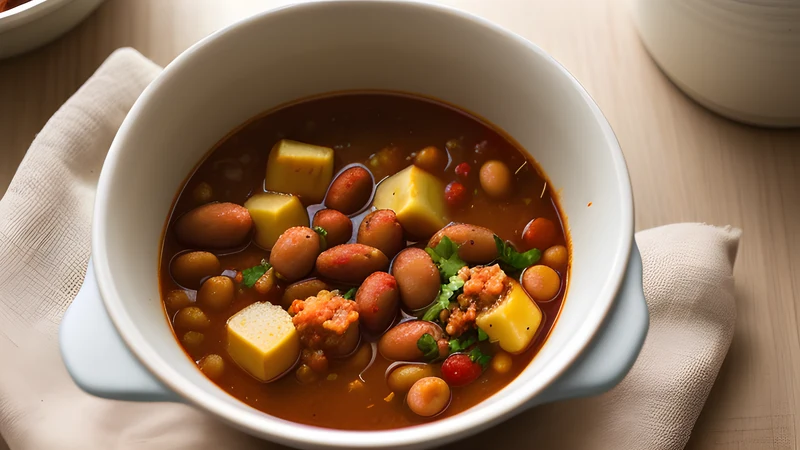
↓ Jump to recipeThere is a moment in every fabada, usually around the three-hour mark, when the broth stops being water with beans in it and becomes something else. It goes glossy. A spoon drawn through it leaves a track that closes slowly. Nothing has been added — no flour, no cream, no cornflour slurry mixed in a mug. The beans have simply given up enough of their starch to thicken their own cooking liquid, and the fat from the chorizo has emulsified into it. That transformation is the entire dish, and it is why fabada cannot be rushed and cannot be made in a pressure cooker without losing the thing that makes it worth eating.
Asturias sits on the north coast of Spain, green and rain-soaked, pressed between the Picos de Europa and the Bay of Biscay. It is cider country, dairy country, and pig country. Fabada belongs to all three.
Fabada Asturiana: Asturias in a Bean Pot
Ingredients
- 500g dried fabes de la granja (or large dried white beans such as judión or cannellini)
- 2 Asturian chorizos (about 200g total), whole and unpricked
- 2 Asturian morcillas (about 200g total), whole and unpricked
- 200g lacón (cured pork shoulder) or a smoked ham hock
- 150g piece of salted pork belly or unsmoked streaky bacon in one lump
- 1 whole head of garlic, unpeeled, the papery outer skin rubbed off
- 1 medium onion, peeled and left whole
- 1 dried bay leaf
- 1 strip of dried orange peel, about 5cm long, pith scraped off
- 2 tbsp Spanish extra virgin olive oil
- 1 tsp sweet smoked paprika (pimentón de la Vera dulce)
- A pinch of saffron threads, about 20 threads
- 1.8 litres cold water, plus more as needed
- 1 tsp fine salt, added at the end
Method
- Put the beans in a large bowl, cover with 2 litres of cold water and leave to soak for 12 hours or overnight. Drain and rinse.
- Put the drained beans in a wide, heavy pot. Add the chorizos, morcillas, lacón and pork belly in one layer on top, tucking the whole garlic head, onion, bay leaf and orange peel among them.
- Pour over 1.8 litres of cold water — enough to cover everything by 3cm. Add the olive oil. Bring to the boil over a medium heat, uncovered, skimming the grey foam off the surface for the first ten minutes.
- As soon as it boils, pour in 150ml of cold water to shock the pot and drop the temperature. Reduce the heat until the surface is barely trembling — one bubble every second or two.
- Toast the saffron threads in a dry pan for 20 seconds, crush them between your fingers, and stir them into the pot with the smoked paprika.
- Cook, uncovered and never stirred, for 3 to 4 hours. Every 40 minutes, take the pot by both handles and shake it gently in a circle. Top up with cold water whenever the beans peek above the surface.
- After 90 minutes, lift out the morcillas and set them aside on a plate — they will collapse if left in longer.
- The fabada is ready when a bean squashed against the roof of your mouth is creamy with no chalk at the centre, and the broth coats a spoon.
- Lift out the onion, garlic head, bay leaf and orange peel and discard. Squeeze eight of the softened garlic cloves out of their skins, mash them with a little broth, and stir the paste back in.
- Return the morcillas to warm through for five minutes. Season with about 1 tsp fine salt, tasting as you go — the cured meats do most of the work.
- Turn off the heat and let the pot stand for 20 minutes before serving. Slice the meats, divide them between bowls, and ladle the beans and broth over.
The bean that built a region
The bean is la faba de la granja, and Asturians talk about it the way Burgundians talk about pinot noir. It is a flat white bean, large — 25 to 30 millimetres long — with a skin so fine it practically dissolves and a flesh that turns to cream. It carries a Protected Geographical Indication covering some 40 councils in Asturias, and a kilo of the graded stuff will cost you three or four times what a supermarket cannellini costs.
The bean arrived from the Americas in the sixteenth century, and Asturian farmers found their damp, mild summers suited it. For a long time it was grown up maize stalks in the same field, the beans climbing the corn — a leftover of the American planting system that came over with the seed. What we now call fabada seems to have settled into its recognisable form in the nineteenth century; the earliest printed reference anyone has found is in the Gijón newspaper El Comercio in December 1884. Before that, the beans went into pots with whatever was hanging in the chimney, and nobody bothered writing it down.
The pot itself was traditionally pota — cast iron, hung over a wood fire, cooked all afternoon while people did other things. This matters more than it sounds. A wood fire gives a slow, uneven, gentle heat that a gas ring struggles to imitate. Every technique below is really an attempt to get an induction hob to behave like a dying fire.
The compango, and why you cannot fake it
The meats are called compango, and in Asturias they are sold together in a shrink-wrapped bundle: chorizo, morcilla, lacón, tocino. All four are cured, all four are smoked over oak or beech, and all four are salty.
Asturian chorizo is drier and smokier than the soft cooking chorizo sold in British supermarkets. Asturian morcilla contains no rice and no onion in the Burgos style — it is blood, fat and pimentón, and it is smoked until the skin turns near-black. If you can find Spanish morcilla de Asturias, use it. Failing that, a smoked black pudding will do more good than an unsmoked one.
Never prick the sausages. This is the single most common error. A pricked chorizo dumps its fat and its paprika into the broth in the first twenty minutes and turns the whole pot brick-orange and greasy; left whole, it seeps slowly through the casing over four hours, and the fat has time to emulsify rather than pool. The same logic applies to the morcilla, which is even more fragile — pull it out after ninety minutes and return it at the end, or you will find yourself serving grey beans in a pot of blood.
Water, temperature, and the art of the shake
Three rules govern the cooking, and the first is that the beans go into cold water and come up to heat with everything else. Dropping soaked beans into boiling liquid tightens the skins and makes them split before the insides soften.
The second rule is the asustar — the scare. When the pot reaches the boil, you pour in a slug of cold water to knock the temperature back down. Asturian cooks do this two or three times over the cooking, and the reason is mechanical: an aggressive boil knocks the beans against each other and shreds their skins, releasing starch too fast and leaving you with a pot of husks in gravy. The cold water halts the convection and lets the beans settle. From then on, the surface should barely move.
The third rule is that you never put a spoon in the pot. Stirring breaks beans. When the liquid needs redistributing, you take the pot by both handles and give it a slow circular shake — the beans slide over each other and the starch disperses without a single skin tearing. It looks like a party trick. It is genuinely load-bearing.
The orange peel
Everything above is orthodox. Here is the one thing I do that an Asturian grandmother would raise an eyebrow at: a strip of dried orange peel goes in with the bay leaf.
The reasoning is straightforward. Fabada is a wall of smoke, fat and salt, and after six spoonfuls the palate stops registering any of it. Orange peel gives the broth a faint bitterness and a top note of citrus oil that resets the tongue between mouthfuls. You will not taste orange. You will taste the pork more clearly at the end of the bowl than at the start, which is the whole point. Dry a strip of peel on a radiator for two days, scrape the white pith off with a teaspoon, and keep a jar of them — they last for months and do the same job in chorizo and white bean stew or a beef shin braise.
The mashed garlic at the end is my second small liberty. Four hours in the broth turns a whole head of garlic sweet and jammy; squeezing the cloves out and stirring the paste back in adds body and a low, roasted sweetness that has nothing to do with the raw allium hit of Castilian garlic soup.
How the afternoon actually goes
Start the night before. The beans go into a bowl with two litres of cold water and stay there for twelve hours; they will roughly double in weight and the skins will go from wrinkled to taut. Drain them in the morning and throw the soaking water away — it carries the oligosaccharides that make beans hard work later.
Choose the pot carefully. You want it wide rather than tall, heavy-based, and big enough that the beans sit in a layer no more than 8cm deep with the meats resting on top. A deep, narrow pot crushes the bottom layer under the weight of everything above it, and those beans turn to paste while the top ones are still chalky. Earthenware is traditional and works beautifully if you have it; a cast-iron casserole is the practical answer.
Everything goes in cold together, and the water covers by three centimetres. The first ten minutes are the only ones that need attention: as it comes up to the boil, a grey-brown foam rises, and you skim it off with a slotted spoon. That scum is denatured protein from the beans and the cured meats, and leaving it in gives the finished broth a muddy, slightly bitter edge. After the scare — the slug of cold water at first boil — the pot goes down to its lowest possible flame and you leave the room.
The saffron and pimentón go in once the surface has settled. Toast the saffron first: 20 seconds in a dry pan, until it smells of hay and honey rather than of nothing, then crush it between your fingertips over the pot. Untoasted saffron threads will float for four hours and give you a third of what they have. The pimentón goes in off a rolling boil for the same reason it never goes into a hot dry pan — paprika scorches at around 130°C and turns acrid, and the calm surface of a fabada is well below that.
Then it is four hours of shaking the pot every 40 minutes, topping up the water, and doing something else. Around hour two it smells like a smokehouse. Around hour three the broth thickens. Around hour four it is fabada.
Getting it right, and what goes wrong
Hard beans after four hours. Almost always old stock. Dried beans have a shelf life; anything more than a year off the plant may never soften. Very hard water can also do it — if your area is chalky, use filtered water or add a pinch of bicarbonate of soda to the soak.
Split skins and a mush. The heat was too high. Fabada wants 85–90°C, which on most hobs is the lowest setting your ring can hold, sometimes with a heat diffuser underneath.
Thin broth. Undercooked. Give it another 30 minutes and shake the pot more often. If it is still thin, lift out 60g of beans, mash them to a paste with a fork and 3 tbsp of broth, and stir the paste back in.
Too salty. You salted early. The lacón and chorizo release salt gradually, and only at the end can you judge it. If it happens anyway, add 200ml of water and simmer for another 15 minutes.
Substitutions, storage and where else to take it
Without fabes, use judión de La Granja, large butter beans or good cannellini, and cut the cooking time to 2 to 2½ hours — smaller beans dissolve if you hold them at four. A smoked ham hock covers both lacón and tocino if you can only find one thing; pull the meat off the bone at the end and return it shredded.
For a version without morcilla, add ½ tsp of ground cloves and an extra ½ tsp of smoked paprika to compensate for the missing spice. It will be a different, lighter dish, closer to the chickpea and chorizo stew with spinach than to a true fabada, and it will still be good.
Fabada is better on day two and arguably best on day three, once the starch has fully set and the fat has firmed into a cap you can lift off if you want it lighter. Reheat gently with a splash of water, shaking rather than stirring. It freezes for three months, though the beans soften a little on thawing.
Serve it in deep bowls with bread, and drink Asturian sidra if you can get it — poured from a height, a couple of inches at a time, which does for the fat what the orange peel does for the palate. A green salad afterwards. Nothing before.
Related Content