Ewa Agoyin: Mashed Beans Under Burnt Pepper Sauce
Soft-boiled brown beans, roughly mashed, drowned in a deliberately scorched pepper oil
Contents
↓ Jump to recipeEwa Agoyin: Mashed Beans Under Burnt Pepper Sauce
Ingredients
- 500g dried brown beans (honey beans), or black-eyed beans as a substitute
- 1 small onion, halved
- 1 tsp salt
- 200ml palm oil
- 8 dried red chillies (or 4 fresh red chillies plus 1 tsp chilli flakes)
- 4 dried scotch bonnet or 2 fresh, deseeded for less heat
- 1 large onion, roughly chopped, for the sauce
- 4 cloves garlic
- 2 stock cubes, crumbled
- Salt, to taste
Method
- Rinse the beans and pick out any stones or debris. Place in a large pot with the halved onion, cover generously with water (about 5cm above the beans) and bring to the boil.
- Reduce to a steady simmer, part-cover, and cook for 60-90 minutes, topping up with boiling water as needed so the beans are never exposed. The beans are ready when they collapse easily under the back of a spoon.
- Drain most of the cooking liquid, leaving about 100ml in the pot. Add salt and mash the beans roughly with a wooden spoon or potato masher, leaving some texture rather than a smooth puree.
- While the beans cook, blend the fresh chillies, roughly chopped onion and garlic to a coarse paste, or pound the dried chillies to a rough powder if using those instead.
- Heat the palm oil in a pan until it starts to smoke lightly and the colour shifts from bright orange-red to a darker rust, about 4-5 minutes over medium-high heat — this deliberate bleaching is what gives agoyin sauce its name and flavour.
- Add the pepper paste carefully (it will splutter) and fry, stirring often, for 10-12 minutes until the raw onion smell disappears and the mixture darkens further and thickens.
- Stir in the crumbled stock cubes and season with salt. Simmer for a final 5 minutes.
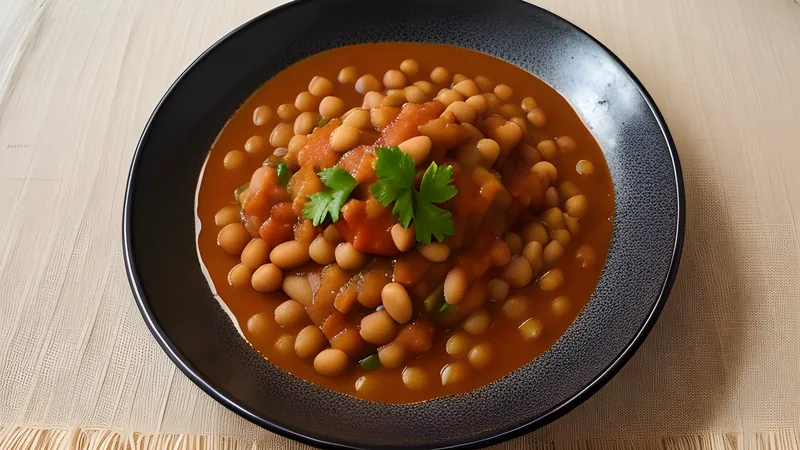
- Serve the mashed beans in a bowl with the burnt pepper sauce spooned generously over the top.
The name is the method
Ewa agoyin means, roughly, “agoyin’s beans” — named after the Agoyin people, migrant workers from Togo and Benin who settled in Lagos in the twentieth century and are widely credited with popularising the dish among dockworkers and labourers who needed cheap, filling food fast. The beans themselves, soft-boiled brown beans mashed until they lose most of their individual shape, are almost incidental. The dish lives or dies on the sauce: a palm oil deliberately cooked past the point most recipes stop, until it darkens, thins, and takes on a faint bitter-smoky edge that gives ewa agoyin its instantly recognisable dark red-brown pool. Most Nigerian cooking treats scorched palm oil as a mistake to correct. Ewa agoyin treats it as the entire point.
A dockworker’s economics, still visible today
The dish’s origin as cheap, calorie-dense food for manual labourers explains a lot about how it’s still sold today. Ewa agoyin sellers, still concentrated around Lagos neighbourhoods like Ojuelegba and Yaba, cook enormous pots of beans and equally large batches of pepper sauce each morning, ladling portions to order rather than plating individual servings in advance — a system built around volume and speed rather than presentation. The price point has stayed deliberately low relative to other Lagos street food, a small portion with bread costing a fraction of a plate of jollof rice with meat, and that affordability is arguably as central to the dish’s identity as the burnt-oil flavour itself. It’s food designed to fill a working person up fast, cheaply, and reliably, and the recipe hasn’t drifted much from that brief even as it’s become popular well beyond dockworkers — university students, office workers and Lagosians of every income bracket queue at agoyin stalls for the same reason people always have.
Choosing the right bean
Brown beans, sometimes labelled honey beans, are the traditional choice — they cook down to a softer, more butter-like texture than black-eyed beans and mash more willingly into the rough, not-quite-smooth consistency ewa agoyin needs. Black-eyed beans work as a substitute and are what most cooks outside Nigeria reach for since brown beans can be harder to find, but expect a slightly firmer mash and a milder flavour. Either way, buy dried beans specifically for this dish rather than tinned — tinned beans have already been cooked to a texture that doesn’t mash the same way, and they lack the starchy cooking liquid that helps bind the mash together.
Getting the burn right
The palm oil stage is the part cooks new to this dish get wrong most often, usually by pulling the oil off the heat too early out of instinct. Fresh palm oil is bright orange-red and smells faintly sweet; as it heats past its smoke point, it darkens, the smell shifts toward something deeper and slightly acrid, and the oil itself thins noticeably. This is the transformation the dish is named for, and stopping short of it — a common instinct, since “burnt” oil looks and smells wrong by the standards of most other cooking — gives you a pale, thin sauce that misses the point entirely. Watch the colour rather than the clock: different stoves and pans heat at different rates, and the target is a specific visual and olfactory cue, not a fixed number of minutes.
Once the pepper paste goes in, the oil will spit and hiss loudly for the first thirty seconds as the moisture in the peppers hits the hot fat. Standing back and stirring with a long-handled spoon avoids most of the splatter. The sauce is ready when it’s noticeably darker than when the peppers first went in, thick enough to coat the back of a spoon, and the sharp, raw smell of blended onion and garlic has cooked away into something rounder.
Method notes for the beans
Beans cook faster and more evenly without salt added early — salting the cooking water before the beans have softened toughens the skins and can add significant time to the simmer. Adding the halved onion to the pot, rather than blending it in, perfumes the cooking liquid gently without needing to strain anything out afterward; fish it out (or just mash it in, since by the end it’s soft enough to disappear into the beans) before mashing. If your beans are taking far longer than 90 minutes to soften, it’s very likely their age — dried beans that have sat in storage for a year or more lose moisture and take substantially longer to cook, sometimes needing an overnight soak first to come back to a reasonable cooking time.
Tips for balance
Ewa agoyin sauce should taste of scorched palm oil and chilli heat first, with the stock cubes rounding out the savoury base rather than dominating it — add them toward the end and taste before reaching for extra salt, since two crumbled cubes are often enough seasoning for the full batch. If the sauce tastes flat despite the burn, it’s usually under-salted rather than under-burnt; palm oil itself carries no salt, so all of the dish’s seasoning comes from the stock cubes and any salt added directly. Serve the sauce hot and freshly made if possible — it keeps well, but the specific smoky top note is strongest in the first hour after cooking.
Substitutions
Palm oil is not really optional here; its flavour, once scorched, is the dish’s identity, and no other oil replicates it convincingly. If palm oil genuinely isn’t available, a mix of vegetable oil with a small spoonful of smoked paprika gets you an approximation, though anyone who’s had the real thing will notice the difference immediately. Dried chillies give a deeper, more concentrated heat than fresh and are closer to traditional; fresh chillies are faster and more widely available and work well as a substitute, particularly scotch bonnet or habanero for the traditional Nigerian heat level.
Storage and reheating
Both components keep separately in the fridge for up to four days — store the mashed beans and the pepper sauce in separate containers rather than combined, since the sauce’s oil can make the whole dish greasy if it sits mixed in overnight. Reheat the beans gently with a splash of water to loosen them, and warm the sauce separately in a small pan; it may need a minute longer to fully recombine and gloss over again after refrigeration, since the oil solidifies slightly when cold. The sauce also freezes well for up to two months, making it worth doubling the pepper sauce batch and freezing half for a much faster second round.
Why the mash stays rough
Unlike a smooth bean puree or hummus, ewa agoyin’s mash keeps visible fragments of whole and half beans throughout — a texture that comes from mashing by hand with the back of a spoon or a traditional wooden masher rather than blending. This isn’t a shortcut skipped; it’s deliberate, because a fully smooth mash turns gluey under the hot, oily sauce and loses the contrast between soft mashed beans and the occasional whole bean that still holds its shape. If you’re using a stand mixer’s paddle attachment to speed up the mash for a large batch, pulse it briefly rather than running it continuously — a minute of continuous mixing on beans this soft will turn them to paste faster than expected.
Reading the pot as it simmers
Because dried bean cooking times vary so much with age and mineral content of your water, it helps to check texture rather than trust a clock once you’re past the hour mark. Fish out a single bean and press it between your fingers: it should collapse with almost no resistance, the skin barely holding together. Beans that still have a firm, resistant centre need more time regardless of how long they’ve already simmered — adding more boiling water (never cold, which shocks the beans and can toughen the skins) and continuing rather than giving up and mashing underdone beans, which leaves a gritty, chalky texture no amount of good sauce can disguise.
Serving and variations
The classic street-food format is agege bread — a soft, slightly sweet, dense white loaf sold specifically for this purpose — torn into pieces and used to scoop both beans and sauce, sold from roadside stalls across Lagos wrapped in black nylon bags. At home, plain white rice or boiled yam are common substitutes for the bread. Some versions add small pieces of boiled beef, shaki (tripe) or smoked fish to the sauce itself for extra protein, turning it into more of a stew than a condiment. However you serve it, ewa agoyin pairs naturally with akara for a fully bean-centred meal, or alongside moin moin if you want three different textures from the same core ingredient on one table.
Two sauces, one pot
Some agoyin sellers actually cook two separate pepper mixtures — a milder one for customers who want less heat, and a fiercer one loaded with extra scotch bonnet for those who ask for it — ladling from whichever pot matches the order. It’s worth doing the same at home if you’re cooking for a mixed group: hold back a portion of the pepper paste before it goes into the hot oil, cook the milder base first, then fry a second smaller batch with the reserved paste plus extra chilli for anyone who wants the full burn. Because the sauce keeps and reheats well, this splitting costs almost no extra time and means nobody’s stuck eating a version that’s either too mild or too aggressive for their taste. It’s a small piece of street-vendor logistics that translates surprisingly well to a home kitchen serving people with different heat tolerances.
What good agoyin sauce looks like at rest
Once spooned over the beans, a properly cooked sauce shouldn’t sit as a thin, watery layer or a heavy, congealed slick — it should pool loosely around the mash, glossy and dark red-brown, with visible flecks of pepper and onion suspended through it rather than settled at the bottom. If your sauce separates into a clear oil layer floating over a paste, it usually means the frying stage ended too early, before the pepper paste had properly broken down and emulsified into the oil. A few extra minutes of patient stirring over medium heat, rather than turning the heat up to force it, generally brings a separated sauce back together.
Related Content