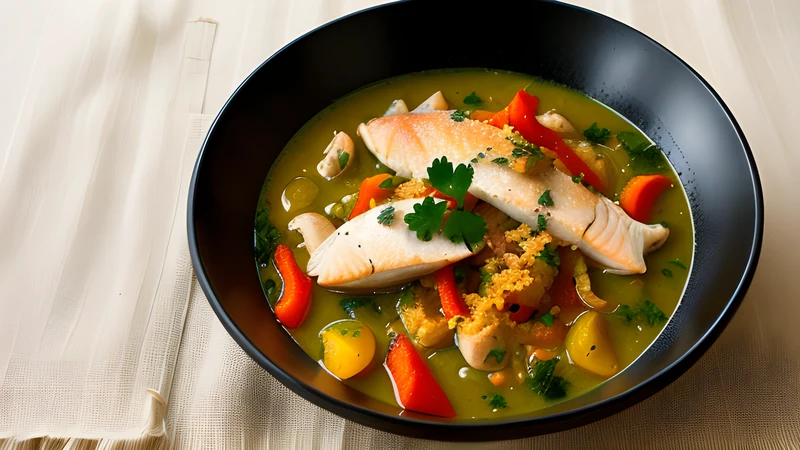
Escovitch Fish With Pickled Peppers
Fried whole fish drowned in a hot, vinegary carrot-and-onion pickle
Contents
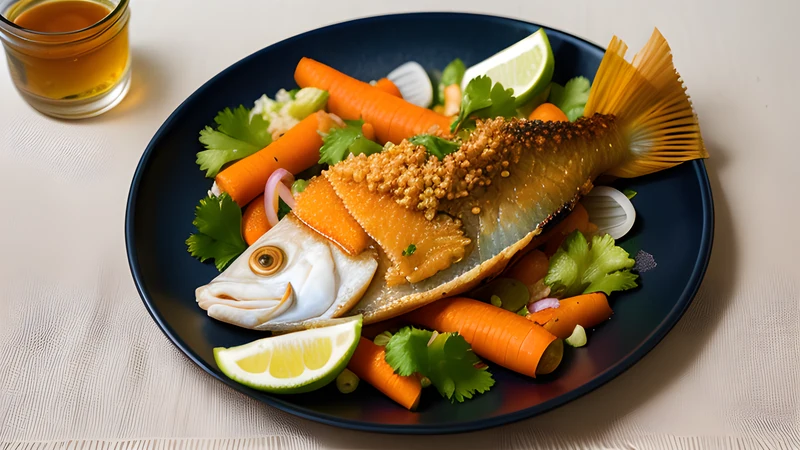
↓ Jump to recipeEscovitch fish is one of the great arguments for cooking something you intend not to eat straight away. You fry a whole fish until its skin blisters and crackles, then you deliberately pour hot, sharp, spice-laced vinegar all over that hard-won crispness and walk away for a day. It sounds like sabotage. It is, in fact, the point. By the time you come back, the fish has drunk up the pickle, the raw edge has softened into something bright and savoury, and the vegetables on top have gone from crunchy to just-yielding. This is Jamaican Easter food, Good Friday food, and one of the smartest things I know to do with a whole fish.
Escovitch Fish With Pickled Peppers
Ingredients
- 2 whole red snapper (about 400 g each), scaled and gutted
- 2 tsp fine salt
- 1 tsp coarsely ground black pepper
- 1 tsp garlic powder
- Juice of 1 lime
- Neutral oil for shallow frying (about 300 ml)
- 1 large onion, sliced into slivers
- 2 carrots, cut into thin ribbons or matchsticks
- 1 red pepper, sliced
- 1 Scotch bonnet, sliced into rings (deseed for less heat)
- 6 whole allspice berries (pimento)
- 4 sprigs thyme
- 1 bay leaf
- 180 ml white vinegar (or cane vinegar)
- 2 tbsp water
- 1 tsp sugar
Method
- Pat the fish dry. Score each side twice to the bone. Rub inside and out with the salt, pepper, garlic powder and lime juice. Leave 15 minutes.
- Heat the oil in a wide frying pan to 180C. Pat the fish dry again, then fry one at a time for 5 to 7 minutes a side until deeply golden and crisp, the skin blistered and the flesh cooked through. Drain on a rack.
- Pour off all but 2 tbsp of oil. Add the onion, carrot, red pepper, Scotch bonnet, allspice, thyme and bay. Cook over medium heat for 3 to 4 minutes until just softened but still crunchy.
- Add the vinegar, water and sugar. Bring to a boil and simmer 2 minutes, then taste and adjust salt.
- Lay the fried fish in a shallow dish and pour the hot pickle and all its vegetables over the top, making sure the liquid gets into the scored cuts.
- Leave at least 30 minutes, or cover and chill overnight. Serve at room temperature or cold with bammy or festival.
An old technique wearing a Caribbean shirt
The dish is a direct descendant of escabeche, the Iberian method of preserving fried fish or meat in an acidic marinade of vinegar and aromatics. That technique itself has older Persian and Arab roots (the word traces back to sikbaj, a medieval vinegar stew) and travelled the Mediterranean before Spanish and Portuguese ships carried it around the world. You meet its cousins everywhere colonial trade routes ran: escabeche in the Philippines and Latin America, escovitch in Jamaica, caveach in old English cookbooks, and the pickled fish of the South African Cape.
In Jamaica it took on the island’s own accent: Scotch bonnet for heat, allspice (pimento) for its warm clove-and-pepper aroma, and the vivid ribbons of carrot and onion that make a plate of escovitch look like a celebration. The original purpose was preservation, a way to keep fried fish edible for days without refrigeration, which is exactly why it became a Good Friday staple when Christian households ate fish rather than meat and wanted something that could be made ahead. That make-ahead quality is still its best trick today.
On the island escovitch is woven into the rhythm of Holy Week. Good Friday is a day when many Jamaican Christians abstain from meat, and a whole fried fish under pickle, made the day before, lets a family mark the day without anyone chained to the stove. It is sold from cook-shops and beach stalls up and down the coast, wrapped in paper with a slab of bammy, and it is as much a fixture of a day at the seaside as it is of the Easter table. That double life, holy-day food and lazy-beach food at once, tells you how completely the dish has settled into Jamaican life since escabeche first came ashore.
The two halves of the dish
Escovitch is really two techniques bolted together, and each has to be done properly. The first is frying a whole fish so the skin is genuinely crisp. The second is a quick, hot vinegar pickle. Get the frying right and the pickle right and the marrying-together happens on its own.
The fish. Whole red snapper is the classic choice, prized for its firm, sweet flesh, but any small whole fish with decent skin works: sea bream, grey mullet, small sea bass. Ask the fishmonger to scale and gut it and you are most of the way there. The two things that stand between you and crisp skin are moisture and temperature. Pat the fish bone-dry, twice, because water is the enemy of a crackling crust and it also makes hot oil spit viciously. Score the flesh to the bone on each side so it cooks evenly and so the pickle can later seep into the cuts. Then fry in oil that is properly hot, around 180C, one fish at a time so the temperature does not crash. Size matters more than species. A fish of around 300 to 400g, a comfortable single portion, cooks through in the pan in the same time it takes the skin to crisp, so you get shattering skin and just-set flesh together. A big fish forces a compromise, the skin turning leathery before the middle is done; if you can only get one large fish, score it more deeply and finish it in a hot oven for a few minutes after frying. Buy it as fresh as you can, clear-eyed and firm, because the pickle sharpens and preserves flavour yet cannot rescue tired fish.
The pickle. The dressing takes minutes. Soften the sliced onion, carrot ribbons, red pepper and Scotch bonnet rings in a little of the frying oil with allspice, thyme and bay, just enough to take the raw bite off while keeping real crunch. Then in goes the vinegar with a splash of water and a pinch of sugar to round it, and a short boil to meld everything. That is it. You want the vegetables still to have snap, because they will soften further sitting on the warm fish.
Assembly and the all-important wait
Lay the fried fish in a shallow dish and pour the hot pickle over the top, spooning the liquid into the scored cuts and making sure every fish gets its share of carrot and onion. Now the hard part: leaving it alone. Thirty minutes is the absolute minimum for the flavours to begin trading places. An hour is better, and overnight in the fridge is best of all, which is why this is such a gift of a dish for entertaining. You do the messy frying the day before and serve it cold or at room temperature, tasting better for the rest.
Why the vinegar bath actually works
It helps to understand what the pickle is doing, because it changes how you treat the dish. The acid in the vinegar denatures proteins on the surface of the fish, gently firming the flesh and seasoning it far more deeply than salt alone could in the same time. That is the same principle behind ceviche, except here the fish is already cooked, so you get seasoning and preservation without the raw-fish texture. The vinegar also holds spoilage bacteria in check, which is the whole reason the dish exists as a make-ahead food: fried fish left at room temperature would turn quickly, but fried fish submerged in an acidic pickle stays good for days.
The crispness question deserves honesty. If you pour the pickle over piping-hot fish and eat it immediately, the skin stays crackly but the flavours have not married. Leave it overnight and the skin softens as it absorbs the liquid, but the taste is far more harmonious and the flesh silkier. Most Jamaican cooks accept the softening as part of the deal; the dish was never meant to stay shatteringly crisp. If you genuinely want both, cheat: pickle only the underside and spoon the vegetables over just before serving, keeping the top skin clear of the liquid until the last minute.
A note on the vegetables. Cut the carrots into long ribbons with a peeler rather than chunky batons; thin ribbons soften attractively and drape over the fish, while thick pieces stay stubbornly raw and awkward to eat. The onion wants to be in fine slivers for the same reason. You are building something that looks generous and tangled on the plate, a bright heap of pickle rather than a scattering of hard cubes.
Tips, swaps and storage
Vinegar. White vinegar is standard and gives the clean, bracing sharpness the dish is known for. Cane vinegar is more traditional if you can find it and is a touch softer. Do not use anything heavily flavoured like balsamic or malt; the point is a clean, bracing acid that lets the allspice and thyme come through.
Heat. The Scotch bonnet is sliced into rings here rather than left whole, so its heat does go into the pickle. Deseed it, use half, or leave it whole and unpierced if you want the perfume without the burn. Warn your guests either way; those pretty red rings are not sweet peppers.
Fillets, if you must. Whole fish gives the best texture and the most dramatic plate, but thick, skin-on fillets work for a weeknight. Fry them skin side down first and handle gently. Reduce the pickling time a little as fillets absorb faster.
Frying safely. A wide, heavy pan and enough oil to come halfway up the fish makes for even browning. Keep a lid nearby to knock down any flare of spitting oil, and lower the fish away from you.
Storage. Escovitch keeps for three days in the fridge, submerged in its pickle, and genuinely improves for the first day or two. It does not freeze well; the fish texture suffers. Serve it cold from the fridge on a hot day and it is close to perfect.
Those sides earn their place. Bammy, the flat cassava bread the Taino were making long before Columbus arrived, is soaked in milk or coconut milk and fried until golden, and its bland, slightly chewy starch is the ideal sponge for stray pickle. Festival, a cigar-shaped fried dumpling sweetened with a little sugar and sometimes cornmeal, plays the opposite role, its sweetness pushing back against the vinegar. Fried plantain, hard-dough bread, or plain rice and peas all work too. The common thread is something starchy and mild to carry and calm the bright, acidic fish, which is how the plate is built right across the Caribbean.
The traditional partners are bammy (a flat cassava bread that is fried or steamed) and festival, the slightly sweet fried dumplings that soak up the vinegar. For a bigger island spread, escovitch is the cool, sharp counterpoint to smoky jerk chicken or a rich pot of pelau, and it plays beautifully against the mellow coconut of rundown if you want two fish dishes on the table. Make it the day before, forget about it, and let the vinegar do the quiet work while you get on with everything else.
Related Content