Ensaymada: Buttered Brioche Coils With Cheese
A Mallorcan bread that got richer, sweeter and cheesier crossing the Pacific
Contents
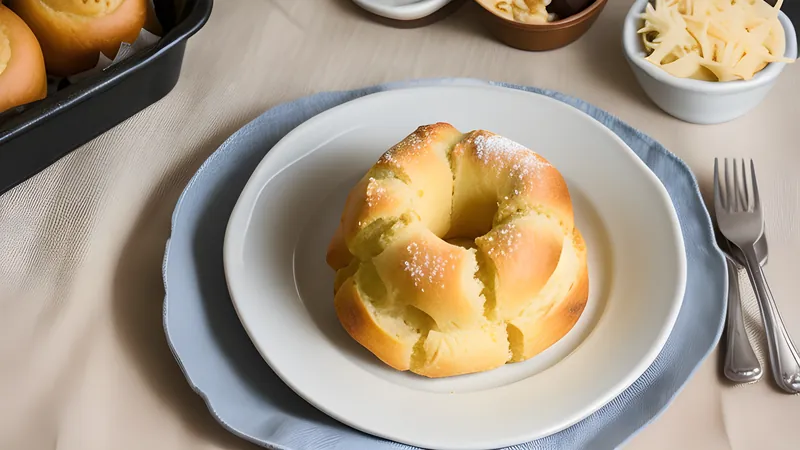
↓ Jump to recipeEnsaymada takes its name and its basic coiled shape directly from the ensaimada de Mallorca, a spiral pastry from the Balearic Islands traditionally made with lard (the word “saïm” means lard in Mallorcan) rather than the enriched butter dough the Philippines developed instead. The two breads share a name, a coil shape and a colonial thread connecting them across the Manila-Acapulco galleon trade that linked the Philippines to Spain by way of Mexico for over two centuries, but they’ve diverged enough since that a Mallorcan and a Filipino ensaymada now sit at opposite ends of the same family tree, related but no longer describing the same food.
Ensaymada: Buttered Brioche Coils With Cheese
Ingredients
- 500g strong white bread flour
- 7g instant yeast
- 80g caster sugar
- 180ml warm whole milk
- 3 eggs
- 1 egg yolk
- 100g unsalted butter, softened, plus extra for laminating and rolling
- 1 tsp salt
- For the topping: 100g softened butter, 80g caster sugar, 150g grated quickmelt or edam cheese
Method
- In a large bowl or stand mixer, combine flour, yeast and sugar. Add warm milk, eggs and egg yolk, and mix to form a rough dough.
- Knead for 10–12 minutes (or 8 minutes in a stand mixer) until smooth. Add the softened butter gradually, a tablespoon at a time, kneading fully between additions, then add the salt.
- Continue kneading for a further 8–10 minutes until the dough is smooth, elastic and passes the windowpane test — stretched thin, it should not tear immediately.
- Place in a greased bowl, cover, and prove in a warm place for 1½–2 hours, until doubled in size.
- Punch down the dough and divide into 12 equal pieces. Roll each piece into a long rope about 50cm long, brushing lightly with melted butter as you roll to keep it supple.
- Coil each rope into a spiral and place into a greased muffin tin or paper case.
- Cover and prove for a further 45 minutes until puffy.
- Preheat the oven to 180°C (fan 160°C). Bake for 15–18 minutes until golden brown.
- While still warm, brush each roll generously with softened butter, dust with sugar, and top with a handful of grated cheese.
From lard to butter, from plain to loaded
The original Mallorcan ensaimada is relatively restrained: a lard-enriched, spiral-shaped bread, often dusted only with icing sugar, sometimes filled with pumpkin preserve (cabello de ángel) but otherwise fairly simple in its finishing. The Filipino version took the coil and the enrichment and pushed both further. Lard was swapped for butter, partly a matter of local ingredient availability and partly a matter of taste, giving a richer, more purely buttery dough than the original. The topping changed even more dramatically: where Mallorca dusts with sugar and stops, Filipino ensaymada brushes the still-warm roll generously with more butter, dusts with sugar, and then finishes with a genuinely substantial layer of grated cheese — usually a mild, meltable variety like quickmelt or edam — creating a topping that’s simultaneously sweet, salty and rich in a combination the original pastry never attempted.
Malolos and the reputation for fluffiness
Within the Philippines, the town of Malolos in Bulacan carries a specific reputation for ensaymada, to the point where “ensaymada de Malolos” functions almost as a regional designation rather than just a place name attached to a recipe. Bakeries there have competed for generations on the fluffiness and richness of their dough, and the town’s version is often held up nationally as the benchmark against which other regional variants get measured. Some of that reputation comes down to genuinely careful technique — a properly laminated, well-proofed brioche dough, rolled thin enough to coil into fine spirals rather than thick lumps — and some of it is simply the accumulated prestige of a place that decided, generations ago, that this was the bread it would be known for.
Building the enriched dough
Ensaymada dough is a brioche-style enriched dough, and it behaves the way brioche always does: slow to come together, resistant to absorbing fat too quickly, and dependent on patience rather than speed. Add the softened butter gradually, in stages, kneading fully between each addition rather than dumping it all in at once. Butter added too fast coats the gluten strands before they’ve developed enough structure to hold it, leaving a dough that stays slack and greasy rather than eventually turning smooth and elastic. The windowpane test — stretching a small piece of dough thin enough to see light through it without tearing — is the most reliable check that the gluten has developed sufficiently to trap the gas produced during proofing, which is what gives the finished bread its soft, pillowy crumb rather than a dense one.
Rolling each portion into a long, thin rope before coiling is what produces the fine, layered spiral ensaymada is known for, rather than a single thick swirl. Brushing the rope lightly with melted butter as you roll keeps the surface supple and helps the layers separate slightly during baking, giving a bit of visible lamination in the finished coil rather than a solid, undifferentiated mass of dough.
What can go wrong
The most common failure is under-kneading, leaving a dough that hasn’t developed enough gluten structure to support all the added butter and eggs — the result bakes up dense and slightly greasy rather than light and airy. Give the dough the full kneading time even if it feels like it’s taking longer than a lean bread dough would; enriched doughs genuinely need more work to come together properly.
The second is over-proofing at the second rise, particularly in a warm kitchen. Left too long, the coiled rolls can over-expand and collapse slightly in the oven rather than holding their shape, since the gluten structure, weakened by so much fat, has less strength than a lean dough to support extended proofing. Forty-five minutes is usually right at normal room temperature; check for a gentle poke test — the dough should spring back slowly, leaving a slight indent, rather than springing back instantly or not at all.
Substitutions and variations
Macapuno — sweetened, shredded young coconut strands — is a popular addition either mixed into the dough itself or scattered on top alongside the cheese, giving a chewy sweetness that plays well against the savoury cheese topping. Some bakeries use a queso de bola (a mild, waxy, ball-shaped cheese associated with Christmas) for the topping instead of edam or quickmelt, giving a slightly saltier, firmer finish. For a less rich version, some households cut the butter quantity in the dough itself while keeping the topping generous, since the topping is where most of ensaymada’s signature flavour actually lands.
Storage
Ensaymada is best eaten within a day of baking while the buttery topping is still fresh and the crumb at its softest — day-old ensaymada firms up noticeably, in the way most enriched breads do once their fat begins to set fully. It keeps for up to three days at room temperature in an airtight container, and reheating briefly in a low oven (150°C for 5 minutes) revives some of the softness, though the topping is best added fresh after reheating rather than reheated along with the bread, since the cheese can turn rubbery under a second bake. The plain, untopped coils freeze well for up to two months — thaw, then finish with butter, sugar and cheese only once you’re ready to serve.
Pair it with a cup of coffee for a proper Filipino merienda, or serve alongside pandesal and leche flan for a spread that covers breakfast, snack and dessert all from the same baking session.
Why cheese belongs on a sweet bread
The combination of sweet and salty on top of ensaymada surprises people encountering it for the first time, since Western baking traditions rarely put grated cheese directly on top of a sugared brioche. But the pairing has a clear internal logic once you taste it: the cheese’s saltiness and slight tang cut through what would otherwise be a fairly one-note sweetness from the butter and sugar alone, in the same way a salted caramel works by contrast rather than simply adding more sugar. Quickmelt and edam both work because they’re mild enough not to overwhelm the bread’s flavour, and because they soften into a slightly gooey texture from residual heat when applied to a still-warm roll straight from the oven, rather than staying firm and separate the way a sharper, harder cheese would. This same sweet-salty pairing shows up elsewhere in Filipino baking — cheese on top of pan de sal loaves, cheese folded into ube halaya, cheese scattered over halo-halo — enough that it reads as a genuine feature of the wider baking tradition rather than a one-off quirk specific to ensaymada.
Proofing in the Philippine climate
It’s worth understanding why Filipino baking recipes, ensaymada included, tend to specify proofing times that read as fast compared with European bread recipes written for a cooler climate. Warm, humid ambient temperatures across most of the Philippines mean dough proofs considerably faster there than it does in a cool European kitchen, and recipes developed and passed down in that climate reflect it. If you’re baking this somewhere cooler, expect both proofs to take meaningfully longer than the times given — up to an hour longer for the first rise in a cold kitchen — and rely on the dough’s visible size and texture rather than the clock as your real guide to doneness. A warm oven with just the light on, or a proofing box if you have one, closes that climate gap and gets you closer to the timings the recipe assumes.
A note on the coil shape
The spiral shape isn’t purely decorative — rolling the dough into a thin rope before coiling it maximises the amount of surface area exposed to butter, sugar and cheese once the topping goes on, since the coil’s ridges catch and hold the toppings far better than a smooth, unribbed roll would. It also means each bite includes several thin layers of dough rather than one thick mass, giving a lighter, more delicate texture in the mouth than a same-sized ball of dough baked without the spiral shaping. Getting the rope thin and even along its whole length, rather than tapering unevenly, is worth the extra care — a lumpy rope coils into a lumpy, uneven spiral that bakes less predictably.
Christmas and the special-occasion version
Ensaymada shows up year-round as an everyday merienda bread, but it takes on extra significance during the Christmas season, when queso de bola becomes widely available in Filipino markets specifically for the holidays and finds its way onto ensaymada toppings as the more festive alternative to everyday quickmelt. Some households also add a scraping of macapuno or a light drizzle of condensed milk over the cheese for a Christmas version noticeably richer than the everyday bread, reserved for the same season that produces queso de bola, hamon and other holiday-specific ingredients across the wider Filipino table. This seasonal upgrade follows a pattern common across Filipino baking and cooking more broadly, where a familiar, everyday dish gets a small number of specific, more expensive additions during Christmas without changing its fundamental identity.
Getting the butter topping right
Brush the butter onto the rolls while they’re still genuinely warm from the oven — warm bread absorbs the butter partway into the crumb, giving a moist, rich bite throughout rather than a greasy layer sitting purely on the surface. Work quickly with the sugar and cheese immediately after, while the butter is still soft enough to help both stick properly; a roll left to cool even slightly before topping will shed sugar and cheese far more readily once handled or bitten into.
Related Content