Encebollado: Ecuador's Hangover Fish Soup
A sharp, cumin-scented tuna and yuca soup crowned with pickled onion
Contents
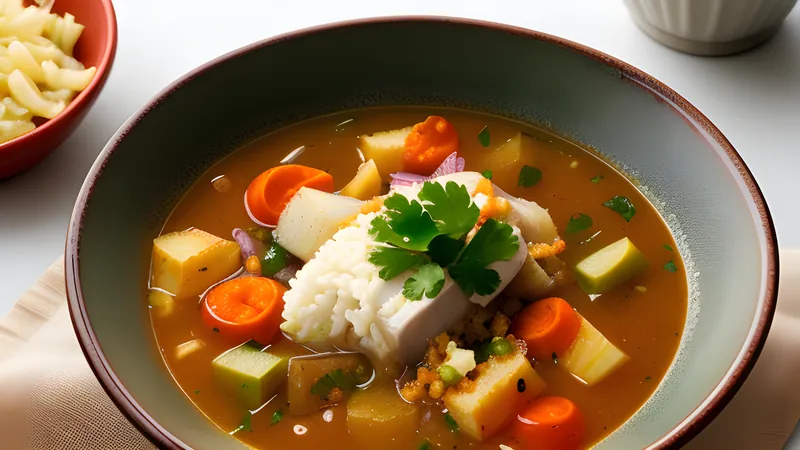
↓ Jump to recipeEncebollado takes its name from the pickled onion, cebolla, piled so thickly over the top that it’s the first thing you see before the tuna and yuca underneath. Ecuador’s coastal breakfast counters serve it every morning to fishermen coming off a night shift and to anyone else nursing the effects of the night before, and the reputation as a hangover cure is taken seriously enough that some restaurants only open before noon. Sharp with lime, warmed with cumin, and finished at the table with a squeeze of mustard, it’s a soup built entirely around contrast.
Encebollado: Ecuador's Hangover Fish Soup
Ingredients
- 600g fresh albacore tuna steaks, or fresh tuna loin
- 1 litre fish stock
- 1 bay leaf
- 500g yuca (cassava), peeled and cut into thick chunks
- 2 tbsp vegetable oil
- 1 onion, finely chopped
- 3 garlic cloves, crushed
- 1 tsp ground cumin
- 1 tbsp tomato paste
- 2 tomatoes, chopped
- 1 red onion, thinly sliced
- Juice of 3 limes, divided
- 1 tbsp chopped fresh coriander
- 1 ripe plantain, thinly sliced, for frying
- Yellow or hot mustard, to serve
- Salt and black pepper
Method
- Toss the sliced red onion with the juice of 2 limes and a pinch of salt, and set aside to pickle for at least 20 minutes.
- Bring the fish stock to a simmer in a large pot with the bay leaf. Add the tuna and poach gently for 10 minutes until just cooked through. Lift out and flake into large chunks, discarding any skin. Reserve the poaching stock.
- In a separate pot, cover the yuca with water, add a pinch of salt, and simmer for 20-25 minutes until tender. Drain and set aside.
- Heat the vegetable oil in a clean pot and soften the onion for 5 minutes.
- Add the garlic and cumin, and cook for 1 minute until fragrant.
- Stir in the tomato paste and chopped tomatoes, and cook for 5 minutes until the tomatoes break down.
- Pour in the reserved fish stock and bring to a simmer.
- Add the cooked yuca and flaked tuna, and simmer gently for 5 minutes to bring everything together.
- Stir in the remaining lime juice and season well with salt and pepper.
- Fry the plantain slices in hot oil until golden and crisp, then drain.
- Ladle the soup into bowls, piling the pickled red onion generously over each portion, and scatter over the coriander.
- Serve with the fried plantain chips and a bottle of yellow mustard on the side, for stirring in at the table.
The story
Guayaquil, Ecuador’s largest city and its main Pacific port, claims encebollado as a distinctly urban, working-class invention, born among the dockworkers and market traders who needed something cheap, filling and restorative before a long shift. Albacore tuna, landed daily along Ecuador’s coast, made it an affordable soup even for people with very little money, since the fish was abundant and the yuca a cheap starch already grown across the region. It has since spread across the whole country and beyond, carried by Ecuadorian migrants to Spain, Chile and the United States, where encebollado now turns up in Ecuadorian restaurants far from any coastline.
The claim that encebollado cures a hangover has genuine cultural weight rather than being a passing joke; entire streets in Guayaquil fill with people eating it before ten in the morning, particularly on weekends, and vendors who specialise in it build loyal followings around the specific balance of their broth. The theory usually offered is straightforward: salt and fluid replace what a night of drinking depletes, the acidity of the lime cuts through nausea, and the mustard, stirred in at the table rather than cooked into the pot, adds a sharp, palate-resetting tang that wakes up a dulled appetite. Whether or not the science holds up exactly as claimed, the ritual of eating it the morning after is deeply embedded in coastal Ecuadorian life.
Every family and every street stall has its own small variations: some add peanut butter to thicken the broth slightly, some lean harder on the cumin, and the ratio of pickled onion to broth is a matter of real personal preference, with some diners wanting the onion piled so high it nearly outweighs the soup beneath. What stays constant is the trio of tuna, yuca and pickled onion, the specific combination that makes the dish recognisable from one end of the Ecuadorian coast to the other.
Poaching the tuna without drying it out
Albacore tuna dries out fast if it’s simmered too hard or too long, turning from tender to chalky in the space of a few extra minutes, so a gentle poach rather than a rolling boil is essential. Bring the stock to a bare simmer before the fish goes in, and keep it there; you want small bubbles breaking the surface occasionally rather than a vigorous boil. Ten minutes is usually right for steaks around 2-3cm thick, but check the thickest piece by flaking a corner with a fork; it should come apart easily and look opaque all the way through without any translucent centre remaining.
Flake the tuna into fairly large chunks rather than shredding it fine, since the soup already has plenty of texture from the yuca and benefits from real, substantial pieces of fish that hold together in the bowl. Add the flaked tuna back to the soup only for the final few minutes of cooking, just long enough to warm through and pick up the broth’s flavour; any longer at a simmer and the fish that was perfectly poached the first time round turns dry the second time.
Getting the yuca right
Yuca needs a longer, more patient cook than a potato of the same size, and it’s worth testing for doneness with a fork rather than guessing from the clock, since different batches vary more than potatoes do. Properly cooked yuca turns slightly translucent and a knife slides through with almost no resistance; undercooked yuca stays chalky and starchy in the middle, which is unpleasant in a soup meant to be spooned rather than chewed through. Always remove the tough, fibrous central core if you find one running through a piece once it’s cooked; it doesn’t soften no matter how long you boil it, and it’s better picked out than left to surprise a diner.
If fresh yuca isn’t available, frozen yuca, already peeled and cut, is a perfectly reasonable substitute and often easier to find outside South America; simmer it directly from frozen, adding a few extra minutes to the timing. The soup’s other seafood cousin on this site, ceviche with leche de tigre, shares the same coastal Andean instinct for balancing acid against rich protein, and sopa de lima makes an interesting comparison from further north, where lime plays a similarly central role in a broth-based soup.
The pickled onion and the mustard
The pickled red onion is not a garnish here so much as a second component of the dish, piled generously rather than scattered thinly, and it needs at least twenty minutes in lime juice to lose its raw harshness and turn a vivid pink. Slice it thin and even so it pickles quickly and evenly; thick wedges stay sharp and fibrous even after a good soak. Make it first, before anything else, so it has the full cooking time of the soup to soften properly by the time you’re ready to serve.
Yellow mustard at the table is a distinctly Ecuadorian habit that surprises people trying encebollado for the first time, but it earns its place: a small squeeze stirred through the broth adds a tang that lime alone doesn’t provide, and locals often add it generously rather than as a token afterthought. Offer it on the side rather than stirring it into the pot, since the amount each person wants varies considerably, and a diner who dislikes mustard should be free to leave it out entirely.
Reading a good encebollado stall
Guayaquil’s best-known encebollado spots are judged on a handful of specific things that translate directly to home cooking: a broth with real body rather than watery tomato-tinged stock, fish that’s still tender rather than boiled to shreds, and onion piled generously enough that it’s a genuine mouthful in its own right rather than a token scattering. Watching a good vendor work, the fish always goes in last and briefly, the yuca is cooked separately to the point of near-collapse before joining the pot, and the tomato base is given proper time to break down rather than being rushed through in a couple of minutes.
Home cooks tend to shortcut the tomato stage, treating it as a quick step on the way to the broth rather than a foundation worth five full minutes of its own. Letting the tomato paste and chopped tomato properly soften and darken slightly in the oil before the stock goes in builds a rounder, less acidic flavour than simply dumping everything into the pot together; that few minutes of patience is most of the difference between a thin, sharp soup and a properly balanced one.
A soup for more than the morning after
Even without a hangover to cure, encebollado earns its place as a genuine lunch or light dinner, particularly in warm weather when a rich meat stew feels like too much. The combination of lean fish, a starchy root vegetable and a sharply acidic garnish makes it feel lighter than its ingredient list might suggest, and the fried plantain chips on the side give it enough textural interest to stand as a full meal rather than a starter. Leftovers, eaten cold the next day with extra lime, are a legitimate and popular way to finish the pot, proof that its appeal reaches well beyond the specific circumstances it was invented for.
Substitutions, storage and make-ahead
Fresh albacore is the traditional choice, but a good sustainably caught yellowfin or even a firm white fish like hake works well if albacore isn’t available; avoid anything too delicate, since it will fall apart during poaching. Yuca can be swapped for potato in a pinch, though the texture and slightly nutty flavour won’t be quite the same, and the dish will read as a different, if related, soup. If fresh tomatoes are out of season, a small tin of good plum tomatoes, chopped, works just as well in the base.
The broth base, up to the point of adding the fish, keeps well in the fridge for two days and freezes for up to two months, making this a genuinely useful dish to have a head start on. Poach the fish fresh each time you plan to serve it, since previously cooked tuna reheated in the broth loses its texture fast. The pickled onion also keeps for several days in the fridge, so there’s no harm making a larger batch to have on hand for the next bowl.
Related Content