Empanadas Mendocinas With a Proper Repulgue
The Argentine beef empanada and the crimp that seals it
Contents
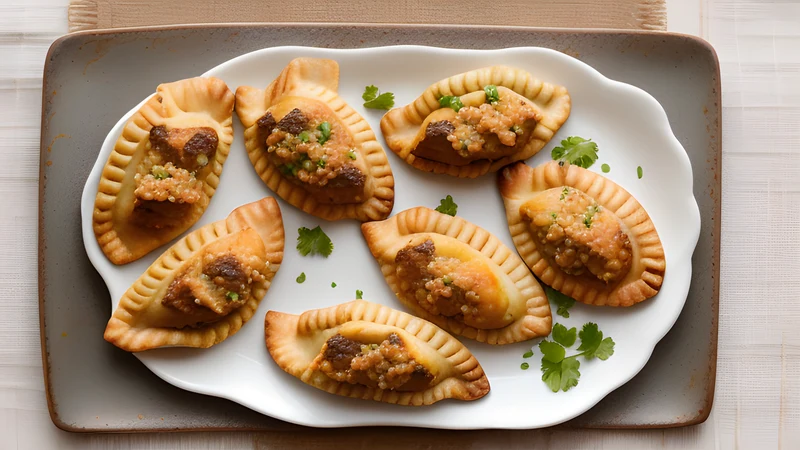
↓ Jump to recipeArgentina argues about empanadas the way other countries argue about football, and the arguments are regional, ancient and unwinnable. Salta wants them small and juicy with potato in the mix. Tucumán fries them and fills them with matambre. Catamarca does something with saltpetre that turns the filling pink. My allegiance, for the purposes of this recipe, is to Mendoza, the wine country in the west, where the empanada is baked, generously sized, spiced with cumin, and sealed with a rope crimp called the repulgue that tells everyone at the table you know what you are doing.
The repulgue is where I want to start, because it is the part that intimidates people and it is genuinely not difficult once someone walks you through it. A fork-crimped empanada is not wrong, exactly, but in Argentina a hand-folded rope is the difference between homemade and shop-bought, and different fillings are traditionally marked with different crimps so you can tell them apart on a shared tray. Learning it takes one clumsy batch and then it is yours forever.
Empanadas Mendocinas With a Proper Repulgue
Ingredients
- 500g plain flour
- 100g beef dripping or lard, plus 1 tbsp for the filling
- 1 tsp fine salt for the dough
- 200ml warm water, approximately
- 500g beef chuck, hand-chopped into 5mm dice (not minced)
- 2 large onions, finely diced
- 2 tsp sweet pimentón (Spanish paprika)
- 2 tsp ground cumin
- 1 tsp dried oregano
- Half tsp chilli flakes, or to taste
- 12 green olives, halved
- 2 hard-boiled eggs, chopped
- 3 spring onions, sliced
- 1 egg, beaten, for glazing
- Salt and black pepper
Method
- Rub the salt into the flour, then rub in the 100g dripping until sandy. Add warm water a little at a time, mixing to a firm, smooth dough. Knead briefly, wrap and rest for 30 minutes.
- Melt 1 tbsp dripping and cook the onions gently with a good pinch of salt for 12 minutes until soft and sweet. Turn up the heat, add the diced beef and brown briefly — it should stay juicy.
- Stir in the pimentón, cumin, oregano, chilli, salt and pepper. Take off the heat, cool, then chill the filling until cold and firm.
- Fold the chopped egg and spring onion through the cold filling.
- Roll the dough 2mm thick and cut 13cm rounds. Place a spoon of filling and half an olive on each, brush the rim with water, fold into a half-moon and press out the air.
- Crimp the repulgue: fold a corner of the edge over, then fold the next section over that, working along the seam to build a rope pattern. Tuck the final fold under.
- Glaze with beaten egg and bake at 200C fan for 22 to 25 minutes until deep golden.
A pastry that crossed an ocean
The empanada began its life far from Argentina. The word comes from the Spanish empanar, to wrap in bread, and the form arrived with Spanish colonisers who had inherited it in turn from the Moors of Al-Andalus, whose cooks had long folded spiced meat into dough. Galicia’s great empanada gallega, a large flat pie sliced into portions, is the direct European ancestor. Carried to the Americas, the pie shrank into individual hand pies and absorbed local ingredients and tastes region by region, until every Argentine province had evolved its own. The cumin-scented, olive-studded Mendoza version is one branch of a family tree that runs back through Spain to the medieval Islamic kitchen, which is why you meet close cousins from the Cornish pasty to the Lebanese sfiha wherever bread and a little meat had to travel together.
The filling starts with the knife
The single most important decision in a Mendoza empanada happens before any cooking: you chop the beef by hand rather than buying mince. There is a concrete reason for the labour. Minced beef packs into a dense, dry, uniform paste when it cooks and cools, whereas hand-cut 5mm dice of chuck stays in distinct, juicy little pieces with texture and bite. It is called carne cortada a cuchillo, knife-cut meat, and Argentines are militant about it. Partly freeze the chuck for twenty minutes and it dices far more easily.
Chuck is the right cut because it has enough fat and connective tissue to stay moist. The filling is built on a base of a lot of gently cooked onion — as much onion as meat, near enough — softened slowly until sweet before the beef ever goes in. The beef is added at the end and only briefly seized, because it will finish cooking inside the pastry. Overcook it now and it will be grey and dry later.
The onion is doing more than seasoning here. Cooked down until soft and sweet it becomes the moisture reservoir that keeps the baked filling juicy, releasing liquid slowly into the meat as it bakes. Skimp on it, or rush it so it stays sharp and raw, and the parcel bakes drier and tastes harsher. This near-equal ratio of onion to beef is one of the quiet markers of a properly made Argentine empanada, and it is the first thing that goes missing in the mass-produced ones.
The seasoning is restrained and specific: sweet pimentón for colour and warmth, plenty of cumin, oregano, and chilli to taste. No tomato, no cheese, no peas. What lifts the Mendoza style is the finishing trio stirred through cold — chopped hard-boiled egg, green olives and sliced spring onion. The olive is the signature. Traditionally half an olive, sometimes with the stone left in as a warning to eat carefully, though I take mine out to save a dentist’s bill.
Why the filling must be cold
Here is the rule that saves you grief: the filling goes into the pastry cold and firm, never warm. A warm filling makes the dough greasy and slack, tears it during folding, and leaks in the oven. I make the filling the day before and leave it in the fridge overnight, at which point the fat has set and it holds together like a scoopable paste. This one habit is the difference between a clean tray and a baking sheet of split, weeping parcels.
The dough
Mendoza empanadas are baked, and the dough reflects that: a simple, sturdy pastry made with beef dripping or lard rather than butter, which gives a savoury flavour and a crust that stays crisp and pliable rather than shattering. Rub the fat into salted flour until it looks like damp sand, then bring it together with warm water into a firm dough. It should be smooth and workable, a little firmer than a shortcrust. Rest it for half an hour so the gluten relaxes and it rolls without springing back.
Roll it thin, about 2mm, and cut discs around 13cm across — a small saucer is the right template. Argentine cooks buy ready-cut tapas de empanada from the shop, and if you find them frozen at a Latin grocer they are a perfectly honourable shortcut. But the homemade dough tastes better and the offcuts re-roll happily.
Building and folding
Put a good tablespoon of cold filling slightly off-centre on each disc, add half an olive, and brush the far rim lightly with water. Fold into a half-moon and, before sealing, press gently from the fold outwards to push out trapped air — an air pocket expands in the oven and can burst the seam. Press the edges together firmly first, then crimp.
How to make the repulgue
Take the sealed edge and start at one end. Fold a small corner of the rim diagonally inward, pressing it flat. Now take the next section of edge, fold it over the first fold at the same angle, and press. Keep going along the whole curved seam, each fold overlapping the last, and you build a neat twisted rope. At the end, fold the final flap underneath so nothing can unravel. The rhythm is fold, press, move along; fold, press, move along. Your first two will be ugly and your third will click into place. Watch your hands find the pattern and trust them.
If it all goes wrong, seal firmly and press the tines of a fork along the edge. A fork crimp is the honest fallback: it holds the seam shut even without the rope’s polish, and a fed table forgives a lot.
Baking
Glaze the tops with beaten egg for shine and colour, and bake in a properly hot oven — 200C fan — for 22 to 25 minutes until deep, blistered gold. High heat is essential: it sets the crust fast and finishes the beef inside while keeping it juicy. A cooler oven gives you pale, tough pastry and a dried filling. Some cooks slash a tiny steam vent in the top, though a well-pressed seam and pushed-out air usually make it unnecessary.
Rest them five minutes before eating, because the filling comes out volcanic. In Mendoza they are eaten out of hand with nothing but a squeeze of lemon or a spoon of chimichurri on the side.
Mendoza is Malbec country, the heart of Argentine wine, and the empanada there is bound up with the culture of the bodega and the weekend asado. They are the thing handed round while the fire burns down and the beef is still an hour off, eaten standing with a glass of young red in the other hand. A dozen empanadas and a bottle of Malbec is a genuine Mendoza lunch, and the faint sweetness of the cumin-and-onion filling is a deliberate foil to the wine’s dark fruit. Make them for a party and the logic becomes obvious: they are portable, they are good warm or at room temperature, and they keep people happy and un-hungry while the main event takes its time.
Storage, freezing and fixing problems
Assembled raw empanadas freeze superbly. Freeze them on a tray until solid, bag them, and bake from frozen with an extra five minutes. Baked ones keep two days in the fridge and reheat crisp in a hot oven; the microwave sogs them.
If your empanadas leak, the usual culprits are a warm filling, an over-full parcel, or a seam that was not pressed before crimping. If the pastry is tough, you added too much water or over-worked it. If it is greasy, the fat was too warm going in. Cold filling, firm dough, hot oven — hold those three and the rest follows.
Beyond Mendoza
Once the method is in your hands, the fillings open up. The Salta style adds a diced boiled potato to stretch the meat and keep it juicier still, and skips the olive-and-egg finish. A jugoso version deliberately keeps the filling looser and wetter, which is delicious but demands very careful sealing. There are cheese-and-onion empanadas de humita made with fresh sweetcorn and white sauce, ham-and-cheese ones for the children, and in the north a fried version cooked in beef fat instead of baked. If you serve several fillings at once, this is exactly why the repulgue matters: crimp the beef with the rope, mark the cheese ones with a simple pinched border, and nobody bites into the wrong one. Whatever you fill them with, the rules do not change — cold filling, firm dough, hot oven, and no air trapped inside.
For the full Argentine spread, these belong next to a milanesa a la napolitana, the breaded cutlet under ham and cheese that is the country’s other great comfort dish. And the sauce that turns up on every Argentine table, spooned over meat and empanadas alike, is a real chimichurri that isn’t just parsley — make a jar of it while the empanadas bake.
Chop the beef, chill the filling, learn the rope. Three batches from now you will be crimping without looking and quietly judging every fork-sealed empanada you meet.
Related Content