Eggs Benedict with Quick Hollandaise and Sourdough Muffins
The grand brunch, without the fear
Contents
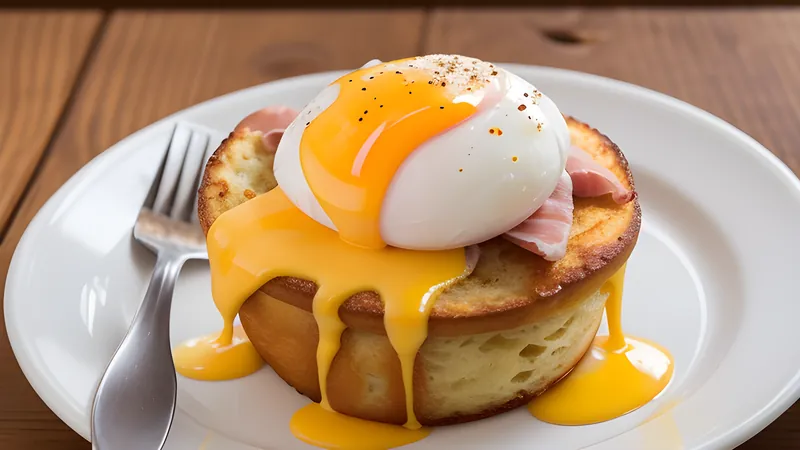
↓ Jump to recipeEggs Benedict has a reputation it does not deserve. People treat it as restaurant food, the dish you order out because making hollandaise at home is supposedly a tightrope walk over a split, oily disaster. It is not. The trick I swear by is a blender hollandaise: hot butter poured into egg yolks with the motor running, emulsified in under a minute, no whisking arm and no double boiler. The other small upgrade is the muffin. A tangy, chewy sourdough English muffin underneath all that richness cuts through it and stops the whole plate feeling like a butter delivery system. With those two things sorted, Benedict goes from terrifying to a perfectly achievable lazy Sunday.
Eggs Benedict with Quick Hollandaise and Sourdough Muffins
Ingredients
- 2 sourdough English muffins, split (or 4 slices of sourdough toast)
- 4 very fresh large eggs, for poaching
- 4 slices of good ham, bacon or smoked salmon
- 1 tbsp white wine vinegar, for the poaching water
- 3 large egg yolks
- 1 tbsp lemon juice, plus more to taste
- 1 tsp Dijon mustard
- 150g unsalted butter
- A pinch of cayenne or smoked paprika
- Salt and freshly ground black pepper
- Chives or chopped tarragon, to finish
Method
- Melt the butter in a small pan until hot and foaming, then keep it warm. Fill a deep pan with water, add the vinegar and bring to a bare simmer.
- Make the blender hollandaise: put the egg yolks, lemon juice, Dijon, a pinch of salt and the cayenne into a blender or tall jug. Blitz for 10 seconds.
- With the motor running, pour the hot melted butter in a slow, steady stream until the sauce is thick, glossy and pale. Taste, adjust with lemon and salt, and keep somewhere warm.
- Toast the split sourdough muffins until golden and warm the ham or bacon. If using salmon, leave it cold.
- Poach the eggs in the barely simmering water for about 3 minutes, until the whites are set and the yolks still soft. Lift out with a slotted spoon and drain on kitchen paper.
- Top each muffin half with ham, then a poached egg. Spoon over plenty of warm hollandaise.
- Finish with a dusting of cayenne, a grind of black pepper and a scatter of chopped herbs. Serve at once.
Where Benedict Came From
For a dish so bound up with the idea of grand hotel brunch, the origins of eggs Benedict are wonderfully petty and disputed. The most repeated story has a hungover Wall Street broker named Lemuel Benedict wandering into the Waldorf in 1894 and ordering buttered toast, poached eggs, bacon and a jug of hollandaise to settle his stomach. The maitre d’, the legendary Oscar Tschirky, was impressed enough to put a refined version on the menu, swapping toast for a muffin and bacon for ham. Lemuel told his version of the tale to The New Yorker in 1942, which is why it has stuck. A rival claim credits a Mrs LeGrand Benedict, a regular at Delmonico’s, who supposedly asked the kitchen for something new for lunch. Either way, it is an American invention dressed in French clothes, hollandaise being one of the classical French mother sauces codified by Auguste Escoffier and taught in every professional kitchen since.
The dish is really an exercise in contrasts: the crisp toasted base, the soft set egg with its liquid yolk, the salty meat, and the warm, lemony, buttery sauce tying it all together. Get those four elements right and you have it. Everything after that, the fancy variations and the plating, is decoration. Nail the four fundamentals and even a plain version on shop toast will be better than most brunch you pay for.
Hollandaise itself is worth understanding a little, because it demystifies the whole thing. It is an emulsion: fat suspended in water in tiny droplets, held together by the emulsifying power of egg yolk. The yolk is full of lecithin, a natural emulsifier that lets oil and water, which normally refuse to mix, stay bound in a smooth, thick sauce. When hollandaise “splits”, the emulsion has broken and the butterfat has separated back out into a greasy pool. Everything the classic method fusses over, gentle heat, slow addition, constant whisking, exists to stop that from happening. The blender does the same job more reliably, which is exactly why it works.
The Blender Hollandaise Trick
Classic hollandaise is made by whisking egg yolks over gentle heat and dribbling in clarified butter, and it can indeed split if the eggs overheat or the butter goes in too fast. The blender method sidesteps the danger almost entirely. The blades whip the yolks into a vortex, and the butter, hot enough to gently cook the yolks as it goes in, emulsifies instantly into a stable, glossy sauce.
The two rules that matter: the butter must be properly hot, foaming but not browned, so it both emulsifies and cooks the yolks to a safe, thickened state; and it must go in slowly, a thin steady stream rather than a glug. The Dijon is my small insurance policy, as mustard is an emulsifier and helps hold everything together, as well as adding a little backbone. If the sauce ever does thicken too much, loosen it with a teaspoon of warm water.
A word on timing, because hollandaise does not like to be kept waiting. It is happiest warm and freshly made, so I always make it last, once the muffins are toasting and the poaching water is at a shiver. Sat too long it can stiffen or, worse, split as it cools. If you need to hold it for a few minutes, leave it in the warm blender jug somewhere off the heat, or stand the jug in a bowl of barely warm water and give it a stir before serving. Made this way it is a sauce of about five minutes, not a project, and that is exactly the point.
Poaching Without Drama
The other thing people fear is the poached egg, picturing wispy clouds of white drifting across the pan. Freshness is the answer. An egg white has two parts, a thick albumen close to the yolk and a thin, watery layer around the outside. As an egg ages the thin layer grows and the thick one weakens, which is why an old egg spreads into rags the moment it hits the water while a fresh one holds itself in a neat parcel. So use the freshest eggs you have; supermarket eggs a week from their lay date will poach far better than ones you have had in the door of the fridge for a fortnight.
A splash of vinegar in the water helps the whites set quickly, because acid speeds up the coagulation of egg protein. The water should be at a bare shiver, around 90°C, with a few lazy bubbles rising, not a rolling boil that batters the eggs apart. Crack each egg into a small cup or ramekin first, so you can lower it gently to the surface and slide it in rather than dropping it from a height. If you like, give the water a slow stir to make a gentle whirlpool just before you add the egg; the current wraps the white around the yolk. Three minutes gives a set white and a flowing yolk. A slotted spoon and a moment on kitchen paper stops watery puddles on your muffin. If you are cooking for a crowd, poach the eggs a few minutes ahead into a bowl of iced water, then reheat them for thirty seconds in the hot poaching water just before serving; restaurants do this all the time.
Making It Your Own
Benedict is a template more than a fixed recipe. Swap the ham for smoked salmon and call it eggs Royale, or pile on wilted spinach for eggs Florentine. Crisp streaky bacon, sauteed mushrooms, a little smashed avocado, or wilted greens with garlic all sit happily under the egg. I like a few capers and a squeeze more lemon when I go the salmon route, and a heavy grind of black pepper always. For a spicier morning, a spoonful of chilli butter under the egg borrows the idea from my Turkish eggs, çılbır, where the same hot, buttery hit plays against a cool base. If you want to keep the whole thing on toast rather than fussing with muffins, smashed avocado with dukkah and feta on sourdough makes a good open-faced foundation for a poached egg too.
The sourdough muffin stays constant in my kitchen: its tang is the thing that keeps an indulgent plate from tipping into too much, and it makes a familiar brunch taste like you fussed far more than you actually did. If you keep a sourdough starter going, the same discard you would otherwise bin can go into muffins, pancakes or the streusel-topped banana muffins I make when the fruit bowl turns. Waste nothing; the tang is free flavour.
Getting the Timing Right
The one thing that trips people up with Benedict is not any single technique but the choreography. Four things need to arrive hot at the same moment: muffins, meat, eggs and sauce. My order runs like this. Melt the butter first and leave it warm. Get the poaching water up to a shiver. Make the hollandaise and park it in the warm blender jug. Toast the muffins and warm the meat while the eggs poach. Assemble the instant the eggs come out. Worked that way, the whole thing takes about fifteen minutes from a standing start, and nothing sits around going cold or stiff. It is a small dance, but once you have done it twice it becomes second nature, and you will wonder why you ever thought this was restaurant-only food.
Related Content