Wok-Charred Egg Fried Rice
The takeaway classic, properly smoky at home
Contents
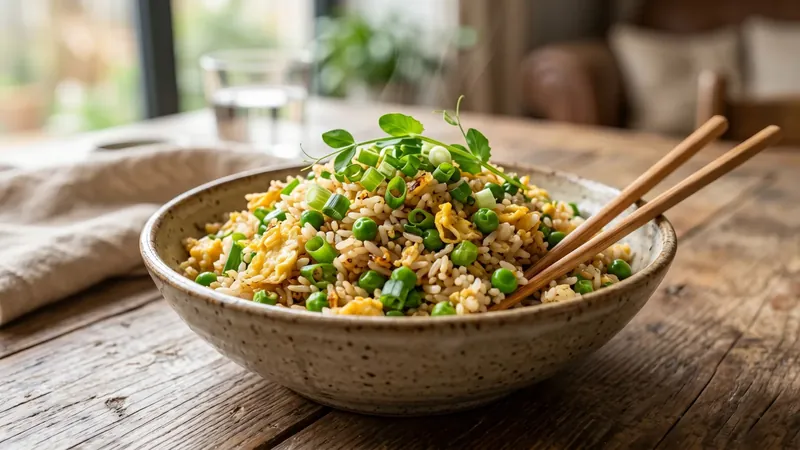
↓ Jump to recipeThere is a reason takeaway egg fried rice tastes the way it does, and it is not magic — it is heat. The twist here is double: cold, day-old rice that fries up in separate, springy grains, plus a properly screaming wok that scorches the rice for that elusive smoky note the Cantonese call wok hei. Spring onion, light and dark soy, and a whisper of sesame finish it. Twenty minutes, two pans dirtied, and a bowl far better than the foil tub.
Wok-Charred Egg Fried Rice
Ingredients
- 350g cooked long-grain rice, cold (ideally day-old)
- 3 large eggs, lightly beaten
- 3 tbsp groundnut or vegetable oil
- 4 spring onions, whites and greens separated, sliced
- 2 garlic cloves, finely chopped
- 1 tbsp light soy sauce
- 1 tsp dark soy sauce
- 1 tsp toasted sesame oil
- 0.5 tsp caster sugar
- 0.25 tsp white pepper
- Pinch of salt
Method
- Break up the cold rice with your fingers so there are no clumps; set aside.
- Mix the light soy, dark soy, sesame oil, sugar and white pepper in a small bowl.
- Heat a wok over the highest flame until it just begins to smoke, then add 1 tbsp oil and swirl.
- Pour in the beaten eggs, let them puff for a few seconds, then scramble until just set and scoop out.
- Add the remaining 2 tbsp oil, then the spring onion whites and garlic; stir for 20 seconds until fragrant.
- Tip in the rice and press it against the hot wok, leaving it untouched for 30 seconds at a time to char before tossing.
- Return the egg, pour in the sauce mixture and a pinch of salt, and toss hard to coat every grain.
- Throw in the spring onion greens, give one final toss, and serve straight away.
The Story
Fried rice exists across Asia as a thrifty answer to the same question: what to do with yesterday’s pot of rice. In southern China it became a Cantonese speciality, and the grandest version, Yangzhou fried rice, carries char siu, prawns and egg. The humble egg-only edition is the everyday cousin — the thing cooks make for themselves at the end of service.
The defining flavour of a good Cantonese fried rice is wok hei, usually translated as “breath of the wok”. It is the faintly smoky, almost charred aroma that comes from cooking over a very high flame in a carbon-steel wok, where droplets of oil and stray grains briefly ignite and the food sears rather than steams. Restaurant ranges roar at a heat domestic hobs cannot match, which is why takeaway rice often tastes more vivid than home attempts. The workaround is to get your wok as hot as it will go, cook in small batches so the pan never cools, and resist the urge to stir constantly — letting the rice sit against the metal is what builds the char. It is the same char-then-toss discipline I use for the corn in my black bean tacos with charred corn salsa and lime crema: heat and patience, not fiddling, are what give you those blackened edges.
The other half of the trick is the rice itself. Freshly cooked rice is moist and soft, so it clumps and turns to mush when fried. Rice that has been cooled and ideally left overnight in the fridge dries out at the surface, the starch firms up in a process cooks call retrogradation, and the grains separate and fry rather than stew. This is not a chef’s affectation; it is the practical reason fried rice was a leftovers dish in the first place, and it is why breaking the cold rice up with your fingers before it hits the pan matters, so no fused clumps survive to steam from the inside.
Long-grain rice is the right choice here. Its lower starch content, compared with short-grain or sticky rice, means the grains stay distinct and never turn gluey. Basmati works well and jasmine even better for its faint fragrance; avoid risotto or pudding rice, which are bred to release starch and cling. If you are cooking rice specially for this rather than using leftovers, cook it a touch on the firm side, spread it on a tray to steam-dry, then chill it uncovered so the surface dries out properly.
Order of cooking is the last piece. The egg goes in first, over high heat, so it puffs and sets fast in the hot oil, then comes straight out before it toughens. The aromatics follow in fresh oil, just long enough to release their fragrance without burning the garlic, which turns bitter in seconds at this heat. Only then does the rice go in, to be pressed and left to char. Everything is folded back together at the very end, off the worst of the heat, so nothing overcooks while the flavours come together.
Soy sauce here does two jobs. Light soy, thin and salty, seasons; dark soy, thicker and aged longer with a touch of molasses, lends colour and a rounder savoury depth. A pinch of sugar balances the salt, white pepper adds a gentle floral heat distinct from black pepper, and sesame oil is added off the heat so its delicate aroma survives. Keep the additions restrained — egg fried rice is meant to taste of rice, egg and the wok, not of a bottle.
What goes wrong, and how to fix it
Almost every failed egg fried rice comes down to one of three things. The first is warm or fresh rice, which steams instead of frying and turns to a gummy, clumped mush no amount of tossing will rescue; if you have forgotten to cook rice the day before, spread freshly cooked rice on a tray and chill it uncovered in the fridge for at least an hour to dry the surface. The second is an overcrowded, under-heated wok. Cooking 700g of rice for four people in one go drops the pan temperature off a cliff and you end up stewing; cook it in two batches, or accept a larger, cooler result. The third is scrambling the egg into oblivion. You want it just set, scooped out and folded back in at the end, so it stays soft and glossy rather than turning to rubbery pellets from sitting in the pan.
A carbon-steel wok is worth having because it takes and holds fierce heat and its curved base concentrates it, but a wide, heavy frying pan will do a respectable job if you keep it screaming hot and cook in smaller batches. Non-stick pans are the wrong tool here: their coatings are not meant for the heat you need, and you will never get any char.
Substitutions and variations
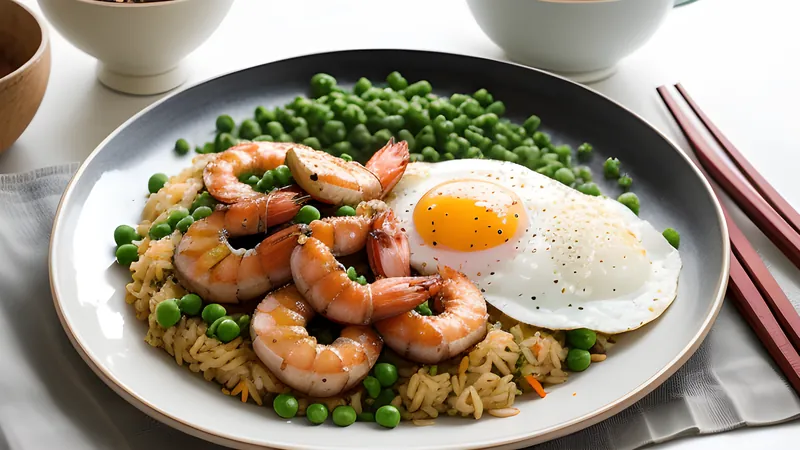
The egg-only version is the everyday one, but this is a template. For a Yangzhou-style rice, add 100g of diced char siu or cooked prawns with the spring onion whites, and a handful of defrosted peas at the end. Cold roast chicken, chopped ham or leftover pork all work; add them just to heat through so they do not dry out, since they are already cooked and only need warming in the hot pan. Vegetarians can bulk it out with finely diced carrot and peas fried before the rice goes in, or with cubes of firm tofu browned first and set aside with the egg to keep their crisp edges.
If you cannot get white pepper, a little black pepper will do, though the flavour is coarser. Groundnut oil has the high smoke point you want for this kind of heat; if you only have vegetable or sunflower oil, they are fine, but avoid olive oil, which will smoke and taste wrong. A few drops of Shaoxing wine splashed down the side of the hot wok just before the rice goes in adds a savoury depth close to the restaurant version.
Storage and serving
Egg fried rice is best straight from the wok, but it will keep, cooled quickly and refrigerated, for up to a day. Reheat it hard in a hot pan rather than the microwave to drive off moisture and revive some of the texture. A word of care with rice generally: cool leftover cooked rice quickly, within an hour, and keep it chilled, because rice left at room temperature can grow bacteria that survive reheating.
Serve it as a meal in its own right with a fried egg on top and a slick of chilli oil, or as part of a spread. A quick cucumber salad, smacked and dressed with rice vinegar and a little sugar, is the classic fresh counterpoint to all that savoury, oily rice, and takes only minutes while the wok heats. It sits happily alongside anything brothy and warming; I often make a bowl to go with my miso ramen when I want two proper things on the table for not much more effort than one.
Related Content