Dum Aloo Kashmiri: Baby Potatoes in Red Chilli Gravy
Blistered potatoes, glowing red, no onion in sight
Contents
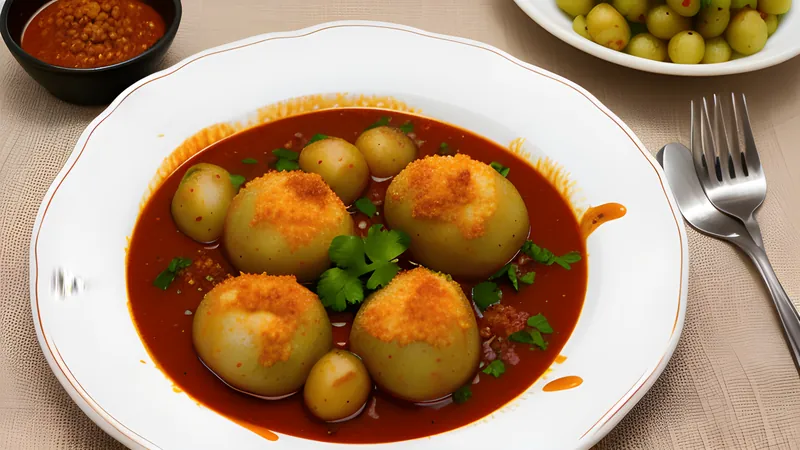
↓ Jump to recipeDum aloo in Kashmir means something specific: baby potatoes, blistered whole in hot mustard oil, then finished slowly under a lid in a gravy the colour of brick, built without a trace of onion or garlic. What carries it instead is Kashmiri chilli powder for that glowing red, ground fennel and dried ginger for warmth, and a pinch of asafoetida standing in for the savoury note onion would normally supply. It’s a side dish substantial enough to be a main on its own, needing only rice.
The technique matters as much as the spice list. Frying the potatoes whole and unpeeled, skin pricked all over, gives them a blistered surface that grips the sauce and a texture that stays firm rather than collapsing during the slow simmer that follows. Skip the frying and boil them straight into the gravy, and you get soft, waterlogged potatoes with a sauce that never properly clings.
Dum Aloo Kashmiri: Baby Potatoes in Red Chilli Gravy
Ingredients
- 600g baby potatoes, similar size, skin on
- 4 tbsp mustard oil, divided
- 200g full-fat natural yoghurt, whisked smooth
- 2 tbsp Kashmiri chilli powder
- 1 tsp ground fennel (saunf)
- 0.5 tsp ground dried ginger (saunth)
- 0.25 tsp asafoetida (hing)
- 4 green cardamom pods, bruised
- 1 cinnamon stick
- 4 cloves
- 2 bay leaves
- 0.5 tsp ground turmeric
- 300ml water
- Salt, to taste
- Fresh coriander, to serve
Method
- Boil the potatoes whole in salted water for 12-15 minutes until just tender, then drain and cool enough to handle.
- Prick each potato several times with a fork or skewer so the gravy can soak in, and pat them dry.
- Heat 3 tbsp of the mustard oil in a wide pan until it smokes lightly, then let it settle for a minute.
- Fry the potatoes in the hot oil for 8-10 minutes, turning often, until blistered and golden all over, then remove and set aside.
- In the same pan, add the remaining oil, the cardamom, cinnamon, cloves and bay leaves, and fry for 30 seconds.
- Add the asafoetida, stir for 10 seconds, then lower the heat and add the Kashmiri chilli powder, fennel, dried ginger and turmeric, stirring for 30 seconds so they don't catch.
- Take the pan off the heat and stir in the whisked yoghurt a few spoonfuls at a time.
- Return to a low heat, add the water and a good pinch of salt, and bring to a gentle simmer.
- Add the fried potatoes, cover and cook on low for 15 minutes, until the gravy has thickened and clings to the potatoes.
- Scatter with coriander and serve.
The story: dum, and a naming confusion worth clearing up
“Dum aloo” is one of the more misleading dish names in Indian cooking, because two entirely different recipes share it. The version most people meet first, in restaurants outside Kashmir, is Punjabi in origin: potatoes deep-fried until dark, then simmered in a rich, often cream-and-cashew-thickened tomato and onion gravy. The Kashmiri original this recipe follows is older, plainer, and considerably more restrained, building its depth from yoghurt, fennel and asafoetida, with the colour coming entirely from Kashmiri chilli rather than tomato.
The word dum itself refers to a slow-cooking method where a pot is sealed, traditionally with a ring of dough pressed around the lid, and left to cook gently in its own trapped steam and residual heat, a technique used across a wide range of Indian cooking from biryani to this humbler potato dish. Rice biryanis are the most famous dum dishes, but the same principle applies here on a smaller scale: once the potatoes go into the gravy, the pan is covered and the heat is kept low, letting the sauce reduce and the flavour concentrate rather than boiling hard and losing moisture to steam. A tight-fitting lid is doing the same job here that a sealed dough ring does in a proper dum biryani, just at a much smaller and more forgiving scale, since a slightly imperfect seal on a potato curry costs you a little moisture rather than an unevenly cooked pot of rice. A loose-fitting lid and too high a heat is the fastest way to end up with a thin, split gravy instead of the thick one this dish is meant to have.
Like yakhni, dum aloo belongs to the Kashmiri Pandit vegetarian tradition, which built an entire cuisine around the absence of onion and garlic, relying instead on asafoetida, dried ginger and fennel to give a savoury base a curry would otherwise need alliums for. That’s part of what makes it a genuinely useful dish beyond Kashmir: it’s one of the few properly spiced, richly flavoured curries that happens to work for anyone avoiding onion and garlic for religious or dietary reasons, without tasting like a compromise.
The pricking step, piercing each boiled potato several times before frying, is easy to skip in a rush but does real work beyond letting the gravy soak in. It also lets steam escape from inside the potato while it fries, preventing the skin from bursting unpredictably in hot oil, which is both a safety consideration and the reason properly made dum aloo potatoes have an even, deliberately blistered surface rather than a few random splits and a mostly smooth skin.
Technique: the fry, and keeping the sauce from splitting
Frying the potatoes properly is worth the extra ten minutes. The oil needs to be genuinely hot, at the point of smoking, before the potatoes go in; add them to oil that’s only warm and they absorb it rather than blistering, ending up greasy instead of crisp-skinned. Turn them often rather than leaving them still, so the blistering happens evenly across the whole surface rather than in patches. Parboiling the potatoes first, as the method has you do, is what makes this whole sequence manageable: a fully raw potato would need far longer in the hot oil to cook through, by which point the outside would burn long before the centre softened, so the boil does the bulk of the cooking and the fry simply builds the blistered crust on top.
The yoghurt behaves exactly as it does in yakhni: it splits if it meets a very hot pan directly, so take the pan off the heat before stirring it in, and add it gradually rather than all at once. Because this gravy also carries Kashmiri chilli powder and turmeric, both of which need thirty seconds in hot oil to lose their raw, dusty edge before the yoghurt goes in, the order of operations in the method matters — spices first, off the heat, then yoghurt, then back onto a low flame.
If the gravy still looks thin once the potatoes have simmered for fifteen minutes, uncover the pan for the final five minutes and let it reduce over a slightly higher heat, stirring so it doesn’t catch on the base. A properly finished dum aloo gravy should coat the back of a spoon rather than pool around the potatoes.
Sourcing genuine Kashmiri chilli powder is worth the small effort of finding an Indian grocer or ordering online, because it’s the whole reason the gravy looks the way it does. It’s grown for colour rather than heat, and a tablespoon of it delivers a deep, appetising red with only a gentle warmth behind it. A standard hot chilli powder or cayenne, used in the same quantity, produces a browner, considerably fiercer gravy that misrepresents the dish; if Kashmiri chilli genuinely isn’t available, cut the quantity of a hotter powder by half and make up the colour with a teaspoon of sweet paprika, which contributes red without extra heat.
What to serve it with
Dum aloo is a natural partner for plainer Kashmiri dishes, precisely because its colour and heat provide the contrast a meal needs. Serve it with haak for a genuinely traditional Kashmiri Pandit plate, or alongside yakhni if you’re cooking a meat and vegetable meal together — the pale yakhni and the red dum aloo look striking side by side on plain rice. To close a fuller spread the way a Kashmiri wedding feast would, finish with modur pulav, the sweet saffron rice that ends a wazwan.
Storage, make-ahead and variations
Dum aloo keeps for three days in the fridge and reheats well over a low heat with a splash of water to loosen the sauce, which thickens considerably once cold. It doesn’t freeze especially well; the potatoes turn grainy once thawed, so this is better made a day or two ahead and kept chilled rather than frozen.
Waxy new potatoes, the kind sold specifically as salad or baby potatoes rather than a general-purpose floury variety, hold their shape through both the frying and the fifteen-minute simmer far better than a floury potato, which tends to break down at the edges and thicken the sauce with starch rather than staying whole and blistered. If all you can find is a larger floury variety, cut it into evenly sized chunks rather than leaving them whole, and shorten the simmer slightly to avoid them collapsing entirely.
If baby potatoes aren’t available, quarter larger ones after boiling, though the blistering and gravy-gripping texture works best with small, whole potatoes. A handful of shelled walnuts, lightly toasted and stirred through at the end, is a genuine regional variation in some Kashmiri households, adding a bitter, oily richness that plays well against the chilli. Toast the walnuts dry in a small pan for a minute or two before adding them, rather than raw, since raw walnuts stirred straight into a hot gravy can taste flat and slightly tannic; a brief toast brings out the oils and rounds off that bitterness into something closer to a pleasant, nutty edge. Skip cream or cashew paste entirely if you’re tempted to add either for extra richness; both belong to the Punjabi version of this dish and dilute the specific fennel-and-chilli character that makes the Kashmiri original worth making. If the dish needs more body without reaching for either, a few extra minutes uncovered at the end, reducing the gravy further, achieves the same thickness through concentration rather than addition.
Related Content