Draniki: Belarusian Potato Pancakes
Lacy, crisp-edged potato pancakes from the country that eats more potato than anyone
Contents
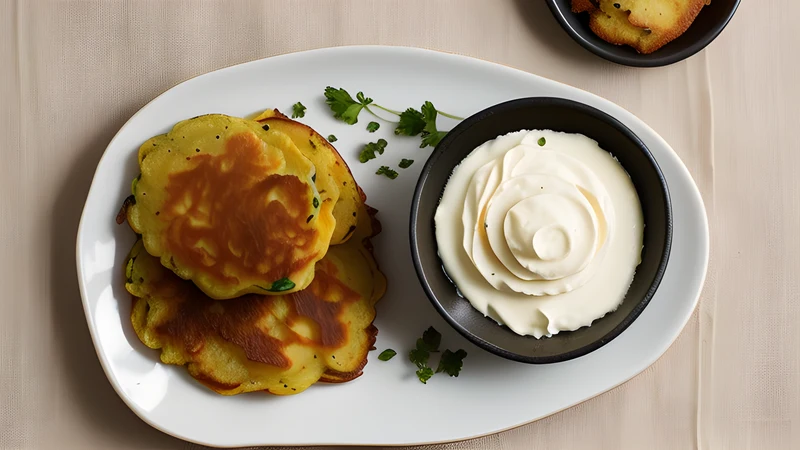
↓ Jump to recipeBelarus eats more potato per head than almost anywhere on earth, and draniki are what that national devotion tastes like: thin, ragged-edged potato pancakes fried until the outside is lacy and crisp and the inside stays soft. Hot from the pan with a cold spoon of soured cream sliding off the top, they are one of the great cheap pleasures of eastern European cooking, and one of the first things I learned to make when I wanted to understand what real potato cookery could be.
Draniki: Belarusian Potato Pancakes
Ingredients
- 1kg floury potatoes (Maris Piper or King Edward)
- 1 small onion
- 1 egg
- 2 tbsp plain flour (or 1 tbsp potato starch)
- 1 tsp fine salt
- ½ tsp ground black pepper
- Neutral oil (sunflower or rapeseed), for shallow frying
- 200g soured cream (smetana), to serve
- Chopped fresh dill or chives, to serve
Method
- Peel the potatoes and onion. Grate the potatoes on the fine side of a box grater into a large bowl, and grate the onion in with them — the onion's acid slows the potato from browning.
- Tip the grated mixture into a clean cloth or fine sieve and squeeze out as much liquid as you can into a bowl. Let that liquid stand for 5 minutes.
- Pour off the watery liquid, leaving the white starch that has settled at the bottom, and scrape that starch back into the grated potato.
- Mix in the egg, flour, salt and pepper to make a loose, spoonable batter. Work quickly, as the potato will darken if it sits.
- Heat a 3mm depth of oil in a large frying pan over medium-high heat until a shred of potato sizzles briskly on contact.
- Drop in heaped tablespoons of batter and flatten each into a thin round about 8cm across. Do not crowd the pan.
- Fry for 3–4 minutes per side until deep golden brown and lacy-crisp at the edges, adjusting the heat so they colour without burning.
- Drain on kitchen paper and keep warm in a low oven while you fry the rest. Serve hot with cold soured cream and dill.
The potato country’s signature dish
Draniki (singular dranik) are so central to Belarusian identity that they function as an unofficial national dish. The name comes from the verb drać — “to grate” or “to tear” — because the potatoes are grated rather than mashed, and the ragged edges of the finished pancake earn the name. Every Belarusian family has a version, and every family will tell you theirs is correct.
Potato pancakes belong to a whole belt of eastern and northern Europe. The Jewish latke, the Polish placki ziemniaczane, the German Kartoffelpuffer and the Ukrainian deruny are all close relatives, and the arguments over which came first are cheerfully unresolvable. What sets the Belarusian draniki apart, in the strictest tradition, is minimalism: potato, onion, salt, and often nothing else — not even egg or flour. Purists insist the potato’s own starch should be the only binder. I add a little egg and flour for reliability, and I will defend that choice to anyone; but it is worth knowing that the austere version is the ideal, and that the better your potatoes, the less you need.
The potato reached Belarus comparatively late. It arrived in the region in the eighteenth century, pushed first by landowners and later by the Russian imperial state as a hedge against grain failure, and the sandy, cool soils of the Belarusian countryside turned out to suit it perfectly. Within a couple of generations it had gone from suspicious novelty to the crop that stood between a peasant household and hunger. Draniki grew directly out of that dependence: a way to turn even small or frost-damaged tubers, grated down, into something hot and filling with almost nothing else in the larder. The dish carries that thrift in its bones, which is why the strictest cooks still bristle at anything beyond potato, onion and salt.
That potato obsession spills across every border in the region. The Lithuanian potato zeppelins cepelinai use the identical trick of squeezing raw grated potato dry and reclaiming its starch, and the same cold spoon of soured cream that finishes draniki turns up on the neon-pink soup šaltibarščiai. Draniki are the simplest and most everyday expression of it.
Today they are both plain daily food and a point of national pride. They appear on the menu of practically every Belarusian café and canteen, cooked to order and stacked steaming; they are a benchmark of a good home cook; and they turn up at Kupalle, the midsummer festival, and at family gatherings where a grandmother at the stove will fry batch after batch faster than the table can eat them. Belarusian writers have reached for them as shorthand for home and childhood, the smell of frying potato standing in for the whole idea of the family kitchen. For a dish this humble, that is a remarkable amount of cultural weight, and it explains why Belarusians abroad talk about draniki the way other emigrants talk about their mother’s bread.
The science of a crisp draniki
A great draniki is crisp and lacy at the edge and tender within. A bad one is grey, soggy and dense. The difference comes down to three things: managing water, managing starch, and managing the pan.
Water is the enemy. Grated raw potato holds a huge amount of water, and water is what steams your pancake into sogginess and stops it crisping. So you squeeze the grated potato hard in a cloth or sieve until it is as dry as you can get it. This single step does more for texture than anything else.
Starch is the friend. But when you squeeze out the water, you also squeeze out potato starch — the natural binder that holds the pancake together and helps it crisp. The clever move, shared with cepelinai, is to let the squeezed-out liquid stand for five minutes. The starch sinks and forms a chalky white layer at the bottom. Pour off the water, scrape that starch back into your potato, and you have kept the glue while losing the water. This is the trick that makes a draniki that both holds together and goes crisp.
Grate the onion in early. Onion is not only for flavour. Its natural acids slow the enzymatic browning that turns grated potato grey, so grating it straight in with the potato keeps your batter paler. It will still darken if it sits, so work quickly once mixed — grated raw potato is not a batter you can make ahead.
Choosing the potato
Use a floury, high-starch potato — Maris Piper, King Edward, russet. Waxy potatoes are lower in starch and higher in moisture, so they bind poorly and fry greasy. Floury potatoes grate to a starchier pulp that crisps beautifully and needs less added binder. This is one of those dishes where the variety genuinely changes the result.
Grate on the fine side of a box grater for the classic soft-centred, lacy-edged draniki. Some cooks use a coarse grate for a more textured, hash-brown-like pancake; both are legitimate, but fine is the traditional Belarusian texture.
The grater itself is worth a thought. A box grater gives the most authentic result, its fine holes producing the slightly stringy, watery pulp that traditional draniki are made from. A food processor with a grating disc is faster for a big batch but tends to cut cleaner, drier shreds that behave more like a hash brown; if you go that route, follow it with a few seconds of the metal blade to break the shreds down. Whatever you use, grate straight into a bowl and start squeezing immediately, because the clock begins the moment raw potato meets air.
Frying: hot oil, thin pancakes, no crowding
Draniki are shallow-fried, and they want a proper depth of oil — around 3mm — and a properly hot pan. The oil should sizzle briskly the moment a shred of potato hits it. Too cool and the pancakes absorb oil and go greasy; too hot and they scorch before the centre cooks.
Drop in heaped spoonfuls and flatten each one thin, around 8cm across. Thin pancakes crisp; thick ones stay stodgy in the middle. Do not crowd the pan — each pancake drops the oil temperature, and a crowded pan steams rather than fries. Give them three to four minutes a side until deep golden brown, then drain on paper and keep warm in a low oven while you work through the batch. Use oil for frying; butter burns at this heat and will scorch the pancakes, though a small knob added to the hot oil is fine for flavour if you keep a close eye on it.
Serving and going further
The classic serving is the plainest and the best: hot draniki, a cold spoon of thick soured cream, and a scatter of dill or chives. The contrast of hot crisp potato and cold sour cream is the whole point.
From there, draniki open up. A famous Belarusian version, draniki po-belorusski or the richer machanka-topped style, serves them with a pork-and-soured-cream gravy poured over. Stuffed draniki (kolduny) sandwich a little seasoned minced meat between two potato layers before frying. And they make a superb base for a fried or poached egg at breakfast, or for cured fish and soured cream as a canapé.
Machanka deserves a word of its own, because for many Belarusians it is the definitive way to eat draniki. It is a loose, brothy gravy built from pork — belly, ribs, sausage or all three — softened with onion, slackened with soured cream, sometimes thickened with a little flour and sharpened with a bay leaf and plenty of black pepper. The draniki are torn and dipped, or laid in a shallow bowl with a ladle of the gravy poured over so the edges soften just enough to soak it up while the centres stay intact. Served this way, with black bread on the side, draniki become a full winter dinner.
Beyond machanka and plain soured cream, draniki take happily to salty and smoky partners: slices of cured salo or streaky bacon crisped in the pan, a spoon of soft curd cheese, pickled mushrooms, or the forest mushrooms that Belarusians gather obsessively in autumn and fold into a creamy sauce. What every good topping shares is a cold, sharp or salty note to cut the richness of the fried potato.
Troubleshooting
They fall apart in the pan. Not enough binder — you lost too much starch, or your potatoes were low-starch. Reclaim the settled starch, or add an extra spoon of flour or potato starch.
They are greasy and soft. The oil was not hot enough, the pan was crowded, or the potato was not squeezed dry. Fix all three.
They went grey. The batter sat too long before frying. Grate the onion in early and fry as soon as the batter is mixed.
They are pale and never crisp up. Fry them longer and hotter, and make the pancakes thinner.
Make-ahead. The batter cannot be made ahead — it oxidises and weeps. Cooked draniki, though, reheat well and crisp back up in a hot oven or dry pan; the microwave makes them soft, so avoid it.
Draniki cost almost nothing, use one main ingredient, and reward a little technique with genuine deliciousness. Master the squeeze-and-reclaim trick and you will make them for the rest of your life. Fry them hot, serve them fast, and keep the soured cream cold.
Related Content