Doubles: Trinidad's Breakfast Sandwich
Two soft flatbreads, curried chickpeas and a queue at dawn
Contents
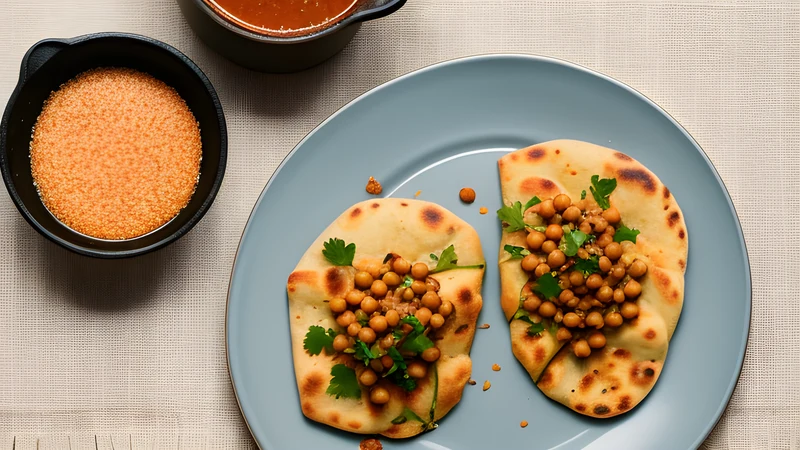
↓ Jump to recipeThe first time someone hands you a doubles it looks like an accident waiting to happen. Two floppy fried flatbreads, a heap of soupy curried chickpeas in the middle, sauces dribbling toward the paper, and no obvious way to eat it without wearing half of it. Then the vendor folds the paper around the base, you tip your head, and you understand: this is one of the great street breakfasts anywhere in the world, engineered to be eaten standing up on the way to work. In Trinidad, doubles is what you queue for at dawn.
It is also, quietly, a vegan dish that nobody thinks of as a vegan dish. Chickpeas, flatbread, tamarind, pepper. The whole thing is built from a store cupboard, costs almost nothing, and once you have made the two components a few times it becomes genuinely quick weekend cooking.
Doubles: Trinidad's Breakfast Sandwich
Ingredients
- For the bara: 300g plain flour
- 1 tsp instant yeast
- 1 tsp sugar
- 1 tsp ground turmeric
- 1/2 tsp ground cumin
- 1 tsp salt
- About 180ml warm water
- Neutral oil, for deep frying
- For the channa: 250g dried chickpeas, soaked overnight (or 2 x 400g tins, drained)
- 2 tbsp neutral oil
- 1 onion, finely chopped
- 4 cloves garlic, crushed
- 2 tbsp Trinidadian or Madras curry powder
- 1 tsp ground cumin
- 1/2 tsp ground turmeric
- 1 scotch bonnet, left whole
- 500ml water, plus more as needed
- 1 tsp salt
- To serve: tamarind sauce, cucumber chutney, scotch bonnet pepper sauce, chopped coriander
Method
- Make the bara dough: whisk the flour, yeast, sugar, turmeric, cumin and salt. Add warm water gradually to a soft, slightly sticky dough. Knead 5 minutes, cover and prove 1–2 hours until doubled.
- Cook the channa: if using dried chickpeas, boil the soaked chickpeas in fresh water until tender, about 45 minutes, then drain. Fry the onion and garlic in oil until soft. Add curry powder, cumin and turmeric and cook 1 minute until fragrant.
- Add the chickpeas, whole scotch bonnet, water and salt. Simmer 20–30 minutes, crushing about a third of the chickpeas against the pan, until thick and stew-like. Remove the pepper before it bursts.
- Shape the bara: oil your hands, pinch the dough into 16 golf-ball pieces, and flatten each into a thin disc about 10cm across.
- Fry the bara in oil heated to 180°C, one or two at a time, for about 20 seconds a side until puffed and pale gold. Drain on paper.
- Assemble: overlap two bara on a square of paper, spoon curried channa in the middle, top with tamarind, cucumber chutney, pepper sauce and coriander. Fold and eat immediately.
Where doubles comes from
Trinidad’s food is Caribbean geography meeting Indian labour history. After the abolition of slavery in the 1830s, the British brought indentured workers from India to the sugar plantations, and they brought their food with them: roti, curried chickpeas, tamarind, the whole grammar of the subcontinental kitchen. Over generations that grammar fused with local ingredients and a Caribbean love of heat to produce something new. Doubles is the clearest example. The curried chickpea filling, channa, is straight out of northern India. The bara is a cousin of the fried breads of that same tradition, spiked with turmeric and cumin.
The dish itself is usually credited to the town of Princes Town in the early twentieth century, where a man named Emamool Deen is said to have sold a single fried bara with channa, then started folding two around the filling because customers kept asking for more bread. Two bara: doubles. The name is that literal. From a single vendor it spread across the island until every roadside, every maxi-taxi stand, every liming spot had its doubles man, and the best of them became institutions with queues that told you everything you needed to know before you tasted anything.
It sits in a wider Caribbean tradition of turning cheap, filling ingredients into street food worth waking up for, the same instinct behind Jamaica’s patties or the pelau pot that browns rice in caramel. What sets doubles apart is that it is unapologetically breakfast, eaten hot at seven in the morning with a warm sweet drink alongside.
The doubles vendor’s rhythm
Watch a busy doubles stand and the whole logic of the dish reveals itself. The channa is cooked in a great pot before dawn and kept warm all morning. The dough was mixed and proved overnight, and the vendor pinches and fries bara continuously, a stack of them steaming under a cloth. Every order is assembled in about ten seconds: two bara slapped onto brown paper, a spoon of channa, then the run of sauces called out by the customer. Nothing is built until it is bought, because a doubles that sits for five minutes is a soggy doubles.
That rhythm is the thing to copy at home. Do not try to plate finished doubles ahead of time. Instead, split the work the way the vendor does: hot channa held in a low pot, fried bara kept warm and soft, sauces in little bowls, and everyone builds their own at the counter. Traditional Trinidadian orders come with their own vocabulary, too: you ask for “slight,” “medium” or “plenty” pepper, and a request for “extra channa” or “with cucumber” tells the vendor exactly how to load the paper. Learn to build to order and you turn a fiddly recipe into an easy, sociable one.
The channa is the soul
Get the chickpeas right and the rest follows. The filling should be thick and spoonable, somewhere between a curry and a stew, with about a third of the chickpeas broken down into a rough gravy that holds the whole together while the rest stay whole and yielding. If you use tinned chickpeas, the whole thing takes half an hour; dried chickpeas soaked overnight and simmered from scratch have a better texture and a nuttier flavour, and I think they are worth the extra time on a weekend.
The curry powder matters. Trinidadian curry powder is its own blend, heavy on coriander and turmeric, and if you can find it, use it. Failing that, a good Madras curry powder is a fair stand-in. The key technique is to bloom the powder in hot oil with the onion and garlic for a full minute before the liquid goes in. Raw curry powder tastes dusty and flat; cooked briefly in fat it opens up into something warm and rounded. This one step is the difference between a channa that tastes homemade and one that tastes like a school canteen.
The scotch bonnet goes in whole. Left intact it perfumes the pot with that fruity Caribbean heat without making the channa aggressive, and you fish it out before it bursts. If you want more fire, that comes later, from the pepper sauce on top, where each person controls their own dose. Crush some of the chickpeas against the side of the pan with the back of a spoon as it simmers; this is what thickens the gravy naturally, without flour or cornflour. A pinch of ground geera (roasted cumin) stirred in at the end, along with a scatter of fresh coriander known locally as chadon beni, is the Trinidadian finishing move that makes the pot taste of the island rather than of a generic curry.
The bara: soft and pillowy
The bara is a fried bread, but the goal is soft and pillowy rather than crisp. This trips people up, because we associate deep frying with crunch. Here you want the opposite: a tender, slightly chewy flatbread that folds around the filling without cracking. Two things get you there. First, a well-proved yeasted dough, soft and a little sticky, so oil your hands rather than flouring the surface when you shape it. Second, a genuinely hot frying temperature and a short time in the oil, around twenty seconds a side. In and out fast, the bara puffs, cooks through, and stays soft. Left too long it goes crisp and cracks when folded.
Shape the discs thin, about ten centimetres across. They will puff as they fry and shrink slightly, giving you the right size to cradle a spoonful of channa. If your first one comes out dense, your oil was probably not hot enough, or the dough was underproved. Turmeric gives the bara its characteristic yellow; do not skip it, both for colour and its faint earthy flavour.
The sauces, and how to make them
A doubles without its toppings is just chickpeas in bread. The three that matter are tamarind sauce, cucumber chutney and pepper sauce, and together they do what every great Caribbean plate does: layer sweet, sour, fresh and fiery over something rich. All three take minutes and reward being made ahead.
For a quick tamarind sauce, soak 60g of seedless tamarind pulp in 150ml hot water for ten minutes, work it through a sieve, then simmer the strained paste with 2 tablespoons of brown sugar, half a teaspoon of salt, a pinch of ground cumin and a little grated garlic until it coats a spoon. It should taste dark, sweet and mouth-puckeringly sour at once.
The cucumber chutney is even simpler: coarsely grate half a cucumber, squeeze out some of the water, and stir it with a crushed clove of garlic, a little chopped scotch bonnet, salt and a squeeze of lime. It brings crunch and cool against the warm channa.
The pepper sauce is where you dial the heat to your own taste, and it is what people mean when they talk about a proper doubles. Blend 3 scotch bonnets with a clove of garlic, a splash of vinegar and a pinch of salt into a loose, fierce purée, and use it a teaspoon at a time. If you make only one sauce, make this one. But all three, spooned generously, are what turn the components into the real thing, finished with a scatter of chopped coriander.
Eating it, and making it work at home
Doubles is assembled to order and eaten immediately, standing up, from the paper. It does not travel and it does not keep once built; the bara goes soggy within minutes, which is exactly why it is street food you eat on the spot. At home, the trick is to cook the channa ahead, keep it warm, fry the bara fresh, and let everyone build their own at the counter. That way the bread stays soft and everyone controls their pepper.
Both components make ahead well on their own. The channa is better the next day, once the flavours have settled, and reheats with a splash of water. The bara dough can be made the night before and left to prove slowly in the fridge, then shaped and fried in the morning. This is how you have doubles for a lazy weekend breakfast without a dawn start.
Troubleshooting
The bara turned crisp and cracked. It stayed in the oil too long, or the dough was rolled too thin. Fry hot and fast, no more than twenty seconds a side, and shape the discs a touch thicker.
The bara came out dense and greasy. The oil was too cool, so the bread absorbed fat instead of puffing, or the dough was underproved. Get the oil to 180°C and give the dough a full one to two hours to rise.
The channa is too thin and watery. Simmer it longer uncovered and crush more of the chickpeas against the pan; the released starch is what thickens it.
It is not spicy enough. The whole scotch bonnet only perfumes the pot. Real heat comes from the pepper sauce spooned on at the end, so build it up there rather than splitting the pepper into the channa.
Serve them the way Trinidad does: two or three per person, a warm drink alongside, and no cutlery. If you want to make a whole Caribbean spread of it, a jar of sharp Haitian pikliz on the side belongs to Haiti rather than Trinidad, though it works beautifully alongside. The first time you fold that paper around a hot doubles and take a bite that is soft, spiced, sweet, sour and fiery all at once, you will understand the queue.
Related Content