Doro Wat With Injera From Scratch
The deep-red chicken stew that Ethiopia builds a table around
Contents
↓ Jump to recipeThere is a moment in a Sana’a kitchen — sorry, wrong country, but stay with me — when a stew stops being ingredients and becomes an argument for sitting down together. Doro wat is that stew for Ethiopia. It is the dish that comes out for Orthodox Christmas, for Easter after the long fast, for a wedding, for the arrival of someone who matters. Traditionally it carries twelve pieces of chicken and a boiled egg for each guest, and while I have never counted apostles into a pan, the generosity of the thing is the point. You make it slowly, you make a lot, and you serve it on a single shared sheet of injera that everyone tears at with their right hand.
The version below asks for patience in two places: the onions and the ferment. Neither is difficult. Both reward you disproportionately.
Doro Wat With Injera From Scratch
Ingredients
- For the injera: 300g teff flour (ideally ivory or brown teff)
- 480ml water, plus more as needed
- 1 tbsp active starter or a pinch of instant yeast (optional, to speed the ferment)
- 1/2 tsp fine salt
- For the niter kibbeh: 250g unsalted butter
- 3 cardamom pods, cracked
- 1/2 tsp fenugreek seeds
- 2 cloves garlic, crushed
- 2cm ginger, sliced
- 1/4 tsp ground turmeric
- For the doro wat: 1kg chicken thighs and drumsticks, skin removed, bone in
- Juice of 1 lemon
- 700g red onions (about 5 large), very finely chopped
- 4 tbsp niter kibbeh (from above)
- 5 tbsp berbere spice blend
- 3 cloves garlic, grated
- 2cm ginger, grated
- 150ml water or unsalted chicken stock
- 6 eggs, hard-boiled and peeled
- 1 tsp fine salt, or to taste
Method
- Three days ahead, whisk the teff flour with 480ml water and the optional starter into a smooth batter. Cover loosely and leave at room temperature. It will separate, bubble and sour over 48 to 72 hours; pour off the dark liquid that rises each day and stir back the rest.
- Make the niter kibbeh: melt the butter gently with the cardamom, fenugreek, garlic, ginger and turmeric. Simmer on the lowest heat for 20 minutes until the milk solids sink and turn golden, then strain the clear spiced butter into a jar.
- Toss the chicken with the lemon juice and 1/2 tsp salt and set aside for 30 minutes.
- In a wide heavy pan, cook the onions dry over medium-low heat, stirring often, for 25 to 30 minutes until collapsed and jammy. Add no oil yet; this dry sweat is what gives doro wat its texture.
- Stir in 4 tbsp niter kibbeh and the berbere and cook, stirring, for 5 minutes until the paste darkens and smells toasted. Add the garlic and ginger and cook 2 minutes more.
- Nestle in the chicken, turning to coat. Pour in the water or stock, cover and simmer very gently for 45 to 60 minutes, stirring now and then, until the sauce is thick and glossy and the chicken is tender.
- Score each boiled egg lightly and slip them into the sauce for the last 15 minutes to take on colour. Season with salt.
- To bake the injera: thin the soured batter with warm water to a thin cream, whisk in the salt. Heat a large non-stick or clay pan over medium. Pour a ladle in a spiral from the outside in, cover, and cook 2 to 3 minutes until the top is set with tiny holes. Do not flip. Lift onto a cloth to cool and repeat.
- Line a platter with injera, spoon the doro wat and eggs on top, and serve with extra rolled injera alongside.
The onion is the sauce
Most stews start with onions softened in fat. Doro wat starts with onions cooked in nothing at all. You chop an enormous quantity — around 700g for this pot, which looks absurd until they cook down — and sweat them dry over a low flame, stirring, for the better part of half an hour. The water leaves, the sugars concentrate, and the pile collapses into a dark jam that clings to the spoon. Only then does the fat go in.
This dry-cook is the single technique that separates a real doro wat from a curry pretending to be one. The onions become the body of the sauce, thickening it without flour or cream, so the finished wat is dense enough to sit in a mound rather than run across the plate. If you rush this stage the stew stays thin and the berbere tastes raw. Give it the thirty minutes.
My one small twist here is to bloom the berbere hard. After the niter kibbeh melts into the onions, I let the spice paste cook a full five minutes until it visibly darkens and the kitchen smells of toasted chilli and fenugreek rather than dusty spice. Berbere is a big blend — chilli, fenugreek, ginger, cardamom, ajwain, nigella, allspice — and it needs heat and fat to wake up. Under-bloomed, it tastes flat and slightly bitter. Properly bloomed, it turns sweet and resinous.
Niter kibbeh, the flavour engine
You cannot make honest doro wat with plain butter, because the fat is doing half the seasoning. Niter kibbeh is clarified butter infused with garlic, ginger, cardamom, fenugreek and turmeric, simmered until the milk solids toast and drop out. It keeps for weeks in the fridge and turns anything you fry in it faintly Ethiopian. Make the full batch — you will want it for tibs and for kitfo, where warm spiced butter is the entire proposition.
Strain it well. Any milk solids left in will burn when the butter hits the berbere and drag a scorched note through the whole pot.
The injera problem, honestly
Injera is a sourdough flatbread made from teff, a grass seed so small that a handful holds thousands. It ferments into a batter, gets poured thin and cooked on one side only, and comes up spongy and full of the little craters Ethiopians call eyes. Those eyes are the whole point: they hold sauce.
I will be straight with you about the challenges. Pure teff injera made with a wild ferment is genuinely hard to get right in a British kitchen, because our teff is often milled differently and our ambient temperature is cooler than the Ethiopian highlands. The batter wants two to three days of souring, and it needs to smell sharply sour and look actively bubbling before it is ready. If you are nervous, a pinch of instant yeast alongside the wild ferment speeds and stabilises the rise without ruining the flavour — purists will wince, but a workable injera beats a heroic failure.
The bake is easier than the ferment. Thin the soured batter to the consistency of single cream, pour a ladleful in a spiral onto a hot dry pan, and cover it at once. Steam sets the top while the base cooks; you never flip it. When the surface is dry and pocked with eyes, lift it off. If you get no eyes, your batter is too thick or your pan too cool. If it tears, it is too thin. It takes a few before your hand learns the rhythm, which is exactly how it goes in the households where this is baked every morning.
Building the wat
Once the onions are jammy and the berbere bloomed, the rest is gentle. The garlic and ginger go in raw and grated, so they keep some bite. The chicken — thighs and drumsticks, skin off, bone in — nestles into the paste and takes on colour before any liquid joins it. Then just enough water or stock to let it simmer without frying.
Skin off matters. Doro wat is not a crisp-skin dish; the skin only makes the sauce greasy and stops the meat drinking in the berbere. Bone in matters too, because the marrow enriches the sauce over the long simmer and the meat stays juicier on the bone.
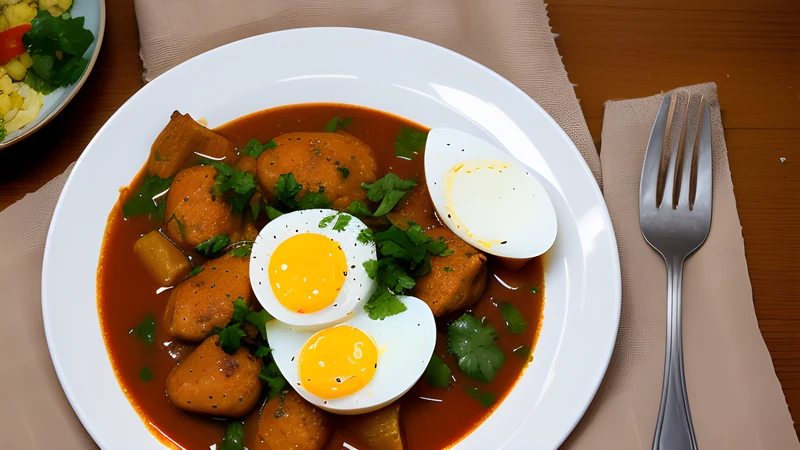
The eggs go in near the end. Score them lightly first so the red sauce can stain the whites, then let them bob in the pot for the last quarter of an hour. A doro wat egg, cut open at the table with its yolk just past soft, is one of the quiet pleasures of the dish.
A word on berbere
If you can find a good berbere from an Ethiopian grocer, buy it — a proper blend has fifteen or more components toasted and ground together, and the balance takes practice. But a homemade version is within reach and lets you control the heat. Toast whole dried chillies (a mix of hot and mild), coriander, fenugreek, cumin, black peppercorns, cardamom seeds, cloves, allspice and a little ajwain in a dry pan until fragrant, then grind with dried ginger, ground cinnamon, nutmeg and a generous amount of paprika for colour and body. The paprika is what gives doro wat its glowing brick-red without turning it unbearably hot.
Store berbere airtight and away from light, and treat it as perishable — ground spice fades within a few months, and a tired berbere is the most common reason a doro wat tastes muddy rather than bright. If yours has been in the cupboard since last winter, buy fresh before you commit an afternoon to this pot.
The custom of gursha
Eating doro wat is a communal act with its own gesture. Gursha is the practice of tearing a piece of injera, wrapping it around some stew, and placing it directly into another person’s mouth — a gift of food from your hand to theirs, usually to an honoured guest or a loved one. The bigger the gursha, the greater the affection. You can enjoy the meal without observing it, though it tells you what the dish is for. Doro wat is communal food. It is built for a table of people leaning in over one platter, and something about serving it that way changes the evening.
Set the injera down as the plate itself, mound the wat in the centre with the eggs half-buried, and let people work inwards from the edge. When the stew is gone, the sauce-soaked bread underneath is the reward for whoever is quickest.
Fasting days and the wider table
Ethiopian Orthodox tradition means many days of the year are fasting days, when animal products are off the table, and this has produced one of the great vegan repertoires anywhere. On those days doro wat gives way to lentil and vegetable wats and to shiro, the silky chickpea-flour stew that is arguably the true weeknight backbone of the country. Doro wat is the feast; shiro is the everyday. Learn both and you have the two poles of the cuisine.
Across the border, the Eritrean kitchen makes a close cousin in zigni, a berbere beef stew eaten off the same injera. The shared bread and shared spice blend map a shared history, however differently the two nations tell it now.
Tips, storage and variations
Doro wat is better the next day, once the onions and berbere have married overnight, so it is an excellent cook-ahead dish. Cool it quickly, refrigerate for up to three days, and reheat gently with a splash of water. It freezes well without the eggs; add fresh boiled eggs when you reheat.
If berbere in your cupboard is mild, push the quantity up — this stew is meant to have real heat and depth, not a polite warmth. If it is scorching, temper the finished wat with an extra spoon of niter kibbeh, which rounds the chilli without dulling the spice.
For a lighter midweek take, use boneless thighs and cut the simmer to 25 minutes; you lose a little richness but gain an hour. And if teff defeats you entirely on the day, serve the wat over rice or with warm flatbread and come back to injera when you have a free weekend. The stew is the heart of it. The bread will keep.
One more variation worth knowing: doro wat scales beautifully into a beef version, sometimes called key wat, using the same jammy-onion-and-berbere base with cubed chuck in place of chicken. Give it a longer simmer, an hour and a half or more, until the beef falls apart, and you have a second stew from a single technique. Once the method lives in your hands — dry onions, bloomed berbere, spiced butter, gentle simmer — you can run it across almost any meat and land somewhere honest every time. That is the real gift of learning doro wat: a grammar for a whole shelf of them rather than a single recipe.
Make it once for people you like. Set the platter in the middle, hand out no cutlery, and watch how quickly a shared sheet of injera turns dinner into something warmer than dinner.
Related Content