Dorayaki: Pancake Sandwiches With Anko
Two honey-sponge pancakes, a slab of sweet bean paste, no fuss
Contents
↓ Jump to recipeDorayaki: Pancake Sandwiches With Anko
Ingredients
- 3 large eggs
- 100g caster sugar
- 3 tbsp honey
- 1 tbsp light soy sauce
- 150g plain flour
- 1/2 tsp baking powder
- 80ml water, plus 1 tbsp more if needed
- Neutral oil for the pan
- 350g sweetened adzuki bean paste (anko), at room temperature
Method
- Whisk the eggs and sugar together for a full 2 minutes until pale, thick and doubled in volume.
- Whisk in the honey and soy sauce until smooth.
- Sift the flour and baking powder over the egg mixture and fold in gently until just combined.
- Fold in the water a little at a time until the batter falls off the whisk in a slow, thick ribbon; add the extra tablespoon if it feels stiff.
- Cover and rest the batter for 15 minutes at room temperature.
- Heat a non-stick frying pan over low-medium heat and wipe with a little oil using kitchen paper.
- Drop a scant 1/4 cup of batter onto the pan from a height of about 20cm to encourage a round shape, and cook until bubbles rise steadily to the surface and the edges look matte, 2-3 minutes.
- Flip and cook the second side for 60-90 seconds, until golden, then transfer to a clean tea towel and cover to keep soft while you cook the rest.
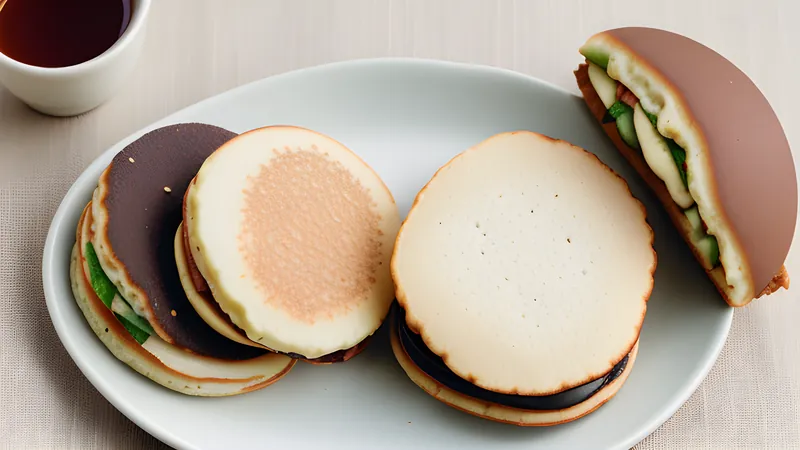
- Once all 12 pancakes are cooked and cooled to room temperature, spread about 55g of anko onto the flat side of one pancake, leaving a small border.
- Sandwich with a second pancake, flat sides together, pressing gently so the filling reaches the edge but doesn't spill.
A pancake with a comic strip’s name
Dorayaki gets its name from dora, a gong, because the round pancakes are said to resemble the shape of the bronze gongs used in temples and theatre — some tellings go further and claim the dish was named after a samurai who left his actual gong behind at a farmhouse and the owner used it to cook pancakes on. Whichever version is true, the shape has stuck, and so has the name recognition that comes from an unrelated source: dorayaki is the favourite food of Doraemon, the robotic cat from one of Japan’s longest-running manga and anime series. Sales of dorayaki in Japan reportedly climb every time a new Doraemon film is released, which is a strange but real example of fiction driving demand for a centuries-old snack.
The pancake itself is a distinct thing from a Western pancake or a French crêpe, closer in construction to a Japanese castella sponge cake cooked in individual discs. It’s leavened mostly by whipped egg rather than a large amount of baking powder, which is why the whisking stage at the start — a full two minutes on the eggs and sugar — isn’t a step to rush through. That whisking incorporates air that baking powder alone can’t replace, and it’s the difference between a pancake with real spring and one that’s flat and dense despite tasting the same.
Why soy sauce goes in a sweet pancake
A tablespoon of light soy sauce in a dessert batter reads oddly on paper, but it does real work: it deepens the caramel notes that develop as the sugar and honey brown in the pan, and its salt content sharpens the overall sweetness so the pancake doesn’t taste flat or one-note. Leave it out and the dorayaki will taste noticeably less complex — sweeter in an uninteresting way, without the faint savoury edge that makes people go back for a second one without quite knowing why. This is the same logic behind a pinch of salt in caramel or chocolate: a small amount of salt or umami doesn’t make a sweet thing taste savoury, it makes the sweetness read as more distinct.
Honey plays a double role here too, exactly as it does in taiyaki batter: it holds moisture in the crumb overnight, which matters because dorayaki are meant to be eaten the next day as much as fresh, and it browns at a lower temperature than table sugar, giving the pancake its characteristic freckled golden-brown surface rather than a pale one.
The drop, the bubbles, and the flip
Getting a properly round dorayaki without a mould comes down to how the batter is poured. Dropping it from height — about 20cm above the pan — lets gravity and the batter’s own thickness pull it into a natural circle as it lands, rather than spreading unevenly the way batter poured straight from a jug tends to. A batter that’s the right consistency (a slow, thick ribbon off the whisk, not a thin stream) holds that circular shape once it’s down; too thin a batter spreads into an oval or a puddle with thin, ragged edges that burn before the centre cooks.
Watching for bubbles rather than timing the first side by the clock matters because pan heat varies enormously between stoves and pans. The right moment to flip is when bubbles are rising steadily across the whole surface, not just at the edges, and the surface has gone from glossy to matte — that matte look means the top has set enough to survive a flip without tearing. Flip too early, while the top is still wet and glossy, and the pancake folds on itself or sticks to the spatula. The second side needs far less time than the first, since it’s cooking against a pan that’s already fully hot and the pancake itself is already mostly set.
Keeping cooked pancakes under a tea towel rather than stacking them exposed is what keeps dorayaki soft rather than papery. The residual steam trapped under the towel continues to gently steam the surface, which is exactly the texture you want for the finished sandwich — a slight tackiness that makes the two halves feel like one cake once filled, rather than two dry discs with paste between them.
Getting consistent size without a ring
The biggest visible difference between a home batch and a bakery’s is uniformity — professional dorayaki come out identical in diameter and thickness, batch after batch, because the batter is portioned by weight rather than by eye. A kitchen scale solves this at home: weigh out roughly 45g of batter per pancake rather than eyeballing a quarter cup, and you’ll get a stack of pancakes that pair up neatly by size rather than leaving you matching a large one from batch one with a small one from batch three. Pairing pancakes of noticeably different sizes isn’t just about looks — a mismatched sandwich puts more filling pressure on the smaller pancake, which is more likely to crack when you bite into it.
Filling without a mess
Anko for dorayaki should sit at room temperature rather than fridge-cold, the opposite of the anko used in taiyaki — here the paste needs to be soft enough to spread evenly with a palette knife or the back of a spoon without tearing the tender pancake surface. Cold, firm anko dragged across a soft pancake will pill and tear the crumb. Leave a small border free of filling, about a centimetre, so that when you press the second pancake down the anko spreads to the edge without squeezing out the sides — filled right to the edge, the first press of the sandwich shoots paste out onto your fingers and the plate.
A layer of thinly sliced strawberry or a smear of whipped cream alongside the anko is common in modern Japanese cafés and works well if you want a lighter, less purely sweet version; add no more than a couple of thin slices per sandwich so the pancake still closes cleanly. Chestnut paste (kuri) is a good autumn swap for anko, using the same 55g portion and the same room-temperature spreading technique.
A century-old bakery still sets the benchmark
Bunmeido, a Tokyo confectioner founded in the late nineteenth century, is often credited with standardising the modern dorayaki recipe and remains one of the most recognisable names in it today, selling millions of the sandwiches a year from a formula that hasn’t changed much in decades. What that longevity points to is how little dorayaki actually needs to get right: a pancake with real spring, a filling that’s neither too wet nor too stiff, and a size that lets you eat the whole thing in a handful of bites without the filling squeezing out. Home versions rarely go wrong on flavour; they go wrong on the pancake’s texture, which is why the whisking and resting stages matter more here than the ingredient list does.
Pan choice and heat control matter more than you’d expect
A heavy, flat-bottomed non-stick pan gives the most reliable results because it heats evenly across its surface and holds that heat steadily once you’ve got a rhythm going through six pancakes. Thin pans, especially ones that have thinned further with age, develop hot spots that show up as one side of a pancake browning in blotches while the rest stays pale — annoying on a pancake meant to look uniformly golden on both faces. Low-medium heat, rather than medium, is worth sticking to even once you’ve built confidence, because dorayaki batter has enough sugar and honey in it to scorch quickly if the pan runs hot; a pancake that looks perfectly cooked at the edges but tastes faintly bitter at the centre has usually been cooked a touch too hot rather than too long.
Wiping the pan with fresh oil between every one or two pancakes, rather than only at the very start, also makes a visible difference over a full batch — the sugar in the batter leaves a thin residue on the pan’s surface as you go, and an unwiped pan by pancake five or six will brown unevenly and stick slightly compared to pancake one.
Matcha, chestnut and the modern shop counter
Beyond plain anko, matcha-flavoured pancakes sandwiching plain anko are common in specialty shops — whisk a teaspoon of matcha into the dry flour before folding it in, which tints the pancake pale green and adds a bitter edge that plays well against the sweetness of the filling without needing any change to the anko itself. Whipped cream folded through anko in roughly equal parts is a popular modern lightening of the traditional filling, giving a mousse-like texture that’s less dense than pure paste, though it needs the sandwich eaten within an hour or two since dairy doesn’t hold at room temperature the way plain bean paste does. Some shops also sell a savoury-adjacent version filled with sweetened black sesame paste in place of anko, worth trying if you want a nuttier, less purely sweet filling with the same pancake base.
Keeping and reheating
Dorayaki are traditionally best on their second day, once the filling has had time to soften the pancake slightly from the inside and the flavours have settled — wrap assembled sandwiches individually in cling film and store at room temperature (not the fridge, which dries out the crumb) for up to two days. They also freeze well for up to a month, wrapped the same way; thaw at room temperature for a couple of hours rather than the fridge, since a slow thaw at room temperature keeps condensation from making the pancake soggy.
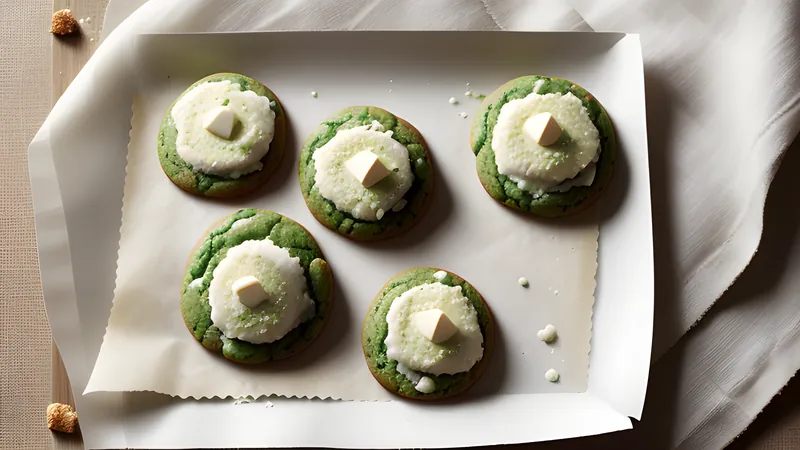
Dorayaki, taiyaki and daifuku are the trio worth knowing if anko is a flavour you like, each one built to show off a different texture around the same filling. For a lighter finish to the same table, matcha white chocolate cookies with flaky salt or a slice of butter mochi with brown butter and coconut both lean on the same honeyed, caramelised notes this batter has, without repeating the bean paste.
Related Content