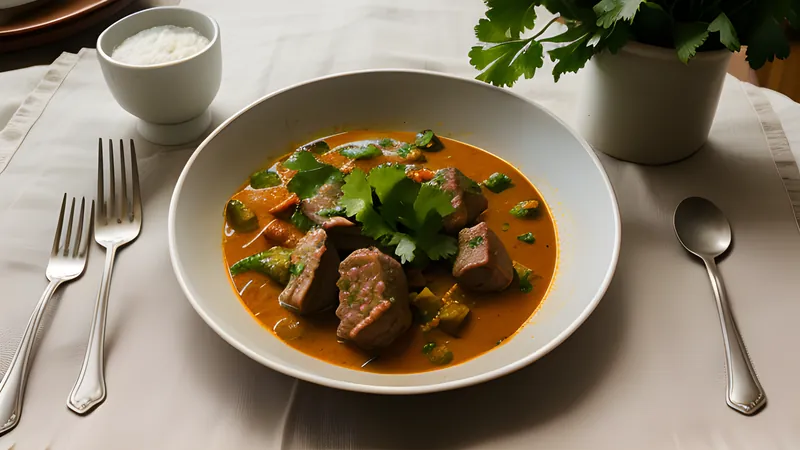
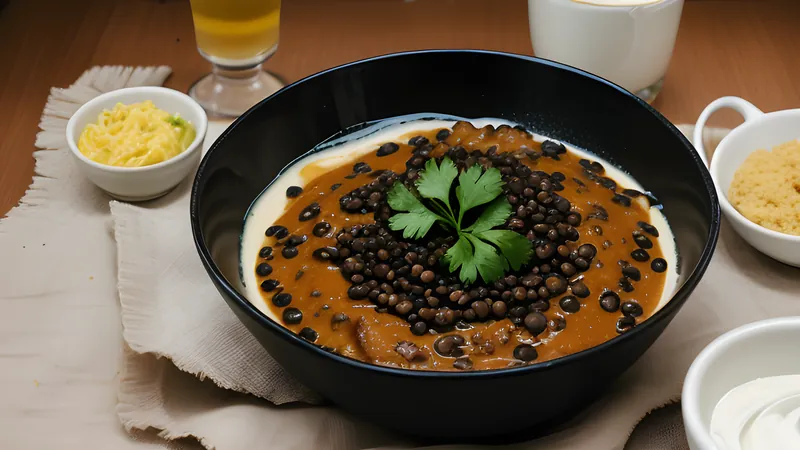
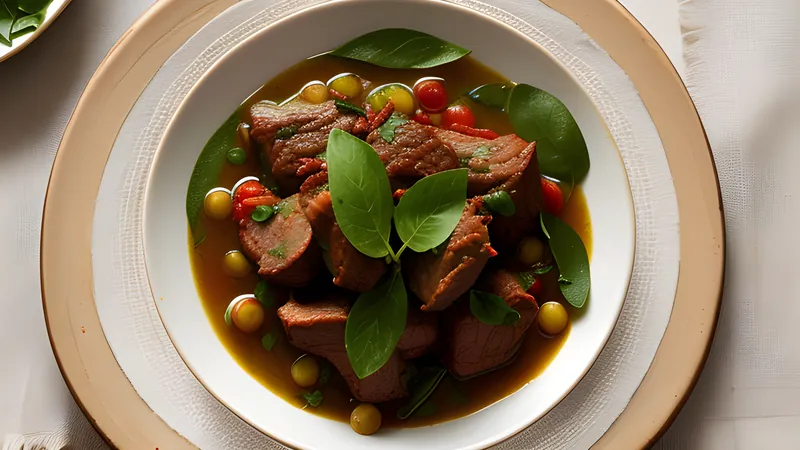
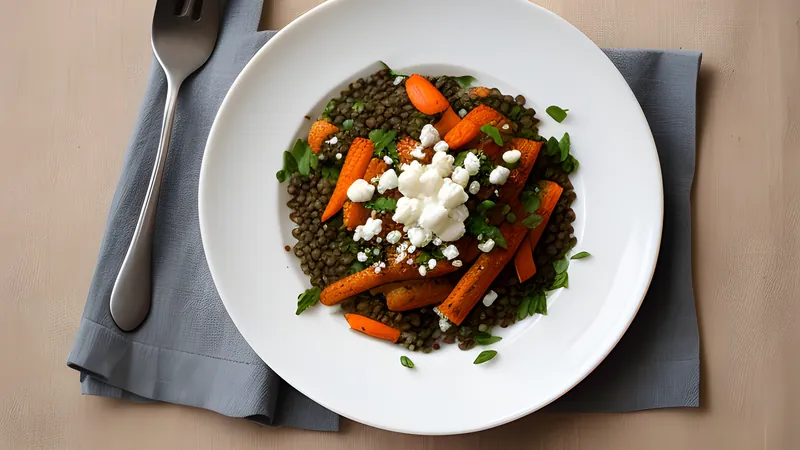
Dhansak: Parsi Lentils, Mutton and Brown Rice
The Parsi Sunday plate that turns five lentils and a lamb shoulder into something sweet-sour and deeply spiced
Contents
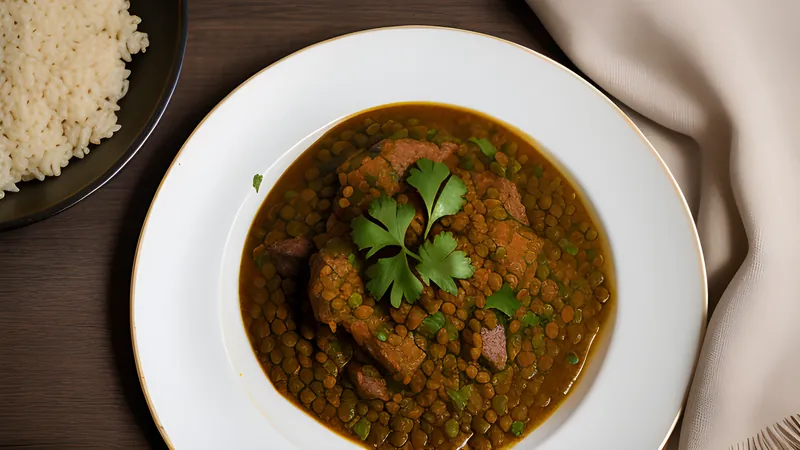
↓ Jump to recipeDhansak asks you to cook two things that don’t usually meet on the same plate: a lentil dal thick enough to stand a spoon in, and a mutton curry rich enough to eat on its own. Parsi cooks in Bombay and Gujarat have been merging the two for generations, and the result is a dish that reads as neither purely a dal nor purely a curry, but something with its own logic — sour from tamarind, sweet from jaggery, and carrying five different lentils that mostly disappear into the body of the sauce.
Dhansak: Parsi Lentils, Mutton and Brown Rice
Ingredients
- 500g mutton or lamb shoulder, bone-in, cut into 5cm chunks
- 100g toor (pigeon pea) dal
- 50g masoor (red lentil) dal
- 50g chana dal
- 50g moong dal
- 50g urad dal
- 300g red pumpkin or butternut squash, peeled and diced
- 1 small aubergine, diced
- 1 large potato, peeled and diced
- 2 tomatoes, chopped
- 2 onions, 1 sliced and 1 finely chopped
- 6 garlic cloves, crushed
- 3cm ginger, grated
- 2 green chillies, slit
- 2 tbsp dhansak masala (or 1 tbsp cumin, 1 tsp coriander seed, 4 cloves, 1 cinnamon stick, 1 star anise, 2 dried red chillies, all ground)
- 1 tsp turmeric
- 2 tbsp tamarind pulp, soaked and strained
- 1 tbsp jaggery, grated
- handful fresh fenugreek (methi) leaves, chopped, or 1 tbsp dried kasuri methi
- 4 tbsp ghee or vegetable oil
- 300g brown basmati rice, soaked 20 minutes
- 1 tbsp caster sugar
- 4 cloves, 2 green cardamom pods, 1 cinnamon stick
- salt to taste
Method
- Season the mutton with salt and turmeric. Heat 2 tbsp ghee in a heavy pot and brown the meat in batches, 8 minutes, then set aside.
- In the same pot, soften the sliced onion for 8 minutes. Add garlic, ginger and green chillies, cook 2 minutes, then return the mutton with 800ml water. Simmer covered 45 minutes until the meat is nearly tender.
- Add all five dals, the pumpkin, aubergine, potato and tomatoes. Simmer a further 45 minutes, stirring occasionally, until the lentils have collapsed into the liquid and the meat is fully tender.
- Lift the meat out. Blend or mash the lentil-vegetable base until mostly smooth, then return the meat to the pot.
- In a small pan, fry the chopped onion in the remaining ghee until deep golden, 12 minutes. Stir in the dhansak masala and cook 1 minute until fragrant, then tip into the dal along with the tamarind, jaggery and methi. Simmer 15 minutes, adjusting salt, tamarind and jaggery until the balance of sour and sweet is pronounced but not sharp.
- For the rice, heat the sugar in a dry pot until it turns amber, then add a splash of water to stop it burning. Add a tablespoon of ghee, the whole spices and the drained rice, stirring to coat every grain in the caramel.
- Pour in 500ml boiling water, salt lightly, cover and cook on the lowest heat for 25 minutes until the rice is tender and deep gold-brown. Rest 5 minutes off the heat before fluffing.
- Serve the dhansak ladled over or beside the brown rice, with a raw kachumber salad of onion, cucumber and lime on the side.
The Parsi kitchen behind it
Parsis are the descendants of Zoroastrians who left Persia for the Gujarat coast between the 8th and 10th centuries, and their cooking has always shown that double inheritance: Persian richness with meat and dried fruit, layered onto Gujarati vegetarian technique with lentils and jaggery. Dhansak is the clearest expression of that fusion. The name splits into dhan (wealth, or grain) and sak (vegetable), and the dish itself is built the same way — a Gujarati lentil-and-vegetable base carrying a Persian-leaning meat stew, finished with the sour-sweet balance that runs through most Parsi cooking, from patra ni machhi to the vinegar-heavy salli boti.
There’s a real custom worth knowing if you’re cooking this for Parsi friends: dhansak is traditionally not served at weddings, navjotes or other celebratory occasions. It’s associated instead with the period immediately after a death, cooked on the fourth day of mourning when the household returns to eating meat, and from there it became the standard Sunday lunch — a dish for quiet, unhurried afternoons rather than festivity. Most households now cook it every week regardless, but the association with Sunday, family, and slow cooking has stuck. It is not a dish anyone rushes, and the two-hour simmer isn’t a chore so much as the point.
Five lentils, one texture
The “five lentils” detail isn’t decorative. Toor dal gives the base its body, masoor breaks down fastest and adds silkiness, chana dal holds a little bite even after an hour of simmering, moong contributes a gentle sweetness, and urad thickens the liquid into something closer to gravy than soup. Some Parsi households use only toor and masoor for a weeknight version, and it still tastes recognisably like dhansak, but the five-lentil version has a rounder, more complex mouthfeel that’s worth the extra bag of dal in the cupboard. If you only stock two or three of the five, use what you have in roughly equal proportion — the dish is forgiving about which lentils, less forgiving about the tamarind-jaggery balance.
The pumpkin and aubergine aren’t garnish either. They cook down entirely into the lentil base, adding sweetness and body that plain dal doesn’t have, which is part of why dhansak tastes rounder and more savoury-sweet than a straightforward mutton curry. Skipping them makes a thinner, sharper dish — still good, but missing the depth that makes dhansak distinct. The potato does something different again: it breaks down only partially, leaving small soft chunks that give the finished dal a bit of textural contrast against the otherwise uniform mash.
Getting the meat right
Bone-in mutton or lamb shoulder is worth insisting on. The bone releases collagen and marrow fat over the two-hour simmer, and that fat is what carries the dhansak masala’s aromatics through the finished dish — a boneless, leaner cut gives you a thinner-tasting curry even with identical spicing. Brown the meat properly in the first step; a hard sear across all sides, in batches so the pan doesn’t steam, builds a layer of fond that dissolves back into the water once you deglaze it with the onions and ginger-garlic paste. Skipping the browning is the single most common shortcut that makes home versions of dhansak taste flat compared to a restaurant’s.
Resist the temptation to add all the water at once and walk away. The first 45-minute simmer, with just the meat, onion and aromatics, is doing important work — reducing and concentrating the stock before the lentils go in and start absorbing liquid. If you add everything simultaneously the dals cook through before the meat has released enough flavour, and you end up thickening a thin curry rather than building a rich one from the start.
Dhansak masala and the sour-sweet spine
Commercial dhansak masala blends are widely available and worth buying if you cook this more than once, but the homemade version above — cumin, coriander, cinnamon, cloves, star anise and dried red chilli, all toasted and ground — gets close enough. What matters more than exact proportions is toasting the whole spices lightly before grinding; raw-ground spice tastes flat against the richness of the mutton fat and caramelised onion.
The tamarind and jaggery need active tasting rather than fixed measurements, because tamarind pulp varies enormously in concentration between brands. Add both gradually near the end of cooking, tasting after each addition, until the dal tastes distinctly sour and distinctly sweet at the same time rather than settling into a single flavour. That tension — both sour and sweet clearly present together — is the single thing that makes a dhansak taste right rather than just like a spiced dal with meat in it.
Fresh fenugreek leaves, added in the last fifteen minutes, contribute a faint bitterness that Parsi cooks consider essential; dried kasuri methi, crumbled between your palms to release the oils, is a fair substitute if fresh isn’t available. Either way, don’t skip it — the bitterness is doing real work against the sweetness of the jaggery, and a dhansak without it tastes one-dimensional.
Caramelised brown rice, not plain rice
Dhansak is served with a specific side, and it isn’t plain rice. The rice is browned in caramelised sugar and ghee before the water goes in, which colours every grain a deep amber-brown and adds a faint burnt-sugar sweetness that echoes the jaggery in the dal. It takes five extra minutes and changes the whole plate — plain white rice under dhansak tastes like an afterthought by comparison. Use a heavy-bottomed pot for the caramelising step; a thin pan scorches the sugar before the rice has a chance to absorb the colour evenly. Watch the sugar closely once it starts to colour — it moves from pale gold to burnt in under a minute, and burnt sugar will make the whole pot of rice taste bitter.
The kachumber salad served alongside — raw onion, cucumber, tomato, lime — isn’t optional garnish either. Dhansak is rich and slow-cooked; the sharp raw crunch resets your palate between spoonfuls the way a proper accompaniment should, the same job pickled vegetables do next to beef rendang with toasted coconut kerisik.
Common mistakes
The most frequent fault is under-seasoning the dal before the meat goes back in — because the lentils are bulky, it’s easy to under-salt the base and then find the whole pot tastes muted even after the tempered onion and spice go in. Salt the lentil-vegetable base properly before you blend it, then adjust again at the end. The second common fault is rushing the final onion-and-masala tempering: that fried onion needs to go properly dark, past golden into a deep brown, or the masala won’t have enough caramelised sweetness to balance the tamarind. A pale, undercooked tempering onion is the difference between a dhansak that tastes assertive and one that tastes merely spiced.
Where dhansak fits at the table
Restaurant menus in the UK often list dhansak alongside standard curry-house dishes, spiced roughly to the same heat level as a rogan josh and served in a similar steel bowl, which flattens what makes it distinct. The lentil base is doing a different job than a tomato-onion curry gravy — it’s providing bulk, sweetness and acidity all at once, rather than acting as a carrier for spice. Cooked properly, a dhansak should taste layered: sour first, then a wave of caramelised sweetness from the rice and the fried onion, then the meat itself coming through last. If your dhansak tastes like a generic curry with lentils stirred in, the masala tempering step probably needs more time, or the tamarind and jaggery need pushing further apart rather than toward the middle.
Portion size matters too. Because the dal base is so dense, a proper dhansak serving is smaller than you’d expect for a mutton curry — a ladleful over a modest scoop of the brown rice, with the kachumber doing real work as a palate reset between mouthfuls rather than sitting untouched at the side of the plate.
Variations and substitutions
Chicken dhansak works well and cooks faster — reduce the initial simmer to 25 minutes before adding the lentils. A vegetarian version replaces the mutton with extra pumpkin, aubergine and a can of chickpeas, and is genuinely satisfying rather than a diminished substitute, since the lentil base was always doing most of the work. If mutton isn’t available, lamb shoulder is the closest substitute and needs roughly the same cooking time; leaner cuts like leg will dry out over the long simmer.
For a slow-cooker version, brown the meat and fry the onions on the hob first, then transfer everything except the tamarind, jaggery and methi to the slow cooker for 4 hours on high. Stir in the final flavourings in the last 30 minutes so the tamarind doesn’t lose its brightness over a long cook.
Storage and make-ahead
Dhansak improves overnight — the lentils continue to break down and the spices settle into the fat, so cooking it a day ahead and reheating gently is standard Parsi practice rather than a compromise. It keeps in the fridge for four days and freezes well for up to three months, though the brown rice is best made fresh since reheated caramelised rice loses some of its texture. If you’re planning a Sunday lunch on the same principle as the original, this is one of those dishes where the wait actively improves the result — much like the long lentil work behind dal makhani with butter and cream, where an overnight simmer does more than any amount of extra spice. For a lighter weeknight comparison of what long-simmered ghee and lentils can do without meat, khichdi with ghee and crispy onion is worth keeping in the same rotation.
Related Content