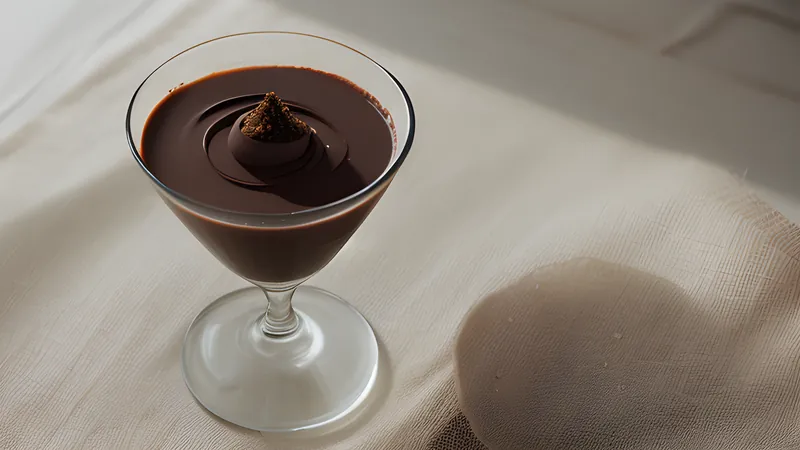
Dark Chocolate Mousse with Espresso and Flaky Salt
Deep, airy and just a little bittersweet
Contents
↓ Jump to recipeThis is the chocolate mousse I keep coming back to: dark and intense, airy enough to feel light despite all that chocolate, and lifted by two small additions that most recipes leave out. A shot of espresso deepens the chocolate without making it taste of coffee, and a final pinch of flaky salt at the table sharpens every spoonful. It is the classic French separated-egg method, all whisked whites and folded cream, which gives a far more delicate, billowing texture than the dense ganache-style mousses you get from a tub. It looks impressive in little glasses but is genuinely straightforward, and, crucially, it must be made the day before, which makes it the least stressful dinner-party pudding I know.
The French art of the mousse
Mousse au chocolat is a fixture of the French home and bistro repertoire, the sort of dessert that turns up scooped from a big communal bowl at the end of a long lunch. The word mousse simply means foam, and that is exactly what the technique produces: a stable foam of air trapped in chocolate, eggs and cream. Recipes for it appear in French cookbooks from the nineteenth century onwards, and the painter Henri de Toulouse-Lautrec, a serious amateur cook whose recipes were collected after his death in the 1901 book later published as L’Art de la Cuisine, is often credited with popularising a chocolate version he called mayonnaise de chocolat. Whether or not he invented it, the pairing of whisked eggs and melted chocolate was well established in Parisian kitchens by then.
The traditional approach relies on raw eggs, separated so the yolks enrich the chocolate base and the whisked whites provide lift. Whipped cream is a slightly more modern, indulgent addition that softens the texture and tempers the intensity. Purists will tell you a true mousse au chocolat needs no cream at all, only chocolate, eggs and a little sugar; I find a small amount of cream gives a rounder, silkier set that suits the espresso. The result is rich but never heavy, holding its shape yet collapsing softly on the tongue.
Coffee and chocolate have a long partnership in French and Italian baking, the bitterness of one amplifying the dark fruitiness of the other. This is the same logic behind adding a spoonful of coffee to a chocolate cake batter, or the way I lean on it in my chocolate beetroot cake. Used sparingly, espresso does not announce itself as coffee; it simply makes the chocolate taste more like itself, rounder and more grown-up. Salt does similar work: a flaky pinch scattered at the last moment sharpens the sweetness and the cocoa, the same trick that makes a batch of brown butter chocolate chip cookies so hard to stop eating.
The reason the salt goes on at the table rather than into the mixture is worth explaining. Folded through, salt dissolves and simply seasons; scattered on top in flakes, it stays in distinct crystals that dissolve one at a time as you eat, giving little bursts of saltiness against the sweet. That contrast is what keeps a rich, dark pudding interesting to the last spoonful, where an evenly sweet one would start to feel cloying halfway down the glass. It is a small piece of theatre and a genuine improvement at once.
Dark Chocolate Mousse with Espresso and Flaky Salt
Ingredients
- 200g dark chocolate (about 70% cocoa solids), chopped
- 50g unsalted butter
- 1 shot of strong espresso (about 30ml), or 1 tsp instant espresso in 30ml hot water
- 4 large eggs, separated
- 50g caster sugar
- A pinch of fine salt
- 150ml double cream
- Flaky sea salt, to finish
Method
- Melt the chopped chocolate and butter together gently in a heatproof bowl set over a pan of barely simmering water, stirring until smooth.
- Stir the warm espresso into the melted chocolate, then remove from the heat and leave to cool until just warm.
- Beat the egg yolks with half the sugar until pale and slightly thickened, then fold into the cooled chocolate.
- In a clean bowl, whisk the egg whites with the pinch of fine salt until they hold soft peaks, then add the remaining sugar and whisk to firm, glossy peaks.
- In another bowl, softly whip the double cream until it just holds its shape.
- Fold the whipped cream into the chocolate mixture gently to loosen it.
- Fold in the egg whites in three additions, using a light hand to keep as much air as possible.
- Spoon into six glasses or ramekins and chill for at least 4 hours, or overnight, until set.
- Just before serving, finish each with a small pinch of flaky sea salt.
Where it can go wrong, and why
The two classic failures are the chocolate seizing and the finished mixture splitting, and both come down to temperature and handling. If the chocolate is too hot when it meets the eggs, the yolks cook into tiny scrambled specks; too cold, and it stiffens into a stubborn paste that will not fold smoothly with the airy whites, leaving you with lumps of chocolate suspended in foam. Warm but not hot is the target, and once everything is ready you want to work quickly and lightly.
The other pitfall is deflation. Egg whites whisked in a bowl with any trace of grease or yolk will never reach firm peaks, so start clean. And a heavy hand at the folding stage undoes everything: the mousse should look mousse-like going into the glasses, not soupy. If it does turn out looser than you like, it will still set in the fridge, just to a denser, more truffle-like texture, which is no bad thing.
A note on raw eggs
Because this mousse contains raw egg, use the freshest eggs you can, and avoid serving it to anyone who should steer clear of raw egg, such as pregnant women, very young children or anyone with a compromised immune system. Pasteurised eggs, sold in cartons or in shell in some supermarkets, are a safe alternative and whisk up perfectly well.
Substitutions, storage and variations
Choose a chocolate you genuinely enjoy eating, ideally around 70% cocoa solids. Much darker than 80% and it can turn bitter and grainy in the mouth; much sweeter than 60% and it loses the edge that makes this dessert worth making. If you want to skip the coffee entirely, leave it out and add 1 teaspoon of vanilla extract instead.
For variations, fold 1 tablespoon of brandy, dark rum or orange liqueur into the cooled chocolate base, or add the finely grated zest of half an orange. A little chopped candied orange peel through the set mousse is lovely at Christmas. For a nuttier profile, whisk a tablespoon of tahini into the warm base before folding, echoing the chocolate-and-sesame idea I use in my chocolate hazelnut and sea salt tart.
Made ahead is the whole point: it needs those hours in the fridge to set, and it keeps well, covered, for up to two days (raw-egg caveat aside). Cover the glasses with cling film or a lid so the surface does not form a skin or pick up fridge smells, and take them out about ten minutes before serving so the mousse loses its fridge chill and the aroma opens up; ice-cold chocolate tastes muted. Serve it plain with that telling pinch of salt, or dress it up with a spoonful of softly whipped cream and a few shards of dark chocolate.
A few practical notes for the day itself. Making it in individual glasses rather than one big bowl means no messy serving at the table and a fixed, sensible portion; wide, shallow glasses give more surface for the salt, tall ones look more elegant. If you are cooking for a crowd, the recipe doubles cleanly, though you will want a large bowl for folding so you are not fighting the volume of whites. It rewards a calm, unhurried hand at the folding stage far more than any special skill, which is exactly why it has stayed in my repertoire for so long: nobody has ever turned one down, and I have never once been stuck plating pudding while the main course goes cold.
Related Content