Dal Tadka with a Ghee-Cumin Tempering
Comforting lentils with an aromatic sizzle
Contents
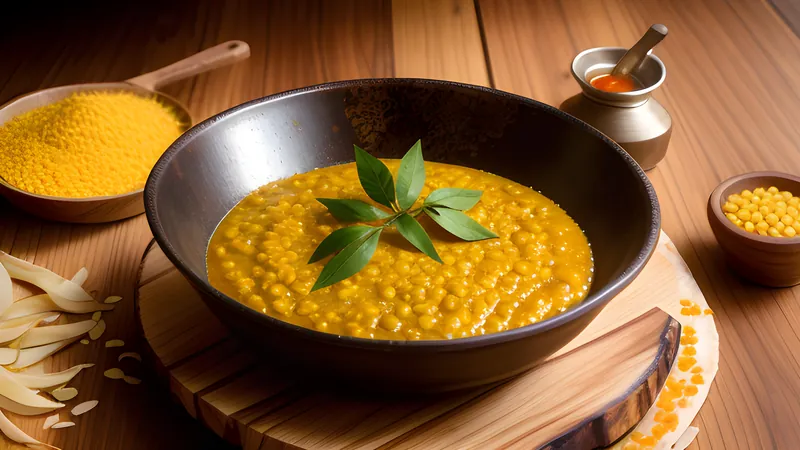
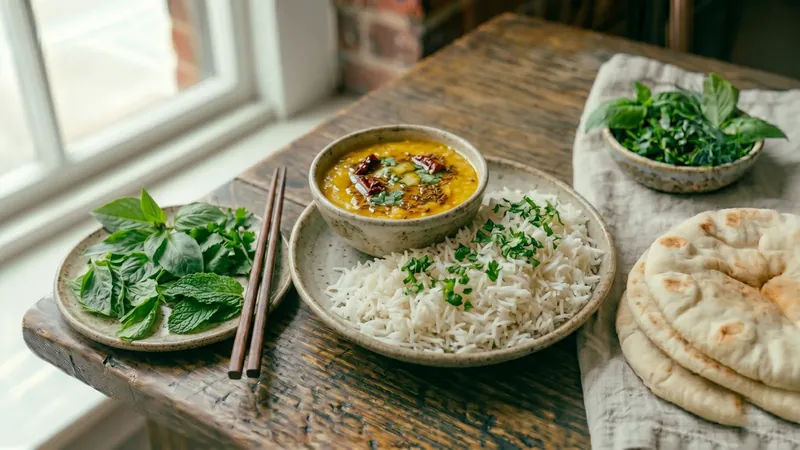
↓ Jump to recipeDal tadka is the lentil dish home cooks across India make almost without thinking, yet it never gets old. The twist, and indeed the whole soul of the dish, is the tadka: a small pan of ghee crackling with cumin, garlic, onion and chilli, poured sizzling over the cooked lentils at the very end. That final aromatic flourish turns a plain pot of dal into something fragrant and rounded, the fat carrying flavours that the simmering water alone could never reach. Serve it with rice or warm flatbread for one of the most quietly satisfying suppers there is.
Dal Tadka with a Ghee-Cumin Tempering
Ingredients
- 250g toor dal (split pigeon peas) or yellow split peas, rinsed
- 1 litre water
- 0.5 tsp ground turmeric
- 1 tomato, chopped
- 1 tsp salt, plus more to taste
- 3 tbsp ghee
- 1 tsp cumin seeds
- 4 garlic cloves, thinly sliced
- 1 small onion, finely chopped
- 2 dried red chillies
- 1 green chilli, slit
- 1 tbsp grated fresh ginger
- 0.5 tsp Kashmiri chilli powder
- Pinch of asafoetida (hing)
- 2 tbsp chopped fresh coriander, to serve
Method
- Put the rinsed dal, water and turmeric in a large pan, bring to the boil, and skim off any froth that rises.
- Simmer partly covered for 25-30 minutes, stirring occasionally, until the lentils are completely soft and breaking down.
- Add the chopped tomato and salt, then whisk or mash to a loose, creamy consistency, adding hot water if too thick; keep warm.
- For the tempering, heat the ghee in a small frying pan over a medium heat until hot and shimmering.
- Add the cumin seeds and let them sizzle for 10 seconds until fragrant, then add the asafoetida.
- Add the sliced garlic, onion, ginger, dried red chillies and green chilli, and fry for 3-4 minutes until the garlic and onion turn golden.
- Take the pan off the heat and stir in the Kashmiri chilli powder so it blooms in the residual heat of the ghee without burning.
- Pour the sizzling tempering over the hot dal, stir half of it through, scatter with the coriander, and serve.
The Story
Dal is both an ingredient and a dish. As an ingredient it refers to dried split pulses, the lentils, peas and beans of many kinds; as a dish it is the cooked, seasoned pottage made from them, eaten daily across the Indian subcontinent with rice or bread. For a largely vegetarian population it has long been a primary source of protein, and there are countless regional versions, from the buttery black dal makhani of the Punjab to the soupy, tamarind-spiked dals of the south. Dal tadka in particular is a restaurant and dhaba favourite across northern India, the roadside eateries where a pot of yellow dal finished with a fierce tempering is a fixture of the menu.
The tadka, and the science of it
Tadka, also called tarka, chaunk or baghar depending on the region and language, is the technique at the heart of this particular dal, and one of the defining moves of Indian cooking generally. Whole spices and aromatics are fried briefly in hot ghee or oil until they release their fragrance, and the resulting flavoured fat is poured over the finished dish. The science behind it is worth understanding, because it explains why you cannot just stir the spices into the pot at the start.
Many of the aroma and flavour compounds in spices, cumin’s earthy cuminaldehyde among them, are fat-soluble and volatile. Blooming whole spices in hot fat draws those compounds out and dissolves them into the ghee, which then coats the whole dish and delivers the flavour evenly, in a way water-based simmering simply cannot. The heat also triggers gentle browning reactions in the cumin, garlic and onion, deepening their taste from raw and sharp to sweet and nutty. The dramatic sizzle as the hot fat hits the dal is the sound of that trapped aroma being released in one go, and it is very much part of the pleasure.
Two details keep the tadka from turning bitter. The cumin goes in first and only sizzles for a few seconds, because burnt cumin is acrid; and the Kashmiri chilli powder goes in last, off the heat, since ground spices scorch far faster than whole ones. Adding it to ghee that is hot but no longer on the flame lets the colour and gentle heat bloom without catching.
Choosing your lentil
The choice of lentil matters to the texture. Toor dal, or split pigeon peas, is the classic base for dal tadka, cooking down to a smooth, mildly nutty creaminess that holds the tempering well. Moong (split mung) and masoor (red lentils) cook faster and lighter and can be swapped in if that is what you have, though the finished dish will be looser. Chana dal, split brown chickpeas, stays firmer and takes longer, so it suits a chunkier dal. Whichever you use, rinse it well and simmer with turmeric, which both colours the pot golden and gently flavours it, until the lentils collapse; then loosen to the consistency you like, thick enough to eat with bread or looser to spoon over rice.
Asafoetida and the supporting cast
Two supporting ingredients earn their place in the tempering. Asafoetida, or hing, is a pungent dried resin tapped from the roots of a giant fennel relative; it smells startling and almost sulphurous raw, but mellows in hot fat into a savoury, oniony, garlicky depth that underpins the whole dish. A pinch is genuinely all you need, and it is especially valued in cooking that avoids onion and garlic. Ghee, clarified butter with its milk solids removed, is the traditional fat because it withstands the high heat of the tadka without burning and lends a rich, nutty flavour of its own; a neutral oil works for a vegan version.
Substitutions, storage and serving
No fresh tomato to hand? A tablespoon of tomato puree stirred into the dal gives the same gentle tang and body. If you cannot find toor dal, the swaps above apply. The dal itself keeps for up to four days in the fridge and thickens as it sits, so loosen it with hot water when reheating; it also freezes well for up to three months. Fry the tadka fresh each time you serve, though, because that sizzling contrast of hot fat on soft lentils is the entire point and does not survive storage.
Getting the consistency and seasoning right
The most common mistake with dal is underseasoning it. Lentils are bland on their own and drink up a surprising amount of salt; a dal that tastes flat almost always needs more salt rather than more spice. Add it in stages, tasting as you go, and remember that the tadka brings its own seasoning from the fried aromatics. The second mistake is texture. A good dal tadka should be pourable but not watery, closer to a loose porridge than a soup, so that it clings to rice without sliding straight off. If it thickens too much as it sits, and it will, loosen it with a splash of boiling water rather than cold, which would dull the temperature and the flavour. A quick whisk or a few strokes with a hand blender just before serving makes it silkier without turning it to paste.
Cooking the lentils fully is non-negotiable. Undercooked dal has a raw, chalky edge and will not break down into creaminess no matter how vigorously you stir. Give the pulses the full simmer, top up with hot water if the pan threatens to dry out, and only add the salt and tomato once they are soft, since acid and salt both slow the softening of pulses if added too early.
Substitutions, storage and serving
No fresh tomato to hand? A tablespoon of tomato puree stirred into the dal gives the same gentle tang and body. If you cannot find toor dal, the swaps described above apply, though the cooking time will change. The dal itself keeps for up to four days in the fridge and thickens as it sits, so loosen it with hot water when reheating; it also freezes well for up to three months. Fry the tadka fresh each time you serve, though, because that sizzling contrast of hot fat on soft lentils is the entire point and does not survive storage in the fridge.
Serve dal tadka with plain basmati rice, warm flatbread and a spoonful of yoghurt, or a sharp pickle and a few slices of raw onion alongside. A squeeze of lemon over the top just before eating lifts the whole bowl, brightening the richness of the ghee and waking up the spices; do it at the table rather than in the pot, so the sourness stays fresh. If you want to explore the pulse family further, the lighter, coconut-scented red lentil and coconut dal makes a good contrast, and for a mezze-style spread the same warm bread is happy dipped into a bowl of charred lemon hummus.
Related Content