Culurgiones: The Pleated Potato Parcels of Ogliastra
Potato, pecorino and mint sealed with a braided ear of wheat
Contents
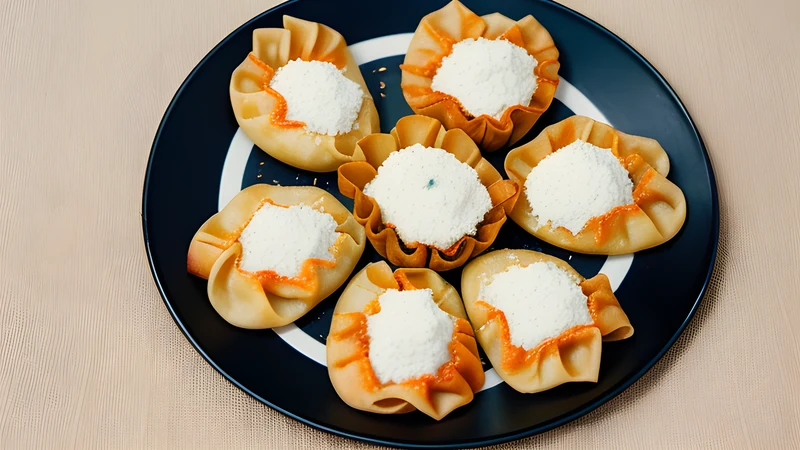
↓ Jump to recipeA culurgione is a potato parcel with a plait down its back. The plait is the whole reputation of the dish — a raised seam that looks exactly like an ear of wheat, closed by hand, one pinch at a time, in a rhythm you either have or you spend an afternoon acquiring. I did not have it. I have it now, and it took roughly forty ruined parcels.
The filling is potato, sheep’s cheese and mint, and it should not work as well as it does. Mint in a hot pasta reads as a mistake for about two seconds and then makes perfect sense.
Culurgiones: The Pleated Potato Parcels of Ogliastra
Ingredients
- 400g semola rimacinata di grano duro
- 210g water at 45°C
- 6g fine sea salt, for the dough
- 700g floury potatoes, such as Maris Piper, unpeeled
- 150g young pecorino sardo, or any mild sheep's cheese, coarsely grated
- 100g aged pecorino, finely grated
- 50g smoked pecorino or smoked provola, finely grated
- 2 garlic cloves
- 25 fresh mint leaves
- 30ml extra virgin olive oil
- 5g fine sea salt, for the filling
- 1/2 tsp black pepper, coarsely ground
- 400g passata
- 1 garlic clove, sliced
- 2 tbsp extra virgin olive oil, for the sauce
- 6 basil leaves
Method
- Boil the potatoes whole and unpeeled in salted water for 30 minutes, until a knife meets no resistance. Drain, peel while hot, and pass through a ricer into a wide bowl. Spread out and cool for 20 minutes.
- Mix the semola, the 6g of salt and the warm water into a stiff dough. Knead for 10 minutes until smooth and waxy. Wrap and rest for 30 minutes at room temperature.
- Grate the garlic to a paste on a microplane. Chop the mint finely at the last moment.
- Fold the three cheeses, the garlic, the mint, the olive oil, the 5g of salt and the pepper into the cooled potato. Work it with a spoon for 1 minute until it holds its shape on the spoon. Chill for 1 hour.
- Simmer the passata with the sliced garlic and the 2 tbsp of oil for 15 minutes over low heat, until it darkens and thickens. Tear in the basil and take it off the heat.
- Roll the dough 1.5mm thick, in two batches, keeping the second wrapped. Cut 8cm discs with a cutter. Re-roll the offcuts once.
- Put a heaped teaspoon of filling, about 20g, in the centre of a disc. Rest the disc across the fingers of one hand and pinch the near edge closed to start the seam.
- Working away from yourself, fold the left edge over the filling and pinch it to the seam, then the right edge, then the left again, alternating in a rhythm. The seam braids itself into a raised ear of wheat. Pinch the far tip and fold it under.
- Set each finished parcel on a semolina-dusted tray, seam up, and do not let them touch.
- Boil in plenty of salted water for 5 to 6 minutes, until they float and the seam has gone translucent at the edges. Lift out with a slotted spoon.
- Spoon the warm sauce over, scatter with more grated aged pecorino, and serve at once.
Ogliastra, the wheat ear, and the hands that judged you
Ogliastra is the middle of Sardinia’s east coast, hemmed in by the Gennargentu mountains and reachable, until fairly recently, only with effort. It is one of the world’s demographic oddities: an unusual concentration of people who live past a hundred, which has brought a steady traffic of researchers to villages of a few hundred souls. Whatever the cause, the food there is potato, sheep’s cheese, bread and olive oil, and culurgiones sit at the centre of it.
Culurgiones d’Ogliastra were granted IGP status in 2015, which fixed in law what every household there already argued about: the filling is potato, pecorino, garlic and mint, the dough is durum semolina and water, and the seal is done by hand. Elsewhere in Sardinia you will find culurgiones with ricotta, with saffron, with chard — Cagliari and the Campidano do their own versions and call them the same thing. Ogliastra regards this with the patience of a region that has been right for a very long time.
The seal is called sa spighitta, the little ear of wheat, and it was a public exam. The pleat is visible on the plate, and a parcel closed by someone who could not do it properly announced itself immediately. In the villages around Lanusei and Tortolì, a young woman’s culurgiones were assessed by her future mother-in-law with an attention that had nothing to do with dinner. The seam had to be even, the parcel had to be plump without straining, and the whole thing had to survive six minutes of boiling water with its plait intact.
They also belonged to the dead. Culurgiones were made for All Souls, on 2 November, and left out as an offering — a wheat ear closed over food is a fairly transparent piece of agricultural symbolism, and Ogliastra kept it long after anyone was explaining why. They were given as gifts between households at harvest, and were, until the last century or so, a dish for an occasion rather than a Tuesday.
One more thing about the name. Culurgione has been traced, plausibly, to the Latin culliculus, a little sack, and the island’s dialects spread it across a dozen spellings — culurgionis, culurjones, culingiones, kulurjones — each defended by the village that uses it. A Sardinian will correct your pronunciation and mean it kindly.
The filling, and the smoke
Three cheeses go in and each has a job. Young pecorino sardo brings the milky, slightly lactic body that keeps the potato from being dry. Aged pecorino brings salt and the sharp sheep note that makes the parcel taste of somewhere. Both are traditional; households vary the ratio and some add casu axedu, a soured curd cheese with a genuine tang, which is nearly impossible to buy off the island.
The third cheese is mine. Fifty grams of smoked pecorino, or smoked provola if that is what your cheesemonger has, puts a thin line of hearth smoke under the mint. Sardinian shepherds’ cheeses spent time in rooms with fires in them, and the smoked versions on the island are a direct descendant of that. Against potato and mint the smoke reads as depth rather than as smoke, which is exactly what I want from it — it stops the filling from being a pale, polite thing.
Ricing the potato matters as much here as it does in gnocchi, for the same reason: a masher bursts the cells and floods the filling with free starch, which turns it into wallpaper paste. A ricer keeps the cells whole and the filling light. Cool the potato before the cheese meets it, or the cheese melts, releases its fat, and the filling splits.
Chop the mint last. Mint oxidises fast — chopped mint left for twenty minutes is dark, bruised and tastes of hay. Chop it, fold it in, chill.
And there is no egg. Every instinct trained on ravioli will tell you to add one. Do not: the filling here binds on cold cheese and cold starch, and egg makes it rubbery in the boil.
Garlic goes in raw and grated to a paste. Two cloves in a filling this size is restrained by my standards and about right by Ogliastra’s — the point is a background pungency behind the mint, and raw garlic in chunks would dominate a parcel that only holds twenty grams of anything.
The dough, and rolling it thin
Semola rimacinata and water, nothing else. Durum gluten is strong and short, which means the dough rolls thin and holds its shape rather than shrinking back, and it means it fights you for the first two minutes of kneading and then gives up all at once.
Forty-five degree water is deliberate. Warm water hydrates durum faster and more evenly than cold, and a durum dough mixed cold has a habit of feeling done while there are still dry pockets in the middle. Ten minutes of kneading, then thirty minutes of rest, and it becomes an entirely different material — smooth, faintly yellow and pliable.
Roll to 1.5mm. Thicker and the seam becomes a doughy ridge that never quite cooks; thinner and it tears when you pleat. A pasta machine on the second-thinnest setting gets there reliably. By hand, roll from the centre out and turn often.
Keep unused dough wrapped. Durum dries into a skin in about four minutes, and a disc with a dried edge will not seal, which you discover halfway through the plait.
The pleat
Here is the motion in words, which is the wrong medium for it, so expect to look at your hands rather than the page.
Rest the disc across the fingers of your left hand, filling in the middle, and cup slightly so the dough curves up on both sides. Pinch the two edges together at the end nearest you. That first pinch is the anchor. Now bring the left edge over the top of the filling and press it against the anchor. Then the right edge over, pressed against the left. Then left, then right, walking away from yourself, each pinch landing on the previous one. The seam builds itself into a braid because you are alternating, and the parcel closes because each pinch pulls dough over the filling.
At the far end, pinch the last of the dough into a tail and fold it under. Set it down seam up.
The three things that go wrong: too much filling, so the edges will not meet; a dry edge, so the pinches release; and hurrying, so the alternation collapses into a fold. Twenty grams of filling, a covered stack of discs, and a slow rhythm fix all three. Your first six will be ugly. They will taste identical.
What goes wrong
They burst in the pan. Overfilled, or the seam had a gap you did not see. Check each parcel by eye before it goes in the water; a good seam is continuous and slightly raised the whole way. A burst parcel is also often a sign the filling was warm when it went in.
The seam is a doughy ridge. Dough rolled too thick. At 1.5mm the braid cooks through in the same time as the rest; at 3mm you are boiling a knot.
The filling is gluey. Mashed instead of riced, or worked too long after the cheese went in. Fold for one minute and stop.
The filling tastes of almost nothing. Undersalted, which is easy with potato — it absorbs salt and hides it. Five grams in a filling this size is right, and remember the aged pecorino brings its own. Taste the filling raw before you fill anything; it should taste slightly too strong on its own, because a spoonful of it is about to be wrapped in unsalted dough and boiled.
The mint is invisible. Twenty-five leaves sounds like a lot and is the floor. Sardinian mint — often menta romana, a round-leaved spearmint — is more pungent than the supermarket variety. If yours is mild, go to thirty-five.
The discs will not seal. They dried. Cut six at a time, cover the rest with a cloth, and fill immediately. A drop of water rubbed round the rim will rescue a disc that has only just started to skin over; a genuinely dry one is a lost cause and should go back into the re-roll pile.
Cooking, storage and the sauce
Plenty of water, a rolling boil, and five to six minutes. They float at about four minutes, and floating only tells you the dough has warmed through. The seam is thicker than the rest and needs another full minute after the parcel rises. Lift them with a slotted spoon; a colander pours boiling water over a plait you just spent an hour building.
The Ogliastra sauce is plain tomato, simmered until it darkens, with basil torn in at the end. It is deliberately quiet, because the filling is doing the talking. Butter melted with sage is the other classic and is better in winter. Anything more assertive is a waste of the mint.
Uncooked parcels freeze perfectly: spread them on a semolina-dusted tray, freeze until solid, then bag. They keep three months and go into boiling water from frozen for eight minutes. Do not refrigerate them raw for more than a couple of hours — the filling weeps and softens the dough from the inside.
If you want to practise the potato-and-ricer discipline on something less demanding first, potato gnocchi uses the same instincts with a fraction of the handwork, and gnocchi alla sorrentina with tomato and mozzarella shows what that dough does under a proper sauce. For the tomato here, the method in pizza sauce made from fresh tomatoes is the right level of restraint if you have good tomatoes in front of you.
Eight parcels a head is a starter portion in Ogliastra and a main course everywhere else, which tells you something about both. If this is the whole dinner, count on ten and put out bread.
Make thirty-two. Serve eight a head. Freeze nothing, because there will be nothing left.
Related Content