Cuban Sandwich: The Pressed Argument Between Tampa and Miami
Mojo pork, ham and Swiss, pressed hot enough to matter
Contents
↓ Jump to recipeYbor City, the cigar-manufacturing district built east of downtown Tampa in the late nineteenth century, ran on a workforce of Cuban, Spanish and Sicilian immigrants who rolled cigars by hand for ten and twelve hour shifts and needed lunch that could be eaten fast, standing up, without cutlery. The Cuban sandwich came out of that specific labour economy: cheap, dense Cuban bread, whatever cured meats the neighbouring communities had on hand, pressed flat and hot on a plancha so it stayed together through a short break and a long afternoon back at the workbench.
Cuban Sandwich: The Pressed Argument Between Tampa and Miami
Ingredients
- 1 kg boneless pork shoulder
- Juice of 4 sour (Seville) oranges, or 2 limes plus 2 regular oranges
- 8 garlic cloves, crushed to a paste
- 1 tbsp dried oregano
- 2 tsp ground cumin
- 2 tbsp fine salt, divided
- 3 tbsp olive oil
- 4 Cuban bread rolls or torpedo rolls, about 20 cm each
- 4 tbsp yellow mustard
- 200 g thinly sliced Cuban-style boiled ham
- 150 g thinly sliced Genoa salami (Tampa-style; omit for Miami-style)
- 200 g Swiss cheese, thinly sliced
- 16 dill pickle slices
- 100 g unsalted butter
Method
- Combine the sour orange juice, garlic paste, oregano, cumin, 1 tablespoon salt and the olive oil in a bowl. Rub over the pork shoulder, cover, and marinate in the fridge overnight, or at least 6 hours.
- Preheat the oven to 150C (300F). Put the pork and its marinade in a roasting dish, cover tightly with foil, and roast for 3 to 3.5 hours until completely tender and shreddable with a fork. Rest 15 minutes, then shred or thinly slice, tossing with a spoonful of the pan juices and the remaining salt.
- Melt the butter in a small pan over medium heat and continue cooking, swirling often, until the milk solids turn golden brown and it smells nutty, 4 to 5 minutes. Strain into a small bowl and set aside.
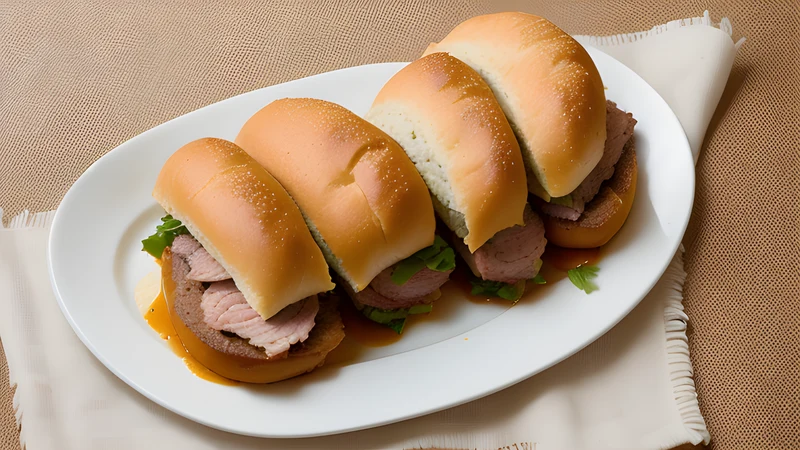
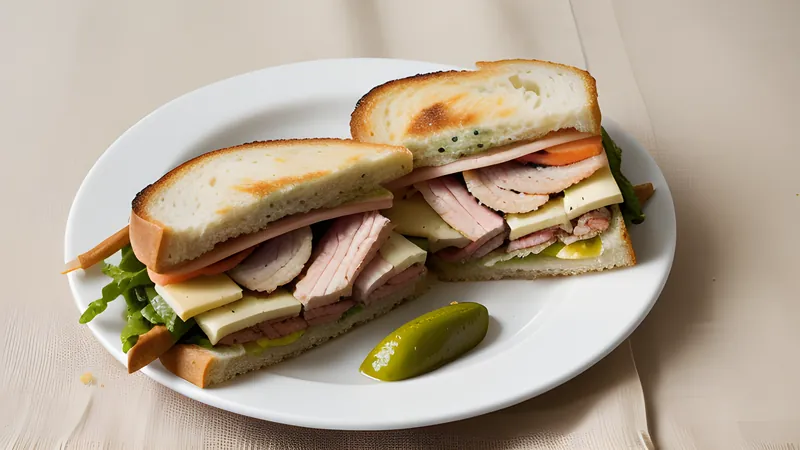
- Split each roll lengthwise without cutting all the way through. Spread mustard on both cut sides. Layer the ham, then the salami if using, then a generous pile of the mojo pork, then the cheese, then the pickle slices, on the bottom half of each roll. Close the sandwich.
- Brush the outside of each sandwich generously with the brown butter on both sides.
- Heat a griddle, panini press or heavy pan over medium heat. Press the sandwiches, weighted down with a second heavy pan or a foil-wrapped brick if you don't have a press, for 3 to 4 minutes a side, until the bread is deeply golden and crisp and the cheese has fully melted.
- Slice each sandwich diagonally and serve immediately while the crust is still crackling.
A sandwich built by three communities, not one
What makes the Cuban sandwich historically interesting is that it isn’t purely Cuban in its ingredient list, and the reason is Ybor City’s specific demographics. Cuban and Spanish cigar workers brought the ham, the roast pork and the Cuban bread itself, baked locally by Cuban and Spanish bakeries that still supply Tampa restaurants today. The genoa salami came from the neighbourhood’s large Sicilian population, who arrived in the same period to work the same factories and lived alongside the Cuban and Spanish communities closely enough that their charcuterie ended up in each other’s sandwiches. By the early twentieth century, cafés and cigar-factory lunch counters across Ybor City were serving a version with all four meats together, and that combined sandwich, not a purely Cuban original, is the one that spread outward from Tampa.
Miami’s version tells a different, later story. Cuban migration to Miami accelerated dramatically after 1959, and the sandwich that took root there kept the ham, roast pork, Swiss, mustard and pickle but dropped the salami, since the Sicilian community that had put it there in the first place was a Tampa-specific, not a Miami-specific, population. Both versions are correct for where they come from; the disagreement that still runs hot between the two cities is really a disagreement about which city’s immigration history the sandwich should be read as representing; it is genuinely just a difference in a shared recipe’s regional lineage, not a case of one city getting it wrong.
The pork does the most work
Ham and Swiss give the sandwich its saltiness and its melt, but the mojo-marinated roast pork is what makes a Cuban sandwich taste like Cuban food rather than a good deli sandwich pressed flat. Sour orange, garlic, oregano and cumin are the backbone of Cuban mojo generally, showing up across roast pork, yuca and plantain dishes throughout Cuban cooking, and a long slow roast at a relatively low oven temperature gives the shoulder time to break down fully while the marinade’s acid and aromatics penetrate deep into the meat rather than sitting on the surface. Don’t rush this part by roasting hot and fast; the texture you want is properly shreddable, almost falling apart, closer to a pulled pork than a sliced roast.
If you’re making a big batch of mojo pork for other purposes, this recipe scales up easily and the pork keeps beautifully; making extra specifically to have Cuban sandwiches through the week is a completely normal thing to do in a Cuban-American household, and the pork reheats better than almost any other component of the sandwich does.
Brown butter on the plancha
Traditional Cuban sandwiches are pressed with plain butter or sometimes mayonnaise brushed on the outside of the bread, giving a good, straightforward crisp crust once it hits the hot plancha. Browning the butter first, cooking it past the foaming stage until the milk solids turn golden and it smells distinctly nutty, adds a layer of toasted, almost caramel flavour to the crust that plain butter can’t replicate, and it costs you five extra minutes at a stage you were already doing regardless. It’s the one small addition I’d make to an otherwise traditional build, and it’s subtle enough that it won’t read as a departure from the original to anyone eating it, only as a better version of the same sandwich.
Pressing it properly
A dedicated panini press or plancha gives the most even result, but a heavy pan with a second pan or a foil-wrapped brick weighted on top does the job at home almost as well. The goal is real, sustained pressure and enough time on medium heat, not high heat, for the bread to compress, the cheese to fully melt through every layer, and the outside to turn deeply golden and genuinely crisp rather than just warmed through. Three to four minutes a side is usually right for a sandwich built as described here; check the underside at the three-minute mark and adjust down if it’s browning faster than the inside is heating, since a burnt exterior with a cold centre is the most common failure when the heat runs too high.
Cuban bread specifically matters more than most substitutions in this recipe. It’s a soft, slightly sweet white bread with a thin, crackly crust, traditionally baked with a palmetto leaf laid along the top before baking, which splits the crust as it bakes and gives the loaf its characteristic ridge. A soft torpedo roll or French sandwich baguette without a thick, chewy crust is the closest reasonable substitute if you can’t source genuine Cuban bread; avoid anything with a hard, crackly crust of its own, since it won’t compress properly under the press and will shatter rather than crisp.
Assembly order and why it holds together
Layer the ingredients in the order given, cheese directly against the pork rather than at the very top, since the cheese needs to be positioned where the press’s heat will melt it fully through rather than leaving it half-set at the edges. Mustard goes on both cut sides of the bread rather than pooled in the centre, so every bite gets an even hit of tang rather than a dry first bite and an overloaded last one. Pickles go in whole slices rather than chopped, both for a cleaner bite and because chopped pickle tends to make the bread soggy faster once the sandwich is pressed and its juices start moving.
Serving, storage and what to eat alongside
A Cuban sandwich is best eaten within minutes of coming off the press, while the crust is still audibly crackling; it does not hold well once cooled, since the bread softens quickly once the initial crispness fades. If you need to make a batch ahead for a crowd, assemble the unpressed sandwiches ahead of time, refrigerate, and press each one fresh to order rather than pressing everything in advance and trying to keep it warm.
Leftover mojo pork keeps for four days refrigerated and freezes for up to three months, making it worth roasting a double batch specifically so a second round of sandwiches is only ever twenty minutes away. If you’re building out a wider pressed-sandwich education, the muffuletta shares the same immigrant-community layering logic from a different Gulf Coast city, and Uruguay’s chivito shows what happens when a different country takes the loaded-sandwich idea and pushes it even further.
The media noche, its close cousin
Any conversation about the Cuban sandwich eventually runs into the media noche, a nearly identical build, ham, pork, Swiss, mustard and pickle, pressed the same way, served on a soft, slightly sweet egg bread roll instead of Cuban bread. The name means midnight, a reference to its history as the sandwich Cuban nightclub and casino workers ate at the end of a late shift, when a lighter, sweeter roll suited the hour better than a full-sized Cuban loaf. The two sandwiches are close enough that a media noche is often described, not quite accurately, as simply a smaller Cuban sandwich; the real distinction is the bread, and once you’ve made a genuine Cuban sandwich the way to try a media noche is to keep the exact same filling and swap only the roll.
Frita cubana, a separate sandwich built around a spiced ground beef and pork patty rather than sliced cold cuts, sometimes gets lumped into the same conversation by people encountering Cuban sandwich culture for the first time, but it shares almost nothing with the pressed ham-and-pork sandwich beyond a country of origin; it’s worth knowing the name exists so you don’t go looking for it inside this recipe.
Cheese, mustard and pickle, chosen properly
Swiss cheese is standard and its mild, slightly nutty flavour and reliable melt are exactly right for this sandwich, but a few Tampa restaurants use provolone instead, and either is defensible; what matters more than the specific cheese is slicing it thin enough that it melts fully under the press rather than staying rubbery in the centre of a thick slice. Yellow mustard, the bright, sharp American style rather than a grainy or Dijon mustard, is correct here; the sandwich’s other flavours are rich and salty enough that a sharper, simpler mustard cuts through them more effectively than a more complex one would.
Dill pickle, sliced lengthwise into thin spears or crosswise into rounds depending on the sandwich shop, is the other non-negotiable component; a sweet pickle relish or bread-and-butter pickle changes the flavour balance more than most substitutions in this recipe and isn’t traditional. Use a genuinely sour, garlicky dill pickle if you can find one, since a mild, barely-tart supermarket dill pickle won’t provide enough contrast against the richness of two meats, melted cheese and buttered, pressed bread.
Scaling for a crowd
This recipe presses four sandwiches individually, which is the right approach for a small gathering, but if you’re feeding a genuine crowd, build all the sandwiches ahead unpressed, wrap them tightly in foil, and press them one or two at a time as guests arrive rather than trying to keep a stack of already-pressed sandwiches warm in an oven, which softens the crust and defeats much of the point of pressing them in the first place. The mojo pork, made a day or even two ahead and gently reheated before assembly, is the one component that genuinely benefits from being made in advance, since the flavour deepens overnight in the fridge the same way a good stew does.
Related Content