Croque Monsieur with Dijon Bechamel
The ultimate grilled cheese, French-style
Contents
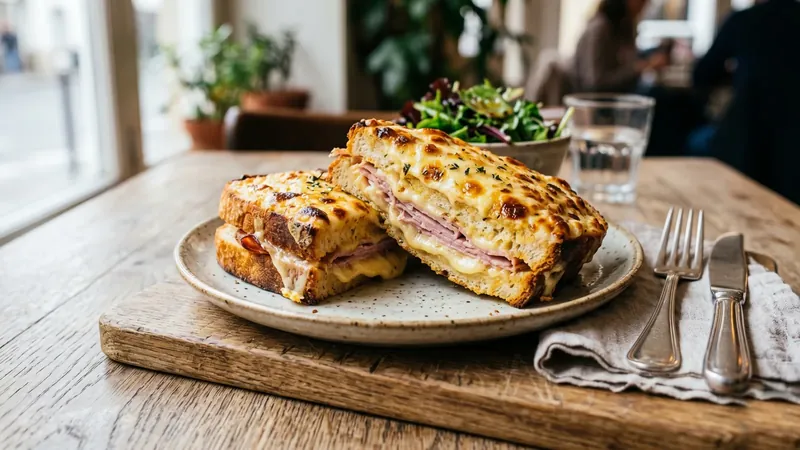
↓ Jump to recipeA croque monsieur is grilled cheese raised to an art form: ham and Gruyere pressed between buttered bread, then blanketed in bechamel and grilled until the top blisters and turns burnished gold. The twist here is a generous spoonful of Dijon stirred through that white sauce, lending a quiet mustardy warmth that cuts the richness. It is unapologetically indulgent, the kind of thing French cafes have served as a lunchtime staple since the early twentieth century. Made properly, with a well-cooked roux and a hot grill, it is far more than a toasted sandwich, and it is worth understanding why each step is there.
Croque Monsieur with Dijon Bechamel
Ingredients
- 4 thick slices of good white bread
- 25g unsalted butter, plus extra for the bread
- 25g plain flour
- 250ml whole milk, warmed
- 1 tbsp Dijon mustard
- 100g Gruyere, grated
- A pinch of freshly grated nutmeg
- 4 slices of good cooked ham
- 0.25 tsp fine salt and a good grind of black pepper
Method
- Melt the butter in a small saucepan over a medium heat, stir in the flour and cook for 1-2 minutes to a smooth pale paste.
- Gradually whisk in the warm milk, a splash at a time, and cook for 3-4 minutes, stirring constantly, until thickened enough to coat the back of a spoon.
- Remove from the heat and stir in the Dijon mustard, one-third of the Gruyere and the nutmeg. Season with the salt and pepper.
- Lightly butter the bread on one side and lay two slices butter-side down on a baking tray.
- Spread a thin layer of the bechamel over the upturned faces, then top each with two slices of ham and a scattering of Gruyere.
- Close the sandwiches with the remaining bread, butter-side up.
- Spoon the remaining bechamel generously over the top of each sandwich and scatter with the last of the Gruyere.
- Grill under a medium-high grill, 10cm from the element, for 5-7 minutes until the top is bubbling and deep golden.
- Rest for 1 minute, then serve hot with a knife and fork.
The Story
The croque monsieur is a fixture of French cafe and bistro culture, the kind of hot sandwich that has anchored lunch menus for well over a century. It is generally dated to Paris in 1910, with an early reference appearing on a cafe menu on the Boulevard des Capucines; the writer Marcel Proust mentions one in his novel cycle a few years later, which fixes the dish firmly in the belle epoque city. Its name comes from the French verb croquer, meaning to crunch or bite, paired with monsieur, and it speaks to the sandwich’s defining quality: a crisp, golden exterior giving way to molten cheese and warm ham within. It was designed as a quick, hot, substantial bite for workers and passers-by, food to eat standing at a zinc counter.
A close cousin, the croque madame, adds a fried egg perched on top, said to resemble a lady’s hat and giving the variation its name. Beyond those two, cooks have improvised endlessly over the years, but the essential template holds: bread, ham, cheese, and crucially a sauce that lifts the whole above an ordinary toasted sandwich. That sauce is where this recipe takes its small liberty.
The bechamel, and why the roux matters
The classic croque monsieur is finished with a bechamel, the foundational French white sauce built from a roux of butter and flour loosened with milk. It is one of the mother sauces codified in French cuisine, a base from which a whole family of other sauces derives, and its job here is twofold: to add creamy, savoury body inside and to brown into a glorious bubbling crust under the grill.
Getting it right hinges on the roux. Cooking the flour in the butter for a minute or two before adding liquid is not optional; it drives off the raw, pasty taste of uncooked flour and lets the starch granules swell evenly later. Add the milk all at once to a hot roux and you get lumps, because the starch seizes before it can disperse. Add it warm and gradually, whisking hard between additions, and the sauce comes together glossy and smooth. It should be thick enough to coat the back of a spoon and hold a line when you draw a finger through it, since a runny bechamel will slide off the bread rather than setting into a crust.
The Dijon twist and the cheese
The twist is to whisk a spoonful of Dijon mustard into that finished bechamel. Dijon, the sharp, smooth mustard named for the city in Burgundy and traditionally made with brown mustard seeds and verjuice or wine, brings a gentle heat and acidity that balances the richness of the cheese and butter, stopping the whole sandwich from feeling leaden. Add it off the heat so its volatile pungency is not cooked away entirely.
Gruyere is the traditional cheese of choice, an Alpine cow’s-milk cheese from Switzerland prized for the way it melts into long, savoury strands and for its nutty, faintly sweet depth. Using it in three places, blended into the bechamel, layered inside the sandwich, and scattered on top, guarantees cheese in every bite. A little Comte or Emmental can stand in, but avoid pre-grated supermarket cheese, which is dusted with anti-caking starch that stops it melting cleanly.
The grill is the whole point
Spooning the sauce over the top before the sandwich goes under the heat is what gives the croque monsieur its signature lacquered, blistered surface. Use the grill, not the oven, and keep the sandwich around 10cm from the element so the top browns before the bread dries out. Watch it closely from the four-minute mark; the line between deep golden and burnt is a matter of seconds under a fierce grill. A minute’s rest before serving lets the molten cheese firm up just enough to eat without scalding.
Substitutions, sides and getting ahead
For a vegetarian version, swap the ham for a layer of sauteed spinach squeezed dry, or thin slices of roasted mushroom. The bechamel can be made up to two days ahead and kept in the fridge with cling film pressed onto its surface to stop a skin forming; loosen it with a splash of milk over a low heat before using. Day-old bread is actually better than fresh here, as it soaks up the sauce without collapsing.
Troubleshooting the grill
The two things that go wrong are a soggy sandwich and a burnt one, and both come down to control at the grill. A soggy croque usually means the bechamel was too thin, so it soaked into the bread instead of setting into a crust, or the grill was too gentle, leaving the top pale while the interior steamed. Cook the sauce until it genuinely coats a spoon, and get the grill properly hot before the sandwich goes under. A burnt one means the rack sat too close to the element or you looked away; the top can go from golden to scorched in under a minute. If your grill runs fierce and uneven, start the sandwiches lower down to warm through, then move them up for the final blistering minute.
Bread choice matters more than people expect. A soft, floppy sliced white will collapse under the weight of the sauce; a slightly stale, close-crumbed white loaf, cut about 1.5cm thick, holds its structure and toasts to a firm base. Brioche makes a richer, more tender croque but browns fast, so watch it. Whatever you use, toasting the bread lightly before assembly is a worthwhile extra step if your loaf is very soft, giving the base a head start against sogginess.
Substitutions, sides and getting ahead
For a vegetarian version, swap the ham for a layer of sauteed spinach squeezed thoroughly dry, or thin slices of roasted mushroom. The bechamel can be made up to two days ahead and kept in the fridge with cling film pressed onto its surface to stop a skin forming; loosen it with a splash of milk over a low heat before using. You can assemble the sandwiches an hour or two ahead and keep them covered in the fridge, ready to spoon over the top layer of sauce and grill to order, which makes them a genuinely practical thing to serve for a lazy weekend brunch. If you are feeding a crowd, this is also the way to do it: assemble a whole tray, then grill them all together and serve at once, rather than trying to time them one pan at a time.
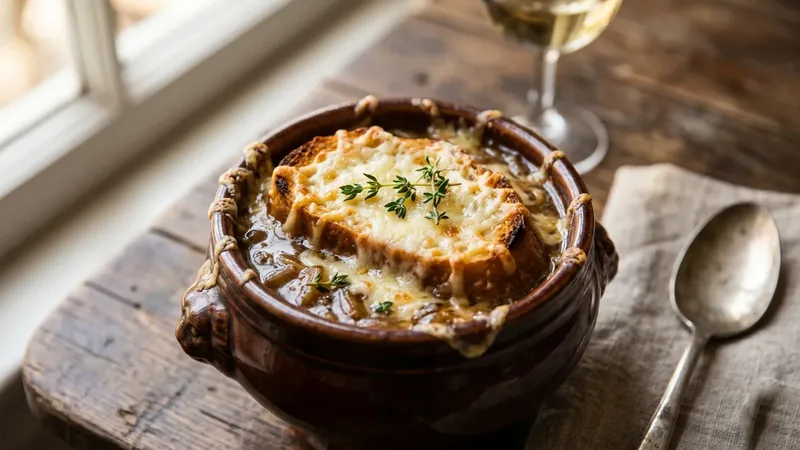
A croque monsieur wants something sharp alongside to cut its richness: a handful of dressed bitter leaves, a few cornichons, or a spoonful of quick pickled red onions. If you are cooking a French cafe lunch in earnest, it sits beautifully after a bowl of French onion soup, which shares its Gruyere and its grilled, bubbling top. And for another route to melted, savoury cheese, the mushroom and Gruyere quiche with thyme pastry is cut from very similar cloth.
Related Content