Extra-Crispy Roast Potatoes with Rosemary Salt
Shatteringly crisp, fluffy within
Contents
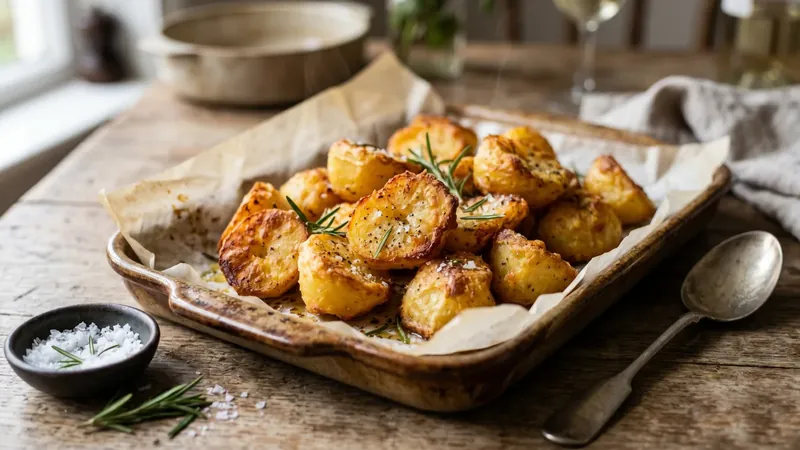
↓ Jump to recipeA truly crunchy roast potato is built on one idea: a rough, starchy exterior that fries into a brittle shell while the inside stays soft and steaming. A couple of tablespoons of semolina does that job better than flour ever could. Shaken over parboiled potatoes, it forms a craggy crust that crisps to a sandy, golden shattering in screaming-hot fat. A scattering of homemade rosemary salt at the end adds a fragrant, savoury finish. These are the roasties that disappear first from the table, and once you understand why the method works, you will make them the same way every time.
Extra-Crispy Roast Potatoes with Rosemary Salt
Ingredients
- 1.5kg Maris Piper potatoes
- 2 tbsp fine semolina
- 5 tbsp goose fat or sunflower oil
- 2 sprigs of rosemary
- 2 tbsp flaky sea salt
- 1 tbsp olive oil
Method
- Heat the oven to 200C fan. Peel the potatoes and cut into large, even chunks, roughly 5cm across.
- Put the potatoes in a large pan of cold salted water, bring to the boil and simmer for 8-10 minutes until the edges are just turning soft but the centres are still firm.
- Meanwhile, put the goose fat or oil into a sturdy roasting tin and place it in the oven to heat for 10 minutes, until shimmering and very hot.
- Drain the potatoes well and leave them in the colander to steam-dry for 2 minutes, then return them to the dry pan and sprinkle over the semolina. Put the lid on and shake firmly 5 or 6 times to roughen up the edges and coat them in floury starch.
- Carefully tip the potatoes into the hot fat, turning each one to coat, and spread them out so none are touching.
- Roast for 25 minutes without disturbing, then turn them over and roast for a further 20-25 minutes until deep golden and crisp all over.
- While they cook, strip the rosemary leaves and chop them finely. Warm them in the olive oil over a low heat for 1 minute, then pound or mix with the sea salt to make rosemary salt.
- Lift the potatoes onto kitchen paper for 30 seconds, then tip into a warm bowl and scatter generously with the rosemary salt before serving.
The Story
The roast potato holds an almost sacred place at the British table, the non-negotiable centrepiece of the Sunday roast and the dish over which families happily argue. Its appeal is textural above all: the contrast between a crisp, shattering crust and a soft, steaming interior is what separates a great roast potato from a merely adequate one. Achieving that contrast reliably is the whole challenge, and generations of British cooks have developed tricks to tilt the odds in their favour.
The choice of potato is the first of them. Maris Piper is a floury maincrop variety bred in the United Kingdom and added to the National List in 1966; its dry, fluffy flesh roughens easily and turns light inside. King Edward, another floury British favourite, works just as well. Waxier salad potatoes such as Charlotte or Anya resist the treatment, staying dense and refusing to develop that ragged, crushable surface. If you can only find an all-rounder, choose the biggest, oldest-looking specimens, since older potatoes have converted more of their sugars to starch and roast drier.
Why the parboil and the rough-up matter
The single most important step is the parboil. Simmering the potatoes until their edges just begin to soften, then agitating them, breaks down the outer layer of cells into a slurry of fluffy, gelatinised starch that clings to each piece. That ragged surface is what crisps so dramatically in the oven, because it offers far more surface area to brown than a smooth-cut potato ever could. Cut the potatoes too small and they overcook to mush before they crisp; too large and the outside burns before the middle softens. A 5cm chunk is the reliable middle ground.
Steam-drying after draining is the quiet hero here. Water is the enemy of crispness: any moisture left on the surface has to boil off in the tin before the potato can start to fry, which wastes heat and softens the crust. Two minutes in the colander, or a brief return to the empty pan over a low flame, drives that surface water off and leaves the starch tacky and ready to grip the fat.
The semolina twist
The semolina is this recipe’s small clever twist, though it follows exactly the same logic as roughing up. Semolina is coarsely milled durum wheat, the same hard wheat used for dried pasta, and its slightly gritty grains cling to the damp parboiled potatoes and crisp into an even rougher, more brittle coating than the potato’s own starch alone. A little plain flour does something similar, but semolina gives a particularly sandy, crunchy shell that stays crisp longer on the plate. Shaking the potatoes in the pan with the lid on, rather than stirring with a spoon, distributes it evenly while battering the edges into the right ragged state.
Fat, heat and spacing
Fat and heat finish the job. The fat must be genuinely hot before the potatoes go in, hot enough to shimmer and sizzle on contact, so that the surface sears immediately rather than absorbing grease and going soggy. Goose fat gives a rich, savoury flavour and browns beautifully; duck fat is similar, and a neutral oil with a high smoke point, such as sunflower, works perfectly well for a vegetarian or vegan version. Spacing matters just as much as heat: crowd the tin and the potatoes steam each other, trapping moisture and softening the crust. Leave a clear gap between each one and resist the urge to turn them until the base has set into a firm golden crust, or they will stick and tear.
The rosemary salt and finishing
The rosemary salt is the final flourish, and the reason it goes on at the very end is worth explaining. Rosemary added to the hot tin at the start scorches and turns bitter before the potatoes are done. Instead, chop the leaves finely, warm them briefly in a spoonful of olive oil to release their aromatic resins, then work them through flaky sea salt. Scattered on after the potatoes leave the oven, it perfumes each one without any risk of burning, delivering that classic pairing of rosemary and potato in its freshest, greenest form. A brief rest on kitchen paper before serving pulls off the last of the surface fat so the crust reads as crisp rather than oily.
Getting ahead and troubleshooting
You can parboil and rough up the potatoes several hours in advance; spread them on a tray and keep them uncovered in the fridge, which dries the surface further and makes them crisp even more emphatically. Bring them back to room temperature before they hit the hot fat. If your roasties come out pale and greasy, the fat was not hot enough or the tin was overcrowded. If they are crisp but the insides are dense, the parboil was too short. And if the crust softens on standing, you served them too long after they left the oven; roast potatoes wait for no one.
Make-ahead, storage and reheating
Roast potatoes are at their best straight from the oven, but with a little planning you can take most of the stress out of the day. The parboil-and-rough-up stage, in particular, can be done well in advance: spread the roughed potatoes on a tray and leave them uncovered in the fridge for up to a day, which dries the surface further and, if anything, makes them crisp more emphatically. Bring them back to room temperature before they hit the hot fat, or they will drop its temperature too far. You can even part-roast them until pale and set, then finish in a hot oven just before serving, which is the trick that lets you get roasties onto a crowded Sunday table without a last-minute panic.
Leftover roast potatoes rarely survive, but if they do, revive them in a hot oven or air fryer rather than the microwave, which turns them limp and steamy. Chopped and fried hard in a little fat the next morning, they make an excellent base for a fry-up, or crushed with a fork and crisped again as a rough hash.
Variations
The semolina crust takes flavour well. Toss a few whole unpeeled garlic cloves and a couple of bruised rosemary sprigs into the fat for the last twenty minutes so they perfume the potatoes as they finish, then discard or squeeze the soft garlic over the top to serve. A grating of Parmesan added in the final ten minutes melts into a savoury crust; a spoonful of semolina swapped for polenta gives an even sandier, cornmeal crunch. For a spiced version, toss the drained potatoes with a teaspoon of cumin seeds and a pinch of chilli before roasting. The method underneath stays exactly the same; it is robust enough to carry almost any seasoning you throw at it.
Serve these alongside a Sunday roast, or turn them into a meal in their own right with something warming and vegetarian, such as a bowl of red lentil and coconut dal. For a fuller plate they sit happily next to a crispy chickpea and sweet potato bowl with tahini dressing, and if you want to round off the meal, a slice of chocolate hazelnut and sea salt tart never goes amiss.
Related Content