Cou-Cou and Flying Fish: The Barbadian National Plate
Okra-laced cornmeal alongside a fish that gave Barbados its own emblem
Contents
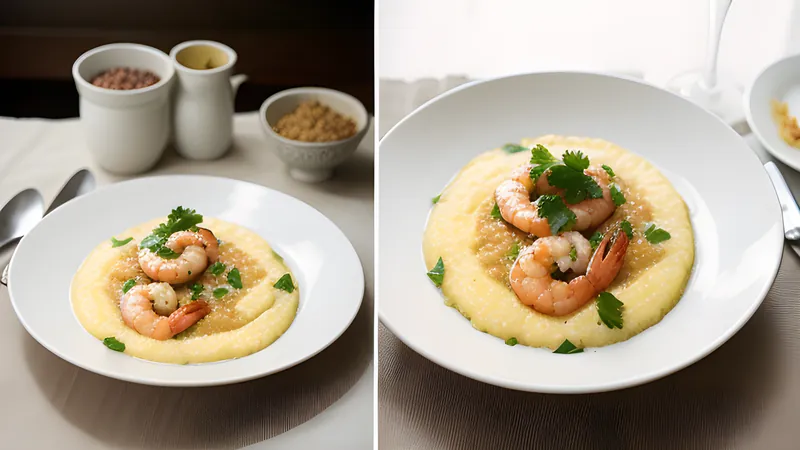
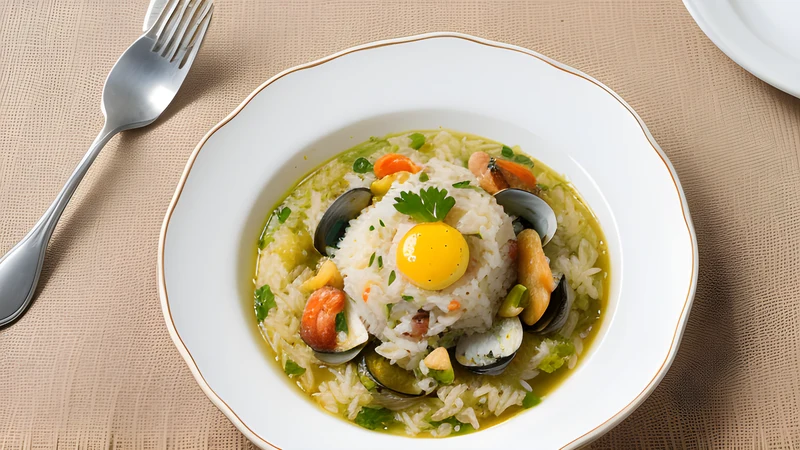
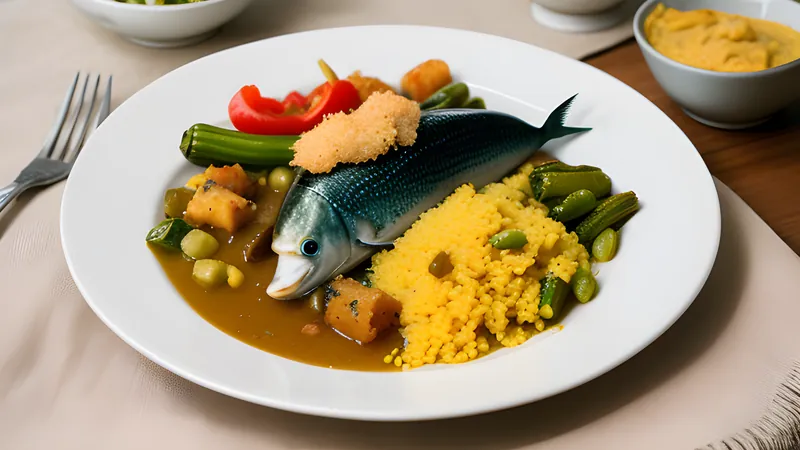
↓ Jump to recipeCou-cou and flying fish is Barbados’s official national dish, and the pairing says something true about the island itself: a cornmeal-and-okra porridge, worked with a wooden stick into a smooth, sliceable mound, served alongside a small silver fish so central to Bajan identity that it appears on the country’s coins and is protected by specific fishing regulations most other nations don’t bother legislating for a single species. Neither half of the dish is showy. Both depend entirely on technique done properly, which is exactly the kind of dish that survives for centuries as a national symbol rather than a passing trend.
Cou-Cou and Flying Fish: The Barbadian National Plate
Ingredients
- 8 flying fish fillets (or substitute mackerel, herring or small whiting fillets)
- 2 limes, juiced
- 1 tbsp white vinegar
- 2 tsp fine salt, divided
- 12 okra pods, topped and sliced into rounds
- 700ml water, plus more for the fish gravy
- 250g fine yellow cornmeal
- 2 tbsp butter
- 2 tbsp vegetable oil
- 1 onion, finely chopped
- 3 garlic cloves, minced
- 1 tomato, chopped
- 1/2 scotch bonnet chilli, finely chopped (seeds removed for less heat)
- 2 spring onions, chopped
- 2 sprigs fresh thyme
- 1 tbsp tomato paste
- 150ml fish or vegetable stock
- Black pepper, to taste
Method
- Wash the fish fillets in cold water with the lime juice and vinegar, then rinse and pat dry. Season with 1 tsp salt and black pepper and set aside.
- Put the sliced okra into a pot with 700ml water and 1 tsp salt. Bring to the boil and cook for 8-10 minutes until the okra is very soft and has released its characteristic sticky liquid into the water.
- Reduce the heat to low. Gradually sprinkle in the cornmeal in a thin, steady stream while whisking or stirring constantly with a wooden cou-cou stick or the back of a sturdy spoon, working out any lumps as they form.
- Once all the cornmeal is incorporated, switch to a strong, steady stirring motion and cook over low heat for 15-20 minutes, stirring in one direction and scraping the base and sides of the pot regularly, until the mixture pulls away cleanly from the sides and forms a smooth, cohesive mass.
- Beat in the butter until fully melted and glossy. Taste and adjust the salt. Cover and keep warm while you cook the fish.
- Meanwhile, heat the oil in a wide pan over medium heat. Add the onion, garlic, scotch bonnet and spring onions, and cook for 3-4 minutes until softened.
- Add the tomato, thyme and tomato paste, and cook for a further 2 minutes, then pour in the stock and bring to a gentle simmer.
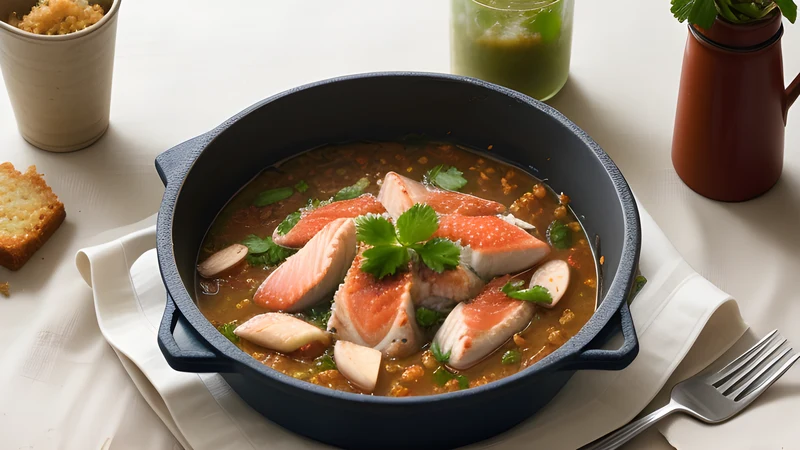
- Lower the seasoned fish fillets into the simmering gravy in a single layer. Cover and poach gently for 6-8 minutes, until just cooked through and opaque.
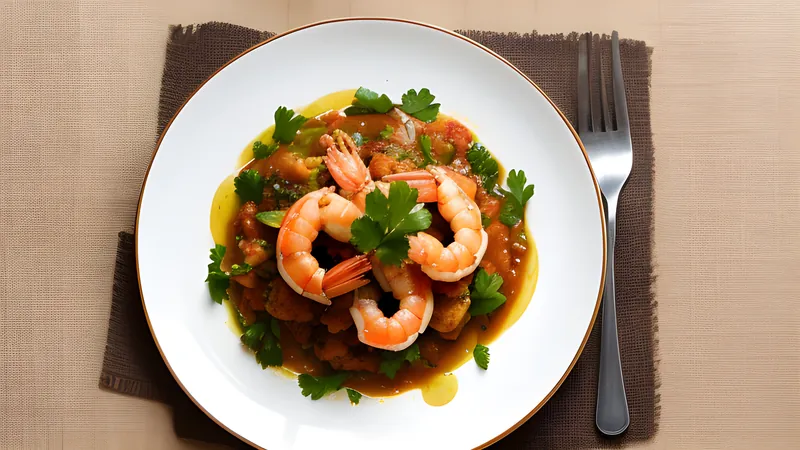
- Turn the cou-cou out onto a large plate or board, shaping it into a rounded mound with a wet spoon. Serve immediately with the fish and its gravy spooned alongside or over the top.
Two histories in one plate
Cou-cou’s roots trace to West African cornmeal-and-okra porridges — closely related to fufu and the various cornmeal mush dishes found across the West African coast — carried to Barbados during the transatlantic slave trade and adapted to whatever grain and vegetable were locally available on the plantations. Okra itself made the same journey from West Africa, and its natural mucilage, the sticky, slightly slippery liquid it releases when cooked, is what gives cou-cou its distinctive smooth, almost custard-like texture once it’s worked together with the cornmeal, a texture that would be impossible to replicate with cornmeal and water alone.
Flying fish is the other half of the story, and it’s a genuinely unusual fish to build a national identity around: a small, silvery species with enlarged pectoral fins that let it glide, sometimes for hundreds of metres, just above the ocean surface to escape predators, most abundant in the warm currents around Barbados among all the Caribbean islands. It became central to Bajan fishing culture and cuisine specifically because it arrived so reliably and in such volume close to shore, giving generations of small-boat fishermen a dependable catch without the need for the larger vessels bigger fish demand. The fish’s cultural weight runs deep enough that a long-running dispute with Trinidad and Tobago over flying fish migration and fishing rights in the waters between the two islands went all the way to international arbitration in the early 2000s, a rare case of a small fish becoming genuine diplomatic business between nations. The fish appears on Barbadian coins, and although the country’s coat of arms carries a dolphin and a pelican rather than the fish itself, flying fish remains the animal most Bajans would name first if asked what represents the island. Oistins fish market on the south coast still runs a Friday night fish fry built substantially around it, alongside marlin, snapper and other local catch, drawing both residents and visitors every week of the year.
The two halves of the dish also carry different weekly weight in Bajan life. Cou-cou and flying fish is specifically associated with Friday dinner and Sunday lunch in many households, a status similar to the way brown stew chicken anchors a Jamaican weeknight rather than a special occasion, except that cou-cou and flying fish carries more ceremony precisely because of its national-dish status; it turns up at government functions and cultural festivals as the dish visitors are handed to explain what Barbadian food is, in a way few other Caribbean staples are asked to do for their own countries.
The stick, the stir, and why cou-cou takes patience
Cou-cou is traditionally made and served with a specific tool, a smooth wooden cou-cou stick, flattened at one end, that’s used both to stir the mixture as it cooks and to work the finished porridge into its characteristic smooth, sliceable texture once it’s turned out. A sturdy wooden spoon does the job reasonably well if a proper stick isn’t available, but the motion matters regardless of tool: steady, continuous stirring in one direction, scraping the base and sides of the pot constantly, is what prevents the cornmeal from catching and burning against the hot metal while it slowly thickens and gelatinises over fifteen to twenty minutes.
Rushing this stage, either by adding the cornmeal too fast at the start or by cooking over heat that’s too high, produces a lumpy, grainy cou-cou that never develops the smooth, cohesive texture the dish depends on; cornmeal added too quickly clumps immediately on contact with the hot okra water, and those clumps don’t fully dissolve no matter how long the mixture cooks afterwards. Sprinkling it in gradually, in a thin stream while stirring continuously, gives each addition of cornmeal time to hydrate evenly before the next handful goes in, which is the difference between a cou-cou that slices cleanly once turned out and one that stays stubbornly grainy.
The okra’s role goes beyond flavour. Its mucilage is genuinely what binds the finished cou-cou into a mass firm enough to hold a mounded shape rather than slumping like a loose porridge, which is why the okra is cooked first in the water that then goes on to cook the cornmeal, rather than being added separately at the end — that sticky cooking liquid is doing real structural work that plain water couldn’t replicate.
What can go wrong
Lumpy cou-cou is the single most common failure, and it traces almost always to the cornmeal going in too fast or the heat being too high when it does. Cornmeal added in a sudden dump rather than a steady rain clumps on contact with the hot, sticky okra water, and once a lump forms it resists breaking up no matter how long the pot is stirred afterward, since the outside of the clump cooks into a barrier that seals in dry cornmeal underneath. If lumps do form, straining isn’t really an option the way it might be with a sauce; the only real fix is to keep stirring hard and long, pressing lumps against the side of the pot with the stick or spoon, though prevention by going in slowly is far more reliable than any rescue. A cou-cou that stays loose and won’t hold a mounded shape when turned out usually means either the okra wasn’t cooked long enough to release its full mucilage, or not enough cornmeal went in relative to the water; both are easy to test before committing to the full cooking time; the mixture should visibly thicken and pull away from the sides of the pot as it nears done, and if it’s still sloshing after twenty minutes of proper stirring, a little more cornmeal sprinkled in and cooked through will usually bring it round. On the fish side, overcooked flying fish (or its substitutes) turns dry and flaky rather than staying moist, since these are all naturally lean, delicate fish; six to eight minutes at a gentle simmer is usually enough, and pulling a fillet to check for opaque, just-set flesh is a better guide than the clock alone.
The recipe
Serves 4.
Ingredients
- 8 flying fish fillets (or mackerel, herring, or small whiting)
- 2 limes, juiced
- 1 tbsp white vinegar
- 2 tsp salt, divided
- 12 okra pods, sliced
- 700ml water
- 250g fine yellow cornmeal
- 2 tbsp butter
- 2 tbsp vegetable oil
- 1 onion, finely chopped
- 3 garlic cloves, minced
- 1 tomato, chopped
- 1/2 scotch bonnet chilli, finely chopped
- 2 spring onions, chopped
- 2 sprigs fresh thyme
- 1 tbsp tomato paste
- 150ml fish or vegetable stock
- Black pepper
Method
- Wash the fish in lime juice and vinegar, rinse, dry, and season.
- Boil the sliced okra in the water with salt for 8-10 minutes until very soft.
- Reduce heat and sprinkle in cornmeal gradually while stirring continuously.
- Cook over low heat, stirring constantly, for 15-20 minutes until smooth and cohesive.
- Beat in butter and adjust salt; keep warm.
- Soften onion, garlic, scotch bonnet and spring onion in oil, then add tomato, thyme and tomato paste.
- Add stock, bring to a simmer, and poach the fish gently in the gravy for 6-8 minutes.
- Turn the cou-cou out into a mound and serve with the fish and gravy.
Tips, substitutions and storage
True flying fish is hard to source outside the Caribbean, but any small, oily, silver-skinned fish — mackerel, herring, or a delicate white fish like whiting — takes the same gentle poaching gravy well and gives a genuinely close result. Fine yellow cornmeal, sometimes labelled “cou-cou meal” in Caribbean grocers, gives a smoother result than coarser polenta-style cornmeal, which stays grainier no matter how long it’s cooked. Cou-cou is very much a fresh-cooked dish, best eaten the day it’s made since it firms up considerably and loses its silky texture once refrigerated, though leftovers can be sliced and pan-fried the next day into something closer to a savoury cornmeal cake, which is a genuinely good use for them rather than a compromise.
The Creole gravy that carries the fish here is a close relative of the base used across the English-speaking Caribbean for stewed and steamed fish, related in spirit to the poaching liquid under Trinidad’s roti curries even though the two dishes land in very different places on the plate. It also pairs unexpectedly well as a starter alongside something as substantial as festival, if putting together a wider Caribbean spread. A cou-cou stick isn’t sold outside Caribbean specialist shops, so a long-handled wooden spoon with a flat, sturdy bowl is the practical substitute most cooks outside the region use, and it works fine as long as it’s strong enough to withstand real pressure against a thick, resistant mixture without bending or splintering. The gravy itself scales up easily for a larger gathering; double the aromatics and stock while keeping the fish in a single layer so it poaches evenly rather than steaming unevenly in a crowded pan, adding a second batch afterward if the whole quantity of fish won’t fit in one go.
Variations
Saltfish (dried, salted cod) is a common substitute for flying fish when it isn’t in season, soaked and desalinated first, then flaked into a similar Creole gravy; it’s a heavier, saltier dish than the version here but equally traditional across the region. Some households add a splash of coconut milk to the okra water before the cornmeal goes in, which softens the finished cou-cou’s flavour and adds a subtle richness, though purists tend to see this as a Trinidadian influence rather than strictly Bajan practice. Whichever fish ends up in the gravy, the cou-cou itself is worth mastering on its own terms first, since a properly smooth, well-seasoned mound is what the whole plate is actually judged on at a Bajan table, long before anyone gets to the fish sitting next to it. A version made without okra at all, using only cornmeal and water, turns up in some households simply as a side starch when okra is out of season, though it’s closer to a plain cornmeal porridge than true cou-cou, missing the smooth, custard-like set the okra provides. Pumpkin, mashed and worked into the cou-cou alongside the cornmeal, is a less common but genuinely good regional variation that adds sweetness and a softer orange-flecked colour, popular in some rural parishes where pumpkin grows easily. Steamed flying fish, seasoned simply with lime, garlic, thyme and a green seasoning paste rather than the tomato-based gravy here, is the other standard preparation, closer to a simple herb-and-citrus poach than a stew, and worth trying once the gravy version has been mastered, since the two show off different sides of the same small fish.
Related Content