Colombo: The Curry of Martinique and Guadeloupe
The French Caribbean's own curry powder, built by Tamil indentured labourers and never quite Indian again
Contents
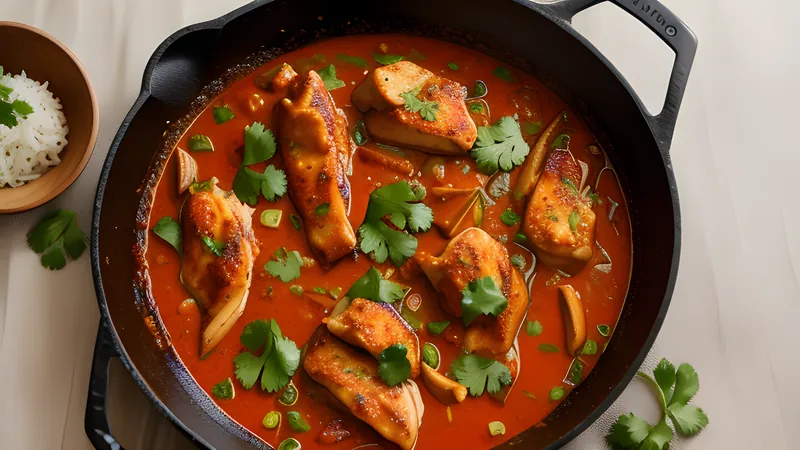
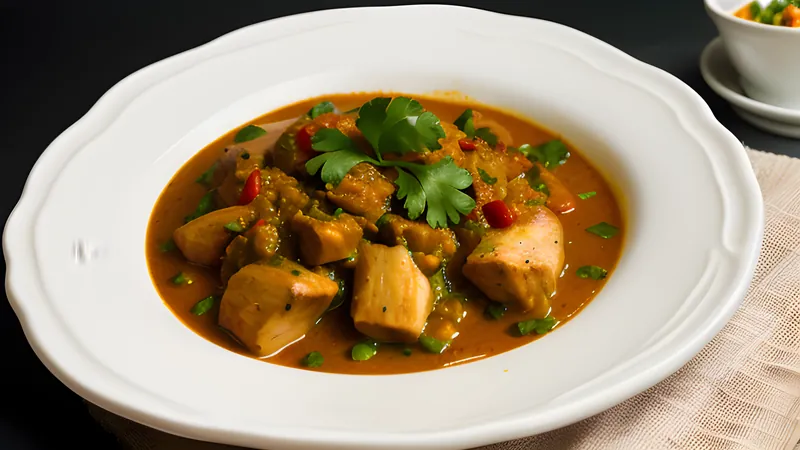
↓ Jump to recipeColombo is the curry of Martinique and Guadeloupe, France’s Caribbean overseas territories, and its name is a direct fossil of where the dish came from: Colombo, the capital of what was then Ceylon, now Sri Lanka, one of the ports Tamil indentured labourers sailed from when they were brought to the French Antilles after slavery’s abolition in 1848 left plantation owners searching, exactly as in Trinidad and British Guiana, for a new labour force. Those labourers carried curry cooking with them, and over more than a century and a half in the French Caribbean, it drifted steadily away from anything resembling South Indian curry into a dish with its own distinct spice blend, its own name, and its own place at the centre of both islands’ everyday cooking.
Colombo: The Curry of Martinique and Guadeloupe
Ingredients
- 1.4kg bone-in, skin-on chicken pieces
- 1 lime, juiced
- 2 tsp fine salt, divided
- 2 tbsp coriander seeds
- 1 tbsp cumin seeds
- 1 tbsp yellow mustard seeds
- 1 tsp black peppercorns
- 4 whole cloves
- 1/2 tsp fenugreek seeds
- 1 dried scotch bonnet or 2 dried bird's eye chillies
- 1 tsp ground turmeric
- 3 tbsp vegetable oil
- 1 large onion, sliced
- 5 garlic cloves, minced
- 3cm fresh ginger, grated
- 1 fresh scotch bonnet chilli, whole and unpierced
- 2 medium potatoes, peeled and cut into large chunks
- 1 small aubergine, cut into chunks
- 400ml chicken stock
- 1 tbsp tamarind paste (or 2 tbsp lime juice)
- 2 sprigs fresh thyme
Method
- Rub the chicken with lime juice and 1 tsp salt, cover, and set aside for 15-20 minutes.
- Toast the coriander, cumin, mustard seeds, peppercorns, cloves and fenugreek in a dry frying pan over medium heat for 2-3 minutes, shaking the pan often, until fragrant and a shade darker. Tip into a spice grinder or mortar, add the dried chilli, and grind to a fine powder. Stir in the turmeric. This is your colombo powder.
- Pat the chicken dry and toss it with 2 tablespoons of the colombo powder, working it into the skin. Reserve the rest of the powder for the sauce.
- Heat the oil in a heavy pot over medium-high heat. Brown the chicken pieces in batches, 3-4 minutes a side, until golden, then remove to a plate.
- Add the onion to the same pot and cook for 5 minutes until softened, then add the garlic and ginger and cook a further minute.
- Stir in the remaining colombo powder and cook for 30 seconds, stirring constantly, until fragrant, taking care not to let it catch and burn.
- Return the chicken to the pot along with the whole scotch bonnet, potatoes, aubergine, stock, tamarind paste and thyme. Bring to a simmer, cover, and cook for 30-35 minutes, until the chicken and vegetables are tender.
- Uncover and simmer a further 5-10 minutes to thicken the sauce slightly. Remove the whole chilli and thyme stems, taste, and adjust salt.
- Serve hot over steamed white rice.
A curry powder that stopped being Indian
What makes colombo genuinely its own dish rather than a regional Indian curry with a French postcode is the spice blend itself, “colombo powder,” toasted and ground fresh rather than bought pre-mixed by any serious cook, and built from a specific list — coriander, cumin, mustard seed, black pepper, cloves, fenugreek, dried chilli and turmeric — that overlaps with South Indian curry powders without matching any single regional Indian blend exactly. Over generations in Martinique and Guadeloupe, with the specific spices available through French Caribbean trade routes and without regular contact back to India to keep the recipe anchored, the blend settled into its own distinct proportions, heavier on mustard seed and fenugreek than most Indian curry powders and generally milder in raw chilli heat, with fresh scotch bonnet added separately during cooking rather than folded into the powder itself.
Fresh-toasted spice is doing real, specific work here that a jar of pre-ground curry powder can’t replicate. Whole coriander, cumin and mustard seeds carry volatile aromatic oils that begin degrading from the moment they’re ground, so a shop-bought powder that’s been sitting on a shelf for months, however good the brand, has already lost much of the top-note fragrance that makes a fresh blend taste bright rather than flat and dusty. Toasting the whole seeds briefly in a dry pan before grinding pushes this further, coaxing out deeper, nuttier, more rounded flavours through gentle heat that raw or pre-ground spice never develops, which is why colombo made with a freshly toasted-and-ground batch tastes noticeably more complex than the same recipe made with even a good commercial curry powder.
Colombo powder also travelled under French administration rather than British, which meant Martinique and Guadeloupe developed the dish in relative isolation from the parallel curry traditions taking shape at the same time in British-run Trinidad and Guyana, each fed by the same broad wave of nineteenth-century Indian indenture but shaped afterwards by different colonial food supply chains, different available produce, and decades without meaningful contact between the two curry cultures. That isolation is a large part of why colombo tastes distinct from Trinidadian curry today rather than like a regional variation on the same recipe, even though both ultimately share the same starting point on ships out of Indian and Sri Lankan ports. The same Tamil indenture system also seeded curry cooking on Réunion, the French island in the Indian Ocean, where a closely related dish called rougail carri developed along parallel lines, sharing the same toasted, ground spice base despite entirely different local produce. The labourers who made this journey were legally “engagés,” contracted rather than enslaved, but the contracts were frequently exploitative in practice, terms routinely extended or dishonoured by estate owners, and the food they carried with them is one of the few parts of that history that survived on its own terms.
Two ways in: meat colombo and vegetable colombo
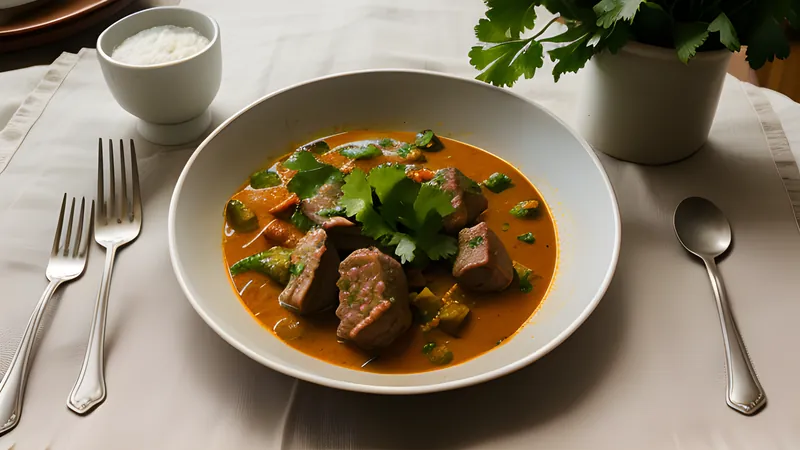
Chicken is the most common protein for colombo today, though the dish traditionally covers a wider range: colombo de cabri (goat), colombo de porc (pork), and a vegetable-only version, colombo de légumes, built around the same aubergine, potato and squash that support the meat versions here, are all equally legitimate and appear regularly on Martinican and Guadeloupean tables depending on what’s available and the occasion. What stays constant across every version is the technique of blooming the ground colombo powder briefly in hot oil with the aromatics before any liquid goes in, a step that toasts the spices a second time, now in fat rather than dry heat, and releases fat-soluble aromatic compounds that water alone can’t carry, which is the same reason a curry bloomed properly in oil tastes rounder and less raw than one where the spice powder is simply stirred into a finished sauce at the end.
Potato and aubergine both go into the pot specifically because they hold their shape reasonably well through a thirty-minute simmer while still taking on the sauce’s flavour, aubergine in particular acting almost as a sponge for the spiced liquid around it by the time it’s fully tender. Tamarind, or a substitute of extra lime juice, supplies a specific tart backbone that curry powder’s own acidity doesn’t fully provide, cutting through the richness of the browned chicken and oil-bloomed spice in a way that keeps the whole dish from tasting flat or overly heavy by the time it reaches the table.
What can go wrong
A colombo that tastes flat and dusty despite a long simmer almost always comes back to the spice powder rather than anything about the cooking method: pre-ground curry powder past its prime, or whole spices ground without toasting first, simply won’t develop the deeper, rounder flavour fresh-toasted colombo powder gives. Toast the whole seeds only until they turn a shade darker and smell distinctly more fragrant, no longer than three minutes over medium heat; push past that point and coriander and cumin turn bitter rather than nutty, a mistake that’s hard to correct once it’s happened since the burnt note carries straight through into the finished sauce. Burning the spice powder itself during the blooming step, after the onions and aromatics, is an even easier way to ruin the dish, since ground spice catches almost instantly in hot oil; thirty seconds of constant stirring is genuinely enough, and pulling the pot off the heat the moment it smells fragrant rather than acrid is the right instinct. A sauce that never thickens properly usually means the lid came off too late rather than too early; the last uncovered stretch is there specifically to reduce the liquid, and if it’s still thin after ten minutes uncovered, a further five to eight minutes with the chicken pieces turned occasionally will usually bring it to the right consistency. Chicken that’s tough despite the long cook time is generally a sign that the pieces browned in step four spent too long over high heat rather than a genuinely quick sear, toughening the outer meat before the braise even starts.
The recipe
Serves 4-5.
Ingredients
- 1.4kg bone-in, skin-on chicken pieces
- 1 lime, juiced
- 2 tsp salt, divided
- 2 tbsp coriander seeds
- 1 tbsp cumin seeds
- 1 tbsp yellow mustard seeds
- 1 tsp black peppercorns
- 4 whole cloves
- 1/2 tsp fenugreek seeds
- 1 dried scotch bonnet or 2 dried bird’s eye chillies
- 1 tsp ground turmeric
- 3 tbsp vegetable oil
- 1 large onion, sliced
- 5 garlic cloves, minced
- 3cm fresh ginger, grated
- 1 fresh scotch bonnet chilli, whole
- 2 medium potatoes, chunked
- 1 small aubergine, chunked
- 400ml chicken stock
- 1 tbsp tamarind paste (or 2 tbsp lime juice)
- 2 sprigs fresh thyme
Method
- Rub the chicken with lime juice and salt; rest 15-20 minutes.
- Toast the whole spices and dried chilli, then grind and mix with turmeric to make colombo powder.
- Coat the dried chicken in 2 tbsp of the powder.
- Brown the chicken in oil in batches; remove.
- Soften the onion, garlic and ginger in the same pot.
- Stir in the remaining colombo powder and cook briefly until fragrant.
- Return the chicken with the whole chilli, potatoes, aubergine, stock, tamarind and thyme. Cover and simmer 30-35 minutes.
- Uncover and reduce slightly. Remove the chilli and thyme, season, and serve over rice.
Tips, substitutions and storage
Colombo powder keeps for a couple of months in an airtight jar away from light, so it’s worth toasting and grinding a larger batch than one recipe needs if colombo becomes a regular dish, though it will never taste quite as vivid as the day it’s made. Aubergine can be swapped for pumpkin or butternut squash if it’s out of season, both of which take the sauce equally well though they’ll break down slightly more during the simmer. Leftovers keep four days refrigerated and the flavour genuinely improves overnight as the spices settle further into the sauce; reheat gently on the stove rather than in a microwave to keep the potatoes from turning mealy. A spice grinder dedicated to savoury spices rather than a coffee grinder pressed into double duty gives a cleaner-tasting powder, since coffee oils are notoriously hard to fully clean out of grinder blades and will taint a delicate spice blend; a mortar and pestle is the traditional alternative and gives good control over the final texture, coarser or finer as preferred. If fresh scotch bonnet isn’t available, a whole habanero or two dried chillies added to the pot alongside the potatoes gives a similar background heat without needing to be blended into the sauce itself. The dish also freezes well once fully cooked, up to two months, though potatoes soften further on thawing, so cooks planning to freeze a batch often hold the potatoes back and add them fresh during reheating instead.
Colombo shares its Indian-indentured-labour ancestry with Trinidad’s roti and curry tradition, and the two dishes make an instructive pair to cook back to back, since they show how far the same starting point can diverge once it settles into two different island cultures. For a lighter starter before a colombo, cou-cou and flying fish offers a completely different, cornmeal-based register from elsewhere in the Caribbean.
Variations
A dry colombo, cooked with less stock and reduced further at the end until the sauce clings to the meat rather than pooling, is common for special occasions and holds up particularly well with goat or pork, which can take the longer, more concentrated cooking time. Coconut milk sometimes replaces part of the stock in home versions, especially in Guadeloupe, giving a rounder, sweeter sauce that leans the dish slightly closer to other Caribbean coconut curries. Whatever protein or liquid changes, the freshly toasted colombo powder is the one element worth never skipping or substituting with a shop-bought jar, since it’s genuinely the entire identity of the dish rather than an interchangeable seasoning. Colombo de cabri, the goat version, is widely considered the more festive iteration, served at gatherings and celebrations where chicken colombo is the everyday household version; goat needs closer to ninety minutes of simmering to become properly tender, roughly triple the time chicken takes, and benefits from being started a day ahead so the meat has time to fully soften and the sauce time to deepen overnight in the fridge. A colombo built entirely on root vegetables, with no meat at all, is a genuine Lenten-season tradition in some Catholic households across the French Antilles, proof that the dish’s identity really does live in the powder rather than in what it’s cooked with.
Related Content