Cocido Madrileño: Madrid's Three-Course Chickpea Stew
One pot, three services, and a meatball with mint in it
Contents
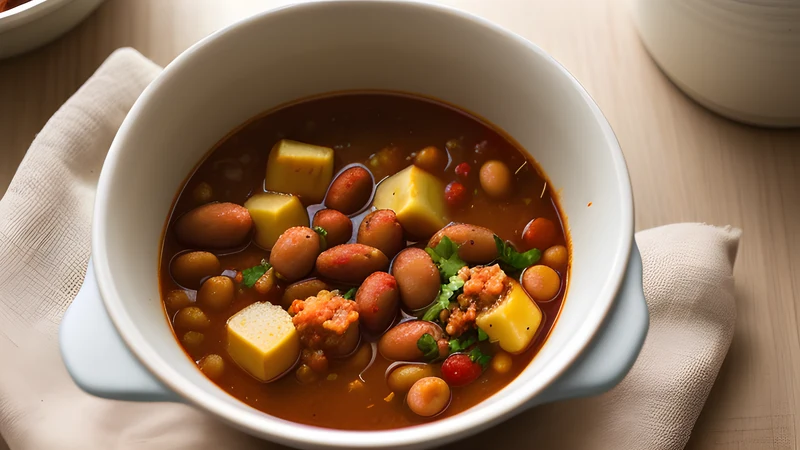
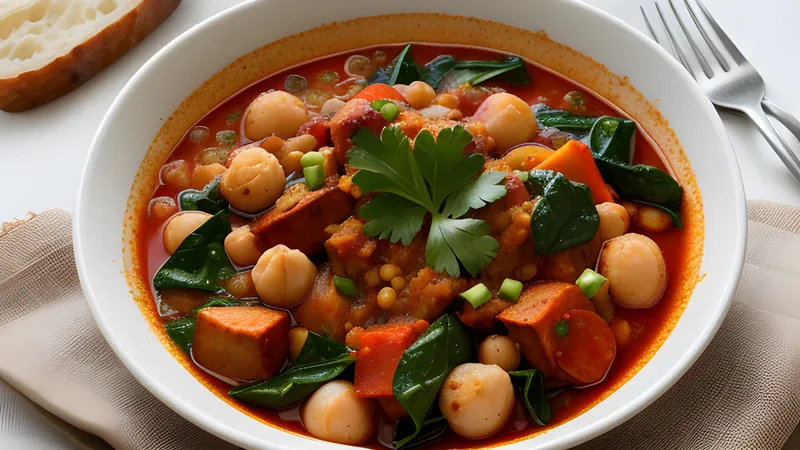
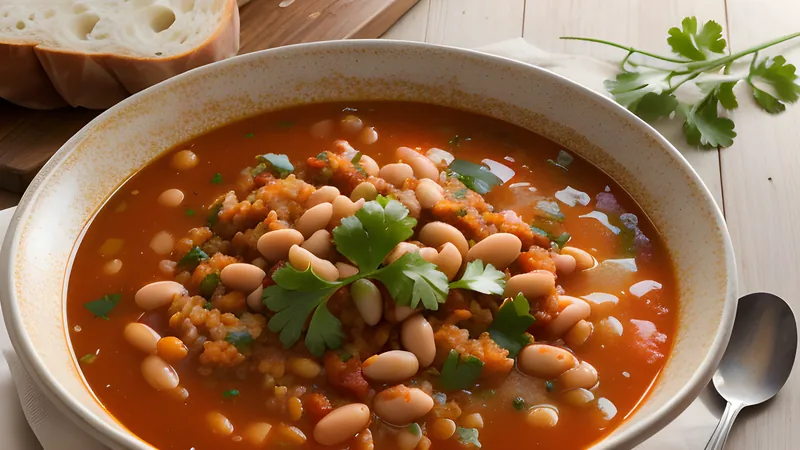
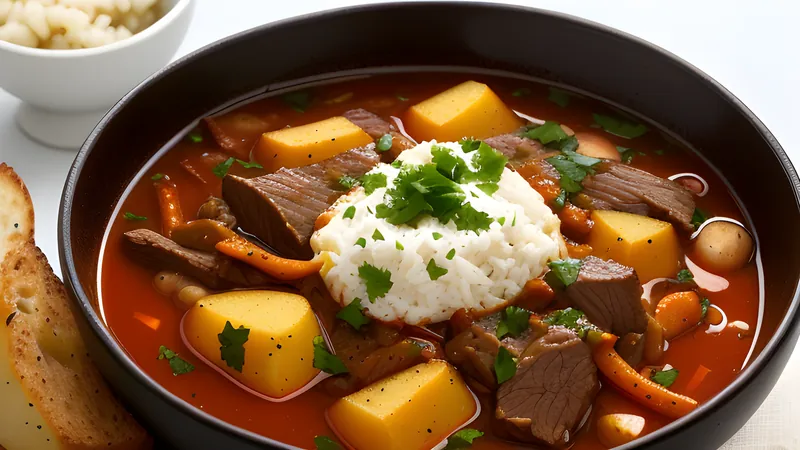
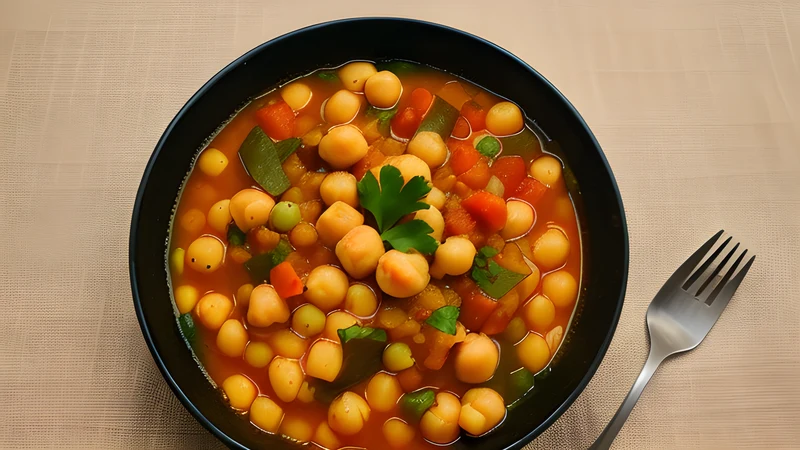
↓ Jump to recipeCocido madrileño arrives at the table three times. The same pot, carried out in three separate services, in a fixed order that nobody in Madrid deviates from: first a bowl of broth with noodles in it, then the chickpeas and vegetables, then a platter of meat. They call this the tres vuelcos — the three turnings-out — and the order is a set of instructions for eating four hours of cooking without capsizing halfway.
I have made this a dozen times and got the sequence wrong twice. Both times the mistake was the same: serving it all at once, on one plate, like a French pot-au-feu. It becomes a heap. Split into three, it becomes a lunch that lasts two hours and that people talk about afterwards.
Cocido Madrileño: Madrid's Three-Course Chickpea Stew
Ingredients
- 500g dried chickpeas (garbanzos, ideally the lechoso or pedrosillano variety)
- 2 tbsp fine salt, for the soaking water
- 500g beef shin or brisket, in one piece
- 1 whole beef marrow bone, about 200g
- 1 ham bone or 150g piece of smoked gammon
- 300g pork belly or unsmoked streaky bacon in one lump
- 2 chicken thighs, bone in, skin on
- 150g tocino (cured pork back fat) or extra pork belly
- 2 Spanish cooking chorizos, about 200g total, whole and unpricked
- 1 morcilla de Burgos, about 100g, whole and unpricked
- 3 medium carrots, peeled and halved
- 2 medium potatoes, peeled and quartered
- 1 small green cabbage, about 500g, cut into 6 wedges
- 3 tbsp Spanish extra virgin olive oil
- 3 garlic cloves, thinly sliced
- 1 tsp sweet smoked paprika
- 150g fine soup noodles (fideos number 2)
- 3.5 litres water, plus more as needed
- 1 tsp fine salt, to finish
- For the pelotas: 200g minced pork
- For the pelotas: 60g fresh white breadcrumbs
- For the pelotas: 1 medium egg, beaten
- For the pelotas: 2 garlic cloves, crushed
- For the pelotas: 2 tbsp chopped flat-leaf parsley
- For the pelotas: 1 tbsp finely chopped fresh mint
- For the pelotas: ½ tsp fine salt
Method
- The night before, put the chickpeas in a bowl with 2 litres of warm water and 2 tbsp of fine salt. Soak for 12 hours. Drain and rinse.
- Put the beef shin, marrow bone, ham bone, pork belly, chicken thighs and tocino in a large pot. Cover with 3.5 litres of cold water. Bring to the boil and skim the grey foam off for 10 minutes.
- Reduce to a bare simmer. Cook for 90 minutes, skimming occasionally, until the broth is clear and tastes of meat.
- Bring the pot back to a strong simmer. Lower the drained chickpeas in — ideally in a net bag or a large piece of muslin tied loosely — directly into the hot broth. Never into cold liquid.
- Add the carrots. Simmer very gently, uncovered, for 60 minutes, topping up with boiling water whenever the ingredients are exposed.
- Make the pelotas: combine the minced pork, breadcrumbs, egg, crushed garlic, parsley, mint and ½ tsp salt. Shape into two oval balls the size of a small fist. Lower them into the pot.
- Add the chorizos and morcilla whole and unpricked. Add the potatoes. Simmer for a further 30 minutes.
- Meanwhile, boil the cabbage wedges in a separate pan of salted water for 12 minutes until tender. Drain well.
- Heat 3 tbsp olive oil in a frying pan over a medium heat. Fry the sliced garlic for 60 seconds until pale gold, remove from the heat, stir in 1 tsp smoked paprika, and pour the lot over the drained cabbage.
- Test the chickpeas: they should be creamy with no chalk. Season the broth with about 1 tsp fine salt.
- Lift out everything solid and keep it warm. Strain 1.5 litres of broth into a clean pan, bring to the boil, add the fideos and cook for 3 minutes. Serve this as the first course.
- For the second course, serve the chickpeas, carrots and potatoes with the dressed cabbage. For the third, slice all the meats and the pelotas onto a platter.
From adafina to the Plaza Mayor
The dish’s ancestor is adafina, the Sabbath stew of Sephardic Jews in medieval Spain — chickpeas, meat and eggs left in a sealed pot in the embers on Friday night so that no cooking happened on Saturday. After 1492 and the expulsions, conversos in Castile cooked something that looked like adafina and added pork to it, loudly, in a form visible to any neighbour who might report them to the Inquisition. Historians of Spanish food, Néstor Luján among them, treat the pork as a piece of survival theatre. Whether that origin story is complete or convenient, the shape of the thing is unmistakable: the chickpea, the long slow pot, the meat added at the end.
By the nineteenth century cocido was Madrid’s everyday food, cooked in every house on the same day of the week, and tabernas built entire menus around it. Some of them still do. Lhardy has been serving it since 1839; Malacatín has done nothing else since 1895. Order it in a Madrid taverna today and it will arrive in three courses exactly as described, and there will be a small jug of the broth left on the table in case you want more.
The Spanish have a family of these one-pot chickpea stews and each region defends its own — Andalusian, Montañés, Lebaniego, Maragato. The Maragato version from León is served in reverse: meat first, chickpeas second, soup last. There are theories about muleteers and about cold weather; the honest answer is that nobody knows why, and they have been doing it that way for long enough that the reason stopped mattering.
Why the chickpeas go into hot water
This is the technical heart of the dish and the mistake most people make.
Chickpeas are soaked overnight in salted warm water — a tablespoon or two of salt in two litres. Salt in the soak sounds wrong to anyone raised on the myth that salt toughens pulses. The opposite is true, and the chemistry is well understood: sodium ions displace the calcium and magnesium in the pectin of the seed coat, which loosens the cell walls and lets water in evenly. Salt-soaked chickpeas cook faster, hold their shape better, and split far less.
Then they go into the pot when the broth is at a strong simmer — never at the start, never into cold water. A chickpea that heats slowly from cold suffers a phenomenon Spanish cooks call encallado: the outside sets hard while the inside is still raw, and it will stay chalky no matter how long you cook it. Dropped into liquid at 90°C, the seed heats through fast enough to gelatinise evenly.
The same rule governs the top-ups. If the water drops below the chickpeas, you add boiling water, never cold from the tap. Cold water crashes the temperature and hardens the skins mid-cook. Keep a kettle on standby.
The net bag is optional and worth doing. Chickpeas cooked loose sink under a marrow bone and get crushed; a loose muslin bag keeps them together and lets you lift the whole lot out in one movement when it comes time to serve.
Building the broth, and the order of the pot
The pot is loaded in stages, and the logic is simply that each thing goes in at the point where it will finish at the same time as everything else.
The beef shin, the bones, the pork belly, the chicken and the tocino go in cold together and simmer for 90 minutes on their own. This is broth-making, and it wants the same discipline as any stock: a hard skim in the first ten minutes while the grey foam rises, then a surface that barely trembles. A boiling stock is a cloudy stock, because the boil emulsifies fat into the liquid instead of letting it float where you can skim it.
Chickpeas and carrots go in at 90 minutes and take an hour. The chorizo, morcilla, potatoes and pelotas go in for the final 30. Chorizo held for three hours strips its fat and paprika into the broth and turns the whole thing orange and greasy — the same reason the fat white beans in a fabada are treated the way they are. Morcilla is more delicate still and will burst if you look at it wrong.
The cabbage never touches the main pot. Cook it separately in salted water, drain it hard, and dress it with garlic fried in olive oil until pale gold, off the heat, with a teaspoon of pimentón stirred into the oil. Cabbage boiled in the cocido leaks sulphur compounds into the broth and turns it faintly bitter — this is the one place where the pot is not big enough for everything.
The mint in the pelotas
The pelota — sometimes called the relleno or bola — is a large pork meatball poached in the broth for the last half hour. Standard versions are pork, breadcrumbs, egg, garlic and parsley, and they are fine and slightly dull.
Mine has a tablespoon of finely chopped mint in it. The reasoning is the same as anywhere else you meet mint against fat: it is a cooling volatile in a dish that is otherwise three hours of rendered pork, and it lands on the palate at exactly the moment the third course threatens to become monotonous. It is also not a wild invention. Mint runs through Sephardic cooking and through the Levantine meat traditions that shaped Spanish food, and there are old Castilian relleno recipes that carry hierbabuena alongside the parsley. I am putting back something that fell out.
Keep it to a tablespoon. The pelota should taste of pork with a cold green edge behind it, and mint at any volume takes over.
Serving the three vuelcos
The serving is the dish, so it is worth rehearsing before your guests are sitting down and everything is going cold.
Have two warm platters and a warm tureen ready. When the chickpeas are done, turn the heat off and lift everything solid out of the pot with a spider: chickpeas into a bowl, vegetables into another, meats onto a board. Cover them all with foil and put them somewhere warm — a 70°C oven is ideal. They will hold happily for twenty minutes and you need every one of them.
Strain a litre and a half of broth through a fine sieve into a clean pan. Taste it now, because this is the only course where the broth stands entirely alone and any under-seasoning is nowhere to hide. Bring it to a boil, throw in the fideos, and cook for three minutes — these are hair-fine noodles and they go from firm to pap in about ninety seconds of inattention. Serve immediately in bowls, and expect the room to go quiet.
The second vuelco is the chickpeas, mounded in the middle of a platter with the carrots and potatoes around them and the dressed cabbage at the side, its garlic-and-pimentón oil pooling. Moisten the chickpeas with a couple of ladles of broth so they do not dry out and dull. This is the course people underrate and then go back to.
The third is the meat: the shin sliced across the grain, the pork belly cut into fingers, the chicken pulled off its bones, the chorizo and morcilla in thick coins, the pelotas halved to show the green flecks. Put the marrow bone on the board too, with a small spoon, and let whoever gets to it first have it.
On the table you want three things and no more: bread, a bottle of good olive oil, and something sharp. In Madrid the sharp thing is usually a dish of pickled guindilla peppers or a jar of piparras, and occasionally a spoonful of tomato sauce for the meat course, which some cooks consider heresy and others consider dinner. A jug of the remaining broth stays out for anyone who wants to top up.
What goes wrong
Chalky chickpeas after two hours. Old stock, cold water added mid-cook, or hard tap water. If your area is chalky, soak in filtered water. A quarter teaspoon of bicarbonate of soda in the soak fixes almost any case, at the cost of slightly softer skins.
Cloudy, greasy broth. It boiled. Skim harder in the first ten minutes and drop the heat lower than you think.
Bland broth despite everything. Salt goes in at the end, because the ham bone and chorizo release theirs unpredictably, but it does need to go in. Taste before straining and expect to add a teaspoon.
Everything tastes the same. The cabbage was cooked in the pot instead of dressed separately, or the paprika garlic oil was skipped. That plate of dressed cabbage is the only sharp, bright thing on the table.
Make-ahead, leftovers and the next day
Cocido is better made a day ahead. Cool the pot, lift the set fat cap off the top, and reheat gently — the broth clarifies overnight and the chickpeas firm up.
The leftovers have their own name: ropa vieja, old clothes. Shred the meats, chop whatever chickpeas remain, and fry the lot in olive oil with sliced garlic until the edges catch and crisp. Some cooks add a beaten egg at the end. It is arguably better than the cocido, in the way that migas with tortilla, egg and chorizo is arguably better than the bread it began as.
Leftover broth freezes for three months and turns any weeknight pot of chickpea and chorizo stew with spinach into something considerably better than it has any right to be. Drink a light Rioja with the meat course, and leave the afternoon free.
Related Content