Cinnamon and Pecan Morning Buns
Flaky, sticky spirals to start the day
Contents
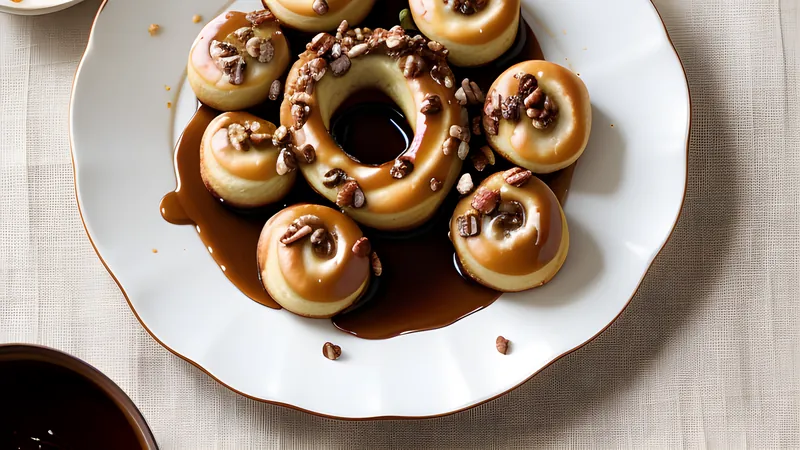
↓ Jump to recipeThese are the buns you want to wake up to: tender, enriched dough rolled around a thick spiral of cinnamon sugar and pecans, baked over a layer of caramel that turns sticky and burnished as the buns sit upside down to cool. The clever twist is browning the butter for the caramel base, which adds a toasted, almost butterscotch depth that takes them well beyond an ordinary cinnamon roll. They take a leisurely morning to make, but most of that is the dough quietly proving while you get on with other things, and the smell as they bake is reason enough.
Cinnamon and Pecan Morning Buns
Ingredients
- 500g strong white bread flour, plus extra for dusting
- 60g caster sugar
- 7g fast-action dried yeast
- 8g fine salt
- 250ml whole milk, warmed
- 2 medium eggs
- 120g unsalted butter, softened, for the dough
- 100g unsalted butter, softened, for the filling
- 150g light brown soft sugar
- 2 tbsp ground cinnamon
- 100g pecans, roughly chopped
- 75g unsalted butter, for browning
- 100g caster sugar, for the caramel base
Method
- Brown the 75g of butter in a small pan over a medium heat until it smells nutty and turns golden, then leave to cool slightly.
- In a large bowl or stand mixer, combine the flour, caster sugar, yeast and salt, then add the warm milk and eggs.
- Mix to a shaggy dough, then knead in the 120g softened butter a little at a time until smooth, soft and elastic, about 10 minutes in a mixer.
- Cover and prove for about 1.5 hours until doubled in size.
- For the caramel base, melt the 100g caster sugar with the browned butter, pour into a deep buttered 12-hole muffin tin or roasting tin, and scatter over half the pecans.
- Knock back the dough and roll out on a floured surface into a large rectangle about 40 by 30cm.
- Spread with the 100g softened butter, then scatter over the brown sugar mixed with the cinnamon and the remaining pecans.
- Roll up tightly from the long edge into a log, then cut into 12 even slices.
- Place the slices cut-side up on the caramel base, cover, and prove for another 45 minutes until puffy.
- Heat the oven to 180C fan and bake for 22 to 25 minutes until deep golden and bubbling.
- Leave for 5 minutes, then carefully invert onto a tray so the sticky caramel runs down over the buns.
- Serve warm, spooning over any caramel left in the tin.
From Scandinavia to the American bakery
The cinnamon bun is one of those bakes that has travelled and transformed. Its roots reach back to Scandinavia, where the kanelbulle of Sweden, scented with cardamom as much as cinnamon, is so beloved it has its own national day each October. Swedish and German immigrants carried their sweet, spiced doughs across the Atlantic, and in the bakeries of North America the cinnamon roll grew larger, sweeter and more lavishly iced.
The sticky-bottomed version, baked over caramel and nuts and then turned out so the topping runs down the sides, has a particular home in the bakeries of Philadelphia, where it descends from the German sticky bun, or Schnecken (German for “snails”, after the spiral shape), brought by the Pennsylvania Dutch — the German-speaking settlers of the region whose name is a corruption of Deutsch. The trick of inverting the tin after baking gives you all the glory of a caramel glaze without having to make icing, and the nuts toast in the buttery caramel as they cook. Pecans, native to North America and long a staple of the American South, are the traditional choice and bring a rich, slightly maple-ish flavour that suits the spice beautifully.
What unites all these versions is the comfort of an enriched dough: flour softened with butter, eggs, milk and sugar until it bakes up pillowy and rich rather than plain and bready. It is weekend baking at its most generous, the kind of thing made to be shared around a kitchen table while the coffee brews. If you would rather chase the cardamom-scented Scandinavian original, my Swedish cardamom buns are the place to start, and the softer, iced cardamom cinnamon rolls sit somewhere between the two traditions.
My one clever twist: brown the butter
The move that lifts these beyond an ordinary cinnamon roll is browning the butter for the caramel base. When you melt butter and keep heating it past the point where the water has boiled off, the milk solids toast and turn a deep amber, throwing off a nutty, almost toffee-like aroma — the same Maillard browning that makes toast and roasted nuts smell so good. That toasted depth carries straight into the caramel and gives the finished buns a butterscotch complexity you cannot get from plain butter. It is the same trick behind the miso banana bread, where browned butter and a savoury edge turn a familiar loaf into something with more depth.
How they come together
Begin by browning 75g of butter in a small pan over a medium heat until it smells nutty and turns golden, then set it aside to cool, since it needs time. In a large bowl or stand mixer, combine 500g strong white bread flour, 60g caster sugar, 7g fast-action yeast and 8g fine salt, then add 250ml warmed whole milk and 2 eggs. Mix to a shaggy dough, then knead in 120g softened butter a little at a time until smooth, soft and elastic, about 10 minutes in a mixer. Cover and prove for about 1.5 hours until doubled.
For the caramel base, melt 100g caster sugar with the browned butter, pour it into a deep buttered 12-hole muffin tin or a roasting tin, and scatter over half of 100g chopped pecans. Knock back the risen dough and roll it out on a floured surface into a rectangle about 40 by 30cm. Spread with 100g softened butter, then scatter over 150g light brown soft sugar mixed with 2 tablespoons ground cinnamon and the remaining pecans. Roll up tightly from the long edge into a log, cut into 12 even slices, and set them cut-side up on the caramel. Cover and prove for another 45 minutes until puffy.
Heat the oven to 180C fan and bake for 22 to 25 minutes until deep golden and bubbling. Leave for 5 minutes, then carefully invert the tin onto a tray so the sticky caramel runs down over the buns. The inverting is the crucial final move, and it must be done while everything is still hot, or the caramel sets and clings to the tin. Serve warm, spooning over any caramel left behind.
A word on the tin, because it matters more than you might expect. A deep 12-hole muffin tin gives you neat, individual buns with a good ratio of caramel to crumb, but the holes must be well buttered and the tin sat on a baking tray to catch any caramel that bubbles over, or you will spend the evening scrubbing a scorched oven floor. A single roasting tin, roughly 30 by 20cm, is more forgiving and gives you a tear-and-share slab, though the buns in the middle stay a little softer than the crisp-edged ones round the sides. Either way, use a light-coloured metal tin rather than dark non-stick, which absorbs heat fast and can catch the caramel before the dough is cooked through.
Make-ahead and tips
The best news for a relaxed breakfast is that you can shape the buns the night before. After slicing and arranging them on the caramel, cover and refrigerate overnight; in the morning let them come to room temperature and finish proving, then bake fresh. The cold slows the yeast so they prove gently as you sleep.
Pecans can be swapped for walnuts, and a handful of raisins or chopped dates in the filling is lovely if you like them. For extra richness, a pinch of flaky salt over the caramel base cuts the sweetness nicely. If your dough feels sticky and hard to roll, resist adding too much flour, which toughens it; a brief chill in the fridge firms the butter and makes it far easier to handle.
These are at their absolute best warm from the oven, but a few seconds in the microwave revives any that linger to the next day. Pull them apart with your fingers, lick the caramel from your thumb, and put the kettle on.
What goes wrong, and why
A note on the dough temperature, which trips people up more than anything else. An enriched dough this rich proves more slowly than a lean bread dough, because all that butter and egg weighs it down and physically gets in the way of the gluten strands, so be patient and judge it by size rather than the clock. Somewhere genuinely warm, around twenty-five degrees, makes a real difference; a cold kitchen can double the proving time. If the dough ever feels greasy and the butter starts to leak, it has warmed too much, so pop it in the fridge for ten minutes to firm up before carrying on.
The other common failure is buns that unravel or bake up loose rather than in tight spirals. Two things cause this: rolling the log too slackly, and cutting the slices with a blunt, dragging knife that smears the layers together. Roll the rectangle up as tightly as you can without tearing the dough, keeping the tension even along its length, and cut the log with either a very sharp serrated knife using a gentle sawing motion, or with a length of unflavoured dental floss slipped under the log and crossed over the top to pull through cleanly. The floss trick gives the neatest slices of all and is worth knowing.
Do not skip the second, shorter prove after shaping. It is tempting, when you are hungry and the kitchen already smells of cinnamon, to load the buns straight into the oven, but underproved buns bake up dense and tight rather than soft and pillowy. They are ready for the oven when they look visibly puffed and press back slowly when prodded, rather than springing straight back. If your caramel base seizes into a hard sheet while the buns prove, that is fine; it will melt and loosen again in the heat of the oven.
Substitutions and getting ahead
The best news for a relaxed breakfast is that you can shape the buns the night before. After slicing and arranging them on the caramel, cover and refrigerate overnight; in the morning let them come to room temperature and finish proving, then bake fresh. The cold slows the yeast so they prove gently as you sleep, and the flavour actually improves for the longer, cooler fermentation.
Pecans can be swapped for walnuts, and a handful of raisins, chopped dates or dried sour cherries in the filling is lovely if you like them. For extra richness, a pinch of flaky salt over the caramel base cuts the sweetness nicely. If your dough feels sticky and hard to roll, resist adding too much flour, which toughens it; a brief chill in the fridge firms the butter and makes it far easier to handle. You can also swap a teaspoon of the cinnamon for ground cardamom, nudging the buns towards their Scandinavian cousins, or fold a little orange zest into the filling for a brighter, more fragrant result. Whatever you do, make the full dozen — they vanish faster than you would believe, and cold leftovers are almost as good as warm ones.
Related Content