Chupe de Camarones: Arequipa's Prawn Chowder
The Sunday soup of Peru's White City, thickened with potato and finished with a poached egg
Contents
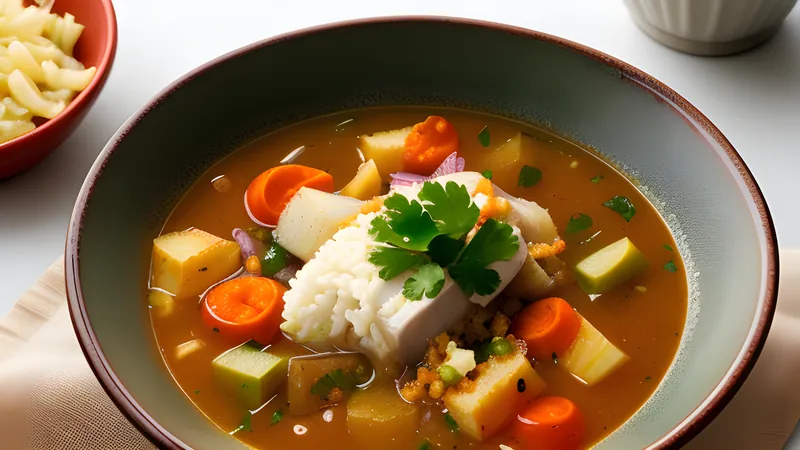
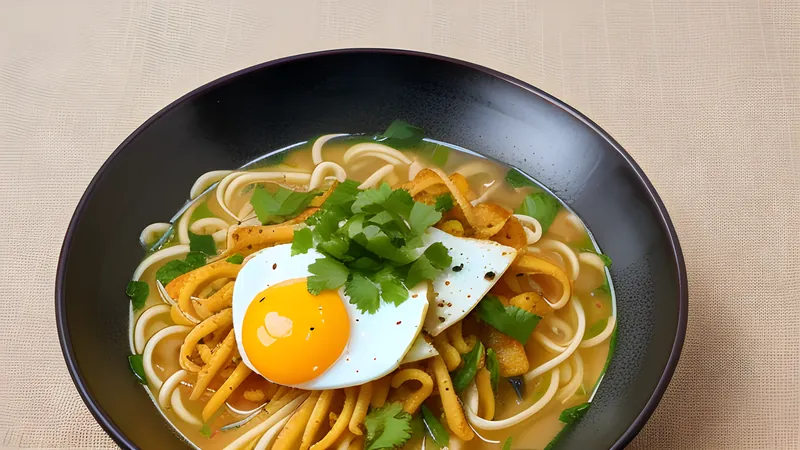
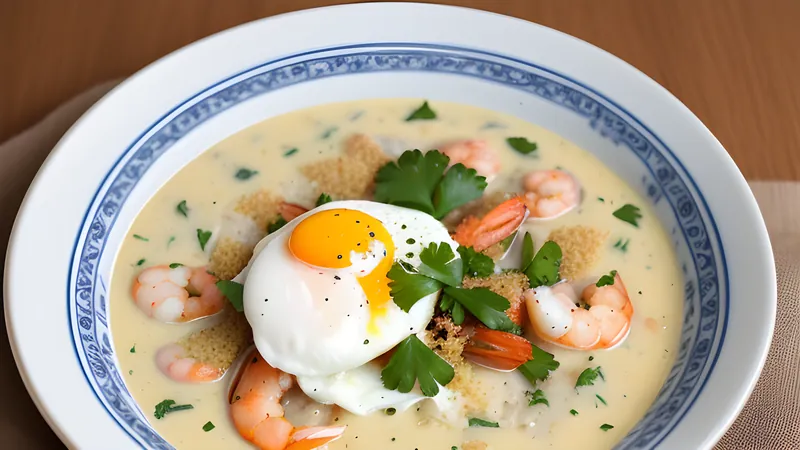
↓ Jump to recipeChupe de camarones is Arequipa’s answer to a cold Andean morning: a chowder thick enough to stand a spoon in, built from a shellfish stock, and finished with a poached egg that turns the whole bowl into a single soft-yolked meal. Waxy potato and sweetcorn carry the body of the soup, queso fresco melts through it in salty threads, and the prawns go in only at the end, so they stay plump instead of turning rubbery. It’s a dish that rewards patience with the stock and speed with everything else.
Chupe de Camarones: Arequipa's Prawn Chowder
Ingredients
- 500g raw prawns, shell and heads on
- 1 litre fish or light chicken stock
- 2 tbsp vegetable oil
- 1 onion, finely chopped
- 3 garlic cloves, crushed
- 2 tbsp ají panca paste (or 1 tbsp smoked paprika plus 1 tsp chilli flakes)
- 1 tsp ground cumin
- 400g waxy potatoes, peeled and cut into 3cm chunks
- 2 corn cobs, cut into thick rounds
- 100g fresh or frozen peas
- 150g podded broad beans
- 200ml whole milk
- 100g queso fresco, crumbled, plus extra to serve
- 4 eggs
- 2 tbsp chopped fresh oregano
- Salt and white pepper
Method
- Peel the prawns, reserving the shells and heads, and devein the tails. Set the prawn meat aside in the fridge.
- Heat 1 tbsp of the oil in a large pot and fry the prawn shells and heads over high heat for 3-4 minutes, pressing them with a spoon to release their fat.
- Pour in the stock, bring to a simmer, and cook for 15 minutes to build a shellfish-scented base. Strain and discard the shells.
- Heat the remaining oil in a clean pot and soften the onion for 5 minutes.
- Add the garlic, ají panca paste and cumin, and cook for 2 minutes until fragrant.
- Pour in the strained stock and bring to a simmer. Add the potatoes and corn, and cook for 12 minutes until the potatoes are nearly tender.
- Add the peas and broad beans, and simmer for a further 4 minutes.
- Stir in the milk and prawn meat, and cook for 3-4 minutes until the prawns turn opaque and pink.
- Crack the eggs directly into the simmering soup, spacing them apart, and poach for 3-4 minutes until the whites are set.
- Stir the queso fresco through gently, season with salt and white pepper, and scatter over the oregano.
- Ladle into bowls, making sure each portion gets a poached egg, a piece of corn and plenty of prawns.
The story
Arequipa calls itself the Ciudad Blanca, the White City, for the pale volcanic sillar stone its colonial buildings are carved from, and its cooking has its own fierce sense of identity within Peru, distinct from the ceviche-driven coast or the guinea-pig-and-potato cooking of the high sierra. The picantería, a kind of tavern-restaurant run for generations by women known as picanteras, is the institution that carries this cuisine forward, serving hefty lunch portions of the region’s signature dishes to workers and families on Sundays. Chupe de camarones sits near the top of that list, alongside rocoto relleno and adobo arequipeño, and a picantería’s chupe is often judged as strictly as its owner’s reputation.
The prawns themselves are not incidental. Arequipa region’s river valleys, particularly the Camaná, Majes and Tambo, have long produced freshwater camarones de río, a genuinely different creature from coastal shrimp, prized for a sweeter, more delicate flavour and now farmed as well as wild-caught to meet demand. A proper Arequipeño chupe uses these river prawns, heads on, because the heads hold the fat and roe that colour and flavour the stock; using headless supermarket prawns loses a real dimension of the dish, which is why the method here insists on simmering the shells and heads first rather than skipping straight to a plain stock.
Chupe’s structure, a chowder thickened by starch rather than cream, likely predates the arrival of prawns in the dish; chupe verde, made with fresh cheese, potato and huacatay, an aromatic black mint native to the Andes, is served in the same picanterías and shares the same bones. What marks the Arequipeño version as a special-occasion dish, traditionally eaten on Sundays and at celebrations, is the abundance piled into a single bowl: potato, corn, broad beans, peas, cheese, prawns and egg, each ingredient visible and distinct rather than blended into a purée. It reads like a whole meal served as a soup, which is exactly what it is.
Building the layers without losing them
The order of additions in a chupe determines whether you end up with a chowder or a stew that has gone slightly to mush. Potato and corn go in early because they need real cooking time, twelve minutes at a simmer to soften without disintegrating; check a piece of potato with the tip of a knife rather than trusting the clock alone, since starchy varieties break down faster than waxy ones. Peas and broad beans follow later because they cook in minutes and turn grey and tired if boiled alongside the potato from the start.
Prawns go in last of all, and this is the step most likely to be rushed or over-thought. Three to four minutes in barely simmering liquid is enough to turn them opaque and pink; any longer and the proteins seize, squeezing out moisture and turning the texture chalky rather than plump. If your prawns are large, err towards the shorter end and check one by cutting it in half, since a translucent centre is the sign to pull the pot off the heat sooner rather than later. The milk, stirred in just before the prawns, rounds out the broth without curdling, provided it goes into a simmer rather than a rolling boil, since dairy that hits too much heat too fast tends to split.
The poached egg, and why it belongs there
Cracking eggs straight into the simmering soup is long-standing practice in Arequipa, and it does real work: the yolk enriches the broth around it as you eat, and the white gives each bowl its own protein-dense anchor. Space the eggs apart in the pot so the whites don’t merge, and resist stirring once they’ve gone in, since disturbing the surface tears the setting white into ragged threads through the broth. Four minutes gives a set white and a yolk that’s still soft when you break into it with a spoon; if you prefer a firmer yolk, give it another minute, but any longer and you lose the sauce-like quality it lends to the finished bowl.
Ladling is a small skill in its own right here: since the egg sits at the bottom or side of the pot rather than floating, use a slotted spoon to lift each one out first and set it into the bowl, then follow with the broth, potato, corn and prawns around it, so no single portion ends up short an egg. If you like this style of hearty, prawn-forward Peruvian cooking, tacu tacu makes a good pairing for a bigger Peruvian spread, and the same coastal seafood tradition runs through ceviche with leche de tigre, which uses the same prawn stock trick in reverse, chilling it rather than cooking it further.
What a picanteria gets right that a home kitchen often misses
Order chupe de camarones in an Arequipa picanteria and it usually arrives in a wide clay bowl, still bubbling faintly at the edges from the pot it was ladled out of minutes before, with the prawns still curled from the heat and the egg white just barely holding its shape. Home versions tend to go wrong in two predictable ways: an overcooked prawn, and a broth left to sit so long that the potato keeps cooking in residual heat and turns the whole pot starchy rather than brothy. Both are avoidable by treating the final few minutes of cooking as a live performance rather than something you can walk away from. Warm the bowls and set the table before the prawns go in, because from that point you have perhaps six or seven minutes before the dish is at its best, and every minute past that the texture drifts further from where it should sit.
The other picanteria habit worth borrowing is generosity with the garnish rather than the seasoning. A proper bowl gets an extra scattering of queso fresco and a sprig of oregano or huacatay at the table, on top of what’s already stirred through the pot, so the first spoonful carries a hit of fresh cheese before it has had a chance to melt fully into the broth. Rocoto, the fruity, fiercely hot Peruvian chilli, often sits on the table in a small dish alongside, letting each diner turn up the heat to their own taste rather than baking it into the communal pot. Keep a little chilli oil or extra aji panca paste on the side at home rather than dosing the whole pot for the spiciest eater at the table.
Reading the doneness of the potato and corn
Getting the vegetables right matters as much as the seafood, and it is the step most often rushed. Waxy potatoes such as Charlotte or Yukon Gold hold their shape through the full twelve minutes of simmering and are worth seeking out over a floury baking potato, which tends to collapse at the edges and cloud the broth with starch before the centre is properly cooked. Cut the pieces to a genuinely even 3cm so they finish together; a few oversized chunks left in the pile will still be raw in the middle when the smaller pieces are perfect, and there is no way to fix that except starting again with a sharper eye on the chopping board.
Corn cut into thick rounds, on the bone rather than stripped into kernels, is traditional and gives the dish its rustic character: diners pick the cob up with their fingers at the table, which is part of the appeal rather than an oversight in the recipe. If you would rather eat it with a spoon, strip the kernels from two cobs instead and add them at the same point in the timeline; they will cook through in the same twelve minutes as the rounds, just faster to eat once served.
Substitutions, storage and make-ahead
No fresh broad beans or peas to hand, frozen versions of either work fine and need no adjustment to timing; edamame is a reasonable stand-in for broad beans if that’s what’s in the freezer. Queso fresco can be swapped for a mild feta if you rinse it first to cut the saltiness, or for paneer, which holds its shape in the hot broth in a similar way. Ají panca paste is the traditional base, mild and fruity rather than fierce, and if you can’t find it, the smoked paprika and chilli flake combination gets close enough in colour and warmth, though it lacks the paste’s particular sweetness.
Chupe is best eaten the day it’s made, since reheated prawns turn tough and the poached egg doesn’t survive a second simmer. If you want to prepare ahead, make the shellfish stock and the potato-corn base up to a day in advance, then bring it back to a simmer, add the prawns fresh and poach the eggs just before serving. The stock alone freezes well for up to two months, which makes it worth doubling the shell-and-head step whenever you have prawns to peel, so a headstart on the next bowl is already in the freezer.
Related Content