Chorba Frik: Algeria's Freekeh Soup for Ramadan
The green, smoky soup that opens every Algerian iftar
Contents
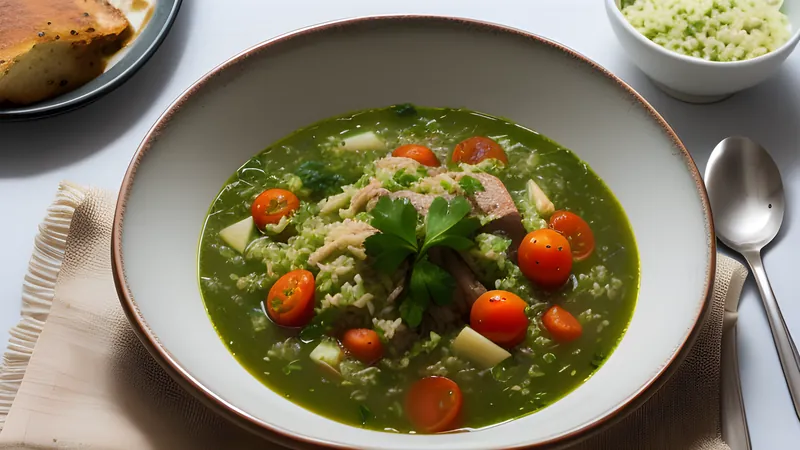
↓ Jump to recipeChorba frik is the soup that Algerian households build the entire fasting day around. During Ramadan, it is the first thing eaten at the moment the sun sets — usually alongside a date, following the traditional practice of breaking the fast with something sweet before moving to something substantial. The soup needs to arrive at the table thick, hot and immediately satisfying, because a full day without food or water leaves no patience for a thin broth that needs another twenty minutes to become a meal.
Chorba Frik: Algeria's Freekeh Soup for Ramadan
Ingredients
- 600g lamb shoulder or neck, cut into 3cm cubes
- 2 tbsp olive oil
- 1 large onion, finely chopped
- 3 garlic cloves, crushed
- 2 tbsp tomato puree
- 2 large tomatoes, grated or blended to a puree
- 1 tsp ground cumin
- 1 tsp sweet paprika
- 1/2 tsp ground cinnamon
- 1/4 tsp cayenne pepper (optional)
- 2 litres lamb or chicken stock
- 150g cracked frik (roasted green freekeh), rinsed
- 1 small bunch coriander, finely chopped, plus extra to finish
- 1 small bunch flat-leaf parsley, finely chopped
- 1 tbsp dried mint
- 1 tbsp plain flour, mixed with 3 tbsp water (to thicken)
- Juice of 1 lemon, plus wedges to serve
- Salt and black pepper, to taste (start with 1 1/2 tsp salt)
- Dates, to serve
Method
- Heat the olive oil in a large heavy pot over medium-high heat and brown the lamb in batches, then set aside.
- In the same pot, soften the onion for 5 minutes, then add the garlic and cook for 1 minute.
- Stir in the tomato puree, blended tomatoes, cumin, paprika, cinnamon and cayenne, and cook for 3 minutes until the mixture darkens slightly.
- Return the lamb to the pot, add the stock, bring to a boil, then reduce to a simmer, cover, and cook for 45 minutes until the meat is nearly tender.
- Add the rinsed frik, coriander, parsley and dried mint, and simmer uncovered for 25-30 minutes, stirring occasionally, until the freekeh is tender and the soup has thickened.
- Stir in the flour-water mixture and simmer for a further 5 minutes to thicken further, until the soup coats the back of a spoon.
- Season with salt and pepper, stir in the lemon juice, and taste, adjusting salt as needed.
- Ladle into bowls, scatter with extra chopped coriander, and serve immediately with lemon wedges and dates.
What frik actually is
Frik, sometimes spelled freekeh, is durum wheat harvested while still young and green, then roasted over open flame or fire before the grain is threshed and cracked. The roasting step is what defines it: it’s not simply unripe wheat, it’s wheat deliberately set alight while the husk still holds moisture, which chars the outer layer, imparts a distinct smoky flavour, and locks in a slightly chewy, nutty grain once cooked. That smokiness is the backbone of chorba frik’s flavour — no other ingredient in the pot replicates it, which is why frik itself, not a wheat substitute, is worth sourcing specifically for this soup.
Cracked frik cooks faster than whole frik and is the standard choice for chorba, since the soup needs the grain tender within half an hour rather than the hour or more whole frik requires. Rinse it before adding to remove loose chaff and surface char dust, a step some recipes skip but that noticeably cleans up the final soup’s clarity.
Building the base
The soup starts like many Maghrebi stews, with lamb browned hard before the aromatics go in — this step is not skippable if you want real depth, since the fond left on the bottom of the pot from browning meat becomes the foundation the rest of the soup builds on. Tomato, cumin, paprika and a small measure of cinnamon form the spice backbone; the cinnamon is easy to overdo, and a quarter teaspoon too much tips the soup from warmly spiced into tasting like a dessert, so measure carefully rather than eyeballing it.
The soup simmers in two stages: first the lamb alone until nearly tender, then the frik and herbs added afterwards so the grain doesn’t overcook into mush during the long meat-tenderizing simmer. The final flour-and-water thickener, called tedouira in Algerian kitchens, is what gives chorba frik its distinctive body — thicker than a typical soup, closer to a stew you’d eat with a spoon that stands nearly upright.
Coriander and mint: the herb backbone, not a garnish
Fresh coriander and parsley go in with the frik rather than as a finishing garnish, because they’re meant to cook down and become part of the soup’s flavour base, not sit decoratively on top. Dried mint, stirred in at the same stage, contributes a cooling brightness that balances the richness of the lamb and the smokiness of the frik — this is one of the few soups where dried mint genuinely outperforms fresh, since fresh mint’s flavour is too fleeting to survive even a short simmer, while dried mint holds its character through the cook.
A final scatter of fresh coriander just before serving reintroduces some of that bright, grassy top note that cooking mutes, giving the soup a lift right at the point of eating.
Getting the texture right
The tedouira thickening step is where most first attempts go wrong — either skipped entirely, leaving a thinner soup than the dish calls for, or added too early and left to simmer so long it turns gluey. Mix the flour with cold water until completely smooth before adding, working out every lump, then stir it into the simmering soup and give it five minutes, no more, to thicken. If the soup is still too thin after that, a second small batch of the mixture is safer than extending the simmer time, which risks breaking down the frik grains further than intended.
Some households use a beaten egg instead of or alongside the flour thickener, stirred in at the very end off the heat the way you’d temper an egg into a hot liquid, which gives a silkier, slightly richer finish closer to an egg-drop soup. Both methods are traditional; the flour version keeps better as leftovers, since egg-thickened soup can separate on reheating.
Substitutions and variations
Lamb is traditional, but chicken thighs work well and cook faster — reduce the initial simmer to 25 minutes before adding the frik. For a meat-free version, use a rich vegetable stock and add chickpeas for protein and body; the smokiness of the frik carries enough character that the soup doesn’t feel like a compromise even without meat. If frik genuinely isn’t available, pearl barley makes the closest textural substitute, though you lose the smoky flavour entirely and should compensate with a pinch of smoked paprika stirred in with the other spices.
Chorba frik pairs naturally with chakhchoukha, another Algerian dish that shares the same tomato-and-spice base but in a completely different form — torn flatbread soaked in sauce rather than a spooned soup — and the two make a genuinely representative pairing of Algerian home cooking for anyone building out a fuller Ramadan or weeknight table. For dessert afterwards, makroud is the standard Maghrebi finish, its honey-soaked semolina offering a sweet contrast after chorba’s savoury depth.
Storage and make-ahead notes
Chorba frik keeps well refrigerated for up to three days and, like most stews, tastes better the day after cooking once the flavours have had time to settle. It thickens considerably on standing, so when reheating, add a splash of stock or water and stir over low heat until it loosens back to a spoonable consistency rather than a paste. It also freezes well for up to two months, though the frik grain’s texture softens slightly on thawing — still perfectly good, just marginally less chewy than the day it was made. Reheat gently rather than at a rolling boil to avoid breaking the soup’s thickened body.
Why this soup, specifically, for Ramadan
Every region of Algeria has a version of chorba, but frik-based chorba is the one most associated with the country as a whole, distinct from the vermicelli-thickened chorba more common in neighbouring Tunisia and Libya. The distinction matters to Algerian cooks: frik is a specifically Algerian wheat-processing tradition, tied to regions where wheat was traditionally harvested early and preserved through fire-roasting before mechanised drying became standard. Using frik rather than vermicelli or rice as the grain is, in a small way, a statement about which country’s version of the soup is on the table.
The soup’s heartiness also reflects Ramadan’s physical demands directly. A full day of fasting, particularly during the long daylight hours of a Ramadan that falls in summer, leaves the body short on both fluid and calories. Chorba frik delivers both at once — its high liquid content rehydrates, while the lamb, grain and thickened body deliver enough sustained energy to carry a household through evening prayers and the rest of the night’s activities without a second heavy meal needed immediately after.
Serving it properly
Chorba frik is rarely served alone at iftar. The traditional sequence starts with dates and a glass of milk or water to break the fast gently, followed by the soup itself, and only then the main dishes — grilled meats, tagines, or other mains depending on the household. Serving chorba frik as a starter rather than a full meal on its own respects that sequence, even though the soup itself, thick with lamb and grain, could easily stand as a complete meal outside the Ramadan context.
A wedge of lemon on the side is non-negotiable in most Algerian households — a squeeze right before eating brightens the soup’s rich, spiced depth in a way that stirring lemon juice into the whole pot doesn’t quite replicate, since individual diners can adjust the acidity to their own taste. Warm, crusty bread for dipping is the other standard accompaniment, useful for scraping the thickened soup from the bottom of the bowl once the spoon has done what it can.
A note on spice intensity
The cayenne pepper in this recipe is listed as optional deliberately — chorba frik as served in most Algerian homes is warmly spiced rather than properly hot, relying on cumin, paprika and a whisper of cinnamon for depth rather than chilli heat. Diners who want more heat typically add it at the table via a spoon of harissa stirred into their own bowl, which keeps the pot itself accessible to everyone including children, who are frequently served the same soup at iftar in smaller portions. If you’re cooking for a household that likes things hotter throughout, doubling the cayenne in the pot is reasonable, but consider serving harissa on the side as the more traditional route to individual heat preference.
Sourcing frik outside Algeria
Frik and freekeh are essentially the same product under different regional names — Algerian and broader Maghrebi cooking tends to call it frik, while Levantine cooking (Lebanese, Syrian, Palestinian) calls it freekeh, and the two are largely interchangeable in this recipe. Middle Eastern and North African grocers stock it, usually in both whole and cracked forms; cracked is the one to buy for chorba, since whole frik needs pre-soaking and a much longer simmer to soften. If a shop only stocks whole frik, a rough pulse in a food processor before rinsing gets you close enough to cracked for this recipe, though the cooking time may run slightly longer than stated.
Related Content