Chivito: Uruguay's Loaded Steak Sandwich
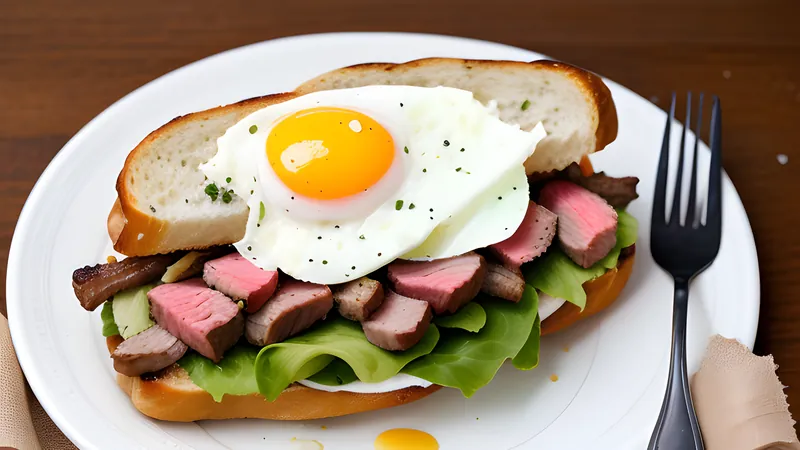
Thin steak, ham, cheese, egg and bacon stacked between two halves of a soft roll
Contents
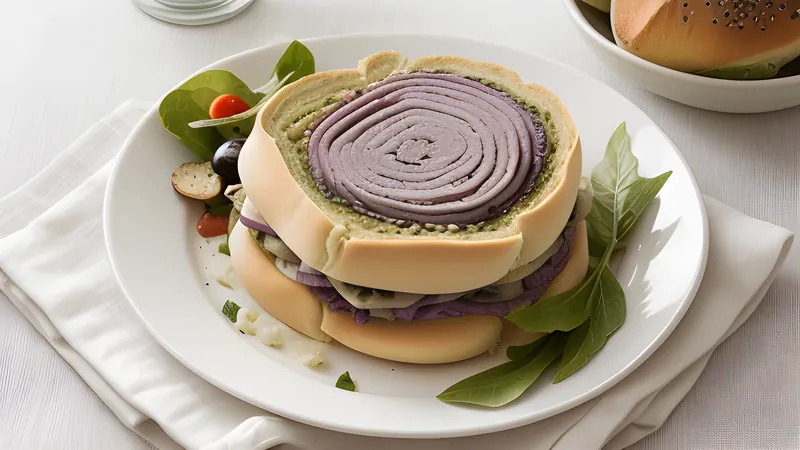
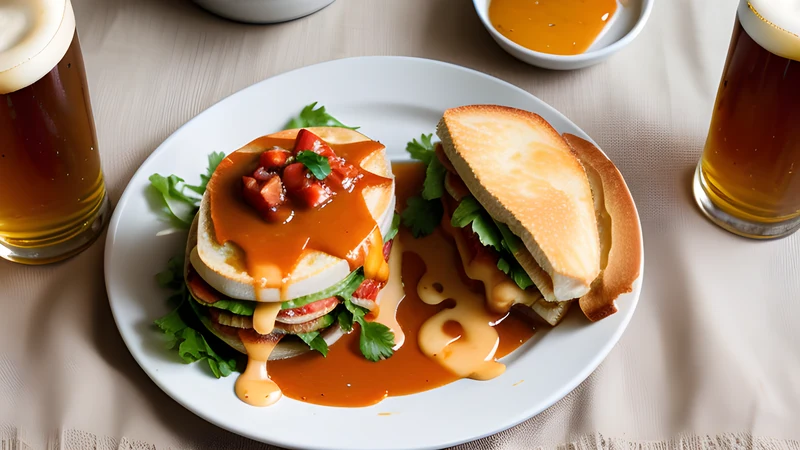
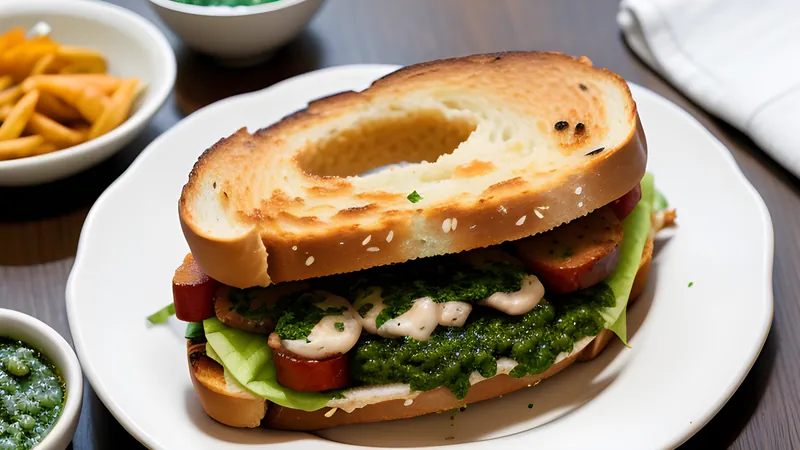
↓ Jump to recipeChivito is Uruguay’s national sandwich, and it does not apologise for its size. Thin steak, ham, melted cheese, bacon, a fried egg, lettuce, tomato, pepper and olives all go into one sandwich, stacked rather than trimmed down to something more manageable, and the result is a sandwich most people eat with a knife and fork at least for the first half, before giving up on decorum and finishing it by hand.
The name translates literally to “little goat,” which is a puzzle given that goat meat appears nowhere in the modern dish — the accepted story traces back to a tourist in the coastal town of Punta del Este in the 1940s who specifically asked for a goat sandwich, a request the restaurant couldn’t fulfil, so they built something similar in spirit from beef and whatever else was on hand, and the name stuck to a dish that has nothing to do with the animal it’s named after.
Chivito: Uruguay's Loaded Steak Sandwich
Ingredients
- 2 beef sirloin or ribeye steaks, pounded thin to about 1cm (150g each)
- 4 rashers streaky bacon
- 2 large eggs
- 4 slices mozzarella or a similar melting cheese
- 4 slices good-quality cooked ham
- 2 soft white sandwich rolls (pan de miga style or a soft brioche bun), split
- 2 tablespoons mayonnaise
- 1 ripe tomato, sliced
- 1/2 iceberg lettuce, shredded
- 8 thin slices red pepper (roasted or raw)
- 8 green olives, pitted
- 2 tablespoons olive oil
- Salt and black pepper
Method
- Season the pounded steaks generously with salt and pepper.
- Fry the bacon in a large frying pan over medium heat until crisp, then remove and set aside on kitchen paper.
- In the same pan, add a little olive oil and fry the eggs to your liking (a runny yolk is traditional), then set aside.
- Increase the heat to high, add the steaks to the same pan, and cook for 1-2 minutes per side for medium, until well browned.
- In the final 30 seconds of cooking, lay the cheese slices over the steaks so they begin to melt from the residual heat.
- Toast the cut side of the rolls in the same pan for 30 seconds.
- Spread mayonnaise on both cut sides of each roll.
- Build each sandwich: base of roll, lettuce, tomato, the steak with melted cheese, ham, bacon, roasted pepper, the fried egg, and olives.
- Top with the other half of the roll, pressing down gently to compress the stack.
- Serve immediately, with a knife to cut it in half — a full chivito rarely fits in one bite.
A neighbourhood built on beef
Uruguay eats more beef per capita than almost any country on earth, a fact tied directly to its vast cattle-grazing plains and its position, alongside Argentina, at the centre of South American beef culture. Chivito is what happens when that beef culture meets the sandwich format — not a token slice of meat tucked into bread as an afterthought, but a genuinely substantial cut of steak treated as the anchor around which everything else in the sandwich is arranged.
Montevideo and the beach towns along Uruguay’s coast, particularly Punta del Este, are where chivito is most closely associated, though it’s eaten across the whole country at cafes and casual restaurants that would be equally happy serving a simple milanesa sandwich to someone in more of a hurry. The full “chivito al plato” version arrives deconstructed on a plate with chips rather than built into a sandwich, which tells you the ingredients themselves — the specific combination of steak, ham, egg, cheese and bacon — matter as much as the sandwich format they’re usually served in.
Choosing and preparing the steak
The steak needs to be thin — pounded down to around a centimetre, not left at its natural thickness — because chivito is built to be eaten as a stack of textures and flavours in each bite rather than as a sandwich built around one dominant, thick piece of meat. A thick steak unbalances the whole structure, making the sandwich harder to bite through cleanly and throwing off the ratio between meat and everything piled on top of it.
Sirloin or ribeye both work well, chosen for flavour and a reasonable amount of marbling that keeps the meat from drying out during the brief, high-heat cooking a thin steak gets. Pound the steaks between two sheets of cling film with a meat mallet or the base of a heavy pan — you’re aiming for an even thickness across the whole piece, since an unevenly pounded steak cooks unevenly, overdone at the thin edges before the thicker centre catches up.
Cooking a steak this thin happens fast — a minute or two per side over high heat is genuinely enough, and it’s easy to overshoot into dry, grey meat if you treat it like a normal-thickness steak and give it the resting time a thicker cut would need. There’s very little margin here; have everything else ready before the steak goes in the pan, because once it’s cooking, the whole assembly needs to move quickly from that point on.
The order of building
Chivito’s specific list of components isn’t arbitrary, and the order they go into the sandwich affects how it eats. Bacon and egg are cooked first and set aside, since both hold their texture reasonably well while waiting a few minutes for the steak. The steak goes on last among the hot components, and the cheese is melted directly onto it in the final moments of cooking rather than added cold — this way, the cheese is soft and pulling by the time the sandwich comes together, rather than sitting as a cold, unmelted layer against hot meat.
Building from the bottom: a layer of crunch and freshness first (lettuce, tomato), then the steak with its melted cheese, then the cured and cooked elements (ham, bacon), then the roasted pepper, then the egg on top where its yolk can run down through the stack when you cut into it, and finally the olives, whose brine cuts through what is, by this point, a genuinely rich collection of ingredients.
A runny egg yolk is traditional and, in my view, essential — it acts as an informal sauce for the whole sandwich once you cut in, running down through the layers and binding flavours that would otherwise sit as distinct components rather than a cohesive whole. If you’re nervous about a very runny yolk, aim for one that’s just set at the white with the yolk still soft rather than fully hard, which still gives you some of that binding effect without the risk of an entirely liquid centre.
The bread
Uruguayan chivito is traditionally served on a soft white roll, sometimes a pan de miga style bread (a very soft, fine-crumbed white bread more associated with tea sandwiches elsewhere but used here as a sturdier base), or a soft bun closer to a brioche. What matters more than the exact bread style is softness and a crumb that won’t fight against a stack of ingredients this tall — a crusty baguette, appealing as it is for something like choripán, is the wrong choice here, since a hard crust makes an already unwieldy sandwich even harder to bite through cleanly.
Toasting the cut side briefly in the same pan the steak and bacon just came out of picks up a little residual flavour and firms the bread just enough to resist the mayonnaise and egg yolk without turning genuinely crisp.
Serving
Chivito is a genuinely messy sandwich, engineered for maximum flavour and substance rather than maximum manageability, and every version I’ve had in Uruguay came with the tacit understanding that reaching for a knife and fork through at least the first half is standard practice among locals. Serve it with chips alongside if you want the full “chivito al plato” experience even in sandwich form, which is how most Uruguayan restaurants present it regardless of which format you’ve ordered.
What can go wrong
Overcooked, dry steak is the single most common failure, and it happens because home cooks apply the timing and instincts they’ve built up for thicker cuts to a piece of meat that’s been pounded down to a centimetre. At that thickness, a minute or two per side over genuinely high heat is enough — checking colour rather than relying on a clock is more reliable, since pan heat and steak thickness both vary enough between kitchens that a fixed time won’t work identically for everyone.
A sandwich that falls apart the moment you pick it up usually means too many wet ingredients stacked without enough structural support underneath — tomato slices especially can make the base of the sandwich soggy if they sit directly against the bread for more than a few minutes before serving. Build the sandwich as close to serving time as you can, and consider placing the lettuce directly against the bread as a light moisture barrier before the tomato goes on, which helps the roll hold up a little longer.
If the cheese hasn’t melted properly by the time everything’s assembled, it likely went on too early or the pan wasn’t hot enough in the final moments of cooking the steak — lay it on only in the last thirty seconds, when the pan and steak are at their hottest, rather than at the start of the steak’s cooking time, when there isn’t enough residual heat left to fully soften it by the time you’re ready to build the sandwich.
Variations
Some versions substitute chorizo or additional bacon for the ham, particularly in more casual, beach-side versions of the sandwich where whatever’s on hand at the grill that day ends up in the stack. A few restaurants add a thin layer of mustard alongside or instead of mayonnaise for extra sharpness, which is a reasonable variation if you find the standard version a little one-note on the richness front without enough acid to cut through it.
Al plato — served deconstructed on a plate with chips rather than built into a sandwich — is arguably the more common way to actually encounter chivito in Uruguay, since it solves the structural problems above entirely by removing the bread from the equation. If you’re finding the sandwich version unwieldy, there’s no shame in serving all the same components on a plate with chips and calling it a day; that’s a legitimate, traditional way to eat this exact combination of ingredients.
Make-ahead and prep order
Chivito doesn’t lend itself to advance preparation the way a stew or braise might, since every element loses something if it sits and waits — the egg firms up, the bacon softens, the bread turns soggy under the mayonnaise. What you can do ahead is the prep work that doesn’t touch heat: pound the steaks and keep them chilled, slice the tomato and shred the lettuce, have the cheese sliced and the pan ready to go. Once you start cooking, the whole process from first bacon rasher to finished sandwich should take no more than fifteen minutes, moving briskly enough that nothing sits waiting too long before assembly.
If you’re feeding more than two people, resist the urge to cook everything in advance and reheat — reheated fried egg and steak both suffer badly, turning rubbery and grey respectively. Instead, cook in relay, finishing one or two sandwiches at a time and serving them as they’re built, rather than trying to plate four or six chivitos simultaneously. It’s less convenient for the cook, admittedly, but the difference in quality between a chivito eaten within a minute of assembly and one that’s waited even ten minutes on a counter is large enough that it’s worth the extra kitchen choreography.
If you’re building a wider spread of River Plate cooking, chivito sits naturally alongside choripán as two very different approaches to the same regional obsession with beef and bread, and a bright chimichurri with toasted cumin on the side gives you something to dip the chips into if the sandwich alone doesn’t feel indulgent enough.
Related Content