Chipá: Paraguay's Cassava Cheese Ring
A cassava-starch dough studded with two cheeses and pressed into a ring, the bread that marks every Paraguayan Holy Week
Contents
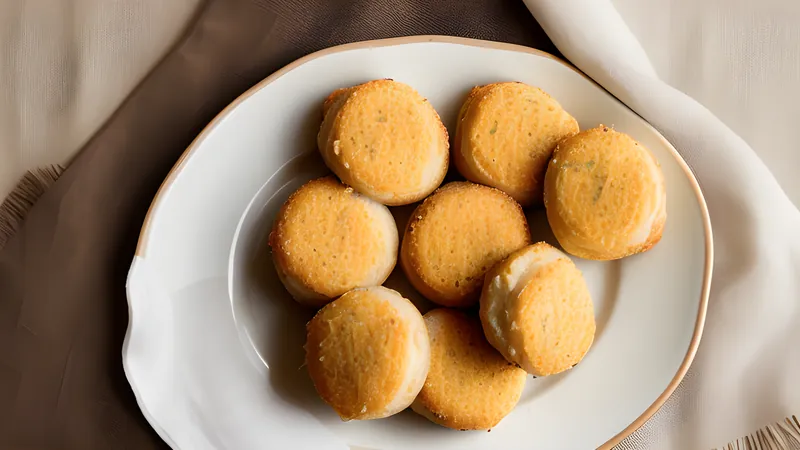
↓ Jump to recipeChipá is a ring of cassava starch and cheese, baked hard on the outside and dense and slightly springy within, and it is the bread that Paraguay builds an entire religious calendar around. It has no wheat flour, no yeast and very little in common with a conventional loaf, but it holds a place in Paraguayan households that few breads anywhere else in the world can match, because for one week a year, this is close to all anyone eats.
Chipá: Paraguay's Cassava Cheese Ring
Ingredients
- 500g sour cassava starch (almidón agrio), or 400g sour tapioca starch plus 100g fine white cornmeal
- 250g queso Paraguayo or another mild, salty fresh cheese, coarsely grated
- 100g aged cotija or parmesan, finely grated
- 100g unsalted butter, softened to room temperature
- 2 large eggs, room temperature
- 120ml whole milk
- 1 tsp fine salt
- 1 tsp anise seeds, lightly crushed (optional but traditional)
Method
- Tip the cassava or tapioca starch into a wide mixing bowl and rub in the softened butter with your fingertips until the mixture looks like coarse, slightly greasy sand.
- Add both grated cheeses, the salt and the anise seeds, and toss through with your hands so every strand of starch is coated.
- Beat the eggs with the milk in a small jug, then pour into the starch mixture.
- Bring the dough together with your hands, kneading in the bowl for 3-4 minutes, until it forms a heavy, slightly greasy, cohesive mass that holds its shape when squeezed. It will feel wrong compared to a wheat dough; that density is correct.
- Preheat the oven to 200C fan (220C conventional, Gas 7) and line two baking trays with parchment.
- Divide the dough into 12 equal pieces, about 75g each.
- Roll each piece into a rope roughly 18cm long and pinch the ends together to form a ring, or shape into a plain oval roll if you prefer the simpler chipá de almidón shape.
- Space the rings 4cm apart on the trays and bake for 25-30 minutes, until the outside is firm, deep gold and faintly cracked, and the base sounds hollow when tapped.
- Cool on a wire rack for at least 10 minutes before eating; the crumb firms up as it cools and is easier to bite into once it has rested.
- Store in an airtight container at room temperature for up to two days, or freeze baked rings and refresh in a hot oven for 8 minutes before serving.
Holy Week, and a bread that becomes a fast
Chipá’s central role comes from Semana Santa, Holy Week, when observant Catholic households in Paraguay traditionally abstain from meat from Wednesday through Saturday. Rather than fasting in any austere sense, families lean into an enormous, coordinated baking effort: ovens across a neighbourhood run in shifts because few households owned a large enough oven to bake for extended family alone, and chipá, along with its filled cousins chipá so’o (stuffed with seasoned minced beef) and chipá guasu (a softer, corn-heavy version closer to a cornbread pudding), becomes the meal itself, morning, noon and night, for days running. Older Paraguayans describe childhoods where the smell of woodsmoke and scorched cassava starch is inseparable from the memory of Easter, more so than any hot cross bun or paschal lamb in other Catholic food traditions.
The starch that makes it possible is almidón, extracted from cassava root (mandioca in Paraguay and much of South America, a staple carried by Guaraní communities long before European contact and later intensified under the Jesuit reducciones that organised Guaraní agriculture across the region from the 1600s). Cassava tolerates poor soil and drought better than wheat and grows reliably across Paraguay’s subtropical interior, which is why the country’s baking tradition runs on tuber starch rather than gluten. The starch itself comes in two forms worth knowing: almidón agrio, soured through a controlled fermentation of several weeks, and almidón dulce, the same starch without that step. The sour version is what gives chipá its faint tang and, more usefully, its capacity to trap steam and hold a domed, slightly cracked crust; the sweet version bakes flatter and denser. If you can only source ordinary tapioca starch outside Paraguay, blending it with fine cornmeal, as in the ingredient list here, gets closer to the texture of the soured original than tapioca alone.
Cheese is the other non-negotiable. Queso Paraguayo is a fresh, salty, semi-firm cow’s-milk cheese made across the country’s dairy regions, mild enough to melt evenly through the dough without dominating it, and traditional recipes usually pair it with a smaller amount of a harder, more piquant cheese for backbone. I use cotija or parmesan for that second layer, both aged enough to bring a savoury sharpness that a single soft cheese can’t provide on its own. Anise seed is the quieter tradition here, a pinch stirred through the dough that Paraguayan grandmothers rarely skip and that first-time bakers often do, to the detriment of the finished bread; it doesn’t read as liquorice so much as a faint warmth that rounds out the salt and fat.
Working a dough that isn’t really a dough
Cassava-starch dough behaves nothing like a wheat dough, and the first time you make it, it will look like you’ve done something wrong. There’s no gluten development, no windowpane test, no rise beyond the modest steam-puff that happens in the oven. What you’re actually doing is coating starch granules in fat (the rubbed-in butter) and binding them with egg and cheese, so the process is closer to a very heavy shortcrust than a bread dough. Work it just enough to bring it together; overworking won’t build structure the way it would in a wheat dough, but it can make the fat break and the finished bread greasy rather than short.
The ring shape isn’t decorative. A flat disc of this dense a dough bakes unevenly, cooked through at the thin edges while the centre stays gummy; a ring, with no solid centre, bakes at a consistent thickness all the way round and gives you the characteristic hollow-sounding tap when it’s done. If you’re shaping by hand for the first time, keep the ropes slightly thicker than you think you need; the dough shrinks a little in width as it bakes and thin rings can crack right through rather than just at the surface.
Salt balance deserves attention because queso Paraguayo’s saltiness varies a lot between makers and substitutes vary even more. Taste your cheese before you commit to the full teaspoon of added salt; a very salty pre-grated hard cheese used as your second cheese can mean you want to halve it. Under-salted chipá isn’t ruined, just bland against the fat; over-salted is much harder to fix after baking.
When the dough won’t behave
A dough that cracks badly across the top rather than just at the surface usually means it was rolled too thin relative to its density, or that the starch itself has gone stale and lost moisture-holding capacity; roll the next batch slightly thicker and check that your starch bag hasn’t been open for months. A dough that won’t hold together at all, crumbling apart as you try to shape the ring, is almost always too dry: work in an extra tablespoon of milk at a time until it packs like wet sand rather than falling apart, rather than reaching for more butter, which fixes greasiness rather than dryness. The opposite fault, a dough so wet it slumps flat on the tray rather than holding a ring shape, comes from starch that’s absorbed extra moisture in humid storage or from eggs on the larger side; work in a spoonful more starch until it firms back up. A finished bake that tastes greasy rather than short and crumbly usually means the fat separated during overworking; next time, stop kneading the moment the dough comes together rather than continuing until it looks perfectly smooth.
Cheese substitutes if you’re outside Paraguay
Queso Paraguayo itself is difficult to find outside South America, and the closest widely available stand-ins are a fresh, low-moisture mozzarella or a mild queso fresco, neither of which melts with quite the same open, stretchy quality but both of which get the saltiness and moisture content close enough for the dough to behave the same way. For the harder second cheese, parmesan and cotija both work well, but a well-aged pecorino is a reasonable third option if neither is to hand, so long as you taste it first; pecorino runs saltier than parmesan and you’ll want to hold back some of the added salt to compensate. Avoid pre-shredded bagged cheese for either component if you can, since the anti-caking starch coating those products carry keeps them from binding into the dough as cleanly as cheese grated fresh off a block.
Variations you’ll meet across Paraguay and the borderlands
Chipá so’o wraps the same starch dough around a filling of minced beef, onion and hard-boiled egg, sealed and baked as a stuffed roll rather than a plain ring, and functions as a more substantial meal in its own right. Chipá manduvi swaps in ground peanuts for part of the cheese, a version more common in Paraguay’s rural interior where dairy was historically harder to keep fresh than groundnuts, giving a nuttier, less overtly savoury bread that still holds the same dense, starch-bound crumb. Chipá guasu drops the starch almost entirely in favour of fresh sweetcorn kernels, blended with cheese, egg, milk and a little cornmeal into a batter baked until set, more custard than bread and often served as a side rather than a snack. Both variants show up on the same Holy Week tables as the ring, and neither is a lesser version, just a different use of the same starch-and-cheese logic.
Across the border in Brazil’s border states and in Argentina’s Corrientes and Misiones provinces, near-identical breads appear under the same name or close variants, a reminder that this is fundamentally a Guaraní foodway that predates the modern national borders drawn through the region. It sits in the same starch-and-cheese family as pão de queijo, Brazil’s better-known cousin from Minas Gerais, though chipá’s texture runs denser and more biscuit-like, closer to a savoury shortbread than pão de queijo’s hollow, puffed-up chew.
Serving, storage and the rest of the Holy Week table
Chipá is eaten warm from the oven with strong, sweetened cocido (a smoky yerba-mate infusion) or with mate itself, and it holds up well enough at room temperature that Paraguayan households bake a large batch at once and keep it out all day rather than reheating individual pieces. It pairs naturally with the rest of a starch-heavy Paraguayan spread; if you’re building out a wider Holy Week or party table, sopa paraguaya, the misleadingly named cornbread that Paraguay calls a soup, sits well alongside it, and both share the country’s fondness for turning humble starches into the centrepiece rather than the side.
Leftover chipá dries out faster than a wheat loaf because there’s no gluten network holding moisture in, so wrap cooled rings tightly and eat within two days at room temperature, or freeze the baked rings flat and refresh them in a hot oven, uncovered, for around eight minutes rather than a microwave, which turns the crust rubbery. If you’re feeding a crowd across a full Holy Week the way Paraguayan households do, the dough itself also freezes well, unbaked and shaped, ready to go straight into a hot oven with a couple of extra minutes added to the bake time.
A word on scaling up: Paraguayan households rarely make a dozen at a time. Neighbourhood ovens exist precisely because a single family’s batch during Semana Santa can run to a hundred rings or more, made in relays through the morning and passed between houses as gifts as much as sustenance. If you want to bake a larger batch, the ratios here scale cleanly; just work the fat into the starch in stages rather than all at once, since a very large volume of starch resists even fat distribution if you try to rub it all in together, and you’ll end up with patches of dry, ungreased starch that bake pale and crumbly instead of gold and short.
Fresh cassava starch matters more than most substitutions in this recipe. If your only option is a starch that’s been sitting open in a cupboard for a year, expect a blander bake; almidón agrio loses some of its characteristic tang and puffing power as it ages past its best, so buy from a shop with reasonable turnover, usually a Latin American grocer, rather than the general baking aisle. The reward for getting a fresh bag is a ring that cracks audibly when you tear it open and smells faintly of scalded milk and toasted cheese before you’ve taken the first bite.
Related Content