Dark Hot Chocolate with Chilli and Sea Salt
Thick, glossy and warming
Contents
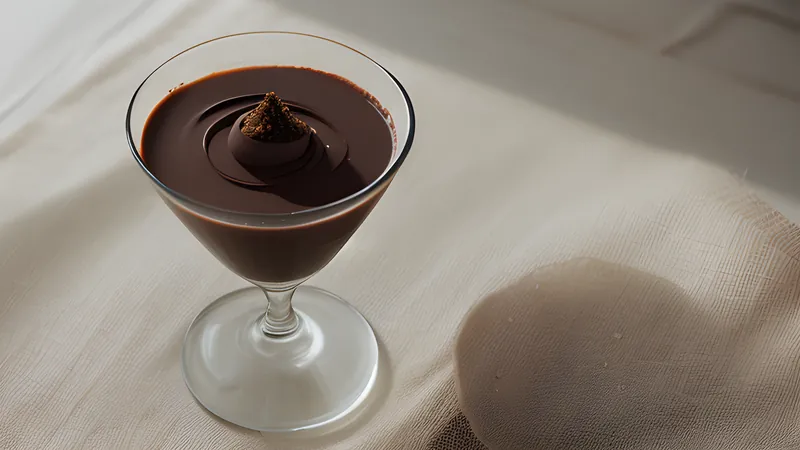
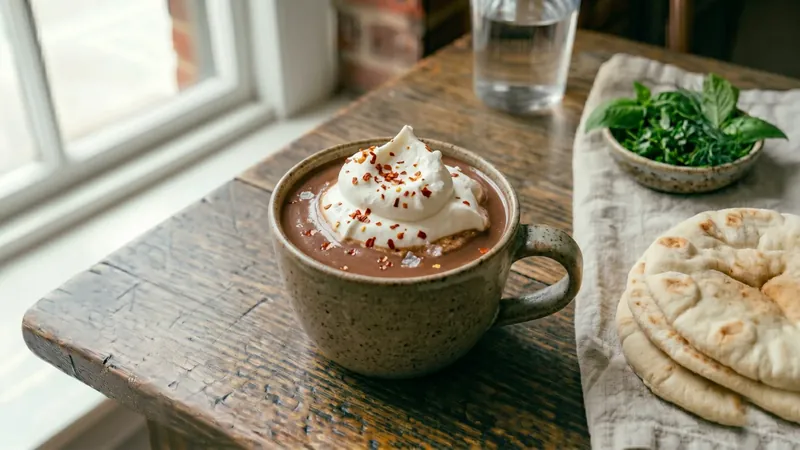
↓ Jump to recipeThis is hot chocolate for grown-ups: thick enough to coat the spoon, made with real dark chocolate rather than powder alone. A whisper of dried chilli builds a gentle warmth at the back of the throat, while a pinch of flaky sea salt sharpens the cocoa and stops it turning sickly. Cinnamon rounds it all off. It is rich, so small mugs are wise; think of it as somewhere between a drink and a thin pudding, the sort of thing to nurse slowly by the window on a cold evening rather than glug from a tall mug.
Dark Hot Chocolate with Chilli and Sea Salt
Ingredients
- 400ml whole milk
- 100ml double cream
- 120g dark chocolate (70%), finely chopped
- 1 tbsp cocoa powder
- 1 tbsp soft light brown sugar
- 0.25 tsp ground cinnamon
- 1 small pinch of dried chilli flakes, or to taste
- 1 small pinch of flaky sea salt, plus extra to finish
- 0.5 tsp vanilla extract
Method
- Warm the milk and cream in a saucepan over a medium heat until steaming but not boiling.
- Whisk in the cocoa powder, brown sugar and cinnamon until smooth.
- Add the chopped dark chocolate and whisk gently until fully melted and glossy.
- Stir in the chilli flakes and a pinch of flaky sea salt, then taste and adjust.
- Add the vanilla and whisk well to a thick, even consistency.
- Warm through for a further minute without boiling, whisking, until silky.
- Pour into two mugs and finish with a tiny extra pinch of flaky sea salt.
The Story
Long before chocolate became a sweet, it was a drink, and a savoury, spiced one at that. The cacao tree, Theobroma cacao, is native to the Americas, and the peoples of Mesoamerica, including the Maya and later the Aztecs, prepared cacao as a bitter, frothy beverage. Ground cacao was whisked with water and flavoured with ingredients such as chilli, vanilla, achiote and maize, then poured from height between two vessels to raise a thick head of foam that was the prized part of the drink. Cacao mattered enough that the Aztecs used the beans as a form of currency, and the drink, xocolātl, held both ceremonial and everyday importance. Spanish accounts from the sixteenth century describe the Aztec ruler Moctezuma being served the drink in golden cups.
That early version bears little resemblance to the milky, sugary cup most people know today. The sweet, hot, milk-based drink developed after cacao reached Europe in the sixteenth century, where sugar was added to soften its natural bitterness and milk gradually replaced water. The spiced, chilli-laced original faded from the European mainstream, surviving in regional Mexican traditions where chocolate is still drunk warm and frothy with cinnamon and, sometimes, a little heat. Mexican drinking chocolate, still sold in rustic discs and whisked with a wooden molinillo, keeps that older, spiced spirit alive.
This recipe leans back toward those roots while keeping the ease of a modern hot chocolate. Using real dark chocolate alongside cocoa powder gives body and a deep, slightly bitter backbone that powder alone cannot match: the cocoa butter in the bar melts into the milk and carries flavour in a way a spoonful of powder simply can’t. Choose a chocolate at around 70 per cent cocoa solids for the right balance of bitterness and richness; go much higher and the drink turns austere, much lower and it slides toward sweet and one-dimensional. The double cream thickens the drink so it coats the spoon, turning it into something closer to a thin pudding than a watery cup.
The two-part approach — real chocolate plus a spoon of cocoa powder — is deliberate rather than lazy. The bar brings the cocoa butter, which is what gives the drink its glossy body and its slow, mouth-coating richness; the cocoa powder, being defatted, brings concentrated, roasty cocoa flavour without adding more fat. Cocoa powder is also slightly acidic, and that faint sharpness stops the drink tipping into cloying sweetness. Use the two together and you get depth from the powder and texture from the bar, which is more than either can manage alone. If you only have cocoa powder in the cupboard, whisk in an extra tablespoon and a knob of butter to make up for the missing cocoa butter, though the result will never be quite as silky as the real thing.
The chilli is the obvious nod to the drink’s history, and a little goes a very long way. It does not make the chocolate spicy so much as warming, building a slow heat that creeps up gently after each sip and lingers pleasantly at the back of the throat, which is exactly what makes the drink feel restorative on a cold evening. Capsaicin, the compound that carries chilli heat, is fat-soluble, so it disperses evenly through the creamy, buttery drink and delivers a rounded warmth rather than a sharp bite. Starting with the smallest pinch and tasting as you go is the safest route, since dried chillies vary widely in strength and the heat also builds a little as the drink sits.
The sea salt is the quieter trick. Salt is a natural enhancer of chocolate, sharpening its flavour and balancing sweetness by suppressing the tongue’s perception of bitterness, which is why salted chocolate bars have become so popular. A pinch stirred in lifts the cocoa, and a few flakes scattered on top dissolve slowly into each mouthful for little pockets of contrast. Cinnamon ties the two together, echoing the warm spicing of traditional Mexican chocolate. The same trio of dark chocolate, chilli and flaky salt runs through my chilli con carne with dark chocolate and coffee, where cacao’s savoury side does its work in a very different bowl.
Getting the texture right
The whole point of this drink is body, and that comes from using real chocolate, not just powder. Chop the chocolate finely so it melts quickly and evenly; a coarse chunk sinks and scorches on the base of the pan before it dissolves. Melt it into milk that is steaming but never boiling. This matters more than it sounds: boiling can cause the milk proteins to catch and the chocolate to seize into a grainy mess, and a skin forms the moment it goes too hot. Keep the heat at a gentle simmer, whisk steadily, and the drink stays glossy and smooth.
The double cream is what turns a thin cup into something that coats the spoon. If you want it lighter, drop the cream and use all milk; the drink is still good, just less of a treat. For a dairy-free version, oat milk plus a spoon of oat cream works surprisingly well, since oat’s natural starch lends body.
One quiet trick, if you want the thickest possible cup, is to whisk the drink hard as it heats, or to blitz it briefly with a stick blender before pouring. Aerating the mixture the way the Aztecs did by pouring from height, or the way a Mexican cook works a molinillo between the palms, folds tiny bubbles into the liquid and lightens the texture without thinning the flavour, giving that characteristic frothy head. It is the difference between a dense, almost claggy cup and one that feels velvety. A whisk does the job; a blender does it better.
Serving and swaps
Start with the smallest pinch of chilli and taste as you go, since dried chillies vary widely in strength and it is far easier to add more than to rescue a drink that has gone fierce. A pinch of chipotle chilli flakes gives a smokier, deeper warmth than plain flakes if you want to lean into the Mexican character, while a whole dried chilli infused in the milk and then fished out gives a gentler, more perfumed heat than flakes stirred through. Serve in small cups, finished with an extra few flakes of sea salt and, if you like, a small pile of softly whipped cream or a couple of marshmallows for the children. For a grown-up nightcap, a small measure of dark rum or a spoon of coffee liqueur stirred in at the end turns the whole thing into something worth staying up for, and a scrape of orange zest over the top plays beautifully against the dark chocolate.
This pairs beautifully with something crisp and sweet on the side to dunk. Warm churros are the classic partner, dragging cinnamon sugar through the thick chocolate exactly as they would in a Spanish café. Any leftover drink keeps in the fridge for a day; it will set to a thick, almost pudding-like consistency once cold, so reheat it gently with a splash more milk, whisking steadily, and never let it boil. The result is rich, glossy and grown-up, best made in small mugs and sipped slowly, ideally with something crisp to dunk and nowhere in particular to be.
Related Content