Chilli Crab: Singapore's Sweet and Sticky Mud Crab
A whole crab cracked and tossed in a tomato-chilli gravy built for mopping up with bread
Contents
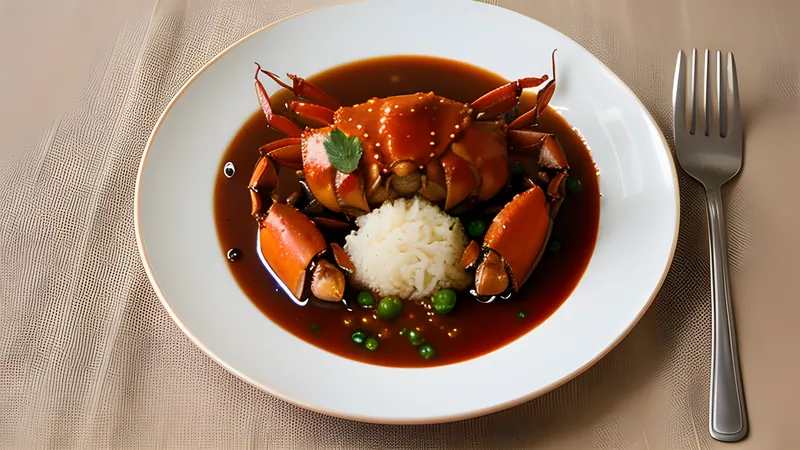
↓ Jump to recipeChilli crab is not a tidy dish and nobody who has eaten it well pretends otherwise. You get given a bib, or you should, and a nutcracker or the back of a cleaver for the shell, and you eat with your hands, cracking claws over a platter of glossy red-orange sauce while trying not to get it up your sleeves. Bibs at the table are the honest tell that this is Singapore’s signature dish rather than a polite one — a whole crab, cracked into pieces, tossed in a sweet, tomato-based chilli gravy loose enough to pool at the bottom of the plate and thick enough to cling to the shell in a way that demands bread specifically for scraping up what the crab itself can’t carry.
Chilli Crab: Singapore's Sweet and Sticky Mud Crab
Ingredients
- 1 whole mud crab or Dungeness crab, about 1kg, cleaned and cut into pieces (ask your fishmonger)
- 4 tablespoons vegetable oil
- 6 garlic cloves, finely chopped
- 1 thumb ginger, finely chopped
- 4 red chillies, roughly chopped (deseeded for less heat)
- 2 tablespoons chilli bean sauce or sambal oelek
- 150ml passata or blended tinned tomatoes
- 2 tablespoons tomato ketchup
- 1 tablespoon light soy sauce
- 2 tablespoons sugar
- 300ml chicken stock or water
- 2 large eggs, beaten
- 2 spring onions, sliced, to finish
- 1 small handful coriander leaves, to finish
- Fried mantou (steamed buns) or crusty bread, to serve
Method
- Heat the oil in a large wok over medium-high heat and fry the garlic, ginger and chillies for 2 minutes until fragrant but not browned.
- Stir in the chilli bean sauce and cook for 1 minute, then add the passata, ketchup, soy sauce and sugar and simmer for 3 minutes until the sauce darkens slightly.
- Pour in the chicken stock or water, bring to a simmer, and taste, adjusting sugar or soy for a balance that reads sweet, savoury and gently hot rather than sharply sour.
- Add the crab pieces to the wok, cover, and cook for 8 to 10 minutes, turning once, until the shells turn bright orange-red and the meat is opaque and cooked through.
- Uncover, increase the heat to reduce the sauce for 2 minutes until it thickly coats the crab, then drizzle in the beaten egg while stirring gently, letting it set into loose ribbons through the gravy.
- Scatter over the spring onions and coriander, and serve immediately in the wok or a large deep platter with fried mantou or bread for mopping.
A dish invented, not inherited
Unlike most of the recipes in this column, chilli crab has a known inventor and a known decade. It’s generally credited to Madam Cher Yam Tian and her husband Lim Choon Ngee, who began selling the dish from a makeshift stall in Singapore in 1956, initially with a simpler tomato-and-chilli sauce before refining it into the version that spread across the island’s seafood restaurants. Singapore in the 1950s and 60s was a genuine culinary melting pot — Chinese immigrant cooking techniques, Malay spice sensibilities, and a booming local mud crab supply from the surrounding mangroves and waterways all converging into new dishes that didn’t map cleanly onto any single ancestral cuisine. Chilli crab is very much a product of that mixing: the wok technique and use of egg to thicken a sauce are Cantonese in origin, the chilli and ginger owe more to Malay cooking, and the overall sweet-savoury-tomato profile is something closer to what Singapore itself invented rather than imported wholesale.
It became so identified with the country that it’s now formally recognised as one of Singapore’s national dishes, served everywhere from hawker centres to white-tablecloth seafood restaurants along the East Coast, and exported in various forms to Chinese and Singaporean restaurants worldwide. The crab of choice was traditionally the mud crab — Scylla serrata, a large mangrove crab found throughout the coastal waters of Southeast Asia, prized for its sweet, dense meat and heavy claws that give you a genuine reward for the work of cracking them. Where mud crab isn’t available, Dungeness crab is the standard substitute in the West, close enough in size and meat texture to carry the dish convincingly.
Getting a good crab
If you can, buy your crab live from a fishmonger or fish market and ask them to clean and cut it for you — most will do this on request, removing the gills, the stomach sac behind the eyes, and cracking the shell and claws so the sauce can get into the meat during cooking. If you’re squeamish about handling a live crab yourself, this is the moment to lean on your fishmonger’s experience rather than muddle through it at home. A pre-cooked or frozen crab works in a pinch, but you lose some textural quality since the meat has already firmed up once and will firm further during the second cook — reduce your simmering time in the wok by two or three minutes to avoid it turning rubbery.
Weight for weight, mud crab and Dungeside crab carry roughly the same amount of usable meat relative to shell, and either will feed two people generously as a main course, or stretch to feed four as part of a wider spread alongside rice and vegetables, which is how most Singapore households and restaurants actually serve it — never as the only dish on the table.
Building the sauce
The sauce is built in stages and each one matters. Garlic, ginger and fresh chilli fried in oil first establish the aromatic base, and you want them fragrant but not browned — burnt garlic turns bitter and there’s no recovering a sauce built on top of it. The chilli bean sauce, a fermented broad bean and chilli paste widely used in Chinese cooking, adds a savoury depth that plain fresh chilli alone can’t match, giving the finished sauce a rounder, more complex heat rather than a flat spiciness.
Tomato does the heavy lifting for body and a gentle acidity, and passata or blended tinned tomatoes work better than fresh tomatoes, which vary too much in ripeness and water content to give you consistent results. Ketchup sounds like an odd addition to a dish with this much culinary pedigree, but it’s genuinely traditional — it adds a specific tangy sweetness and a glossy finish that plain tomato and sugar alone won’t replicate, and most Singapore recipes for chilli crab include it without apology.
The balance you’re chasing is sweet, savoury and gently spicy all at once, with the chilli heat present but not aggressive — this isn’t meant to be a fiery dish, and if you want more heat, add it at the table with extra chopped chilli or a hot sambal on the side rather than overloading the base sauce, since a sauce that’s too hot will mask the crab’s natural sweetness rather than complementing it.
Cooking the crab itself
Covering the wok while the crab cooks matters more than it looks like it should — it traps steam that helps the meat cook through evenly, especially in thicker sections like the claws and legs, without you needing to constantly turn and disturb the pieces. Check for doneness by colour: raw crab shell is a mottled blue-grey or brown depending on species, and it turns a solid bright orange-red once fully cooked, a visual cue that’s hard to miss once you know to look for it.
The egg goes in right at the end, drizzled slowly while you stir gently, and the goal is loose, silky ribbons through the sauce rather than solid scrambled curds. Pour it in too fast or stir too vigorously and you’ll get the latter — a sauce that looks more like egg drop soup than a glossy coating. Turn the heat down slightly before you add the egg if your wok is running very hot, since egg sets almost instantly in a wok this size and you want control over how it forms.
Serving it properly
Fried mantou — soft steamed buns, deep-fried until golden and puffed — are the traditional accompaniment specifically because they’re built to soak up sauce without disintegrating the way ordinary bread would. If you can’t get mantou, a good crusty white loaf, torn rather than sliced, does an adequate job, though it won’t have the same fluffy, faintly sweet interior that makes mantou so well suited to the task. Either way, don’t skip the bread. Leaving all that sauce on the plate is close to a crime against the dish.
Serve chilli crab as the centrepiece of a wider spread rather than alone — a plate of steamed rice, some stir-fried greens, and if you want to stay in the same culinary world, a dish like hainanese chicken rice or a plate of char kway teow alongside rounds out a proper Singaporean hawker-style meal. Provide bibs if you’re feeding guests who aren’t used to cracking crab at the table, plenty of napkins, and a bowl for shells — this is not a dish that photographs cleanly or eats tidily, and that’s precisely the point.
Chilli crab versus black pepper crab
Singapore’s other famous crab preparation, black pepper crab, is often mentioned in the same breath as chilli crab, and it’s worth knowing the difference before you order or cook either. Black pepper crab skips the tomato entirely, building its sauce from butter, dark soy sauce and a heavy hand of freshly cracked black pepper, giving a drier, more savoury result with a real peppery bite rather than sweetness. It’s credited to a different Singapore restaurant, Eng Seng, from roughly the same era as chilli crab’s invention, and the two dishes essentially split the island’s crab-eating public into two camps that argue the merits of each with genuine passion. Chilli crab tends to win over first-timers because the sauce is more approachable and less aggressively peppery, but it’s common for a table to order both if they’ve booked a crab-focused meal, since the dishes are different enough to justify the indulgence rather than repeating themselves.
There’s also a milder white pepper variant found in some Singapore households, closer in spirit to black pepper crab but gentler, and a coconut-based version that borrows from Malay curry traditions, though neither has anywhere near the international recognition of the tomato-chilli original. If you’re cooking chilli crab for the first time, it’s worth sticking with the classic tomato-based version before experimenting with these — the balance of sweet, sour and gently spicy is what people are actually craving when they ask for chilli crab, and departing from it risks making a competent but different dish under the same name.
Scaling up for a crowd
If you’re cooking for more than four people, it’s better to cook two crabs in two batches than to try doubling everything in one wok — a crowded wok won’t let the crab pieces sit properly in the sauce, and you’ll end up steaming rather than properly coating them. Make a double batch of the sauce base ahead of time, keep it warm, then cook each crab in its own portion of sauce just before serving, finishing each batch with its own egg rather than trying to stretch one batch of egg across both. This keeps the sauce-to-crab ratio consistent and means your second batch doesn’t sit waiting while you finish cracking and serving the first.
What can go wrong
The most common mistake is undercooking the sauce before the crab goes in, leaving it thin and watery rather than clinging properly to the shell — give the tomato base a genuine few minutes to reduce and darken before you add the crab, and reduce again after, since crab releases some liquid of its own as it cooks that will thin the sauce further. The second common mistake is overcooking the crab itself once it’s already been par-cooked or bought precooked, which turns naturally sweet, tender meat tough and stringy — always reduce cooking time for crab that’s been previously cooked, checking for doneness rather than following a fixed clock.
Leftover sauce, if you’re lucky enough to have any, keeps in the fridge for up to two days and reheats gently in a pan — it makes an excellent base for tossing through noodles or spooning over steamed fish the next day, which is arguably a fair trade for the crab itself being long gone.
Related Content