Chilli con Carne with Dark Chocolate and Coffee
Deep, smoky and slow-built
Contents
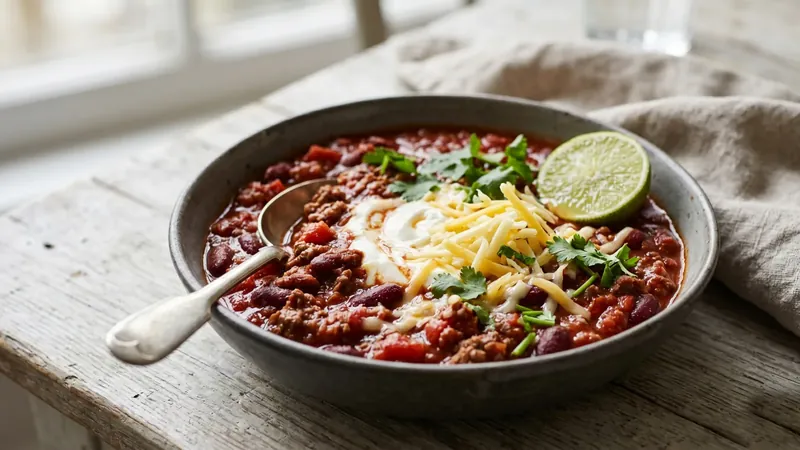
↓ Jump to recipeA bowl of chilli should taste of long, patient cooking even when you haven’t the time, and two things from the store cupboard bend it that way. A square of dark chocolate and a shot of brewed coffee melt into the sauce near the end, deepening the meat and rounding the spice without ever announcing themselves as chocolate or coffee. The result is smoky, faintly bitter and full-bodied, the kind of chilli that tastes even better warmed through on the second day. Neither trick is a gimmick; both have real roots in Mexican cooking, and there is a bit of kitchen science behind why they work, which is worth understanding so you can judge the seasoning by taste rather than by rote.
Chilli con Carne with Dark Chocolate and Coffee
Ingredients
- 2 tbsp olive oil
- 1 kg beef mince (20% fat)
- 2 onions, finely chopped
- 4 garlic cloves, crushed
- 1 red pepper, diced
- 2 tbsp tomato purée
- 2 tbsp ground cumin
- 1 tbsp smoked paprika
- 1-2 tsp dried chilli flakes
- 1 tsp dried oregano
- 2 x 400g tins chopped tomatoes
- 1 x 400g tin kidney beans, drained
- 300ml beef stock
- 1 shot (50ml) strong brewed coffee
- 20g dark chocolate (70% cocoa)
- Salt and black pepper, to taste
- Soured cream and coriander, to serve
Method
- Heat the oil in a large heavy pan and brown the mince in batches over a high heat, then set aside.
- Lower the heat, add the onions and cook for 8 minutes until soft. Stir in the garlic and red pepper for 2 minutes more.
- Add the tomato purée, cumin, smoked paprika, chilli flakes and oregano, and cook for 1 minute until fragrant.
- Return the beef to the pan with the chopped tomatoes, stock and brewed coffee. Bring to a gentle simmer.
- Partially cover and simmer for 45 minutes, stirring now and then.
- Add the kidney beans and simmer uncovered for a further 30 minutes until thick.
- Stir in the dark chocolate until melted, then season well with salt and pepper.
- Rest for 10 minutes, then serve with rice, soured cream and chopped coriander.
The Story
Chilli con carne, “chilli with meat”, grew up along the borderlands of Texas and northern Mexico, and its exact parentage is endlessly argued over. The dish is firmly associated with San Antonio, where so-called “chilli queens” once set up open-air stalls in the city’s plazas through the nineteenth and early twentieth centuries, ladling out bowls of spiced meat to workers and travellers. That street-food heritage is why true chilli is built on dried chillies, cumin and slow-cooked beef rather than the long lists of vegetables that later versions accumulated.
The pairing of chocolate with chillies, though, is older still and reaches deeper into Mexico. Cacao was prized by Mesoamerican cultures long before Europeans arrived, usually drunk unsweetened and often spiced with the very chillies that would later flavour the meat stews of the borderlands. The most famous heir to that tradition is mole, the family of complex, painstaking sauces from Puebla and Oaxaca. Mole poblano, the best known, can run to two or three dozen ingredients, and some versions fold a little dark chocolate into a base of dried chillies, nuts, seeds, spices and stale bread or tortilla. The chocolate there is not there to sweeten; it adds body, a gentle bitterness and a sense of layered depth, binding the sauce into something greater than its parts. Borrowing that idea for a weeknight chilli is not authentic to Texas chilli, but it is faithful to the older Mexican instinct that chocolate and chilli belong together.
The kidney beans, incidentally, are the point where purists and everyone else part ways. A true Texas “bowl of red” contains no beans at all, only meat, chillies and spice. Add them if you like the heartiness and the way they stretch the pot, or leave them out for a meatier, more traditional result; the recipe works either way.
That is exactly the job it does in this recipe. A small amount of high-cocoa dark chocolate, stirred in once the heat is off, smooths the acidity of the tomatoes and rounds the edges of the spice. Dark chocolate is roughly half fat, and that cocoa butter coats the palate and softens the sharp, tannic edge of chilli and tomato, while its own faint bitterness adds a savoury bass note. Use too much and you will taste pudding; a single 20g square is plenty for a large pot, and it should vanish into the background.
Coffee works on the same principle. Its natural bitterness and roasted, slightly smoky notes echo the toasted spices and the browned crust on the meat, reinforcing the deep, savoury backbone cooks call umami. A single shot disappears entirely, leaving only a sense that the chilli has been simmering far longer than it actually has. If you want a chilli-and-chocolate hit in liquid form rather than a bowl, the same pairing runs through my dark hot chocolate with chilli and sea salt, which leans on cacao’s savoury, spiced history rather than sweetness.
Building the flavour
Two further habits pay real dividends. The first is browning the mince properly. Sear it hard in batches over a high heat, and resist crowding the pan, because a full pan drops the temperature and the meat stews grey in its own juices instead of taking on colour. That deep brown crust is the Maillard reaction at work, the same caramelising chemistry that flavours a good steak or a roast, and it builds the savoury foundation everything else is layered onto. Let each batch develop a proper crust before you turn it, then set it aside and start the next.
The second is time. Like most stews, chilli improves with a night in the fridge, as the fat sets, the spices mellow and the flavours marry into something rounder than the sum of its parts. Make it a day ahead if you can. The long, gentle simmer on the day matters too: partially covered for the first stretch keeps everything moist, then uncovered at the end lets the sauce reduce and thicken so it clings to the meat rather than sitting in a thin, watery pool. Keep it at the barest simmer, with only the occasional lazy bubble breaking the surface, and stir now and then so nothing catches on the base of the pan and turns bitter.
A note on the spices. Toasting the ground cumin, smoked paprika and chilli in the fat for a full minute before the wet ingredients go in is not an optional flourish; it blooms their fat-soluble aromatics and cooks off the raw, dusty edge that ruins a rushed chilli. You will smell the difference the moment they hit the hot pan. The smoked paprika is doing quiet work here too, threading a woodsmoke note through the whole pot that reinforces the coffee and the seared beef.
There is a knack to blooming spices without scorching them, and it comes down to keeping something wet in the pan. Add the ground spices to the softened onions and the tomato purée rather than to bare, dry fat, and drop the heat to medium before they go in. The purée gives them a moist medium to cook in and stops the cumin catching, which happens fast and turns the whole pot acrid and bitter. Stir constantly for that full minute, and if it looks as though anything is starting to stick, pull the pan off the heat for a moment; the tinned tomatoes are going in next and will deglaze the base in any case.
Serving, storage and swaps
Serve it simply, with fluffy rice, a spoon of cold soured cream to cool the heat, and a scattering of fresh coriander to cut the richness. Warm flatbreads or a pile of tortilla chips for scooping never go amiss, and a squeeze of lime over the top brightens the whole bowl. If you have leftovers, chilli makes a superb filling for a next-day feast: pile it into warm tortillas with cheese and bake, much as you would for my chicken enchiladas, for a second dinner that feels nothing like the first.
Chilli keeps in the fridge for up to four days and freezes beautifully for up to three months; portion it into tubs before freezing so you can defrost exactly what you need. Cool it quickly and get it into the fridge within a couple of hours of cooking, spreading it into a wide dish to bring the temperature down faster, and always reheat it until it is piping hot right through rather than merely warm. For heat, the 1 to 2 teaspoons of chilli flakes here give a friendly, medium warmth; add a chopped fresh chilli with the onions, or a chipotle in adobo blended into the sauce, if you like it fiercer and smokier. For a lighter or meat-free version, swap half the beef for a second tin of beans, or use a good plant-based mince, keeping the chocolate and coffee exactly as they are.
Related Content