Chikhirtma: The Lemony Georgian Chicken Soup
A silky Georgian chicken soup thickened with egg yolk and sharpened with lemon and coriander
Contents
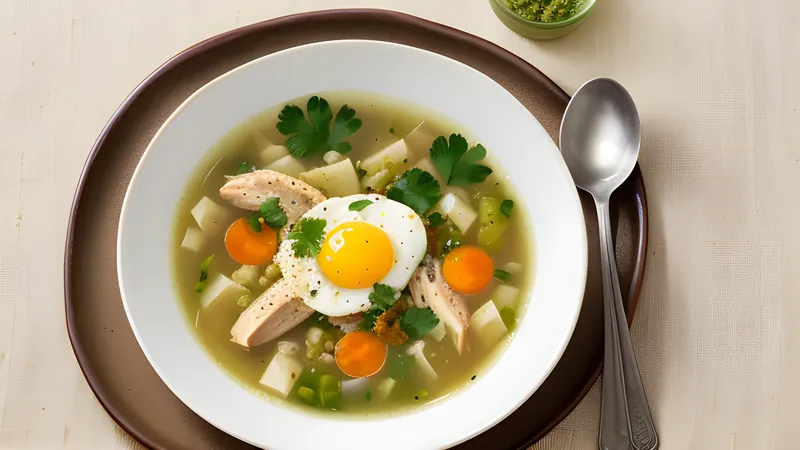
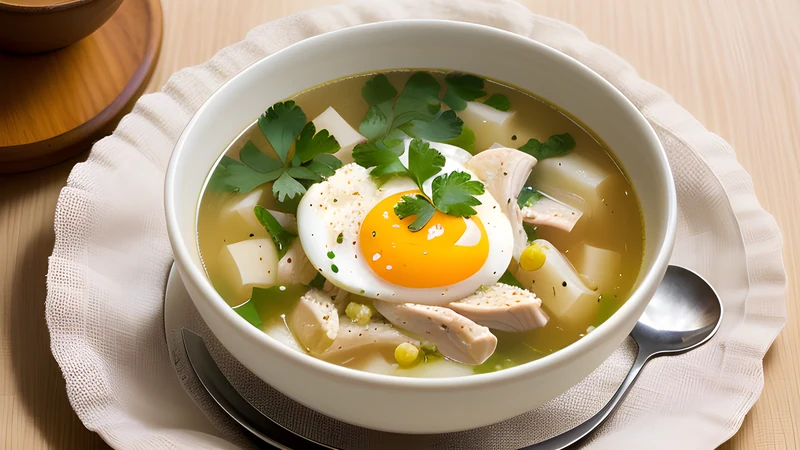
↓ Jump to recipeChikhirtma is the Georgian answer to the question every culture eventually asks: what is the most comforting thing you can do with a chicken and an egg? The answer here is a soup so silky it is almost a sauce — pale gold, thickened entirely with egg yolk, sharpened with lemon and coriander, and containing, unusually, no vegetables to speak of. It is restorative, elegant and quietly clever, and it has become my go-to when someone in the house is under the weather or when I simply want chicken soup with more character than usual.
Chikhirtma: The Lemony Georgian Chicken Soup
Ingredients
- 1 whole chicken (about 1.4kg), or 4 chicken legs
- 2 onions, finely diced
- 40g unsalted butter
- 2 tbsp plain flour
- 3 egg yolks
- 3 tbsp lemon juice, or 2 tbsp white wine vinegar
- 1 tsp coriander seeds, toasted and ground
- ¼ tsp saffron threads or a pinch of ground marigold (imeretian saffron), optional
- 1 large handful fresh coriander, chopped
- 1 small handful fresh mint, chopped
- 1.5 tsp fine salt, plus more to taste
- ½ tsp ground black pepper
Method
- Put the chicken in a large pot, cover with 1.8 litres cold water, bring to a gentle simmer and skim off the foam. Add 1 tsp salt and simmer, partly covered, for 45–60 minutes until the chicken is tender.
- Lift out the chicken, strain and reserve the stock. When cool enough to handle, pull the meat from the bones in bite-sized pieces and discard skin and bones.
- In a clean pot, melt the butter and soften the diced onion gently for 10 minutes until sweet and pale, without browning.
- Stir the flour into the onions and cook for 2 minutes, then gradually whisk in the warm reserved stock to make a smooth, lightly thickened base. Add the ground coriander seed and saffron if using.
- Return the pulled chicken to the pot and simmer gently for 10 minutes. Taste and adjust salt and pepper.
- In a bowl, whisk the egg yolks with the lemon juice until smooth. Temper them by whisking in a ladleful of the hot soup, then a second ladleful, to warm them gradually.
- Take the pot off direct high heat so it is no longer boiling. Pour the tempered egg mixture back into the soup in a thin stream, stirring constantly.
- Warm through over very low heat for 2–3 minutes, stirring, until the soup thickens to a silky, velvety texture. Do not let it boil or the eggs will curdle.
- Stir in most of the chopped coriander and mint, check the lemon and salt, and serve hot with the remaining herbs scattered over.
A soup with no vegetables, on purpose
The first thing that surprises people about chikhirtma is what is missing. Where most chicken soups are a raft of carrot, celery and potato, chikhirtma is deliberately vegetable-free. The body of the soup comes from two thickeners working together: a light flour-and-butter roux, and — the defining move — beaten egg yolks whisked in at the end. The result is a smooth, opaque, velvety broth that coats the spoon.
This egg-and-acid thickening is one of the oldest tricks in the wider region’s cooking. Greek avgolemono does the same thing with egg and lemon; the Georgian version leans on coriander and, often, a local souring agent rather than only lemon. Historically chikhirtma was sometimes made with a sour plum sauce or with vinegar rather than lemon, and in some households with a hint of saffron or the golden Imeretian marigold that stands in for saffron across Georgia. The through-line is that same balance: rich egg, bright acid, warm spice.
A soup with a wide family
Chikhirtma sits inside one of the oldest and most widespread techniques in cooking: thickening a broth with beaten egg and sharpening it with acid. The Greeks call the result avgolemono, the Turks terbiye, and versions turn up from the Balkans through the Levant to Iran, each tuned to a local palate. What marks the Georgian bowl out is the seasoning: fresh coriander in quantity, the toasted coriander seed, and often a whisper of the golden Imeretian marigold that stands in for saffron across the country. Historically the souring did not always come from lemon, which was a luxury; cooks reached instead for vinegar, for unripe grapes, or for the tart plum sauce tkemali that Georgians put on almost everything. Any of those will make an authentic chikhirtma, and choosing between them is a matter of what you have and how sharp you like it. The constant across the whole family is the balance you are steering towards: richness from the egg, brightness from the acid, and a savoury depth from the long-simmered bird.
Georgian cooking is full of these confident, herb-forward dishes that lean on egg, nut and fruit for body rather than the meat-and-potato template of the north. You can taste the same sensibility in the everyday Georgian cheese bread khachapuri imeruli and the summer vegetable stew ajapsandali. Chikhirtma is the soup end of that tradition.
Start with a proper stock
Because the soup has so few ingredients, the chicken stock carries most of the flavour, so make it well. Cover a whole chicken (or good bone-in legs) with cold water, bring it slowly to a bare simmer, and skim the grey foam off the top as it rises. Starting cold and simmering gently gives you a clear, clean-tasting broth; a hard boil emulsifies the fat and turns the stock cloudy and greasy.
Simmer until the chicken is tender, then lift it out, strain the stock, and pull the meat into bite-sized pieces. A whole chicken gives you the richest stock and the best meat; legs alone make a slightly deeper, more gelatinous broth if you prefer. Either way, this poaching liquid is the soul of the dish.
The onion base and the roux
Unusually for a soup this light, chikhirtma starts with a generous amount of onion cooked slowly in butter until sweet and soft but not coloured. The onions dissolve into the finished soup and give it a mellow sweetness that balances the lemon. Take your time here — ten minutes of gentle cooking, no browning.
Then a small amount of flour is stirred in to make a light roux, and the warm stock whisked in gradually. This gives the soup a preliminary body before the eggs go in, and helps stabilise the finished texture. It should be lightly thickened, like thin single cream, not a gravy.
Some Georgian cooks leave the flour out altogether and rely on the egg alone for body, which gives a lighter, more delicate soup that needs an even steadier hand at the tempering stage, since there is no roux to help hold the eggs in suspension. Others thicken with a spoon of flour slaked in cold water and stirred in near the end. The butter-and-flour roux in this recipe is the most forgiving route and the one I would start with; once you trust your tempering you can drop the flour and let the yolks do all the work. Whichever you choose, keep the quantity of onion generous, because its slow sweetness is doing quiet structural work under the acid and the egg. Some households blitz the softened onion smooth before the stock goes in, for a seamless texture; others leave it in soft flecks. Both are traditional, and the choice is simply how rustic you want the finished bowl to look; a smooth base flatters the silky egg thickening, while the flecked version keeps the soup looking honest and home-cooked.
The egg tempering — the one step that matters
Everything about chikhirtma comes down to the final minute, and the technique is called tempering. Egg yolks whisked straight into boiling soup will scramble instantly into little curds and ruin the silky texture you are after. The way to avoid that is to warm the eggs up slowly before they meet the hot soup.
Whisk the yolks with the lemon juice, then ladle a little hot soup into the eggs while whisking hard — this gently raises their temperature. Add a second ladleful the same way. Now the eggs are warm and diluted. Take the pot off the boil so it is hot but not bubbling, and pour the egg mixture back in a thin stream, stirring constantly. Warm it through over very low heat, stirring, for a couple of minutes until it thickens to a glossy velvet.
The rule you must not break: do not let it boil after the eggs go in. Boiling curdles the yolks and splits the soup into broth and scrambled egg. Keep it just below a simmer, stir steadily, and watch it turn silky. If you are nervous, take it off the heat entirely and let the residual warmth do the thickening; it will still work.
Finishing and serving
Off the heat, stir in a big handful of chopped fresh coriander and some mint, check the lemon and salt one last time — the soup should taste bright and savoury, with the acid clearly present — and serve. A pinch of the ground coriander seed and the golden marigold or saffron give it that particular Georgian warmth and colour. Serve it hot with bread for dipping; it is a starter or a light meal on its own.
In Georgia chikhirtma often appears the morning after a feast, valued as a restorative for a heavy head, and it is traditional at celebrations and after long journeys. It is light enough to open a meal and rich enough to be lunch on its own with good bread torn into it. A few pickled vegetables or a plate of fresh herbs on the table keep to the Georgian habit of putting something sharp and something green within reach of every bowl.
Tips, troubleshooting and variations
It curdled. It boiled after the eggs went in, or the eggs were added too fast without tempering. Temper properly and keep the pot below a simmer. A curdled soup is still perfectly edible — blend it smooth if you want to rescue the texture.
If you see the first specks of curdle forming, pull the pot off the heat at once and whisk hard; often you can stop it going further. If it has broken properly, a quick blitz with a stick blender will smooth the texture back into something silky, and while a purist would wince, the flavour is untouched. To avoid the problem entirely, have everything ready before you temper, with the yolks whisked with the lemon, the ladles to hand and the heat already dropped, because the tempering is a thirty-second job that goes wrong only when you are hunting for a whisk mid-pour.
It is too thin. Your roux was too light or you used only two yolks. Three yolks give a properly silky body; you can also simmer (gently) a little longer before adding them to reduce the stock.
Too sharp or too flat. Adjust the lemon at the very end. It should be noticeably lemony but balanced by the sweet onion. Vinegar gives a sharper, more traditional sourness if you prefer it to lemon.
Make-ahead. Chikhirtma is best fresh, because reheating risks curdling the egg. If you must make it ahead, prepare it up to the point before adding the eggs, chill, then reheat gently and temper in the eggs just before serving.
Serving alongside. A rich soup like this loves a piece of warm bread or a savoury pastry beside it — the same instinct that serves the Karaim pastry kibinai with a bowl of broth.
Chikhirtma is proof that a soup can be both light and luxurious. Master the tempering once and you own a whole family of egg-thickened soups. Make it when you want chicken soup that tastes of somewhere specific, and serve it while it is at its silkiest.
Related Content