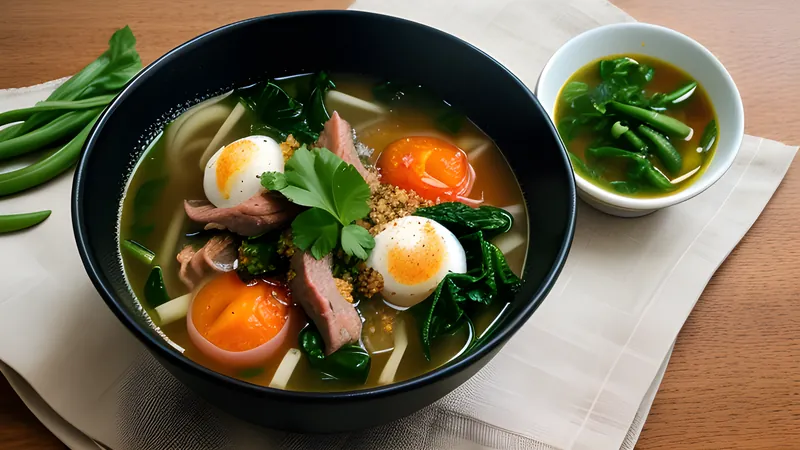
Chicken Tinola With Green Papaya and Chilli Leaves
The ginger broth that predates Spanish rule
Contents
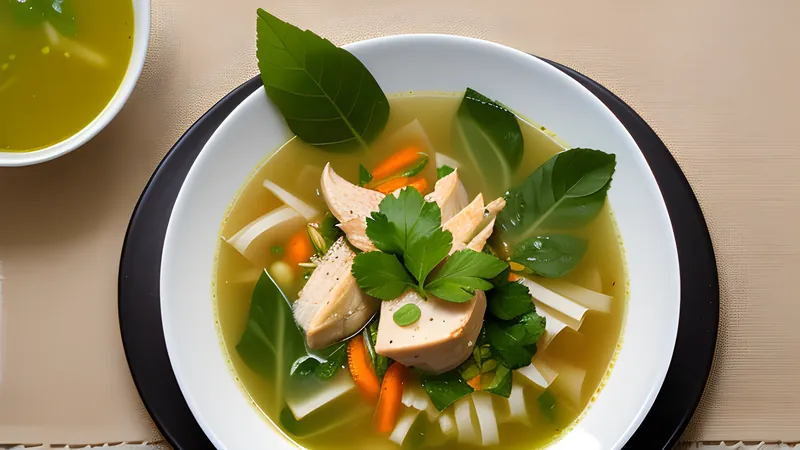
↓ Jump to recipeTinola is the dish Filipino cooking historians point to when they want to demonstrate that not everything on a Filipino table arrived with Spanish colonisation. It appears in some of the earliest Spanish-era accounts of local cooking, described in terms that suggest it was already an established dish by the time European chroniclers started writing things down, built from ingredients — chicken, ginger, native squash and leafy greens — that were present in the islands well before contact with Europe. Where dishes like adobo or kaldereta carry visible fingerprints of colonial trade and ingredients, tinola reads as something closer to a survivor: a simple, ginger-forward broth that has stayed recognisably itself for centuries while the cuisine around it absorbed influences from Spain, China, the United States and beyond.
Chicken Tinola With Green Papaya and Chilli Leaves
Ingredients
- 1kg bone-in chicken thighs and drumsticks, cut into pieces
- 2 tbsp oil
- 6cm ginger, peeled and sliced into thin matchsticks
- 1 onion, sliced
- 4 cloves garlic, minced
- 3 tbsp fish sauce
- 1.5 litres water or light chicken stock
- 1 small green papaya (about 400g), peeled, deseeded and cut into wedges
- 2 large handfuls chilli leaves (dahon ng sili), or substitute spinach or malunggay leaves
- black pepper, to taste
Method
- Heat the oil in a heavy pot over medium heat. Add the ginger and cook, stirring, for 2–3 minutes until fragrant and just starting to colour at the edges.
- Add the onion and garlic, cooking until softened, about 3 minutes.
- Add the chicken pieces and cook, turning occasionally, until the outside is opaque and lightly browned, about 6 minutes.
- Stir in the fish sauce and cook for 1 minute.
- Pour in the water or stock, bring to a boil, then reduce to a gentle simmer. Cover partially and cook for 20 minutes, until the chicken is tender.
- Add the green papaya wedges and simmer for 8–10 minutes until just tender but not falling apart.
- Stir in the chilli leaves and cook for 1–2 minutes until wilted.
- Season with black pepper and additional fish sauce to taste. Serve hot in bowls with the broth.
Ginger first, always
The technique that defines tinola, distinguishing it from other clear Filipino soups like sinigang, is that ginger is sautéed first, on its own, before anything else goes into the pot. This isn’t a minor sequencing detail — it’s the flavour base the entire broth is built on. Raw ginger added directly to simmering water gives a thin, sharp, slightly bitter edge; ginger given three minutes in hot oil first develops a rounder, warmer, more fragrant character that carries through the whole pot rather than sitting on top of it. Cooks who’ve made tinola for years will tell you they can identify a rushed version immediately, by a broth that tastes correct in theory — chicken, ginger, greens — but thin and slightly off in practice, almost always because the ginger went in raw or was only sautéed for a few seconds rather than properly bloomed in the fat.
Green papaya, unripe by design
The papaya used here is unripe — hard, pale green inside, with barely-formed seeds still soft enough to scrape out with a spoon. It has almost none of the sweetness of ripe papaya; instead it behaves more like a mild, absorbent vegetable, similar in texture to chayote or a very firm courgette, taking on the flavour of the broth around it rather than contributing much of its own. This is a common move across Southeast Asian cooking — using the unripe form of a fruit as a vegetable, the same logic behind green mango in som tam or unripe banana in some Filipino stews — and it works particularly well in tinola because the papaya’s mild flesh gives the soup bulk and a pleasant, slightly yielding bite without competing against the ginger and chicken for attention.
If you can’t find green papaya, chayote is the closest substitute in texture, though its flavour is slightly more vegetal. Some households use a firm green squash instead, particularly upo (bottle gourd), which is arguably just as traditional in tinola as papaya — the dish varies significantly by region and by what’s growing locally, and there’s no single canonical vegetable that every Filipino household insists on.
The greens at the end
Chilli leaves — the leaves of the chilli plant itself rather than the pepper it produces, carrying almost no heat — go in last, wilted for barely a minute or two so they keep some structure rather than turning to mush. They add a slightly bitter, mineral note that balances the ginger’s warmth and the papaya’s mildness, playing a similar role that spinach or watercress might in a European broth, though with a distinct, faintly peppery character of their own. Where chilli leaves aren’t available outside the Philippines and parts of the diaspora, spinach is the standard substitute, and malunggay (moringa) leaves work as well if you can find them at a specialist grocer, adding a comparable mineral quality even though the flavour isn’t identical.
Why this is the sick-day soup
Ask Filipino cooks what they make when someone in the household is unwell, and tinola comes up more often than almost anything else — it holds roughly the cultural position that chicken noodle soup or congee occupy elsewhere: simple, warm, easy to digest, built from ingredients believed to help you recover. Ginger’s reputation for settling stomachs plays a large part in that association, and the broth’s clarity — no coconut milk, no heavy fat, nothing thickened — makes it genuinely gentle to eat when appetite is low. It’s also a dish that scales down easily to a single bowl, unlike some of the more elaborate braises in Filipino cooking that make more sense cooked in a large batch for a full household.
What can go wrong
The most common mistake is rushing the ginger step, treating it as a garnish rather than a foundation — give it the full two to three minutes in hot oil, and you’ll notice the difference in the finished broth’s depth even before anything else goes into the pot.
The second is overcooking the papaya, which turns from pleasantly firm to waterlogged and mushy within a few extra minutes past the point where it’s actually done. Check it at the eight-minute mark with a fork; it should still offer slight resistance.
The third is adding the leafy greens too early. Chilli leaves or spinach cooked for more than a couple of minutes lose their colour, turn a dull khaki-green, and take on a slightly cooked-cabbage smell that’s a poor trade for the fresh, slightly bitter lift they’re meant to provide.
Substitutions and variations
Some versions of tinola use fish (tinolang isda) rather than chicken, particularly in coastal communities, simmered more briefly since fish cooks faster than chicken and doesn’t need the same twenty-minute tenderising time. Others add a wedge or two of unripe green mango for extra sourness, a regional variation that pushes tinola closer to sinigang territory while keeping the ginger-forward base that defines it.
For a richer version, some households brown the chicken more aggressively at the start, almost searing it, before adding liquid — this gives a slightly deeper, roastier broth at the cost of some of the dish’s characteristic lightness, and comes down to personal preference rather than any strict regional rule.
Storage
Tinola keeps well in the fridge for up to three days, though the green papaya continues to soften the longer it sits in the broth, so it’s worth eating within the first two days if you want the vegetable’s texture intact. It freezes reasonably well for up to two months, though the chilli leaves lose all texture on thawing and are best added fresh to a reheated batch rather than frozen along with the broth.
Pair it with something richer on the same table, like kaldereta or bicol express, letting the clear broth do the work a plain glass of water might do elsewhere — resetting the palate between richer dishes rather than competing with them.
Regional names, one dish
Because tinola predates any centralised, written culinary standardisation, it exists today with real regional variation under the same name. In the Visayas, some cooks add a splash of coconut milk near the end, blurring the line between tinola and the coconut-based soups more common further south — a version purists in Luzon would argue isn’t really tinola at all, since the defining trait of the dish elsewhere is precisely that it stays clear and coconut-free. In Batangas and parts of southern Luzon, unripe papaya is sometimes swapped for sayote (chayote) as the default vegetable rather than an occasional substitute, to the point where some families have never actually cooked tinola with papaya despite it being the version most commonly written down in cookbooks aimed at a general audience. None of these variations are wrong; they reflect a dish old enough to have drifted regionally before anyone thought to standardise it.
Building the broth without a stock cube
Because tinola’s whole appeal rests on a clean, ginger-forward broth, it’s one of the few Filipino soups where using a stock cube or bouillon powder as a shortcut actively works against the dish rather than simply saving time. Bouillon carries a flat, uniform saltiness and often a sweetness from added sugar that clashes with the specific, sharp warmth ginger is meant to provide. Building the broth from bone-in chicken pieces simmered with the sautéed aromatics, rather than reaching for a shortcut, gives you a broth with actual body from the collagen in the chicken skin and bones — cloudier than a stock-cube broth, with small flecks of fat visible on the surface, which is exactly how a proper bowl of tinola is meant to look rather than a flaw to skim away entirely.
Serving it properly
Tinola is served in its broth, in a wide bowl, always with plain steamed rice on the side rather than folded into the soup — the rice stays separate, spooned in mouthful by mouthful as you eat, so it never turns to mush the way it would if it sat soaking in the broth from the start. A small dish of patis (fish sauce) with calamansi and chopped bird’s eye chilli is a common accompaniment for anyone who wants to season their own bowl further at the table, since the broth itself is deliberately kept on the milder side to suit anyone eating it while unwell or simply craving something gentle after a heavier meal the night before.
Choosing the right chicken cut
Bone-in thighs and drumsticks are the right choice here over boneless breast, and the reasoning is entirely about the broth rather than the meat itself. Bones and skin release gelatin and fat slowly over the twenty-minute simmer, giving the finished broth a faint richness and slight body that a purely lean cut can’t replicate. Breast meat, cooked the same length of time, tends to dry out and turn stringy well before the broth has developed enough depth, since white meat has far less connective tissue to break down into the liquid. If you do prefer breast, add it later in the cooking process, alongside the papaya rather than at the start, so it only spends ten minutes or so in the simmering broth rather than the full twenty.
Whole cut-up chicken, bone-in and skin-on throughout, is what most Filipino households actually reach for, giving a mix of textures and richness across the pot — thighs staying juicy, wings contributing extra gelatin, and the carcass pieces adding the most flavour of all if you’re willing to eat around a few more bones at the table.
Related Content