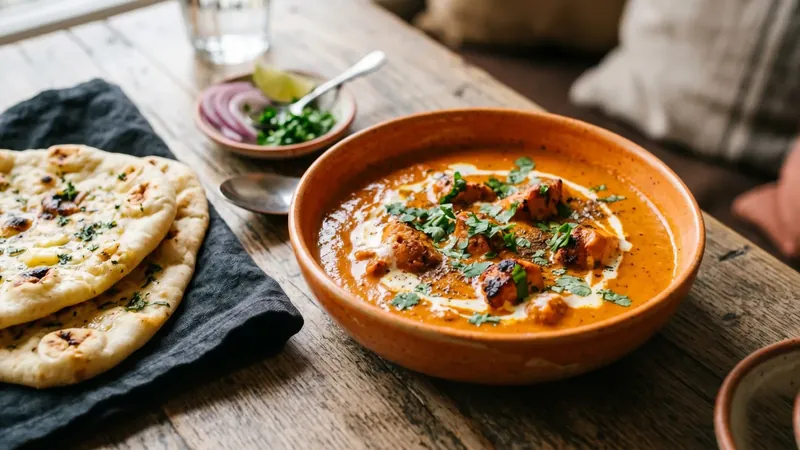
Chicken Tikka Masala with Charred Tomato and Cashew Cream
The nation's favourite, made luxuriously smooth
Contents
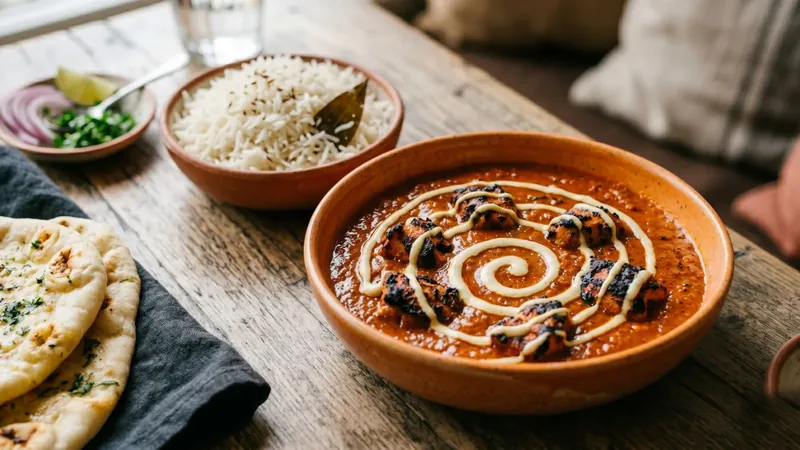
↓ Jump to recipeChicken tikka masala is the curry most of us learned to love first: marinated, grilled chicken in a creamy, gently spiced tomato sauce, the safe and generous middle of the takeaway menu. This version keeps everything that makes it moreish and swaps in two small changes that pay off out of all proportion. The tomatoes are blistered under the grill until charred and sweet, lending a smoky backbone that tinned tomatoes never manage, and soaked cashews are blended into a silky cream that stands in for the usual double cream. The result is luxuriously smooth, a shade lighter, and every bit as good as the version that arrives in a foil tub.
Chicken Tikka Masala with Charred Tomato and Cashew Cream
Ingredients
- 700g boneless chicken breast or thigh, cut into chunks
- 200g full-fat natural yoghurt
- 3 tbsp tikka spice blend (or 1 tsp each cumin, coriander, paprika, garam masala)
- 4 garlic cloves, crushed
- 1 tbsp grated fresh ginger
- 500g ripe tomatoes, halved
- 100g raw cashews
- 1 large onion, finely chopped
- 3 tbsp ghee or vegetable oil
- 1 tsp ground turmeric
- 1 tsp ground cumin
- 1 tsp paprika
- 1 tsp garam masala
- 200ml hot water
- Salt, to taste
- Fresh coriander, to serve
Method
- Mix the yoghurt with the tikka spice blend, half the garlic and ginger, and a good pinch of salt. Stir in the chicken and marinate for at least 30 minutes.
- Soak the cashews in just-boiled water while you cook; this softens them for blending.
- Heat the grill to high. Lay the tomatoes cut-side up and grill for 8-10 minutes until blistered and blackened in patches. Set aside.
- Thread the chicken onto skewers or spread on a tray and grill for 10-12 minutes, turning once, until charred at the edges and cooked through.
- Meanwhile, heat the ghee in a large pan and soften the onion for 8 minutes until deep golden.
- Add the remaining garlic and ginger with the turmeric, cumin and paprika, and fry for a minute until aromatic.
- Tip in the charred tomatoes and cook for 5 minutes, crushing them down into a thick base.
- Drain the cashews and blend with the hot water until completely smooth and creamy.
- Blend the tomato base smooth, return to the pan, then stir in the cashew cream and simmer gently for 5 minutes.
- Fold in the grilled chicken, warm through, finish with garam masala, and taste for salt.
- Scatter with coriander and serve with rice or naan.
The Story
Few dishes provoke as much affectionate argument as chicken tikka masala. It is often held up as a symbol of British dining, and in 2001 the then foreign secretary Robin Cook went so far as to call it “a true British national dish” in a speech on multiculturalism. The idea is a marriage of two halves: marinated, grilled chicken tikka, rooted firmly in the Indian subcontinent and the tandoor ovens of Punjab, married to a creamy, spiced gravy that suited British tastes.
Its exact birth is disputed, which is part of the fun. The best-known origin story places it in Glasgow, where the late chef Ali Ahmed Aslam of the Shish Mahal restaurant claimed to have improvised the sauce in the 1970s by loosening dry tandoori chicken with a tin of tomato soup and some spices for a customer who complained his meal was too dry. Food historians are sceptical that any single kitchen invented it, and the likelier truth is that it emerged in more than one restaurant at around the same time, as cooks up and down the country improvised a gravy for tikka that might otherwise have arrived at the table dry. What is not in doubt is its popularity: for decades it has been among the most ordered dishes in curry houses across Britain.
The two pillars of the dish are the tikka itself and the masala sauce. Tikka simply means pieces, here chunks of chicken steeped in spiced yoghurt and cooked over fierce heat until the edges catch. The yoghurt is not just for flavour; its acidity and enzymes gently tenderise the meat, while its proteins and sugars char and blacken under high heat in a way that lean chicken alone never would. That charring is essential. It gives the meat its colour and a faintly smoky savour that carries through the whole bowl. A domestic grill on full blast, or the flame of a gas hob for the brave, does a respectable impression of the tandoor.
This version pushes the smoky idea further by charring the tomatoes too. Blistering them under the grill drives off water and concentrates their sugars, and the blackened patches bring the same toasty, caramelised depth that a good sear gives meat, so the finished sauce tastes layered rather than flat. It is a small extra step with a generous payoff, and it is the same instinct that makes a charred-tomato salsa taste so much better than a raw one.
The cashew cream is the other twist, and a genuinely useful one. Across northern India and Pakistan, ground nuts, especially cashews and almonds, have long been used to thicken and enrich the luxurious gravies known as korma and makhani. Soaking raw cashews softens them so a blender can whip them into a completely smooth, pourable cream that behaves much like dairy: it clings, it enriches, and it tastes indulgent. It also keeps the sauce a touch lighter than a slug of double cream and, if you swap the yoghurt marinade for a plant-based one, makes the whole dish dairy-free without anyone at the table noticing.
Getting the sauce right
The order of work matters. Get the chicken marinating first, even if only for the 30 minutes the recipe demands, and set the cashews soaking in just-boiled water at the same time; ten minutes in near-boiling water is enough to soften them for the blender. While the grill does its work on the tomatoes and chicken, you build the onion base on the hob, so the three strands come together at the end.
Take the onion further than you think you should. Eight minutes over a medium heat, stirring, until it is deep golden and jammy, builds the sweet foundation the whole sauce sits on; a pale, undercooked onion leaves the gravy tasting sharp and raw. Bloom the ground spices in the fat for a full minute before the tomatoes go in, so they lose their dusty edge, and don’t rush blending the base smooth: a proper whizz is what gives tikka masala its glossy, restaurant-style body rather than a rustic, chunky texture.
The one thing to watch is the cashew cream splitting. Fold it in over a gentle heat and keep the sauce at a bare simmer once it is in; a hard, rolling boil can cause the nut cream to separate and turn grainy, just as it can with dairy. If it looks like it is tightening too much, a splash more hot water brings it back to a silky pour.
If your blender struggles to take the cashews completely smooth, the fault is usually one of two things. Either the nuts have not soaked long enough — give them a full fifteen minutes in properly just-boiled water if ten did not soften them — or the blender jug is too wide for so small a quantity, in which case the blades spin above the liquid rather than through it. Scrape the sides down, add a little more of the hot water, and blend in short bursts until it is genuinely silky, with no grit left between finger and thumb. A high-speed jug blender does this best; a stick blender in a tall, narrow beaker is the next best thing.
Serving, swaps and storage
Serve it the traditional way, with fluffy basmati rice or warm naan for mopping, and plenty of fresh coriander on top. A wedge of lime on the side brightens everything, and a spoon of mango chutney never goes amiss for those who like a sweeter note alongside the spice.
For heat, this recipe stays firmly mild-to-medium; add a chopped green chilli with the onions, or a pinch of Kashmiri chilli powder, if you want more warmth. Thigh meat is more forgiving than breast, staying juicy even if it catches a little extra colour under the grill, so it is my default. To keep the dish vegetarian, swap the chicken for chunks of paneer marinated the same way; if that appeals, my crispy paneer tikka leans into exactly that idea with a shatteringly crisp coating. And if you like the char-and-yoghurt method more generally, you will find the same live-fire logic behind my chicken fajitas, where high heat and a quick marinade do most of the flavouring.
Leftovers keep well: cool quickly, refrigerate for up to three days, and reheat gently with a splash of water to loosen the sauce, which thickens as it sits. It freezes for up to three months, though it is best to freeze the sauce and chicken and add a fresh scattering of coriander when you reheat.
Related Content