Chicken Satay with Peanut Sauce
Smoky skewers and a moreish dip
Contents
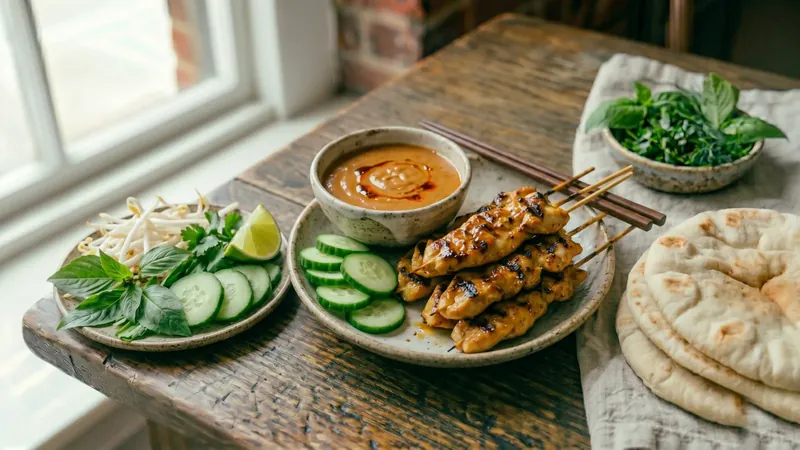
↓ Jump to recipeSatay is street food at its most irresistible: skewers of marinated chicken grilled hard over flame until smoky and charred, served with a thick, savoury peanut sauce for dipping. The whole thing hinges on two marriages of flavour. First, a fragrant lemongrass-turmeric marinade that perfumes the meat and stains it a deep gold, so it catches and chars beautifully over heat. Second, a rich peanut sauce sharpened with lime and tamarind so it stays lively rather than heavy. Cooked on a griddle or barbecue, these are made for sharing, and the sauce is dangerously moreish; make more than you think you need, because it disappears.
You can have the marinade on the chicken in ten minutes and then walk away, which makes this a brilliant dish to start in the morning for an evening barbecue, or the night before for a fast weeknight cook.
Chicken Satay with Peanut Sauce
Ingredients
- 700g boneless, skinless chicken thighs, cut into strips
- 2 lemongrass stalks, tough outer layers removed, finely chopped
- 1 tsp ground turmeric
- 3 garlic cloves, grated
- 1 tbsp grated fresh ginger
- 2 tbsp soy sauce
- 1 tbsp light brown sugar
- 2 tbsp neutral oil
- 150g crunchy peanut butter
- 200ml coconut milk
- 1 tbsp red curry paste
- 1 tbsp soy sauce, for the sauce
- 1 tbsp light brown sugar, for the sauce
- 1 tbsp lime juice
- 1 tsp tamarind paste
- Wooden skewers, soaked in water
Method
- Blend or pound the lemongrass, turmeric, garlic, ginger, soy sauce, brown sugar and oil into a coarse marinade.
- Toss the chicken strips in the marinade, then cover and chill for at least 1 hour, or overnight.
- Thread the marinated chicken onto the soaked skewers, weaving each strip back and forth.
- For the sauce, warm the coconut milk with the red curry paste in a small pan for 2 minutes until fragrant.
- Whisk in the peanut butter, soy sauce, brown sugar, lime juice and tamarind, then simmer gently for 3-4 minutes until thick and glossy, loosening with a splash of water if needed.
- Heat a griddle pan or barbecue until very hot.
- Grill the skewers for 3-4 minutes each side, turning, until charred at the edges and cooked through.
- Rest the skewers for a couple of minutes, then serve with the warm peanut sauce for dipping.
Where satay comes from
Satay, or sate as it is spelled in Indonesian, is one of South-East Asia’s great street foods, and Indonesia, particularly Java, is widely regarded as its homeland. Its development is usually linked to the arrival of Muslim traders and the influence of Middle Eastern and Indian kebab traditions on the archipelago from around the eighteenth and nineteenth centuries, adapted to local ingredients and grilling over charcoal. From Java it spread across the region, and Malaysia, Singapore, Thailand and beyond each developed their own distinct versions, from Malaysia’s chicken satay with cucumber and compressed rice cakes to Thailand’s coconut-rich variation.
At its simplest it is skewered, marinated meat grilled over charcoal, sold from carts and stalls where the vendor fans the coals until the air fills with smoke and the smell of caramelising sugar and spice. Part of its enduring popularity is its sociability: the skewers are made for sharing, eaten with the hands, dipped and passed around. It is festival and family food as much as street food.
The marinade, and why the char matters
The marinade is what gives satay its depth, and each component earns its place. Lemongrass is the aromatic heart; slice off the woody top and the papery outer layers and finely chop or pound only the pale, tender lower stalk to release its citrus perfume. Turmeric lends an earthy warmth and, just as importantly, the golden stain that catches and chars so beautifully on the grill. Garlic and ginger add pungency, and the spoonful of sugar is doing real work: it helps the surface caramelise and blister over high heat, which is where satay’s flavour lives.
Chicken thigh is the right cut here and it is worth insisting on. Its higher fat content keeps it juicy and forgiving over fierce, direct flame, exactly where leaner breast dries into string. Cut the thighs into long strips and thread them onto the skewer by weaving back and forth, so each piece has ridges and edges that char while the folds stay tender.
Building the peanut sauce
The peanut sauce is, for a lot of people, the entire point of the exercise. Versions abound across the region, but the essential idea is a thick, savoury-sweet sauce built on ground peanuts, enriched with coconut milk and seasoned with chilli, sugar and something sour. Peanuts are not native to Asia; they came from the Americas and reached South-East Asia through Portuguese and Spanish trade from around the sixteenth century, then found a natural home in sauces exactly like this one. Using good crunchy peanut butter is a practical shortcut that gives body and texture without the labour of grinding roasted nuts by hand, and I make no apology for it on a weeknight.
Cook the sauce properly rather than just stirring things together. Warming the coconut milk with the red curry paste first blooms the spices and takes the raw edge off, and simmering the finished sauce for a few minutes lets it thicken and turn glossy. The brightening touches of lime and tamarind are what stop it turning cloying; that balance of rich and sour, sweet and savoury, is the whole appeal. The sauce should be thick enough to cling to a skewer yet lively enough to keep you reaching back in. If it stiffens as it cools, loosen it with a spoonful of warm water and taste again for the lime.
Grilling, and getting a good char indoors
A genuine charcoal grill gives the most authentic smoky result, and if the barbecue is lit this is the recipe to cook on it. Indoors, a screaming-hot griddle pan does an admirable job; get it properly hot before the skewers go down so they sear rather than stew, and resist turning them until each side has taken colour. Soak the wooden skewers in water for at least thirty minutes first so the exposed ends do not burn through, and rest the cooked skewers a couple of minutes before serving so the juices settle.
The commonest cause of disappointing satay is a pan that is not hot enough. If the chicken releases a lot of liquid and goes pale grey rather than catching and browning, the surface is stewing in its own juices and the sugar in the marinade never gets the chance to caramelise. Cook in two batches rather than crowding the pan, and give the griddle a good five minutes over a high flame before the first skewer touches it. You want to hear an immediate, aggressive sizzle. A little scorching at the edges is exactly right; that bitter-sweet char against the sweet peanut sauce is the contrast the whole dish is built on.
Substitutions and variations
If you cannot find fresh lemongrass, the tubes of lemongrass paste sold in most supermarkets are a fair stand-in; use about two teaspoons in place of the two chopped stalks. Ground turmeric is fine here, though a knob of grated fresh turmeric gives a livelier colour and flavour if you can get it. Tamarind paste brings the ideal sour note, but a squeeze of extra lime juice will cover for it at a pinch. For the peanut butter, a natural, no-added-sugar crunchy variety gives the cleanest peanut flavour; if yours is already sweetened, hold back a little of the brown sugar in the sauce and taste before adding the rest.
The dish takes happily to swaps. Firm tofu, pressed and cubed, marinates and grills beautifully for a vegetarian version, as do thick slices of aubergine or halloumi. Prawns work too, though they need only a couple of minutes a side. For more heat, add a sliced red chilli or a spoonful of sambal to the sauce; for a Thai lean, stir a little more coconut milk and a squeeze of lime through it and finish with torn coriander.
Make-ahead, sides and storage
The marinade only improves with time, so an overnight sit in the fridge gives the deepest flavour and firmer, better-charring meat. The peanut sauce can be made up to three days ahead and kept in the fridge, then gently reheated with a splash of water to bring it back to a pourable, dippable consistency. Serve the skewers with plain steamed rice, wedges of cucumber and lime, and perhaps a scatter of crushed roasted peanuts over the top for extra crunch.
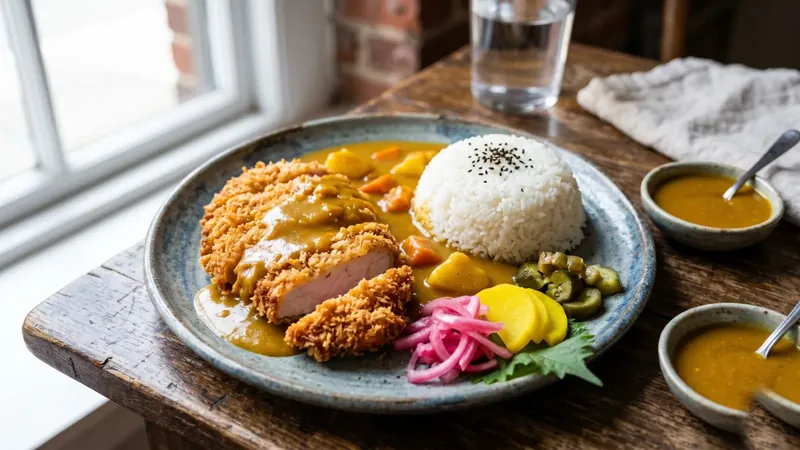
If you love that deep, savoury peanut note, my West African-style sweet potato and peanut stew takes it in a completely different, hearty direction, while for another gloriously sauce-forward chicken dinner the chicken katsu curry scratches the same comforting itch from the other side of the continent.
Related Content