Weeknight Chicken Pho with Charred Ginger
A fragrant, restorative bowl, faster than you think
Contents
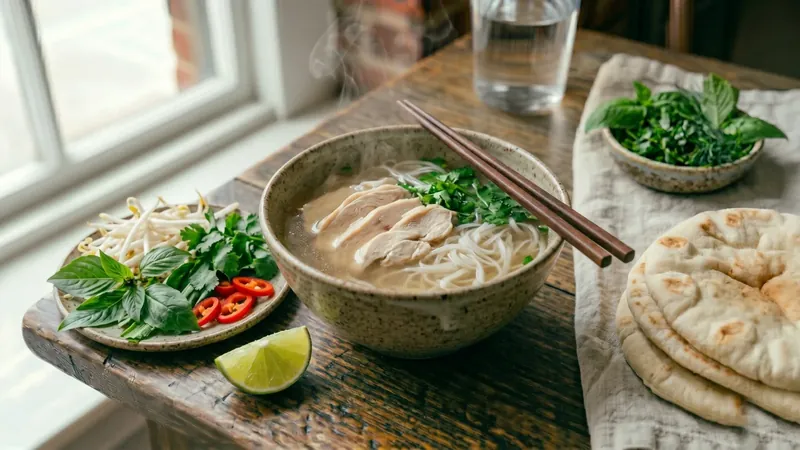
↓ Jump to recipePho has a reputation as an all-day project, a pot of bones muttering away on the stove from dawn, and for the great beef version that reputation is earned. But the chicken version, pho ga, is a genuinely weeknight bowl, and the thing that makes a fast one sing is a single deliberate step: charring the ginger and onion black before they go anywhere near the pot. Blistered over a flame, their sugars caramelise and they give off a gentle smokiness that infuses the whole broth, standing in for the deep character that hours of simmering would otherwise supply. Built on a good shop-bought stock and a small handful of warm whole spices, this comes together in under an hour and still tastes fragrant and restorative rather than like a shortcut.
The other half of the appeal is the ritual at the table. The bowl arrives plain and each person finishes it themselves, tearing in herbs, squeezing lime, adding as much chilli as they dare. Get the broth right and everything after that is pleasure.
Weeknight Chicken Pho with Charred Ginger
Ingredients
- 1 large onion, halved and unpeeled
- 1 thumb-sized piece of fresh ginger, halved lengthways
- 1.5 litres good chicken stock
- 4 bone-in chicken thighs, skin removed
- 3 star anise
- 1 cinnamon stick
- 3 cloves
- 1 tbsp coriander seeds
- 2 tbsp fish sauce, plus more to taste
- 1 tsp caster sugar
- 250g flat dried rice noodles
- 200g beansprouts
- 1 handful each of Thai basil and coriander
- 2 red chillies, sliced
- 1 lime, cut into wedges
- 4 spring onions, finely sliced
Method
- Char the onion and ginger directly over a gas flame, or under a hot grill, turning until blackened and fragrant, about 5 minutes.
- Toast the star anise, cinnamon, cloves and coriander seeds in a dry pan for 1-2 minutes until aromatic.
- Put the charred onion and ginger, toasted spices, stock and chicken thighs into a large pan. Bring to a gentle simmer.
- Simmer, partly covered, for 25-30 minutes until the chicken is tender, skimming any foam from the surface.
- Lift out the chicken, shred the meat from the bones and set aside. Strain the broth and discard the aromatics.
- Return the broth to the pan, season with the fish sauce and sugar, and adjust with more fish sauce to taste.
- Soak or cook the rice noodles according to the packet, then divide between four deep bowls.
- Top with the shredded chicken and ladle over the hot broth.
- Serve with beansprouts, herbs, chilli, lime wedges and spring onions for everyone to add at the table.
Where pho comes from
Pho is Vietnam’s most famous dish, a bowl of flat rice noodles in a clear, aromatic broth eaten at every hour of the day, from pavement breakfast stalls to late-night kitchens. It is a relatively young dish by the standards of national icons: food historians place its emergence in the north of the country, around Hanoi, in the early twentieth century, as a street food that fused local noodle traditions with French and Chinese influences of the colonial period. The word itself is often traced to the French pot-au-feu, the beef-and-vegetable stew, though the connection is debated and the noodle-soup form is thoroughly Vietnamese.
After the division of the country in 1954, waves of migration carried northern pho south to Saigon, where it evolved into a sweeter, more lavishly garnished style piled with herbs and beansprouts, while the northern original stayed leaner and cleaner. The two great branches you meet today are pho bo, made with beef, and pho ga, made with chicken. Pho ga is the lighter cousin, and the one this recipe celebrates; it was said to have gained popularity partly during periods when beef was scarce, and it has been beloved on its own terms ever since.
What the broth is doing
Everything about pho points at the broth, and the broth aims at clarity and fragrance rather than heaviness. The whole spices are chosen and balanced with care: star anise and cinnamon give the warm, faintly sweet top notes, cloves add depth, and coriander seed rounds it out, while fish sauce supplies the savoury backbone that anchors so much Vietnamese cooking. A little sugar balances the salt of the fish sauce so the finished broth tastes rounded rather than sharp. A true pho bo simmers for hours to extract collagen and marrow from beef bones, but chicken gives up its flavour far faster, and a good ready-made stock gives you a respectable head start without shame.
Charring the onion and ginger is not a novelty or a gimmick; it is standard practice in Vietnamese kitchens and the single most important flavour step in a quick version. Hold the halves directly in a gas flame, or sit them under a fierce grill, and turn them until the surfaces are genuinely blackened and fragrant, about five minutes. That char caramelises their natural sugars and adds the faint smokiness that stands in for long cooking. Toasting the whole spices in a dry pan for a minute or two does the same job for their aromatic oils, waking them up before they steep.
Why you skim, and why you never boil
Two small disciplines separate a clean, glassy pho from a cloudy, greasy one. The first is skimming. As the pot comes up to temperature, proteins and impurities rise to the surface as a grey foam; lift them away with a spoon and the finished broth stays clear. The second, and the one people get wrong most often, is heat. Keep the broth at the barest simmer, a lazy shiver rather than a rolling boil. A hard boil churns the fat back into the liquid and emulsifies it, turning the broth murky and heavy. Patience here is the whole game, and it costs you nothing but a low flame.
Removing the skin from the thighs before they go in keeps the broth from turning greasy, and shredding the cooked meat rather than slicing it gives you soft, broth-soaked pieces that sit properly in the bowl. If you have the time, chilling the finished broth overnight makes the last of the fat set into a solid cap you can lift off in one piece, which is the surest way to a clean bowl; northern Hanoi pho in particular prizes a broth that is almost transparent, with only a faint slick of gold on the surface. Thighs are the right cut here rather than breast: they stay tender through the simmer, they give the broth more flavour and body from the bones, and they are far more forgiving if the pot ticks along a few minutes longer than planned.
A word on the fish sauce, since it does the heavy lifting on seasoning. Add most of it at the start and then adjust at the very end, tasting as you go, because different stocks carry different amounts of salt and you want the final broth savoury and rounded rather than sharp. Good fish sauce, ideally one where anchovy and salt are the only listed ingredients, tastes clean and deep; cheaper versions can turn muddy, so it is worth buying a decent bottle, and it keeps for ages. If the broth tastes thin despite enough salt, it usually wants more fish sauce for savouriness rather than more salt.
Building the bowl at the table
The finishing is where pho becomes sociable. Divide soaked noodles between deep bowls, top with shredded chicken, and ladle over broth so hot it wilts everything it touches. Then put out a generous plate of extras and let everyone build their own: crunchy beansprouts, sprigs of Thai basil and coriander, sliced red chilli for heat and lime wedges for brightness. Some people stir in a dash of hoisin or sriracha; many purists taste the broth clean first and only then start adjusting. That freedom to tune the balance of fresh, hot, sour and savoury bowl by bowl is not a garnish afterthought, it is the point of the dish.
Make-ahead, storage and a note on noodles
The broth is even better made a day ahead; chill it and the flavour settles and the fat sets on top for easy removal. It keeps three days in the fridge or freezes for a couple of months, so it is worth making a double batch of broth alone. Cook the noodles fresh each time and only when you are ready to serve, because rice noodles left sitting in hot broth turn bloated and soft within minutes. Soak or boil them to just tender, drain, and portion them into bowls at the last second.
If a fragrant, gingery bowl is what you are after, the same warmth runs through my spiced carrot and ginger soup, and for another restorative use of chicken and rice there is the deeply comforting chicken congee with crispy shallots and ginger oil, which shares pho’s love of aromatics and its build-your-own-bowl finish.
Related Content