Chicken Katsu Curry with a Quick Fruity Sauce
Crisp cutlets and a glossy, apple-sweet sauce
Contents
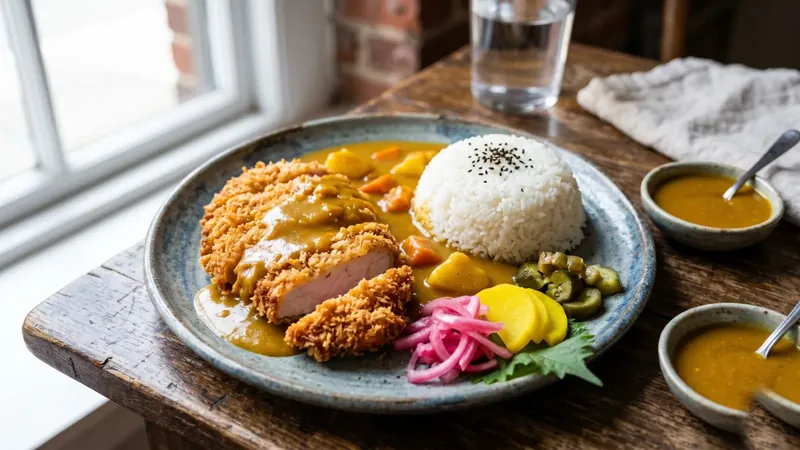
↓ Jump to recipeThere is a specific sound that tells you katsu curry is going right: the dry, hollow crackle of a knife going through panko that has stayed genuinely crisp, into chicken that is still juicy underneath. Get that, pool a glossy golden sauce alongside, and you have one of the most quietly satisfying dinners in the repertoire. My twist lives in the sauce. A whole grated apple melts down into it for a rounded, honeyed sweetness, and a spoonful of mango chutney pushes that further with a fragrant, jammy depth and a beautiful sheen. It tastes like the katsu you queue for on the high street, only fresher, and made for a fraction of the money on a Tuesday night.
The dish rewards a little organisation more than any real skill. Get the sauce simmering first so it can quietly thicken while you crumb and fry the cutlets, and the whole thing lands on the table hot, crisp and saucy in one go.
Chicken Katsu Curry with a Quick Fruity Sauce
Ingredients
- 4 boneless chicken breasts
- 100g plain flour
- 2 eggs, beaten
- 150g panko breadcrumbs
- Vegetable oil, for frying
- 1 onion, finely chopped
- 2 garlic cloves, crushed
- 1 tbsp grated fresh ginger
- 1 tbsp curry powder
- 1 tsp garam masala
- 1 tbsp plain flour (for the sauce)
- 500ml chicken stock
- 1 apple, grated
- 1 tbsp mango chutney
- 1 tbsp soy sauce
- 1 tsp honey
- Steamed rice, to serve
Method
- Start the sauce. Soften the onion in a little oil over medium heat for 8 minutes until golden, then add the garlic and ginger and cook for a minute.
- Stir in the curry powder, garam masala and the tablespoon of flour, and cook for a minute to toast the spices.
- Gradually pour in the stock, stirring, then add the grated apple, mango chutney, soy sauce and honey.
- Simmer gently for 12-15 minutes until thickened and smooth, then blend for a silkier finish if you like. Keep warm.
- Meanwhile, lay the chicken breasts between cling film and bat out to an even thickness with a rolling pin.
- Set up three bowls: flour, beaten egg and panko. Coat each breast in flour, then egg, then press firmly into the panko.
- Heat about 1cm of oil in a wide pan to 170C. Fry the cutlets for 3-4 minutes each side until deep golden and cooked through.
- Drain on kitchen paper, then slice each cutlet into thick strips.
- Spoon rice onto plates, lay the sliced katsu alongside, and pour the warm curry sauce generously over the top.
- Serve at once, with extra sauce on the side.
Where katsu curry comes from
Katsu curry is a star of yoshoku, the genre of Western-influenced Japanese cooking that took shape from the late nineteenth century onward, when Japan opened to foreign trade and cooks began adapting European dishes to Japanese tastes and ingredients. Each part of the name tells part of the story. Katsu is short for katsuretsu, a Japanese rendering of the English word “cutlet”, describing meat breaded and fried in the European manner; the classic tonkatsu, a breaded pork cutlet, was popularised in Tokyo around the 1890s and the chicken version followed the same template.
Curry itself arrived in Japan by a roundabout route. It came not directly from India but via the British, who had adopted curry powder during the colonial period and carried it into their naval kitchens. The Imperial Japanese Navy took it up in the late nineteenth century as a hearty, keep-you-going ration, and from there it spread into homes and canteens. That British detour is exactly why Japanese curry tastes the way it does: thicker, browner, milder and noticeably sweeter than its South Asian cousins, thickened with a roux rather than loosened with a fresh spice paste. The apple in this recipe is not a modern invention, either; sweet fruit stirred into the pot is a long-standing home trick to soften and round the sauce.
Why panko, and why you must bat the chicken flat
The breadcrumb of choice is panko, the airy, flaked Japanese crumb that fries up exceptionally light. Panko is made from a special crustless white bread baked with an electric current that produces a soft, open loaf, which is then torn into large, jagged flakes rather than ground into powder. Those big shards have more surface area and less density than ordinary breadcrumbs, so they absorb less oil and stay crunchy long after the cutlet hits the plate. If your local shop stocks nothing else, ordinary dried crumbs will fry up, but the coating will be tighter and softer; panko is worth seeking out.
Batting the breasts to an even thickness of about 1.5cm is not a cosmetic step. A chicken breast tapers, and left as it is the thin tail will be dry and overcooked by the time the fat end is safe to eat. Flatten it and the whole cutlet cooks at the same rate, so you can pull it from the oil the moment it is golden with the interior just cooked and still juicy. Lay the breast between two sheets of cling film first, or the rolling pin will tear the meat.
The sauce is the whole point
Classic Japanese curry is defined by its glossy, gravy-like consistency and a flavour that is warming rather than fiery. The roux of flour and toasted spices at the start is what gives it that clinging body; cook the flour and spice for a full minute before the stock goes in so the sauce loses any raw, floury edge. Then the grated apple does its quiet work, breaking down completely so you taste sweetness and depth without any obvious fruitiness, while the mango chutney adds a fragrant, jammy note and that restaurant sheen.
Why apple rather than a spoonful of sugar? Plain sugar sweetens but adds nothing else, and too much makes the sauce taste flat and one-dimensional. Grated apple brings a gentler, more rounded sweetness alongside a faint fruity acidity and a little natural pectin that helps the sauce body up, so it reads as depth rather than dessert. Choose a sweet, soft eating apple that will collapse readily; a sharp cooking apple works but you may want a touch more honey to balance it. Grate it coarsely so it melts down quickly into the simmering stock.
Blending the sauce at the end is optional but gives it the smooth, pourable texture people associate with the dish. It should coat the back of a spoon and flow easily over rice, not sit in a stiff mound. If it thickens too much as it sits, which it will, loosen it with a splash more stock and taste again for the balance of salty soy and sweet honey. If it is too thin, let it reduce for a few more minutes rather than adding more flour, which can leave a pasty taste. A pinch of salt at the very end is often what pulls the whole thing into focus.
Getting the fry right
Oil temperature is where katsu is won or lost. Too cool and the panko drinks oil and turns greasy and pale; too hot and the crust scorches before the chicken is cooked. Aim for 170C, and if you have no thermometer, drop in a few crumbs: they should sizzle steadily and rise to the surface, not sit sullenly or spit violently. Fry in batches rather than crowding the pan, which drops the temperature and steams the coating soft. Drain the cutlets on a rack rather than kitchen paper if you can, so the underside stays crisp instead of stewing in its own steam.
Serving, sides and make-ahead
Slice the katsu into thick fingers so the layers show: golden shell, white meat, then the sauce pooled alongside. Short-grain Japanese rice is traditional and its slight stickiness catches the sauce, but any rice you like will do. A pile of finely shredded raw cabbage dressed with a little rice vinegar is the classic partner, its cold crunch cutting neatly through the richness, and quick-pickled cucumber or carrot works the same trick.
The sauce is better made ahead; a day in the fridge lets the spices settle and deepen, and it reheats gently with a splash of stock. The cutlets, though, are a strictly last-minute job, since even the best panko goes soft once sauced and stored. If you want to get ahead, crumb the chicken in the morning and keep it uncooked in the fridge, ready to fry when you are.
If this is your kind of comforting, sauce-heavy dinner, the same instinct runs through my red lentil and coconut dal, another mild, fragrant bowl built for a weeknight. And for a completely different way with chicken thighs, the bright, briny chicken with preserved lemon and olives is worth a look when you want punch rather than mellow comfort.
Related Content