Chicken Karahi: Tomato, Ginger and Wok Steel
A tomato-thick, ginger-heavy curry cooked hard and fast in a two-handled steel pan
Contents
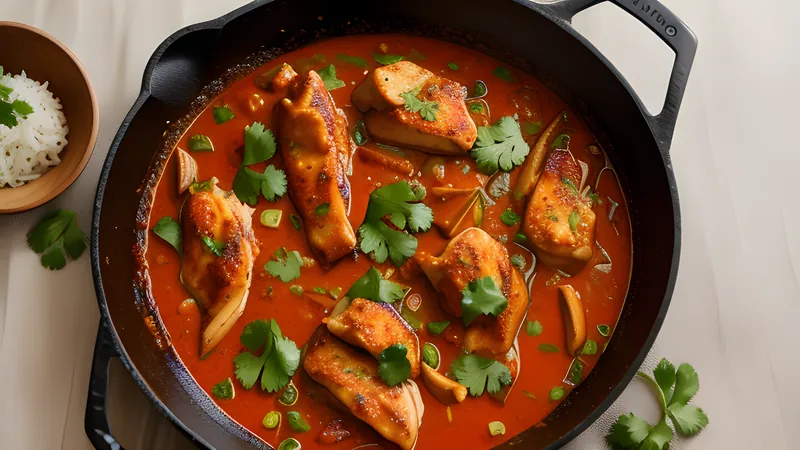
↓ Jump to recipeChicken karahi is named after the pan it’s cooked in — a karahi is a two-handled steel or cast-iron vessel close in shape to a wok, thick-walled enough to hold ferocious heat, and the dish is one of the few curries where the cooking vessel and the cooking method are inseparable from the result. There’s no onion in a proper karahi, no long list of ground spices, and no slow simmer. It’s built almost entirely from tomato, ginger, garlic and green chilli, cooked hard and fast until the tomatoes collapse into a thick, oil-slicked sauce clinging directly to the chicken.
Chicken Karahi: Tomato, Ginger and Wok Steel
Ingredients
- 1kg chicken thighs and drumsticks, bone-in, skin removed
- 6 large tomatoes, chopped, or 500g tinned plum tomatoes
- 6 tbsp vegetable oil or ghee
- 8 garlic cloves, crushed
- 5cm ginger, half crushed and half julienned
- 4 green chillies, 2 chopped and 2 slit whole
- 1 tbsp coriander seed, roughly crushed
- 1 tsp cumin seed
- 1 tsp red chilli powder
- 1 tsp garam masala
- 1 tsp salt, plus more to taste
- 2 tbsp plain yoghurt
- handful fresh coriander, chopped
- 1 lemon, juiced
Method
- Heat the oil in a karahi or wide, heavy-based pan over high heat until visibly shimmering.
- Add the chicken pieces and fry hard, without stirring too often, for 8 minutes until the outside is sealed and lightly browned in patches.
- Add the crushed garlic and crushed ginger, stir for 1 minute, then add the coriander seed and cumin seed. Cook a further minute until fragrant.
- Add the chopped tomatoes, chopped green chillies, chilli powder and salt. Turn the heat down slightly and cook uncovered, stirring occasionally, for 20 minutes, until the tomatoes have completely broken down and the oil begins to separate and pool at the edges.
- Stir in the yoghurt a spoonful at a time, letting each addition incorporate before adding the next, then simmer a further 5 minutes.
- Check the chicken is cooked through, adjust salt, then scatter over the julienned ginger, slit whole green chillies and fresh coriander.
- Finish with a squeeze of lemon juice at the table and serve straight from the pan with naan or roti.
The pan is the technique
A karahi’s thick steel walls and wide, shallow shape let it hold and distribute intense heat evenly, which is exactly what this dish needs — the chicken is seared hard from the first minute rather than gently sweated, and the tomatoes are reduced fast rather than slow-simmered into a smooth purée. Restaurants in Lahore and Karachi cook karahi to order over roaring gas burners, finishing a single portion in well under half an hour, and the pan’s mass and shape are what let that speed produce a sauce with real depth rather than a thin, underdeveloped one. A standard non-stick frying pan can get you a reasonable version at home, but a cast-iron or heavy stainless karahi, if you can find one, holds heat far more consistently through the whole cooking time and makes a genuine difference to the final texture of the sauce.
No onion, and why that matters
Most people’s mental template for a curry base is onion, garlic, ginger, tomato — karahi drops the onion entirely, and that omission defines the dish as much as any ingredient it includes. Without onion’s sweetness and bulk, the sauce depends entirely on the tomatoes breaking down fully and the fat rendering out and separating visibly at the edges of the pan, a stage restaurant cooks call “oil coming to the top” and treat as the signal the base is properly cooked, not a step to rush past. If you pull the tomatoes off the heat before they’ve reduced that far, the karahi tastes thin and slightly raw no matter how much spice you add afterwards.
That absence of onion is also why karahi tastes brighter and sharper than a butter chicken or korma — there’s nothing softening or rounding out the tomato’s acidity, so the ginger and green chilli come through with real clarity. It’s a curry built for people who want the vegetables to taste like themselves rather than melting into a uniform gravy.
Where karahi sits regionally
Karahi cooking spans Pakistan and northern India broadly, but the tomato-heavy, onion-free style described here is most closely associated with Peshawar and the Punjab, where it’s often sold as “Namak Mandi karahi” after the Peshawar market where the style is said to have been popularised by butchers cooking fresh-slaughtered meat to order for customers waiting at their stalls. That origin story explains a few things about the dish: the speed of cooking, the reliance on the freshest possible meat rather than a long marinade, and the minimal ingredient list, which was built around what a butcher’s stall would actually have on hand rather than a wider spice cupboard. Versions further into Punjab sometimes add a touch more garam masala or a spoonful of cream, moving closer to the richer curries more familiar outside the region, but the Peshawari style stays deliberately austere — tomato, ginger, garlic, chilli, and nothing to round off the edges.
Ginger, twice
Ginger appears in two forms and at two points, which is worth paying attention to rather than treating as decorative. Crushed ginger goes in early with the garlic, cooking down into the base and mellowing into the sauce over the twenty-minute reduction. Julienned ginger goes on at the very end, raw or barely warmed through, and it’s meant to retain its sharp, peppery bite as a garnish rather than dissolve into the dish. Skipping the second addition is a common shortcut that loses one of the dish’s most recognisable features — that fresh ginger heat hitting you on top of the cooked base is a large part of what makes karahi taste distinct from other tomato-based curries like butter chicken or chicken tikka masala, both of which rely on cream and a smoother, rounder spice profile rather than this sharp, fresh-ginger finish.
Tomatoes: fresh versus tinned
Good ripe fresh tomatoes, in season, make a noticeably better karahi than any tinned alternative, since their natural sweetness balances the ginger and chilli without needing correction. Out of season, tinned plum tomatoes are a legitimate and common substitute even in Pakistani kitchens — they’re consistently ripe and consistently acidic, which takes some of the guesswork out of the reduction. If you’re using tinned tomatoes, crush them by hand rather than leaving whole pieces, and expect the reduction to take a few minutes less than with fresh, since tinned tomatoes are already partially broken down. Either way, resist adding sugar to correct under-ripe or overly acidic tomatoes — a squeeze of the final lemon juice is the traditional way to balance the dish, not sweetness stirred into the sauce itself.
Getting the sear right
Frying the chicken hard in the first step, without constantly stirring or moving it around the pan, is what builds the base of flavour the rest of the dish depends on. Bone-in, skin-off chicken thighs and drumsticks are worth insisting on — bone adds body to the sauce over the simmer, and thigh meat handles the high, fast heat without drying out the way chicken breast would. Let the chicken sit in the hot oil for a couple of minutes at a time before turning it, so it actually browns rather than just turning opaque and steaming in its own released liquid. Letting the seared chicken rest untouched in the hot pan for the first couple of minutes, rather than shuffling it around immediately, is what actually produces that browning; constant movement is the enemy of a good sear in any dish, and karahi is no exception.
Green chilli heat is adjustable, but don’t remove it entirely — even a mild karahi needs the vegetal sharpness raw green chilli brings, distinct from the smoky heat of dried red chilli powder. If you’re cooking for a heat-averse table, deseed the whole slit chillies before adding them at the end rather than leaving them out, so you keep the flavour without the full punch.
Common mistakes
Adding the yoghurt too quickly, or too early, is the most frequent error — stirred in all at once over high heat, yoghurt splits and turns grainy rather than folding smoothly into the sauce. Add it a spoonful at a time and let the heat come down slightly first. The second common fault is impatience with the tomato reduction: twenty minutes feels like a long time to stand over a pan of tomatoes, but stopping at ten or twelve minutes leaves the sauce watery and the flavour underdeveloped. Wait for the visible sign — oil pooling and separating at the edges of the pan — rather than working from the clock alone, since tomato water content varies between batches.
Serving
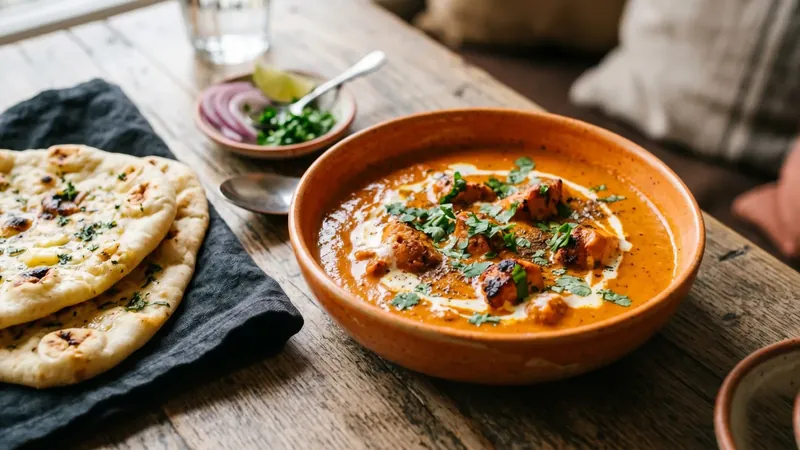
Karahi is traditionally served straight from the pan it was cooked in, set in the centre of the table, with naan or roti for scooping rather than rice, though rice is a fine accompaniment if that’s what you have. A wedge of lemon squeezed over at the table, rather than cooked in, keeps the citrus note bright rather than letting it cook down into the sauce. If you’re building a wider spread, garlic butter naan is the natural bread pairing, its garlic and butter working well against the sharp ginger-chilli profile of the karahi rather than competing with it.
Variations
Mutton karahi follows the same method with a longer simmer — closer to an hour, since the meat needs time to tenderise before the sauce would otherwise reduce past the right consistency. A “white” karahi, made without tomato at all and relying on yoghurt, green chilli and a heavy hand with black pepper, is a legitimate regional variation from parts of Punjab, though it’s a genuinely different dish rather than a simple substitution. Some restaurant versions finish with a spoonful of cream for richness — not traditional, and it mutes the sharpness that makes karahi distinct, so I’d treat it as an optional indulgence rather than a standard step. Vegetable karahi, built the same way with paneer or a mix of cauliflower and peas standing in for the chicken, is a reasonable weeknight adaptation, though it needs a shorter simmer since there’s no bone-in meat to render down.
Storage and make-ahead
Karahi is best eaten fresh, within an hour of cooking, since the appeal is largely in the contrast between the just-seared chicken and the freshly wilted raw ginger and chilli garnish. That said, the base sauce keeps well in the fridge for up to three days and reheats fine; add fresh julienned ginger and chilli only when you reheat, rather than storing them mixed in, so the garnish still reads as fresh rather than cooked through. It freezes for up to two months without the yoghurt, which is best stirred in fresh after thawing and reheating to avoid a grainy texture. If you do end up with leftovers, the sauce is worth turning into a Sunday breakfast rather than a repeat dinner — cracked eggs poached directly into the reheated tomato base, finished with the same fresh coriander, make a fast, satisfying second meal out of what’s left in the pan.
Related Content