Smoky Chipotle Chicken Fajitas with Charred Lime
Sizzling, charred and bright
Contents
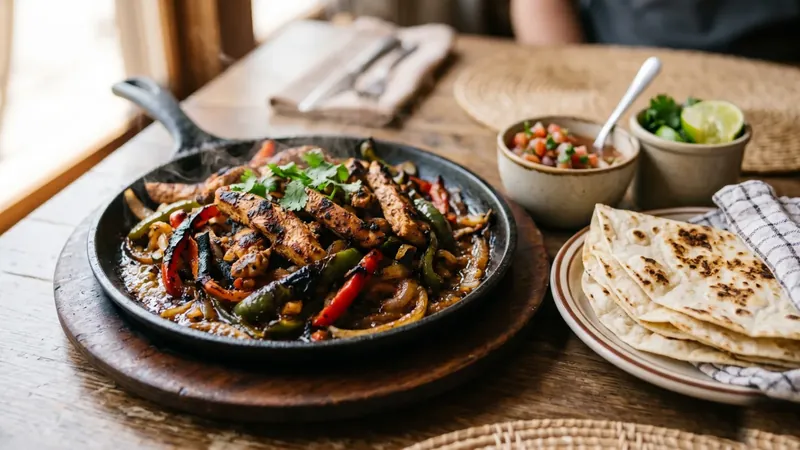
↓ Jump to recipeFajitas live or die on the char, so this version chases it twice over. The chicken sits in a smoky chipotle marinade before hitting a screaming-hot pan, while halved limes are seared cut-side down until caramelised, then squeezed over the lot. The result is sizzling, deeply savoury and lifted by a sweet, smoky burst of citrus, ready to pile into warm tortillas with all the trimmings. What makes them worth cooking at home rather than ordering out is that you control the heat of the pan, and the heat of the pan is the whole difference between fajitas that char and fajitas that steam sadly in their own liquid. Get that right and the rest is assembly.
Smoky Chipotle Chicken Fajitas with Charred Lime
Ingredients
- 600g chicken thigh fillets, sliced into strips
- 2 tbsp chipotle paste
- 2 tbsp olive oil
- 1 tsp ground cumin
- 1 tsp smoked paprika
- 1 tsp dried oregano
- 2 garlic cloves, crushed
- Juice of 1 lime, plus 2 limes halved for charring
- 1 red pepper, sliced
- 1 yellow pepper, sliced
- 1 red onion, sliced
- Salt and black pepper, to taste
- 8 small flour tortillas, to serve
- Soured cream, sliced avocado and coriander, to serve
Method
- In a bowl, mix the chipotle paste, 1 tbsp olive oil, cumin, smoked paprika, oregano, garlic, the juice of 1 lime and a good pinch of salt.
- Add the chicken strips and turn to coat. Leave to marinate for at least 20 minutes, or up to a few hours in the fridge.
- Heat a large frying pan or griddle until very hot. Add the remaining oil and cook the peppers and onion for 5-6 minutes until charred but still with some bite. Set aside.
- Add the marinated chicken to the same hot pan in a single layer and cook for 6-8 minutes, turning, until charred at the edges and cooked through.
- Return the peppers and onion to the pan and toss together for 1 minute to combine.
- Meanwhile, place the halved limes cut-side down in a separate dry hot pan for 2-3 minutes until charred and caramelised.
- Warm the tortillas in a dry pan or microwave.
- Squeeze the charred limes over the sizzling chicken and vegetables.
- Serve everything in the pan with the tortillas, soured cream, avocado and coriander, letting everyone build their own.
The Story
The word fajita comes from the Spanish faja, meaning a strip or belt, a nod to the cut of beef the dish was originally built on. It traces back to the ranch culture of South and West Texas, where Mexican cowhands working the cattle drives were often paid partly in less prized cuts, including the skirt steak. Grilled over an open fire and rolled into a tortilla, that humble strip of beef became the original fajita.
For decades it stayed a regional, working-class food, cooked at ranch butcherings and roadside stands along the Rio Grande. The turning point is usually credited to the 1970s: Sonny Falcon, a Texan meat-market manager often called the “fajita king”, is said to have run a commercial fajita taco stand in Kyle, Texas, in 1969, and around the same time Ninfa Rodríguez Laurenzo put her “tacos al carbón” on the menu when she opened Ninfa’s in Houston in 1973. From there the dish climbed fast. The now-iconic sizzling cast-iron platter, brought to the table still spitting and smoking, did as much for the dish’s fame as the flavour did; it turned dinner into a small piece of theatre. By the 1980s fajitas had become one of the best-known dishes of Tex-Mex cooking across the United States and far beyond, and the chicken, prawn and vegetable versions followed the original skirt-steak beef onto menus everywhere.
The genius of the original was economy. Skirt steak, the diaphragm muscle, is full of flavour but tough and coarsely grained, so it demands both a marinade to tenderise it and fast, fierce cooking followed by slicing against the grain. Everything that makes a good fajita, the acid in the marinade, the hard char, the resting and slicing, grew out of making a cheap, hardworking cut taste like a treat. Chicken thigh, used here, is a happy stand-in: forgiving, juicy and quick, it takes a marinade beautifully and chars in minutes.
The smoky heat in this recipe comes from chipotles, which are jalapeño chillies that have been ripened to red, then smoke-dried. That smoking gives them a distinctive deep, woody warmth quite unlike fresh green chillies, and it is sold conveniently as a paste or in adobo sauce. Chipotle is a genuinely Mexican ingredient with a long history, the smoking technique reaching back to pre-Hispanic Mesoamerica as a way to preserve a chilli whose thick flesh resists air-drying, so it sits comfortably here rather than feeling tacked on. It belongs to the same family of dried Mexican chillies that flavour the sauce in my chicken enchiladas in red chilli sauce.
Charring the lime is a small trick with an outsized payoff. Heat caramelises the natural sugars in the fruit and tames some of its raw, sharp acidity, leaving a juice that is rounder, slightly sweet and faintly smoky, an ideal match for the chipotle. There is a little chemistry behind it: the heat drives off some of the volatile citric acid and browns the sugars at the cut face, so what you squeeze out tastes mellower and more complex than raw lime, without losing its lift. Searing citrus this way is a common move in Mexican and South American cooking, and it takes only a couple of minutes in a dry, hot pan, cut-side flat against the metal and left undisturbed so it colours rather than steams.
It is worth being clear about what a fajita is and is not, because the word gets stretched to cover almost any Tex-Mex plate. Purists will tell you that a true fajita is skirt steak and nothing else, and that chicken, prawn or vegetable versions are really tacos al carbón by another name. That is technically fair, but the term has long since escaped the diaphragm muscle it was named for; today fajita describes the method as much as the meat, the marinate-char-and-slice approach served sizzling with tortillas and build-your-own toppings. Chicken thigh treated this way is honest cooking in the same tradition, even if a Texan rancher of the 1950s would have raised an eyebrow at it.
Why the heat matters, and what goes wrong
The non-negotiable rule for good fajitas is heat, and it is where most home versions fall down. The pan must be genuinely hot, hot enough that the chicken hisses the moment it lands, so the surface chars and caramelises rather than the meat stewing grey in its own released juices. That browning, the Maillard reaction, is where the savoury depth comes from, and it simply cannot happen in a crowded, cooling pan. So resist piling everything in at once: cook the peppers and onion first and lift them out, then give the chicken room in a single layer, working in two batches if your pan is small. A cast-iron pan or heavy griddle holds heat far better than a thin non-stick one and is worth using here.
Two other things go wrong. First, breast meat: it dries and toughens under this kind of fierce, fast heat, whereas thigh stays juicy and forgiving, so use thighs. Second, over-marinating in the acidic lime; leave the chicken in the marinade for twenty minutes to a few hours, but not overnight, or the acid starts to break down the surface of the meat and turn it mealy. Twenty minutes is plenty for flavour.
Swaps, sides and getting ahead
The marinade is flexible. No chipotle paste? A tablespoon of chipotles in adobo, mashed, does the same job, or lean on smoked paprika plus a fresh red chilli for a milder, still-smoky version. Prawns work brilliantly and need only three or four minutes; strips of steak, portobello mushrooms or halloumi all take the same treatment. If you do reach for the traditional skirt or bavette steak, cook it hard and fast to no more than medium-rare, rest it for five minutes, then slice thinly against the grain, which shortens the tough muscle fibres and keeps every strip tender. A slick of the leftover chipotle marinade brushed over the cooked steak as it rests carries the smoke right through. You can mix the marinade and coat the chicken up to a day ahead so it is ready to hit the pan straight from the fridge, and the peppers and onion can be sliced in advance and kept covered.
Fajitas want building at the table, so put out warm tortillas, soured cream, sliced avocado or a quick guacamole, and coriander, and let everyone assemble their own. A spoonful of black bean tacos-style charred corn salsa alongside adds sweetness and crunch, and a bowl of rice turns it into a proper spread. Serve the moment everything is sizzling; fajitas wait for no one.
Related Content