Chicken Enchiladas in Red Chilli Sauce
Saucy, cheesy and comforting
Contents
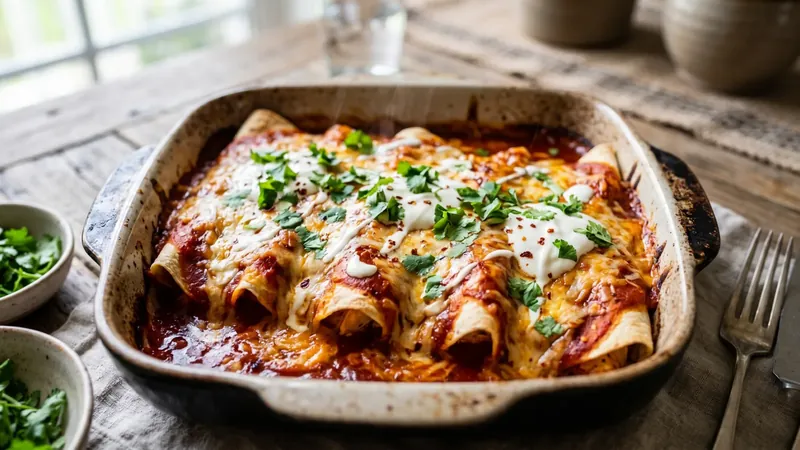
↓ Jump to recipeEnchiladas are pure comfort: tortillas wrapped around tender chicken, blanketed in sauce and cheese, then baked until bubbling. For a long time I made them the lazy way, from a jar, and they were fine in the way that jarred sauces are fine, which is to say faintly sweet and one-dimensional. Then I started making the sauce properly, and there is no going back. The twist here is exactly that: rather than reaching for a jar, this one starts with whole dried chillies, torn open and toasted in a dry pan until fragrant, then soaked soft and blended into a deep, smoky, brick-red sauce. It is fifteen minutes of extra effort and it transforms the dish, giving a warmth, a gentle fruity heat and a complexity that no shortcut can match. Once you have done it once, you will understand why the sauce, not the filling, is what people remember.
Chicken Enchiladas in Red Chilli Sauce
Ingredients
- 3 dried ancho chillies
- 2 dried guajillo chillies
- 1 tbsp vegetable oil, plus extra
- 1 onion, chopped
- 3 garlic cloves, chopped
- 1 tsp ground cumin
- 1 tsp dried oregano
- 400g tin chopped tomatoes
- 300ml chicken stock
- 400g cooked chicken, shredded
- 8 corn or small flour tortillas
- 200g mature Cheddar or red Leicester, grated
- Salt, to taste
- To serve: soured cream, sliced spring onions, fresh coriander
Method
- Tear the stalks and seeds from the dried chillies. Toast the chillies in a dry pan over a medium heat for about 30 seconds each side, until fragrant but not burnt.
- Cover the toasted chillies with boiling water and leave to soak for 15 minutes until softened.
- Meanwhile, soften the onion in the oil for 5 minutes, then add the garlic, cumin and oregano and cook for another minute.
- Drain the chillies and put them in a blender with the onion mixture, the tomatoes and the stock. Blend until smooth.
- Pour the sauce back into the pan and simmer for 10 minutes until slightly thickened. Season with salt.
- Mix about a third of the sauce through the shredded chicken to moisten it.
- Warm the tortillas briefly to make them pliable. Spoon some chicken into each, roll up, and place seam-side down in an oiled baking dish.
- Pour the remaining sauce evenly over the rolled tortillas and scatter the grated cheese on top.
- Bake at 200C (fan 180C) for 18-20 minutes until bubbling and golden.
- Serve hot, topped with soured cream, spring onions and coriander.
The Story
The enchilada is a cornerstone of Mexican cooking, and the idea behind it is ancient: a tortilla, dipped or smothered in a chilli sauce and rolled around a filling. The name comes from the Spanish verb enchilar, meaning to season or coat with chilli, and that chilli sauce is the heart of the dish. The corn tortilla on which it rests is one of the oldest foods of Mesoamerica, a thin flatbread of ground maize that has fed the region for millennia and remains central to its table today.
The word appears in print surprisingly early: Mariano Galván Rivera’s 1831 cookbook El cocinero mexicano, one of the first cookbooks published in independent Mexico, already lists enchiladas among its recipes, though the dish itself, a tortilla dipped in chilli sauce, is far older than any written record of it. What we think of now, rolled tortillas baked under sauce and cheese, is one branch of a large family. Fold rather than roll them and you have enchiladas; layer them flat like lasagne and you have an enchilada casserole; dip and fill them without baking and you edge towards entomatadas or their mole-drenched cousins.
What sets a real enchilada apart from a casual approximation is that sauce. Across Mexico there are countless regional versions, from the green tomatillo-based salsa verde to the rich, dark, many-ingredient moles of Oaxaca and Puebla, but among the most familiar is a red sauce built on dried chillies. The technique used here, toasting dried chillies and then rehydrating them in hot water before blending, is a fundamental Mexican method. It is the foundation of a great many sauces, salsas and adobos, and it is worth understanding because it unlocks so much flavour from such simple ingredients: the toast wakes up the oils and adds a roasted depth, the soak makes the leathery chillies blendable, and the result is a sauce with real backbone rather than a thin, sweet approximation.
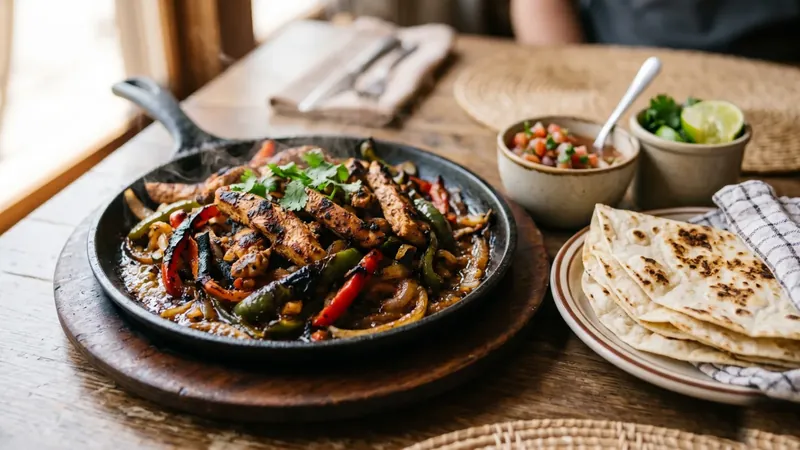
The two chillies in this recipe are workhorses of the Mexican kitchen. The ancho is a dried poblano, broad and wrinkled and a deep mahogany colour, prized for its mild heat and its sweet, raisiny, almost chocolatey depth. The guajillo is a dried mirasol chilli, smoother-skinned and brighter in flavour, bringing a tangy, berry-like note and a vivid red colour to the sauce. Together they give balance: the ancho lends body and sweetness, the guajillo brings brightness and hue. On the Scoville scale both sit at the gentle end, roughly 1,000 to 2,500 units, which is why a sauce built on a good handful of them tastes of chilli fruit rather than raw heat; the warmth builds slowly and never overwhelms. Toasting them briefly in a dry pan awakens their oils and deepens their flavour, while care is needed not to scorch them, as a burnt chilli turns bitter. This same toast-and-rehydrate method underpins the marinade in my smoky chipotle chicken fajitas, where smoke-dried jalapeños do the work instead.
The corn tortilla underneath deserves a word of its own, because it is not merely a wrapper. Traditional Mexican tortillas are made from masa, maize kernels cooked and steeped in an alkaline solution of slaked lime in a process called nixtamalisation, which dates back at least three thousand years in Mesoamerica. That step loosens the hulls, softens the grain and, crucially, unlocks the niacin and amino acids the body could not otherwise absorb from plain maize. It is one of the oldest examples of food science serving nutrition rather than just flavour, and it is why maize could sustain whole civilisations. A shop-bought corn tortilla will not be freshly nixtamalised, but the flavour of masa, earthy and faintly sweet, is what makes an enchilada taste of somewhere rather than nowhere.
Getting it right, and what goes wrong
The two things that trip people up are the chillies and the tortillas. Toasting the dried chillies is the whole flavour foundation, but the window is narrow: thirty seconds a side over a medium heat, pressing them flat with a spatula until they smell nutty and turn a shade darker. Take them past fragrant into smoking and the sauce turns acrid, and there is no rescuing a bitter chilli, so keep the heat moderate and your nose close. If your sauce still tastes flat after simmering, it usually wants salt and a squeeze of acid; a little more salt or a splash of lime or vinegar pulls the smoky, fruity notes forward.
Soggy enchiladas are the other common disappointment. Corn tortillas in particular tear and go to mush if you overfill them or drown them too early, so warm them first to make them pliable, use a restrained amount of filling, and hold most of the sauce back for the top rather than soaking the rolls through. Baking them uncovered lets the surface set and the cheese colour, keeping some texture instead of a uniform sludge.
Fillings, swaps and getting ahead
Shredded chicken is the classic, and especially good for using up the meat from a roast, but the sauce is generous enough to carry beef, cheese, black beans or roasted vegetables just as well. A vegetarian version with beans and cheese loses nothing. If you cannot find whole dried anchos and guajillos, a good chipotle paste or even a couple of tablespoons of chipotles in adobo will give you a shortcut smoky sauce, though the layered depth of two toasted dried chillies is worth the small effort.
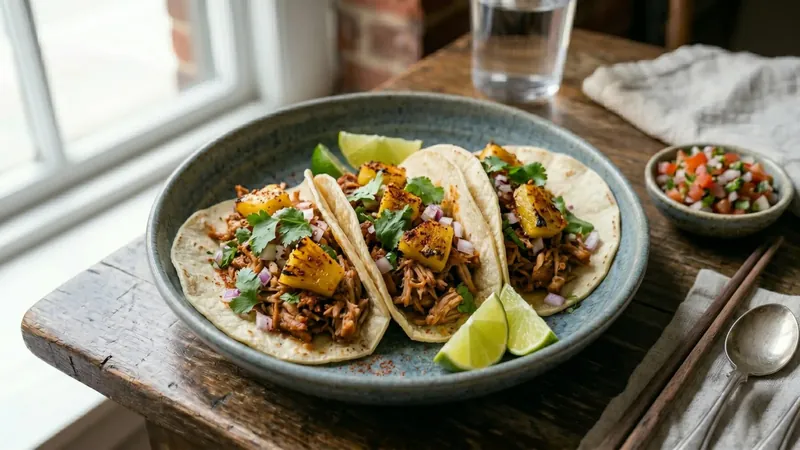
The chilli sauce is the perfect make-ahead component: it keeps for five days in the fridge and freezes for three months, so a double batch pays dividends. Beyond enchiladas it is a genuinely useful thing to have on hand: thin it with a little more stock and it becomes a braising liquid for pork or beans, spoon it over fried eggs for a quick huevos rancheros, or fold it through rice. The flavour deepens after a day in the fridge as the toasted-chilli notes settle and marry, so if anything it is better made ahead than used straight away. You can assemble the whole tray a few hours before baking and keep it covered in the fridge, adding a couple of minutes to the bake time from cold. The finishing touches matter too; a cooling spoonful of soured cream, a scatter of sharp spring onion and fresh coriander cut through the richness. Serve it with rice and something fresh alongside, in the same spirit as a plate of black bean tacos with charred corn salsa and lime crema. Built on a properly made chilli sauce, it is honest, generous, deeply comforting food.
Related Content